Servers

Search documents
推出全新AMD Instinct MI350系列GPU优化服务器解决方案 超微电脑(SMCI.US)小幅上涨
Zhi Tong Cai Jing· 2025-11-20 16:20
Core Viewpoint - Super Micro Computer (SMCI.US) has launched its latest AMD Instinct MI350 series GPU-optimized server solutions, enhancing its product offerings in high-performance computing and AI infrastructure [1] Group 1: Product Launch - The new systems are specifically designed for enterprises that require high-end computing power from AMD Instinct MI355X GPUs while needing to operate in air-cooled environments [1] - The new servers can achieve up to 4 times the AI training performance compared to the previous generation [1] - The inference performance has seen a significant leap of up to 35 times, greatly improving capabilities in deploying large language models (LLM), generative AI, and scientific computing [1]

PC和AI推动,联想三季度营收猛增15%,但存储芯片涨价侵蚀利润
美股IPO· 2025-11-20 02:41
Core Viewpoint - Lenovo Group's latest financial report shows a mixed picture, with a 15% year-on-year revenue growth driven by a recovery in the PC market and strong demand for AI servers, but a 5% decline in net profit raises concerns about future profitability due to rising component costs [3][10][11]. Financial Performance - Lenovo's quarterly revenue reached $20.5 billion, exceeding market expectations of $20.1 billion [5]. - The net profit for the quarter was $340.3 million, falling short of the consensus estimate of $434.2 million [4][11]. - For the first half of the year, Lenovo reported a net profit of $845.6 million and revenue of $20.45 billion [6]. Business Segments - The PC business has shown strong performance, with a 17.3% year-on-year increase in shipments from July to September, helping to boost revenue [8][9]. - AI servers have emerged as a key growth driver, with increasing investments in computing infrastructure from global enterprises accelerating demand [10]. Cost Pressures - Rising storage chip prices are significantly impacting Lenovo's profit margins, leading to concerns about the overall profitability of PC manufacturers [11][12]. - Morgan Stanley has downgraded its rating for Lenovo based on the anticipated erosion of profits due to increasing component costs [3][12].


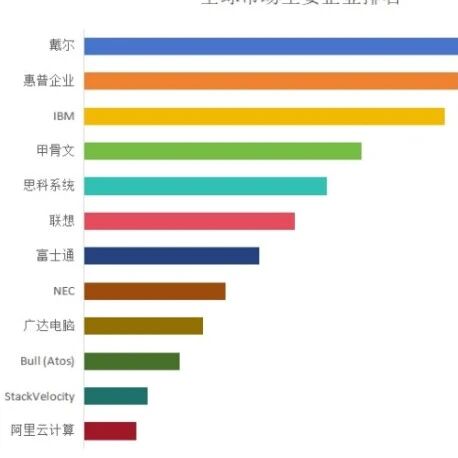
行业聚焦:全球企业高可用性服务器行业头部企业市场份额及排名情况
QYResearch· 2025-11-19 01:47
Core Viewpoint - Enterprise high availability servers are essential for ensuring continuous business operations during hardware or software failures, utilizing redundancy, failover, load balancing, and disaster recovery techniques to maximize reliability and service continuity [1][2]. Market Overview - The global enterprise high availability server market is projected to reach approximately $13.3 billion by 2025 and $19.3 billion by 2031, with a compound annual growth rate (CAGR) of 6.40% over the coming years [4]. Industry Chain - The industry chain for enterprise high availability servers includes upstream hardware manufacturers, midstream system integrators, and downstream enterprise users. Upstream suppliers provide processors, memory modules, storage systems, and power supplies, while midstream integrators assemble these components into high availability solutions [8]. Industry Policies - Industry policies focus on data security, operational reliability, and compliance standards, with governments in North America, Europe, and Asia-Pacific emphasizing data protection and disaster recovery guidelines. Policies often require critical sectors like banking and healthcare to adopt high availability infrastructure [9]. Development Trends - Key trends in the development of enterprise high availability servers include: - Intelligent operations and self-healing systems leveraging AI and automation to achieve zero downtime and reduce operational costs [10]. - Transition towards cloud-native high availability architectures to support hybrid and multi-cloud environments [10]. - Emphasis on green energy efficiency and low-carbon technologies to meet sustainability goals [10]. - Evolution from centralized to distributed architectures due to the rise of edge computing and 5G networks [12]. - Movement towards open and standardized industry ecosystems with modular designs and decoupled hardware and software [12]. Obstacles - The industry faces several obstacles, including: - High technical complexity requiring extensive reliability validation and compatibility testing, leading to significant barriers to entry [13]. - Elevated manufacturing and maintenance costs due to expensive components and stringent deployment conditions [13]. - High market concentration dominated by major players like HPE, Dell, and IBM, creating challenges for new entrants [13][14].
重庆:支持企业研发液冷散热、高速互联等关键技术
Zheng Quan Shi Bao Wang· 2025-11-18 10:34
Core Insights - The article discusses the "Chongqing Action Plan for Accelerating the Innovation and Transformation of the Artificial Intelligence Terminal Industry (2026-2030)" issued by the Chongqing Economic and Information Technology Commission, focusing on advancements in intelligent computing servers [1] Group 1: AI Terminal Industry Development - The plan emphasizes the need to focus on the training and inference requirements of large models in intelligent computing servers [1] - It aims to promote the integration of high-performance GPU and NPU chips in intelligent computing servers to build a heterogeneous computing architecture [1] - The initiative supports the development of key technologies such as liquid cooling and high-speed interconnects [1] Group 2: Infrastructure and Optimization - The plan highlights the importance of enhancing the collaboration between intelligent computing servers and AI frameworks, as well as toolchain optimization [1] - The goal is to create an efficient and stable infrastructure for intelligent computing [1]
20cm速递|关注创业板人工智能ETF国泰(159388)投资机会,算力产业链景气延续
Mei Ri Jing Ji Xin Wen· 2025-11-14 03:03
Group 1: Industry Insights - North American optical module and chip companies show strong performance guidance, indicating sustained global computing power demand [1] - Fabrinet's FY2026 Q1 revenue increased by 22% year-on-year and 8% quarter-on-quarter, driven by robust demand in the Data Center Interconnect (DCI) business, which saw a 92% year-on-year and 29% quarter-on-quarter revenue growth [1] - Coherent's FY2026 Q2 revenue guidance is between $1.56 billion and $1.70 billion, benefiting from technological advancements in DCI ZR/OCS/1.6T VCSEL solutions [1] - Lumentum's FY2026 Q2 revenue guidance is between $630 million and $670 million, with strong demand for optical modules and a supply shortage of EML lasers expanding from 10% to 20-30%, leading to a planned 40% increase in production capacity [1] - Zhongke Shuguang launched the world's first single-cabinet 640-card super node scaleX640, enhancing computing density by 20 times for large-scale cluster deployments [1] - Global AI investment is accelerating, with companies like NVIDIA sending AI server satellites into space and Google initiating the "Daily Plan" to promote space AI infrastructure development [1] Group 2: Market Performance - The Guotai Artificial Intelligence ETF (159388) tracking the ChiNext Artificial Intelligence Index (970070) experienced a daily fluctuation of 20% [2] - The index selects listed companies involved in AI technology development and application from the ChiNext market, covering software, hardware, and related services, reflecting the overall performance of high-growth innovative enterprises in the AI sector [2] - The industry allocation is primarily concentrated in information technology and high-end manufacturing, showcasing the technological forefront and industrial upgrade characteristics of the sector [2]

浪潮信息(000977.SZ):液冷服务器已相继在众多行业和领域实现批量化部署
Ge Long Hui· 2025-11-13 09:46
Core Viewpoint - The company has successfully deployed liquid-cooled servers in various industries, and its "All in liquid cooling" strategy has gained market recognition [1] Summary by Relevant Categories Product Deployment - The company's liquid-cooled servers have achieved large-scale deployment across numerous industries and fields [1] Market Strategy - The "All in liquid cooling" strategy has received market recognition, indicating a positive reception from customers and stakeholders [1] Profitability Factors - The product gross margin is influenced by multiple factors, including customer structure, product structure, supply conditions, and market competition [1]

从标准制定到全球出海 联想液冷:被低估的核心玩家
Zhi Tong Cai Jing· 2025-11-13 07:01
Core Viewpoint - The liquid cooling server sector in the A-share market has experienced a significant surge, driven by increasing demand for computing power and supportive policies, highlighting the competitive advantages of Lenovo Group in this field [1][2]. Group 1: Market Dynamics - The explosion of the liquid cooling server sector is a result of the exponential increase in computing power demand and policy support, particularly due to the rise of generative AI and large model training [2]. - Traditional air cooling technology is inadequate for high-density computing clusters, with AI servers consuming 10-20 times the power of standard servers, necessitating a shift to liquid cooling technology [2]. - The Chinese government has included "efficient cooling technology" in its list of key low-carbon technologies, aiming for a significant increase in liquid cooling penetration from 15% to 38% by 2025 [2]. Group 2: Lenovo's Competitive Edge - Lenovo Group has developed a comprehensive "full-stack" liquid cooling capability, covering core technology research, complete solution design, and lifecycle services, making it a pioneer in the liquid cooling sector since 2006 [3]. - Lenovo's Neptune liquid cooling system has become an industry benchmark, with over 80,000 units deployed globally across various critical sectors, including AI, supercomputing, and finance [3][4]. - The company has established long-term strategic partnerships with leading chip manufacturers like NVIDIA and AMD, enhancing its competitive position in the liquid cooling market [4]. Group 3: Financial Performance and Growth Outlook - Lenovo's liquid cooling business reported a 68% year-on-year revenue growth in Q1 2025, reflecting strong market demand [5]. - The global server cooling market is projected to grow significantly, with estimates of 111%, 77%, and 26% annual growth from 2025 to 2027, reaching $17.6 billion by 2027 [5]. - Lenovo is well-positioned to increase its market share in this expanding market due to its technological leadership, rich case studies, and robust ecosystem [5].
从标准制定到全球出海 联想(00992)液冷:被低估的核心玩家
智通财经网· 2025-11-13 06:17
Core Viewpoint - The A-share liquid cooling server sector has experienced a significant surge, driven by increasing computing power demands and supportive policies, with Lenovo Group emerging as a key player in the market despite short-term stock price fluctuations [1][2]. Industry Overview - The liquid cooling server sector's growth is attributed to the exponential increase in server computing power density, particularly due to the rise of generative AI and large model training, which traditional air cooling systems cannot adequately support [1]. - The Chinese government's "dual carbon" goals and digital economy strategies are providing strong momentum for the development of liquid cooling technologies, with specific targets set for increased penetration rates by 2025 [2]. Company Positioning - Lenovo Group has established a comprehensive "full-stack" liquid cooling capability, covering core technology research, complete solution design, and lifecycle services, positioning itself as a leader in the liquid cooling space [2]. - Lenovo's Neptune liquid cooling system has become an industry benchmark, with over 80,000 units deployed globally across various critical sectors, demonstrating its technological maturity and compliance with international standards [2][3]. Competitive Advantages - Lenovo's liquid cooling solutions have been validated through numerous successful implementations in major projects, showcasing their adaptability and efficiency in various applications, such as automotive and educational sectors [3]. - Strategic partnerships with leading chip manufacturers like NVIDIA and AMD enhance Lenovo's competitive edge, particularly with the introduction of advanced AI server solutions [3]. Financial Performance - Lenovo's liquid cooling business reported a 68% year-on-year revenue growth in Q1 2025, reflecting strong market demand and performance [4]. - The global server cooling market is projected to experience substantial growth, with estimates indicating a market size of $17.6 billion by 2027, driven by increased AI server shipments and rising liquid cooling penetration rates [4].
DELL vs. SMCI: Which AI-Server Stock Should You Buy Right Now?
ZACKS· 2025-11-11 18:56
Core Insights - Dell Technologies (DELL) and Super Micro Computer (SMCI) are significant players in the AI-driven server market, with DELL focusing on PowerEdge servers and SMCI leading in high-performance, energy-efficient systems [1][2] Dell Technologies - DELL is experiencing strong demand for AI servers, shipping $8.2 billion in AI servers in Q2 of fiscal 2026 [3] - The company reported a $5.6 billion increase in AI server orders, with an AI backlog of $11.7 billion at the end of Q2 fiscal 2026, indicating sustained demand [4] - DELL delivered $10 billion worth of AI-optimized servers in the first half of fiscal 2026 and projects $20 billion for the entire fiscal year [5] - DELL introduced the PowerEdge XR8720t, the first single-server solution for Open RAN and Cloud RAN, enhancing performance and reducing costs for telecom and edge deployments [6] Super Micro Computer - SMCI is a frontrunner in the AI server market, quickly launching systems based on NVIDIA's latest platforms, which provides a competitive advantage [7] - The company announced new AI-optimized servers featuring NVIDIA RTX Pro and other advanced technologies at its INNOVATE! EMEA 2025 event [8] - SMCI's Data Center Building Block Solution offers comprehensive server and data center solutions, optimizing performance and reducing power consumption [9] Challenges and Valuation - SMCI faces challenges such as customer delays in transitioning to new AI platforms and reliance on NVIDIA's product cycles, which may impact its near-term performance [10][11] - Year-to-date, DELL shares have increased by 23.9%, while SMCI shares have risen by 31.9%, with SMCI's growth attributed to rising demand for AI infrastructure [12] - DELL's shares are trading at a lower forward P/E of 14.20X compared to SMCI's 19.36X, indicating a more attractive valuation for DELL [10][16] - Zacks Consensus Estimate for DELL's fiscal 2026 earnings is $9.54 per share, reflecting a 17.20% year-over-year increase, while SMCI's estimate is $2.15 per share, showing a 4.37% increase despite a 15.3% decline in estimates over the past 30 days [19][20] Conclusion - DELL's expanding portfolio and partner base position it favorably for long-term investors, while SMCI's challenges and valuation concerns may hinder its performance [21]

Supermicro Shares Tumble Despite Strong Outlook. Should Investors Buy the Stock on the Dip?
The Motley Fool· 2025-11-10 10:12
Core Viewpoint - Super Micro Computer (SMCI) shares have experienced significant volatility, with a recent drop despite strong revenue growth forecasts for fiscal 2026, yet the stock is still up nearly 40% year-to-date [1] Company Overview - Super Micro Computer designs and assembles servers and rack solutions for data centers, including networking and cooling systems, often customized around Nvidia's GPUs, making it a key partner for the chipmaker [2] Financial Performance - For the quarter ended September 30, Supermicro's revenue decreased by 15% year-over-year to $5.02 billion, missing the analyst consensus of $5.8 billion and falling short of the company's own forecast of $6 billion to $7 billion [5][6] - The company lowered its revenue guidance to $5 billion due to delays in "design win upgrades," indicating ongoing challenges in revenue forecasting [6] - Gross margin has been under pressure, dropping from 17% a year ago to 9.3% in the latest quarter, impacting profitability [7][8] - Adjusted earnings per share (EPS) fell 52% to $0.35, missing the analyst consensus of $0.37 [8] Future Projections - Supermicro projected fiscal Q2 revenue between $10 billion and $11 billion, significantly above the $7.8 billion analyst consensus, but adjusted EPS guidance of $0.46 to $0.54 was below the $0.61 consensus [9] - The company raised its full-year revenue forecast to at least $36 billion, up from a prior outlook of at least $33 billion [9] Valuation Metrics - The stock trades at a forward price-to-earnings (P/E) ratio of 13.5 based on fiscal year 2026 estimates and a forward price/earnings-to-growth (PEG) ratio below 0.4, suggesting it may be undervalued [10] Competitive Landscape - Supermicro operates in a low-margin, low-moat business facing intense competition and has struggled with GPU product transition cycles, which may pose ongoing challenges as Nvidia introduces new architectures [12]