
智能手机

Search documents
为什么全世界只卖“中美韩”手机,其他国家的手机品牌都去哪了?
Xin Lang Cai Jing· 2025-12-08 03:23
特别声明:以上文章内容仅代表作者本人观点,不代表新浪网观点或立场。如有关于作品内容、版权或其它问 题请于作品发表后的30日内与新浪网联系。 为什么全世界只卖"中美韩"手机,其他国家的手机品牌都去哪了? 为什么全世界只卖"中美韩"手 机,其他国家的手机品牌都去哪了? 为什么全世界只卖"中美韩"手机,其他国家的手机品牌都去哪了? ...


苹果放下身段、华米攻入腹地,高端手机战场为何更焦灼了?
Xin Lang Cai Jing· 2025-12-08 01:32
Core Insights - The introduction of the "Doubao AI Assistant" by Nubia aims to revolutionize mobile interaction and system permissions, positioning itself as a potential supplier of smart driving systems for smartphones [2][39] - The competition in the high-end smartphone market is expected to intensify in 2024, with Apple accelerating its integration into China's social and content e-commerce ecosystem [2][24] Group 1: Market Dynamics - Domestic smartphone brands are actively positioning themselves in the high-end market, with a notable shift towards premium models priced above 6000 yuan, which is the only segment showing growth [7][42] - According to Counterpoint Research, the market share of high-end smartphones priced at $600 and above has increased from 11% in 2018 to 28% in 2024, driven primarily by Huawei's resurgence [8][43] - Huawei's market share in the high-end segment rose from 20% to 29% within a year, making it the fastest-growing domestic smartphone manufacturer [8][43] Group 2: Product Innovations - The Huawei Mate 80 series has successfully ended Apple's dominance in the high-end market, featuring significant technological advancements and achieving strong sales shortly after launch [12][47] - Xiaomi's 17 series has also gained traction, with a notable sales figure of 2.34 million units, and is positioned to compete directly with Apple's iPhone 17 [6][41][49] - OPPO and Vivo have introduced competitive models, such as the Find X9 series and X200 series, which have shown strong sales performance and contributed to the overall growth in the high-end market [52][54] Group 3: Competitive Landscape - Apple remains a significant competitor in the high-end smartphone market, with its iPhone 17 series experiencing a resurgence in sales, capturing 25% of the market share by October [20][59] - The introduction of the iPhone 17 series has prompted domestic brands to adjust their product strategies in response to Apple's aggressive market tactics [55][60] - The competition is expected to escalate further with the anticipated release of the iPhone 18 series, which aims for a production target of 95 million units, reflecting Apple's confidence in maintaining its market position [25][60] Group 4: Challenges and Future Outlook - The reduction in government subsidies and rising prices have negatively impacted the entry-level high-end market, leading to a 9% decline in sales in that segment [27][65] - The challenges faced by the Doubao AI phone highlight the broader difficulties in the high-end smartphone market, particularly regarding the integration of AI capabilities within existing app ecosystems [30][32][67] - The future of high-end smartphone competition will hinge on the ability of brands to navigate ecological barriers and establish a competitive edge through technological innovation and user experience [68][69]


吉利高管:有车企为博流量盲目模仿,拉低中国车设计高度;因「薪资过高」限制招聘信息发布?BOSS直聘回应;曝苹果芯片核心人物将离职
雷峰网· 2025-12-08 00:52
Group 1 - Geely's executive criticized some car companies for blindly imitating designs to gain traffic, which lowers the standards of Chinese car design [4][5] - Geely emphasized that true Chinese design must be rooted in Chinese culture, possess independent aesthetic judgment, and have distinct characteristics [5] - Huawei's Ren Zhengfei stated that self-reliance is a necessity due to external pressures, and acknowledged that China is still lagging behind in technology compared to the U.S. [7][8] Group 2 - A wind power company in Guangdong offered a starting salary of 8,500 to 10,000 yuan, but faced restrictions from BOSS Zhipin for exceeding average salary levels [16][17] - New Oriental's chairman, Yu Minhong, reassured that employees who expressed concerns in an open letter would not face repercussions and that their issues would be investigated [19][20] - The CEO of Ele.me, Fan Yu, highlighted the strategic importance of the newly launched "Taobao Flash Purchase" as a significant move for Alibaba in the consumer service sector [26] Group 3 - The launch of the new AI model GPT-5.2 by OpenAI is anticipated to counter the competition from Google's Gemini 3, with a release expected on December 9 [39][40] - Meta has postponed the release of its mixed reality glasses to 2027 to ensure a fully polished product, reflecting the company's commitment to user experience [42][43] - Musk criticized the EU's fine against his platform X, calling it absurd and indicative of bureaucratic overreach, while also highlighting the broader implications for U.S. tech companies [48][49]

金融时报:中国手机厂商抓住苹果AI困局,吸引iPhone用户倒戈
Feng Huang Wang· 2025-12-08 00:26
Core Insights - Apple is facing increasing pressure from Chinese smartphone manufacturers who are promoting switch applications to attract iPhone users to Android, as Apple has not yet launched AI features in China, the world's largest smartphone market [1][3] Market Competition - The top five Chinese smartphone manufacturers have launched switch applications this year, facilitating data migration from Apple's iOS to their devices, or allowing users to keep their Apple devices while using Chinese brand phones [1] - The Chinese smartphone market is highly competitive, with no single manufacturer holding more than 20% market share. Vivo has overtaken Apple as the market leader, achieving an 18.5% share in Q3, while Apple, Honor, OPPO, Xiaomi, and Huawei hold between 13.6% and 16.4% [1] AI Development and Innovation - Chinese manufacturers believe their AI capabilities and innovations, such as foldable phones, make their products attractive enough to win over loyal Apple users [3] - OPPO's latest smartphone features an AI assistant that tracks daily spending and provides real-time fitness guidance, while Honor's new model helps users find discounts and coordinate ride-hailing services [3] User Migration Strategies - Honor has upgraded its switch application, allowing users to migrate photos, messages, and contacts from Apple devices by scanning a QR code. The Honor Connect app supports file transfers with iOS devices, similar to Apple's AirDrop [3] - Among consumers purchasing Honor's flagship Magic V5 online, 37% switched from Apple devices using these tools, indicating success in attracting high-end Apple users [3] Other Manufacturers' Initiatives - Other Chinese manufacturers are also enhancing their offerings to attract Apple users. Xiaomi's founder promoted new features for file transfer and notification synchronization between Xiaomi phones and iPhones [4] - OPPO's latest operating system allows users to answer calls and reply to messages from Apple devices directly on OPPO phones [4] Sales Performance - Apple's sales in China declined by 4% year-on-year in the quarter ending September 30, but CEO Tim Cook expects sales to "recover growth" in the upcoming quarter [4] Consumer Sentiment - Counterpoint estimates that after the iPhone 17's release in mid-September, Apple's sales in China increased by 22% year-on-year, suggesting that consumer concerns over the lack of AI features are lower than expected by Chinese competitors [6] Market Dynamics - Analysts indicate that while Chinese manufacturers' new features have not significantly impacted Apple's dominance in high-end markets outside China, their efforts to convert users pose a notable challenge to Apple, especially as global smartphone sales growth has slowed to single digits [7]
俄突陷贫境?财部:将大抛人民币与黄金
Sou Hu Cai Jing· 2025-12-07 23:40
Core Viewpoint - Russia's Ministry of Finance announced plans to sell 56 billion rubles worth of yuan and gold daily starting December 5, continuing until 2026, raising concerns about the country's financial stability and prompting speculation about its economic situation [1][3]. Group 1: Economic Pressures - Russia is facing significant economic challenges due to ongoing Western sanctions, a sharp decline in energy revenues, and the financial burdens of an ongoing war [9][10][13]. - The country’s oil and gas revenues are expected to drop significantly, with estimates suggesting a loss of over a thousand billion rubles in December alone due to decreased global oil prices and reduced demand from Europe [10][25]. - The ongoing war is described as a "money-burning beast," leading to severe financial strain and forcing the government to tap into its National Welfare Fund [13][25]. Group 2: Financial Strategies - The sale of yuan and gold is seen as a desperate measure for immediate liquidity, as these assets are among the few that can be quickly converted into cash [5][15]. - The Russian government is employing a strategy to manage the influx of cash from these sales while preventing hyperinflation by simultaneously selling gold to absorb excess rubles from the market [15][24]. - Additional measures include imposing a one-time "windfall tax" on wealthy energy oligarchs and large corporations to generate further revenue [16][17]. Group 3: Market Adaptations - Russia has adapted to the withdrawal of Western companies by legalizing "parallel imports," allowing the importation of goods through third countries, thus stabilizing domestic markets [20][23]. - Despite these adaptations, there are concerns about the long-term sustainability of such measures, as they may lead to a technological downgrade and isolation from global advancements [28][29]. Group 4: Future Outlook - The National Welfare Fund has reportedly shrunk by over half in the past two years, raising alarms about its viability if current spending continues [25]. - Predictions indicate that if oil prices do not recover, the fund could be depleted by mid-2026, posing serious questions about Russia's economic future [25][26].

豆包AI手机引App厂商集体“掀桌子” AI手机路向何方?
Zhong Guo Jing Ying Bao· 2025-12-07 21:25
Core Viewpoint - The launch of the Doubao AI phone and its assistant has triggered significant backlash from major app developers due to its ability to perform cross-application operations, raising concerns about security and user privacy [1][2][3]. Group 1: Product Features and Market Reaction - The Doubao AI phone's main selling point is its capability to execute complex tasks across multiple applications through voice commands, which has garnered substantial attention in a short period [2]. - Major applications, including WeChat and various banking apps, have begun to restrict access to the Doubao assistant, citing security concerns and the potential for fraud [2][3]. - The rapid shift from user enthusiasm to app resistance occurred within days, indicating a significant disruption in the mobile internet ecosystem [2][3]. Group 2: Industry Implications and Legal Considerations - The Doubao assistant's operation mechanism has triggered security systems in various apps, particularly banking applications, due to its need to read screen information, akin to screen recording [3][4]. - The conflict represents a broader struggle between AI assistants and app developers, necessitating the establishment of new rules to protect personal information and define the boundaries of AI assistant permissions [4][5]. - Legal experts suggest that regulatory bodies should lead the establishment of rules governing AI assistants, ensuring that user privacy is safeguarded while allowing for innovation in AI technology [5][6]. Group 3: Future Directions and Industry Dynamics - Following the restrictions imposed by major apps, the development direction of AI phones may need to adapt to the current legal environment, potentially leading to a shift towards internal development rather than external collaboration [6]. - Major smartphone manufacturers are unlikely to relinquish control over their platforms easily, with the potential for them to introduce their own AI assistants in response to the Doubao assistant's capabilities [6][7]. - The industry may need to explore risk-controlled AI agent models and establish standardized APIs to facilitate data transfer while addressing security concerns [6][7].

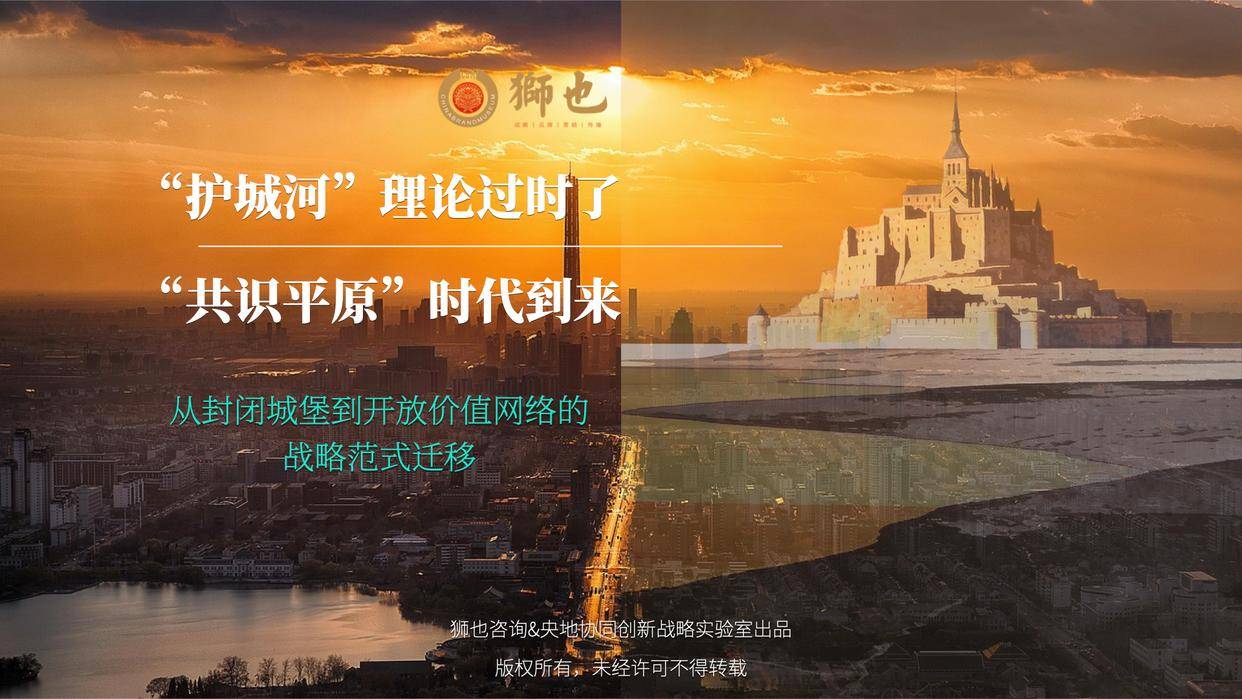
“护城河”理论过时了:“共识平原”时代到来|狮也咨询《思想领袖系列》
Sou Hu Cai Jing· 2025-12-07 13:16
Core Argument - The article argues that the "moat" theory, which has dominated business strategy for the past three decades, is becoming obsolete as the world transitions to a new strategic paradigm called the "consensus plain" [2][3][5]. Group 1: The Decline of the Moat Theory - The moat theory, introduced by Warren Buffett in 1993, emphasized the importance of having a strong competitive advantage to protect investment returns from competitors [2]. - Historical examples illustrate how established companies like Coca-Cola, Kodak, and Walmart have seen their competitive advantages eroded by new entrants that leverage changing consumer preferences and technological advancements [3][5]. - The moat's effectiveness is diminishing as the business landscape shifts from a closed castle model to an open value network model, leading to a strategic paradigm shift [5]. Group 2: Characteristics of the Moat - The moat consists of three essential elements: scarcity, control, and isolation, which were relevant during the industrial era characterized by limited resources [9]. - Brand moats rely on monopolizing consumer perception through significant advertising investments [9]. - Patent moats utilize legal protections to create exclusive advantages based on technological scarcity [9]. - Scale moats achieve cost advantages through high production volumes, allowing companies to dominate pricing [9]. Group 3: Forces Eroding the Moat - Three converging forces are dismantling the moat: the abundance of resources, the networked nature of value creation, and the fluidity of consumer consensus [12][10]. - The abundance of resources, facilitated by cloud computing and open-source movements, has transformed previously scarce resources into accessible infrastructures [12]. - Value is increasingly generated within interconnected ecosystems rather than solely within individual companies, diminishing the relevance of traditional moats [12]. - Consumer loyalty is shifting from static brand recognition to dynamic engagement with values and narratives, making traditional brand moats vulnerable [12]. Group 4: The Consensus Plain Strategy - The "consensus plain" strategy emerges as a new approach when moat logic fails, characterized by an open value creation and exchange environment [13]. - The consensus plain is defined by a shared vision and collaborative rules, attracting participants who contribute to its value [15]. - A strong consensus plain consists of three layers: narrative consensus (the overarching story), rule consensus (operational guidelines), and value consensus (how value is shared) [16]. Group 5: Constructing the Consensus Plain - Building a consensus plain involves a four-step foundational method: identifying value vacuums, crafting a compelling narrative, designing initial rules, and initiating a "cold start flywheel" [22][23]. - Identifying areas with unmet needs is crucial for establishing a consensus plain, as demonstrated by Pinduoduo's focus on price-sensitive consumers [24]. - A powerful narrative serves as the gravitational force for the consensus plain, as seen in Huawei's vision for a unified operating system [29]. - Initial rules must be simple and transparent, facilitating participation and collaboration, as exemplified by BYD's open supply chain model [30]. Group 6: The Evolution of Rules in the Consensus Plain - The power lies in the continuous definition and evolution of rules within the consensus plain, requiring companies to transition from product managers to civilization architects [36]. - Rule definition grants significant commercial power, as illustrated by NVIDIA's dominance through its CUDA ecosystem [37]. - Rules must evolve to maintain vitality and balance, necessitating gradual experimentation and community governance [40]. Group 7: Interactions Between Consensus Plains - As multiple consensus plains coexist, competition and cooperation create a complex landscape, leading to various relationships such as absorption, bridging, and confrontation [50][51]. - The collaboration between national-level and regional plains exemplifies how different levels can resonate and enhance overall value creation [55].
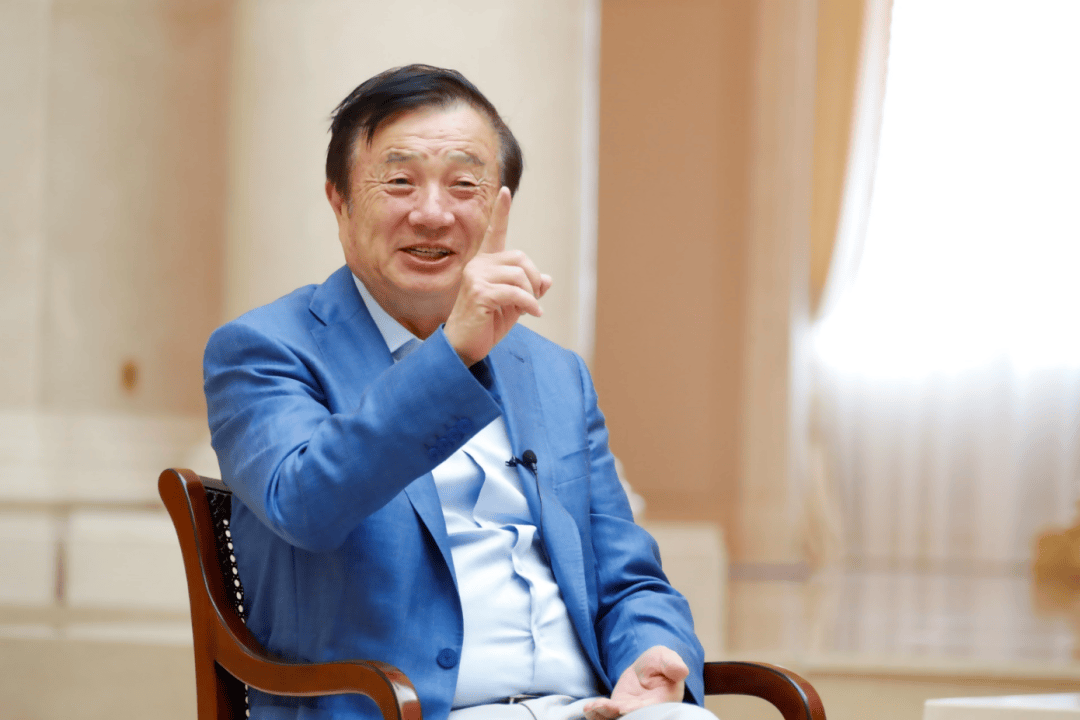
任正非:还打算过年?
Xin Lang Cai Jing· 2025-12-07 12:04
Core Insights - Huawei has grown significantly, becoming the world's largest telecommunications equipment provider, serving 170 countries and 1/3 of the global population, contributing 70% of its overseas revenue to China [5][56] - The founder, Ren Zhengfei, emphasizes a pragmatic and humble approach to business, often downplaying his success and focusing on the hard work required to sustain the company [5][57][60] - Huawei has surpassed Apple to become the second-largest smartphone manufacturer globally, reflecting its strong market position [8][61] Group 1: Ren Zhengfei's Leadership Style - Ren Zhengfei's leadership is characterized by a focus on practicality and hard work, rejecting grandiose ideas without thorough investigation [8][60] - He instills a culture of diligence and caution within Huawei, discouraging employees from boasting about achievements and emphasizing the importance of continuous improvement [9][61] - Ren's personal struggles, including health issues and family responsibilities, have shaped his resilient and determined approach to leading Huawei [5][65][66] Group 2: Company Philosophy and Culture - Huawei's corporate culture is built on a foundation of humility, hard work, and a strong sense of responsibility towards employees and society [30][90] - The company prioritizes technological innovation, investing significantly in research and development, with R&D spending being ten times the average of domestic companies [19][71] - Ren Zhengfei's commitment to employee welfare is evident, as he allocates a substantial portion of company shares to employees and emphasizes fair compensation [84][87] Group 3: Challenges and Resilience - Huawei has faced numerous challenges, including legal battles and internal conflicts, yet has managed to emerge stronger through strategic actions and a focus on core competencies [68][96] - The company has successfully navigated crises by maintaining a strong market presence and adapting to changing circumstances, demonstrating resilience in the face of adversity [70][96] - Ren Zhengfei's personal experiences with failure and loss have reinforced his determination to lead Huawei towards sustained success and global recognition [93][94]

81岁的任正非,为何仍劝我们别恨美国?还要多用美国的技术和芯片
Sou Hu Cai Jing· 2025-12-07 09:42
Core Viewpoint - Huawei's founder Ren Zhengfei emphasizes the importance of utilizing American technology and talent, advocating for a balanced approach rather than a confrontational stance against the U.S. tech industry [4][6][9]. Group 1: Huawei's Position on U.S. Technology - Ren Zhengfei acknowledges the significant impact of U.S. sanctions on Huawei, leading to a push for "self-reliance" in technology [3][4]. - He argues that the desire for complete domestic substitution of U.S. technology may not be practical, suggesting that leveraging American technology is beneficial for Chinese companies [6][9]. - Ren's perspective reflects a broader sentiment among Chinese citizens who are skeptical of U.S. technology, yet he advocates for a more open and collaborative approach [4][9]. Group 2: Talent Mobility and Globalization - Ren views the migration of top talent to the U.S. as a positive development, as it allows for knowledge and innovation to flow back to China, benefiting the global tech landscape [15][16]. - He highlights that the domestic market in China is large enough to retain talent, reducing the necessity for strict measures to keep talent from leaving [15][16]. - The emphasis is on the importance of continuous learning and growth, regardless of geographical location, which aligns with the global nature of talent mobility [18][20]. Group 3: Strategic Insights for the Future - Ren stresses that true strength comes from openness and learning rather than isolation and resentment towards competitors [18][20]. - He encourages young people to seek opportunities where they can maximize their potential, whether domestically or internationally [18]. - The call for a balanced approach to competition and collaboration suggests a strategic mindset that prioritizes long-term growth over immediate emotional responses [20].
5家消费公司拿到新钱;豆包手机陷入无法使用微信争议;蜜雪冰城开始卖早餐了|创投大视野
3 6 Ke· 2025-12-07 06:33
Group 1: Company Financing - The high-end gold jewelry brand "寶蘭" has completed over 100 million RMB in Series A financing, led by Challenger Capital, with funds allocated for brand enhancement, multi-channel layout, supply chain resilience, and talent empowerment [1] - The smart delivery company "江苏云闪送" has announced a completion of 30 million RMB in Series A financing, focusing on upgrading its intelligent scheduling system, expanding its national service network, and building a logistics ecosystem [2] - AI video generation platform Pollo AI has raised 14 million USD in financing, with over 20 million registered users and achieving breakeven in May this year [3] - Robotics company "优理奇机器人" has completed a total of 300 million RMB in financing across two rounds, indicating market recognition of its integrated strategy in embodied intelligence [4] - "戴盟机器人" has completed a strategic round of financing worth over 100 million RMB, aimed at advancing technology breakthroughs and global market expansion [5] Group 2: Company Developments - The launch of the "豆包手机助手" on the nubia M153 has faced issues with WeChat login, leading to the discontinuation of this feature by ByteDance [6][7] - The Taiwanese authorities have announced a one-year ban on the app Xiaohongshu, citing security concerns, although the app remains accessible to many users [8][9] - Shanghai Linqingxuan Cosmetics Group has updated its IPO application, reporting a 98.3% year-on-year revenue growth in the first half of 2025 [10][12] - The breakfast initiative by "蜜雪冰城" is currently being tested in select cities, expanding its product offerings [14][15][16] - The launch of the winter product "豆乳黑麒麟" by Tea Baidao has achieved over 200,000 cups sold on its first day [17] - "奈雪的茶" has appointed actress Gao Yuanyuan as its brand ambassador and launched a low-GI fruit tea product [19] Group 3: Industry Insights - The 2025 holiday film season has surpassed 2.5 billion RMB in box office revenue, led by "疯狂动物城2" [20] - China's esports industry revenue reached 29.33 billion RMB in 2025, with a 6.4% year-on-year growth [21] - Global smartphone production reached 328 million units in Q3 2025, marking a 7% year-on-year increase [22]
