
种植业

Search documents
全国秋粮收获近八成 各地积极采取措施抓好“三秋”生产
Yang Guang Wang· 2025-10-23 01:27
Core Insights - The national autumn grain harvest has reached nearly 80% completion as of October 21, with various regions actively implementing measures to ensure food security for the public [1] - In Hebei's Quzhou County, efforts are being made to expedite the harvest using both wheeled and tracked harvesters, with 35 drying points operational to manage the grain drying process [1] - In Shaanxi's Yanan City, the local agricultural bureau is addressing high moisture content in harvested corn by purchasing additional drying machines to facilitate storage [1] Group 1 - The autumn grain harvest in Hebei has surpassed 90% completion, supported by a funding allocation of 52.25 million yuan for disaster-affected areas [1] - In Anhui's Huangshan City, the second crop of ratoon rice is being harvested, with an average yield of 500 kg per mu, resulting in an additional income of approximately 500 yuan per mu compared to single-season rice [2] - The total production of ratoon rice in Huangshan is expected to reach 600 million kg, reflecting a 2% increase from the previous year, with full mechanization enhancing production efficiency [2]
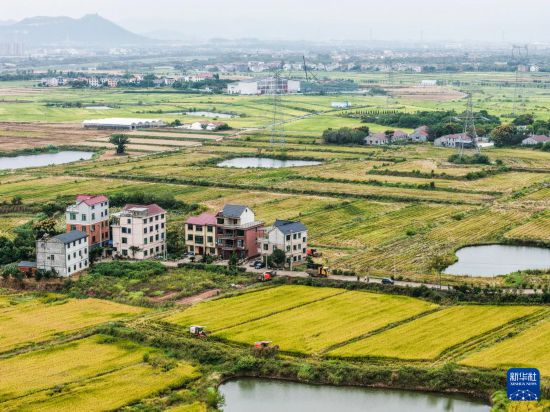
浙江金华:万亩良田示范区迎丰收
Xin Hua Wang· 2025-10-23 00:50
Core Insights - The article highlights the successful implementation of the "multi-field combination" project in Tangya Town, Jindong District, Jinhua City, Zhejiang Province, which has led to the mechanization and automation of rice harvesting across over 10,000 acres of permanent basic farmland [2] Group 1: Agricultural Innovation - The "multi-field combination" project has integrated over 70,000 acres of fragmented farmland, achieving a 100% combination rate [2] - This innovative approach aims to enhance food security by systematically advancing the spatial layout of farmland, high-standard farmland, and grain production functional areas [2] Group 2: Mechanization and Efficiency - The entire process from breeding to harvesting in Tangya Town has been fully mechanized and automated, showcasing advancements in agricultural technology [2] - The use of harvesting machines during the peak rice harvesting season demonstrates the efficiency gained through these technological improvements [2]

风雨之下稳粮仓——河南农业生产的“韧性密码”
He Nan Ri Bao· 2025-10-22 23:51
Core Insights - The agricultural resilience of Henan province is crucial for food security in China, especially given the challenges posed by extreme weather conditions [5][15] - The introduction of high-yield and drought-resistant crop varieties, such as Zhengmai 1860 and Qiuye 368, has significantly improved crop yields despite adverse weather [6][8] - Technological advancements in farming practices and machinery are enhancing the efficiency and effectiveness of agricultural operations in Henan [10][13] Agricultural Resilience - Henan's agricultural sector faces severe challenges due to extreme weather, including droughts and floods, impacting food production [4][15] - The province has implemented strategies to enhance agricultural resilience, focusing on the development of drought-resistant and flood-resistant crop varieties [5][15] - The introduction of advanced breeding techniques has led to the creation of high-yield varieties that can withstand extreme weather conditions [6][7] Crop Varieties and Yields - Zhengmai 1860 has shown impressive yields, with an average of 766.4 kg per mu in demonstration fields, outperforming traditional varieties [6] - Other varieties like Qiuye 368 and MY73 have also demonstrated strong resistance to adverse weather, contributing to stable yields [7][8] - The promotion of these resilient crop varieties is accelerating the modernization of Henan's corn industry [8] Technological Innovations - The integration of smart irrigation systems and precision farming technologies is improving water management and crop monitoring [11][12] - The deployment of advanced machinery, such as tracked harvesters, has proven effective in adverse weather conditions, facilitating timely harvesting [13][14] - The establishment of a multi-layered technological support system is aiding farmers in adopting modern agricultural practices [10][11] Infrastructure and Support - Henan has invested in irrigation infrastructure, with over 56.94 billion cubic meters of water allocated for agricultural use [11] - The province has also enhanced its disaster response capabilities, with a focus on preemptive measures and improved water management systems [17] - Financial support for farmers has increased, with over 178.27 billion yuan in loans provided to support agricultural operations [18] Challenges and Future Directions - Despite advancements, there are still gaps in the availability of specialized crop varieties that can withstand extreme weather [15] - The integration of smallholder farmers into modern agricultural practices remains a challenge, as many still rely on traditional methods [16] - Ongoing efforts to strengthen the agricultural disaster response system and improve post-harvest infrastructure are essential for enhancing food security [18]

“四良”融合绘出好丰景
Jing Ji Ri Bao· 2025-10-22 22:10
Core Insights - The article highlights the transformation of agricultural practices in Yongfeng Village, Sichuan Province, emphasizing the integration of high-standard farmland construction, seed innovation, and advanced farming techniques to achieve stable and increased grain production [1][2][3]. Group 1: Agricultural Practices and Innovations - Yongfeng Village has experienced a significant increase in rice yield, with farmers reporting an average yield of 1,400 jin per mu, attributed to high-standard farmland construction and the adoption of new agricultural technologies [1]. - The introduction of a trial platform for new rice varieties and advanced planting techniques has played a crucial role in enhancing both the yield and quality of rice [1][2]. - The application of various agricultural technologies has led to a 20% to 30% increase in production efficiency, along with a 10% to 20% improvement in fertilizer and water utilization rates [2]. Group 2: National Agricultural Strategy - The Chinese government has established a plan to enhance grain production capacity by over 100 billion jin by 2030, focusing on technological integration and optimizing agricultural structures [2]. - The plan emphasizes the importance of land and seed management, promoting a combination of high-standard farmland, quality seeds, and advanced farming practices to improve grain supply quality [2][3]. - The overall contribution of agricultural technology advancements to production has reached 63.2%, with over 75% mechanization in crop farming and a seed coverage rate exceeding 96% [2].
科学田管充实“赣中粮仓”
Jing Ji Ri Bao· 2025-10-22 22:09
Core Insights - The agricultural sector in Nanchang is experiencing a bountiful harvest, with rice yields expected to exceed 1,000 kilograms per mu due to advanced farming techniques and technologies [1][2] - The implementation of precision agriculture and mechanization has significantly improved efficiency and productivity in rice farming [1] - Government support through subsidies and insurance policies has bolstered rice production and quality [2] Group 1: Agricultural Practices - The use of mechanized harvesting and advanced technologies such as drone spraying and precision fertilization has enhanced the efficiency of rice production [1] - The integration of high-quality seeds and advanced cultivation techniques has led to increased rice yields, with some varieties producing up to 1,200 jin per mu [1] Group 2: Government Support - Nanchang city has implemented a subsidy of 18 yuan per mu for early rice production, laying a solid foundation for late rice planting [2] - A total of 5.71 million yuan has been allocated for autumn grain production initiatives, including comprehensive insurance policies for rice farming [2]
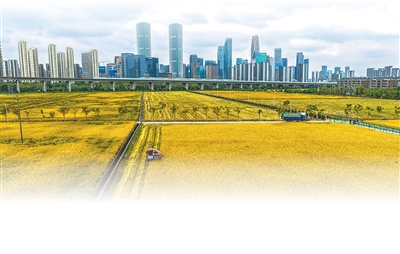
风吹稻浪 城市田园
Ren Min Ri Bao· 2025-10-22 22:02
Core Insights - The article highlights the successful harvest of rice in the agricultural area of Xiaoshan District, Hangzhou, Zhejiang Province, covering over 3,000 acres, showcasing a harmonious blend of urban and rural landscapes [4]. Agricultural Development - The region, previously a collection of urban villages and factories, has been transformed into a grain production area through urban renewal efforts, which included land consolidation and infrastructure improvements [4]. - The area employs a "rice-wheat" rotation model, with rice being the primary crop in the first half of the year and wheat in the second half [4].
广东湛江台风灾后恢复工作基本完成——有效救灾减损 全面复工复产
Ren Min Ri Bao· 2025-10-22 21:57
Core Points - The impact of Typhoon "Maidum" on Zhanjiang has been significant, with approximately 1.9573 million people affected and direct economic losses estimated at around 11.11 billion yuan [1][2] - Recovery efforts have been swift, with local authorities and agricultural departments mobilizing resources to assist in damage assessment and restoration of production [2][3] Group 1: Typhoon Impact - Typhoon "Maidum" is noted as the strongest typhoon to hit Guangdong this year, causing extensive damage in Zhanjiang [1] - The city experienced significant disruptions, but no casualties were reported due to effective pre-emptive measures [1] Group 2: Recovery Efforts - Local government established five disaster recovery teams to assess damage and guide recovery efforts, including coordinating insurance claims and advising on production resumption [1][2] - The agricultural sector has been proactive, with over 23,000 acres of mature crops harvested before the typhoon, and recovery efforts for over 700 acres of banana plantations underway [2] - Power supply restoration was prioritized, with the local power company employing a combination of manual and drone inspections to ensure rapid recovery of electricity services [2][3] Group 3: Community Involvement - Over 910 volunteer teams and more than 10,000 party members participated in recovery efforts, focusing on clearing debris and repairing infrastructure [3] - All 383 ongoing key projects and 741 industrial enterprises in Zhanjiang have resumed operations following the typhoon [3]
金秋农忙正当时
Yang Shi Wang· 2025-10-22 18:27
Core Viewpoint - The Ministry of Agriculture and Rural Affairs reports that as of October 21, nearly 80% of the autumn grain harvest has been completed, indicating a busy agricultural season across the country [1] Group 1 - The current agricultural season is characterized by a bustling atmosphere in various regions, with multiple measures being implemented to ensure a successful autumn grain harvest [1] - The efforts being made are aimed at laying a solid foundation for next year's production [1]
抢收抢种同步推进 2500余台农机护航 连云港海州多举措打响“三秋”攻坚战
Yang Zi Wan Bao Wang· 2025-10-22 11:03
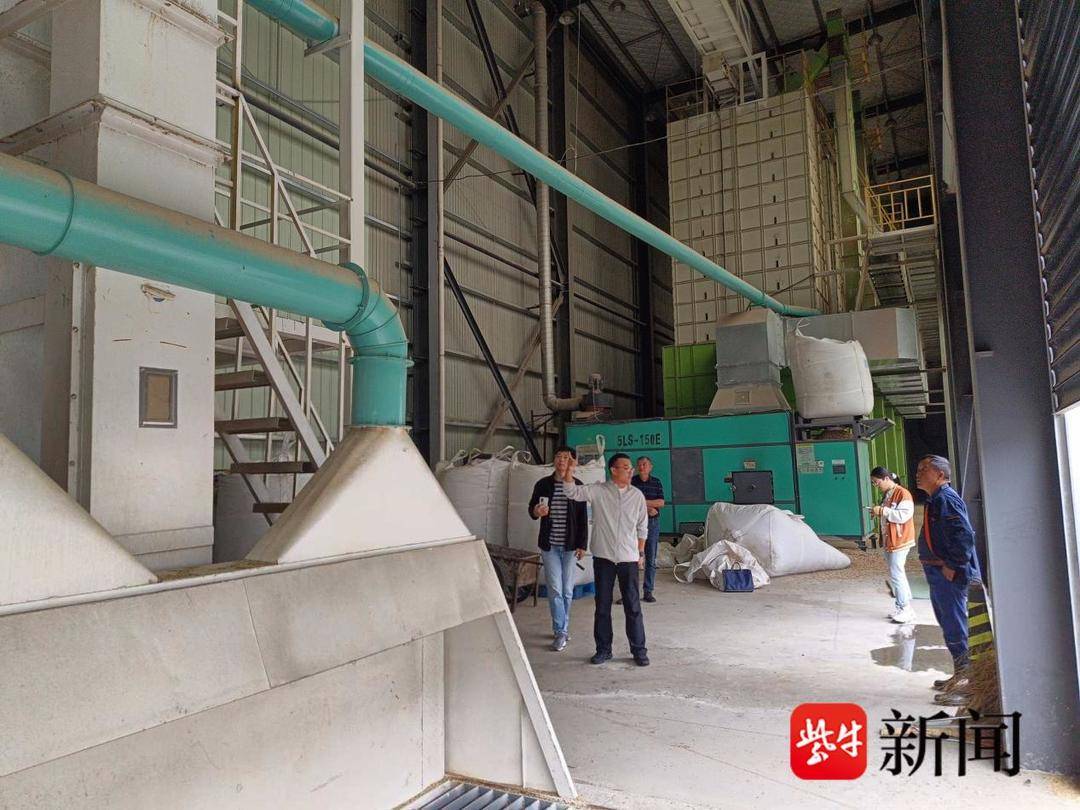
Group 1 - The current "Three Autumns" production is in a critical phase, with continuous rainy weather adversely affecting the harvesting, drying, and storage of autumn grain [2] - The Haizhou District has rapidly deployed measures including meteorological warnings, agricultural technical guidance, and machinery support to ensure a successful autumn harvest [2] - As of October 20, 2023, 4.06 million mu of the expected 33.96 million mu of autumn grain has been harvested, with full completion expected by mid-November [2] Group 2 - Haizhou District is simultaneously advancing the harvesting of corn and soybeans while planting winter wheat, utilizing integrated machinery operations for efficiency [4] - The district has prepared over 2,500 agricultural machines, including 1,432 harvesters and 687 tractors, to support the "Three Autumns" production [4] - To mitigate the risk of grain spoilage due to wet conditions, the district has established 31 grain drying centers and has a drying capacity of 6,226 tons per day with 137 dryers [4]

柴桑区建设高标准农田 “赣”出好成绩
Yang Shi Wang· 2025-10-22 09:35
Core Viewpoint - Jiangxi Province is a significant agricultural region in China, with a focus on high-standard farmland construction to ensure food security and enhance agricultural productivity [1][11]. Group 1: Agricultural Production - Jiangxi Province is one of the 13 major grain-producing areas in China, with a total grain output exceeding 43 billion jin for 12 consecutive years, projected to reach 43.92 billion jin in 2024 [1]. - The province ranks third in the nation for rice production, highlighting its importance in the agricultural sector [1]. Group 2: High-Standard Farmland Construction - The construction of high-standard farmland is a key strategy for ensuring national food security, with a goal to build 1.35 billion mu of high-standard farmland by 2030 [1]. - As of now, Jiangxi has built 30.9435 million mu of high-standard farmland, accounting for 75.5% of its total arable land [1]. Group 3: Local Initiatives and Benefits - In Liu Cang Village, high-standard farmland construction has led to the consolidation of fragmented land, improved irrigation systems, and the establishment of access roads for agricultural machinery [2]. - The rental fee for farmland has increased from approximately 300 yuan per mu to over 600 yuan per mu after the implementation of high-standard farmland [2]. - The use of organic fertilizers and improved farming practices has increased rice yields from around 900 jin per mu to between 1,000 and 1,200 jin per mu [5]. Group 4: Technological Integration - The introduction of smart agricultural practices in tea gardens has allowed for multiple harvests throughout the year, increasing annual income from 17 million yuan to 23 million yuan [6]. - The implementation of water and fertilizer integration systems in tea gardens has enhanced productivity and profitability [6]. Group 5: Community Impact - The establishment of collective agricultural companies has enabled local farmers to collaborate, leading to increased efficiency and profitability, with collective earnings reaching 5.54 million yuan in 2024 [10]. - The high-standard farmland initiative has contributed to rural revitalization, providing community services such as free medical care and meals for the elderly [10].
