新材料

Search documents
天宜新材:部分募集资金投资项目延期
2 1 Shi Ji Jing Ji Bao Dao· 2025-12-26 10:07
Core Viewpoint - The company, Tianyi New Materials, announced a delay in the expected completion of two key projects due to financial and operational challenges [1] Group 1: Project Details - The "Carbon-Carbon Material Product Line Automation and Equipment Upgrade Project" has a planned fundraising investment amount of 269.76 million yuan, sourced from the proceeds of the initial public offering [1] - The "High-Performance Carbon-Ceramic Brake Disc Industrialization Construction Project" has a planned fundraising investment amount of 1.16 billion yuan, sourced from a private placement of shares [1] Group 2: Reasons for Delay - The delay is attributed to certain fundraising accounts being frozen by the court or restricted by banks, impacting the payment for the projects [1] - The actual investment for the "Carbon-Carbon Material Product Line Automation and Equipment Upgrade Project" has exceeded the original plan, with some equipment still pending delivery [1] - The company has entered a pre-restructuring phase, leading to uncertainties regarding future business directions and the implementation of fundraising projects [1] Group 3: Implications - The delay in these projects may result in a further slowdown in investment progress, potentially affecting the company's main business and overall fundraising arrangements [1] - The company will fulfill its approval and information disclosure obligations in accordance with the progress of the restructuring [1]
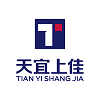
硬科技突围:产业攻坚、资本加持,共建科创生态圈
第一财经· 2025-12-26 09:58
Core Viewpoint - The article discusses the opportunities and challenges faced by hard technology companies in the context of the new technological revolution and industrial transformation, emphasizing the importance of capital market support for technological innovation and the collaborative efforts needed among various stakeholders [1][5]. Group 1: Hard Technology Development - Hard technology is seen as a core engine for cultivating new productive forces, benefiting from policy support and capital market innovations during the "14th Five-Year Plan" period [1]. - The capital market is increasingly supportive of technology innovation, with policies aimed at enhancing inclusivity and adaptability, allowing for more flexible mergers and acquisitions [5][6]. - Companies like Srei New Materials and Hai Tian Rui Sheng are actively exploring opportunities in high-growth sectors such as aerospace, medical imaging, and AI, leveraging their technological capabilities to drive industry upgrades [9][10]. Group 2: Investment Strategies - Investment institutions are focusing on long-term capital and risk-sharing mechanisms to build a healthy ecosystem for hard technology, emphasizing the importance of patience and collaboration [3][4]. - The investment strategy involves targeting sectors with long-term growth potential, such as GPUs, while balancing investments between early-stage and mature projects to ensure both short-term returns and long-term value [11][15]. - The selection of investment projects is based on criteria such as product strength, market penetration, and the quality of management teams, with a focus on sustainable growth rather than short-term gains [12][16]. Group 3: Challenges and Solutions - Companies face challenges such as varying technology iteration speeds, stringent customer certification standards, and competition from international high-end material firms [13][14]. - To address these challenges, companies are developing comprehensive systems for commercial culture, collaborative research, and operational adaptability to align with current political and economic trends [14][15]. - The need for high-quality data and compliance in international operations is highlighted, with a focus on deep collaboration with industry experts to ensure the creation of valuable data sets [10][15].


“五链融合”促创新,培育新增长点
Qi Lu Wan Bao· 2025-12-26 09:33
Group 1 - The core viewpoint of the news is that Jining High-tech Zone is committed to promoting high-quality development through industrial innovation and technological advancement [2] - The economic operation bureau of Jining High-tech Zone prioritizes industrial economy as the "number one project" and emphasizes technological innovation as the core driving force for new industrialization [2] - The integration of five chains: innovation chain, industrial chain, education chain, talent chain, and financial chain is highlighted as essential for building a modern industrial system [2] Group 2 - The establishment of innovation platforms and promotion of technological breakthroughs in key industries such as high-end equipment, healthcare, and new materials is a focus area [2] - Collaboration between enterprises and educational institutions is encouraged to enhance industry-academia-research cooperation, leading to the creation of provincial-level R&D centers and digital economy innovation centers [2] - The Jining High-tech Zone has secured 54 provincial-level technology innovation projects this year, demonstrating a commitment to deepening school-enterprise cooperation and facilitating the transformation of technological achievements [3] Group 3 - The acceleration of digital empowerment and the promotion of digital upgrades for enterprises are key initiatives, particularly in traditional sectors like high-end equipment and biomedicine [3] - The introduction of the "industry brain + future factory" model aims to foster a gradient cultivation system from intelligent transformation to smart factories, enhancing the integration of the real economy with the digital economy [3] - The establishment of nine provincial-level digital economy innovation platforms is intended to forge new economic growth engines and actively cultivate new growth points [3]
唯特偶:与华睿欣能签署战略合作协议 将共建联合实验室
Zheng Quan Shi Bao Wang· 2025-12-26 09:04
Core Viewpoint - The company, Weiteou, has signed a strategic cooperation agreement with Shenzhen Huairuixin Energy Investment Holding Group to leverage its advantages in new material development and production, aiming to enhance both parties' core competitiveness and industry influence [1] Group 1 - The strategic cooperation focuses on the development of new fire extinguishing products, elastic armor coatings, flame retardant materials, and microelectronic assembly materials [1] - The collaboration aims to establish a joint laboratory to promote product co-development and application scenario expansion [1] - The partnership intends to drive regional and industry standard upgrades, enhancing the competitive edge of both companies [1]
博云新材龙虎榜数据(12月26日)
Zheng Quan Shi Bao Wang· 2025-12-26 08:57
Group 1 - The stock of Boyun New Materials closed flat today with a turnover rate of 37.02% and a trading volume of 2.71 billion yuan, showing a fluctuation of 10.90% [1] - Institutional investors net bought 56.66 million yuan, while brokerage seats collectively net sold 172 million yuan [1] - The stock was listed on the Dragon and Tiger list due to its turnover rate, with the top five trading departments accounting for a total transaction of 533 million yuan, where the buying amount was 209 million yuan and the selling amount was 324 million yuan, resulting in a net sell of 115 million yuan [1] Group 2 - In the past six months, the stock has appeared on the Dragon and Tiger list five times, with an average price drop of 0.35% the next day and an average drop of 9.84% over the following five days [2] - The stock experienced a net outflow of 230 million yuan in main funds today, with a significant outflow of 215 million yuan from large orders [2] - The latest margin trading data shows a total margin balance of 288 million yuan, with a financing balance of 288 million yuan and a securities lending balance of 617,000 yuan, indicating a recent increase in financing balance by 5.18 million yuan, or 1.84% [2]

唯特偶(301319.SZ):与华睿欣能签署战略合作协议
Ge Long Hui A P P· 2025-12-26 08:52
Group 1 - The core viewpoint of the article is that Weiteou (301319.SZ) has signed a strategic cooperation agreement with Shenzhen Huairuixin Energy Investment Holding Group Co., Ltd. to leverage each other's strengths in new material development and production [1] - The partnership aims to focus on collaborative product development and application scenario expansion, establishing a joint laboratory to enhance both parties' core competitiveness and industry influence [1] - The agreement emphasizes the principles of resource complementarity, collaborative empowerment, and win-win cooperation, with a shared vision of preventing disasters and enhancing safety [1]
刚刚,重大利好来了!
天天基金网· 2025-12-26 08:27
12月25日至26日,全国工业和信息化工作会议在京召开。会议强调,2026年要围绕实现"十五五"良好开 局,聚焦重点、抓住关键,突出抓好十个方面重点工作。其中包括,培育壮大新兴产业和未来产业。打造集成 电路、新型显示、新材料、航空航天、低空经济、生物医药等新兴支柱产业。支持人工智能攻关。有序开展卫 星物联网等新业务商用试验。 值得关注的是,在A股市场上,商业航天概念股近期持续大涨。12月26日,相关概念股继续活跃,神剑股 份、九鼎新材、佳缘科技、航天发展、永鼎股份等20多只个股集体涨停或涨超10%。其中,神剑股份收获7连 板,九鼎新材4连板。12月26日午后,中国卫星也封死涨停,录得3连板,总市值逼近1000亿元。 上天天基金APP搜索777注册即可领500元券包,优选基金10元起投!限量发放!先到先得! 商业航天、新材料等产业,又迎来利好消息! 工信部:打造集成电路、新材料、航空航天等新兴支柱产业 12月26日下午,据工信部消息,12月25日至26日,全国工业和信息化工作会议在京召开。会议强调,2026 年要围绕实现"十五五"良好开局,聚焦重点、抓住关键,突出抓好十个方面重点工作。 其中包括,培育壮大新兴产 ...

工信部:推进AI+制造专项行动,培育一批重点行业智能体
Nan Fang Du Shi Bao· 2025-12-26 08:17
Core Insights - The conference highlighted the expected growth in telecommunications and software business revenues by approximately 9% and 12% respectively for 2025, with digital industry revenue also projected to grow by around 9% [1] - The manufacturing sector is undergoing a transformation, with significant increases in high-tech and equipment manufacturing value added, and the establishment of numerous advanced smart factories and green factories [1] - The meeting outlined ten key focus areas for 2026, emphasizing the cultivation of emerging industries such as integrated circuits, new materials, and artificial intelligence [2] Group 1 - The total telecommunications business volume and software business revenue are expected to grow by 9% and 12% respectively in 2025 [1] - The value added of high-tech manufacturing and equipment manufacturing increased by 9.2% and 9.3% year-on-year [1] - The core AI industry has surpassed 1 trillion yuan, and exports of new energy vehicles have exceeded 2 million units [1] Group 2 - The conference set a focus on nurturing emerging industries, including integrated circuits, new displays, and aerospace [2] - There is a strong emphasis on the deep integration of information technology and industrialization, with initiatives to create high-quality industry data sets and digital transformation scenarios [2] - The meeting also stressed the importance of improving industry governance efficiency and curbing low-price, low-quality competition [2]
工信部发声!打造集成电路等新兴支柱产业
Zhong Guo Zheng Quan Bao· 2025-12-26 08:14
Group 1 - The conference emphasized the cultivation and expansion of emerging and future industries, including integrated circuits, new displays, new materials, aerospace, low-altitude economy, and biomedicine, while supporting artificial intelligence initiatives and orderly commercial trials for satellite IoT [1][2] - Key focus areas for 2026 include consolidating the industrial economy's stable growth, enhancing the resilience and security of industrial chains, and accelerating technological innovation capabilities in industries [1][2] - The conference outlined ten priority areas for development, including optimizing traditional industries, promoting green and low-carbon industrial development, and fostering deep integration of information technology and industrialization [2][3] Group 2 - The conference highlighted the importance of creating national emerging industry development demonstration bases and building innovative industrial clusters, as well as advancing key innovation tasks in future industries [2] - It was noted that by 2025, the telecommunications business volume and software business revenue are expected to grow by approximately 9% and 12% respectively, with digital industry revenue also projected to increase by around 9% [3] - The conference reported significant growth in high-tech manufacturing and equipment manufacturing, with respective increases of 9.2% and 9.3% year-on-year from January to November [3]
硬科技突围:产业攻坚、资本加持,共建科创生态圈
Di Yi Cai Jing· 2025-12-26 08:12
Core Insights - The article discusses the collaborative efforts of policy, industry, and capital to promote high-quality development in the hard technology sector, emphasizing the opportunities and challenges faced by companies in this field [1][4]. Group 1: Policy and Market Environment - The "14th Five-Year Plan" encourages the capital market to support technological innovation, enhancing the inclusivity and adaptability of market systems [4]. - The capital market's support for technology innovation has become a long-term policy direction, with ongoing institutional innovations aiding the development of tech enterprises [4]. Group 2: Company Strategies and Developments - Srei New Materials, a company focused on new material R&D, has expanded its operations into various sectors, including rail transportation and aerospace, emphasizing technological iteration and industrial upgrading [6][11]. - Hai Tian Rui Sheng is focusing on high-quality training data for AI applications, leveraging industry expertise to maintain technological leadership [6][7]. Group 3: Investment Strategies - Investment institutions are increasingly focusing on long-term capital and risk-sharing mechanisms to foster a healthy ecosystem for hard technology [3][5]. - Oriental Fortune prefers investing in sectors with long-term growth potential, such as GPUs, rather than saturated markets, and emphasizes the importance of team quality in project selection [9][14]. Group 4: Challenges and Solutions - Companies face challenges such as varying technology iteration speeds and stringent customer certification standards, necessitating a robust operational framework to navigate these issues [11][12]. - Compliance with international regulations is a significant hurdle for companies expanding overseas, requiring thorough legal preparations before engaging with foreign clients [12][13].