Robotics

Search documents
机器人大世界来了
Xin Lang Cai Jing· 2026-01-15 18:26
Core Insights - Chengdu is accelerating in the field of embodied intelligence, with the opening of the "Robot World" platform, which showcases nearly a hundred robot products from both domestic and international sources [1] Industry Overview - The "Robot World" platform, which is the first core carrier of the embodied intelligence robot ecosystem in China, officially opened on December 5, 2025, in Chengdu's Jinjiang District [1] - The platform has already received over 80 groups from government and enterprises, along with approximately 4,000 visitors from the public within just over a month of its opening [1]


OpenAI Seeks US-Based Suppliers for Planned Robotics, AI Device Push
Yahoo Finance· 2026-01-15 16:36
Core Viewpoint - OpenAI is expanding its hardware supply chain in the US and seeking partners for consumer devices, robotics, and cloud data centers, indicating a significant product expansion in the coming years [1][4]. Group 1: Hardware Supply Chain and Partnerships - OpenAI has issued a request for proposals from US manufacturers for components like silicon, motors, packaging materials, and cooling gear for data centers, although spending details and timelines are not disclosed [2]. - The company plans to invest trillions of dollars in data center expansions, linking this strategy to revenue growth [4]. - OpenAI has acquired an AI device startup co-founded by Jony Ive, aiming to enter the consumer device market, and has partnered with Foxconn to design and manufacture hardware for US data centers [4]. Group 2: Robotics and AI Development - OpenAI's interest in robotics partners indicates a more aggressive move into this sector, with expectations that the robotics industry will grow rapidly [6]. - The company believes that while China currently has hardware advantages, the US may excel in developing the AI capabilities of machines [6]. Group 3: Data Center Innovations - The request for proposals includes ideas for preventing AI chips from overheating, a concern for startups and industrial firms [7]. - Nvidia's upcoming chip generation may reduce the need for traditional cooling equipment, potentially impacting companies that manufacture such products [7].
「机器人+」高瓴创投领投!机器人租赁成资本新焦点,擎天租上线三周完成种子轮融资
Hua Xia Shi Bao· 2026-01-15 14:40
Core Insights - The robot rental platform "Qingtian Rent" has quickly gained attention in the market, completing its seed round of financing just three weeks after launch, indicating strong investor interest in the service and application layer of the robotics industry [2][3] - The platform aims to address the "last mile" challenge in robot commercialization by offering flexible, on-demand rental services rather than traditional one-time sales [2][4] Financing and Investment - Qingtian Rent's seed round was led by GL Ventures, with participation from Fosun Capital, Muhua Innovation, Dafeng Fund, and Zhangjiang Group's Intelligent Company [3] - The funds will be used for national market expansion, platform technology and service system development, and deep collaboration with local governments and industry ecosystems [3] Market Potential - The robot rental market is projected to reach at least 10 billion yuan this year, reflecting a significant growth opportunity [2] - The platform has already registered over 200,000 users and maintains an average of over 200 rental orders per day, showcasing rapid adoption [5] Business Model and Services - Qingtian Rent's model transforms robots into flexible production factors that can be quickly deployed and paid for based on performance, rather than being sold outright [4] - The platform also offers additional services such as robot customization and collaboration with content production teams, enhancing its value proposition [4] Strategic Goals - The company aims to connect with over 10 robot manufacturers, develop 200 premium service providers, and serve 400,000 rental customers by 2026, establishing a nationwide robot service network [7] - Plans are in place to expand the service network to 200 cities within the year, making robot services as accessible as utilities [7] Competitive Landscape - The rental model is expected to mirror the growth trajectory of the drone industry, where rental services became popular before widespread adoption in other sectors [5] - Qingtian Rent is positioning itself as a neutral third-party platform, aiming to include various robot brands and avoid exclusivity, although challenges in compatibility and service standards remain [6]
Primech AI Concludes CES 2026 With Strong Enterprise Engagement and Global Demand Signals for Hytron
Globenewswire· 2026-01-15 13:07
Core Insights - Primech Holdings Ltd. showcased its autonomous restroom cleaning robot, Hytron, at CES 2026, attracting significant interest from enterprise facility operators and strategic partners, indicating strong commercialization momentum in the U.S. market [1][6] Group 1: Event Participation and Recognition - CES 2026 featured over 4,100 exhibitors and 148,000 attendees, highlighting the event's scale and competitiveness, where Hytron received multiple third-party validations [3] - Hytron was awarded the TechRadar Pro CES Picks Award for its commercial readiness and potential to enhance hygiene operations in high-traffic environments [4] - The robot was included in a curated CES floor tour segment on Havas Super Stream, gaining visibility across various international media platforms [4] Group 2: Product Demonstrations and Capabilities - Live demonstrations of Hytron showcased its AI-powered navigation and cleaning technology, achieving over 99% bacterial reduction, appealing to sectors like healthcare and hospitality [5] - The demonstrations engaged decision-makers from various industries, emphasizing the need for scalable solutions to address labor shortages and rising operational costs [5] Group 3: Lead Generation and Market Engagement - Primech captured over 350 qualified leads from 23 countries, primarily from senior enterprise decision-makers, reflecting strong interest in Hytron's capabilities and U.S. commercialization strategy [6] - Discussions during CES focused on proof-of-concept pilots and commercial rollout strategies, indicating Hytron's readiness for market adoption [6] Group 4: Strategic Developments and Future Plans - Recent milestones for Primech include a $4 million strategic investment from WELLE Environmental Group and a commitment for a 200-unit fleet deployment with Swan Hygiene Solutions [7] - The company plans to begin mass production of Hytron in Q1 2026 and is actively engaging enterprise customers for pilot programs and preorders [7]

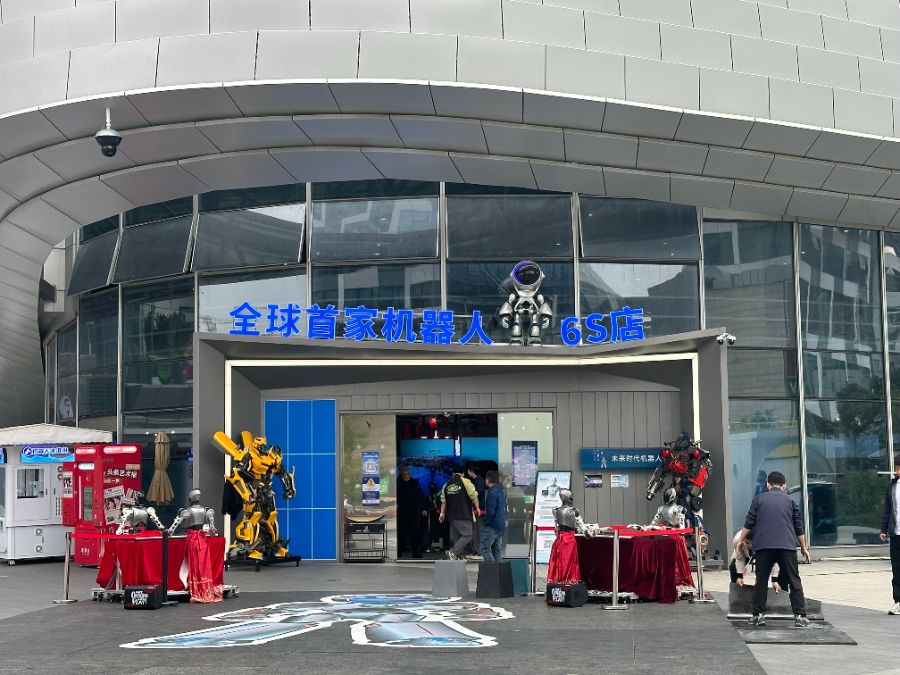
全国首家机器人6S店营业额已达2000万元
21世纪经济报道· 2026-01-15 12:10
Core Viewpoint - The article highlights the rapid growth of Shenzhen's "first store economy," particularly focusing on the emergence of technology-driven retail spaces, such as the world's first robot 6S store, which has generated significant consumer interest and revenue [1][3]. Group 1: Robot 6S Store Performance - The world's first robot 6S store has achieved a total revenue of 20 million yuan within six months of opening and has signed contracts for six franchise stores, attracting approximately 300,000 customers, with over 30% being international visitors [1][3]. - The store operates under a unique 6S model, which includes leasing and customization services, providing a comprehensive lifecycle service system for robots [3][6]. Group 2: Technology First Stores - Shenzhen has seen a surge in technology first stores, with an average of one new store opening daily from 2022 to 2024, showcasing the city's commercial vitality and innovation capabilities [1][3]. - The article mentions various technology first stores, including a humanoid robot-themed store that integrates AI robots into the retail experience, enhancing customer interaction and service [3][6]. Group 3: Impact on Consumer Behavior - Technology first stores are becoming key drivers of foot traffic and consumer spending, with the humanoid robot-themed store attracting over 2,000 visitors daily, doubling on weekends [8][10]. - These stores are effective in targeting high-net-worth individuals and young families, significantly increasing customer dwell time by 1-2 hours [10][11]. Group 4: Industry and Market Dynamics - The introduction of technology first stores is facilitating the connection between technology, industry, and consumer markets, accelerating the adoption of innovative products like 3D printers and robots [11][12]. - The article emphasizes the need for continuous innovation and adaptation in the retail landscape, as many technology first stores face challenges in sustaining operations due to high costs and market readiness [15][16]. Group 5: Government and Market Support - The Shenzhen government is actively promoting the first store economy, aiming to add over 1,000 new stores within the year and providing financial incentives for brands to establish a presence in the city [16][18]. - Market players are also collaborating to enhance the consumer experience, integrating technology stores with other retail formats to create a more engaging shopping environment [16][18].
机器人6S和3D打印店 正在催生新零售场景
2 1 Shi Ji Jing Ji Bao Dao· 2026-01-15 11:17
Core Insights - The first robot 6S store in the world has gained significant attention, achieving a total revenue of 20 million yuan within six months and attracting approximately 300,000 customers, with over 30% being international visitors [5][9]. Group 1: Business Model and Operations - The robot 6S store operates under a unique model that includes leasing and customization, creating a comprehensive service system that differs from traditional retail [11]. - The store has attracted nearly 70 robot brands, showcasing products across various sectors such as home service, medical assistance, and education [10]. Group 2: Economic Impact - The emergence of technology flagship stores in Shenzhen is seen as a vital driver for consumer traffic and economic growth, with the first human-shaped robot theme store attracting over 2,000 visitors daily [17]. - These stores enhance the shopping experience and draw high-value customers, significantly increasing the average time spent in stores by 1-2 hours [20]. Group 3: Industry Trends - The technology retail sector is becoming a key contributor to shopping mall performance, with tech brands achieving 2-3 times the sales per square meter compared to traditional retail [21]. - The introduction of technology flagship stores is expected to bridge the gap between technology and consumer markets, accelerating the adoption of innovative products [22][25]. Group 4: Challenges and Solutions - Despite the initial success, maintaining operations for technology flagship stores is challenging, with a closure rate of over 26% for newly opened stores nationwide [28]. - Shenzhen's government is actively promoting the development of flagship stores, aiming to introduce over 1,000 new stores within the year and providing financial incentives for attracting well-known brands [29][30].
机器人赛道“奇点时刻”来临,如何布局美股隐形冠军?
RockFlow Universe· 2026-01-15 10:31
Core Insights - Physical AI represents the ultimate evolution of AI, with the robotics sector poised for a right-side entry point after three years of underperformance compared to the Nasdaq [3][5] - The robotics ecosystem shows clear value stratification, with the driving layer (e.g., RBC, CW) capturing certainty premiums, the perception layer (e.g., OUST, NOVT) experiencing explosive growth, and companies like Nvidia and Tesla locking in long-term "value-added tax" at the platform layer [3][6] - The recommended strategy is a barbell approach, anchoring investments in the robotics ecosystem with AI giants Nvidia and Tesla while also including stable-margin component stocks like RBC and CW, and speculative perception stocks like OUST [3][6] Investment Timing - The current moment is identified as a singularity for robotics investment, with 2026 expected to be a pivotal year for Physical AI, transitioning from industrial tools to intelligent entities [9][10] - The cost curve for humanoid robots is collapsing, with prices expected to drop significantly due to the scaling effects of core components, enabling broader adoption and investment opportunities [12][13] Value Chain Dynamics - The robotics ecosystem can be divided into three core layers: the driving layer (actuators), the perception layer (sensors), and the integration layer (AI models) [16][22] - Actuators represent the highest cost segment (40%-50%) and are crucial for transforming robots from static machines to active agents, with linear actuators holding significant pricing power [17][18] - The perception layer is evolving from simple visual solutions to complex multi-sensor systems, with companies like OUST and NOVT leading in high-precision sensing technologies [20][21] Investment Recommendations - The focus should be on "shovel stocks" that provide essential components for robotics, which are expected to yield excess profits due to supply-demand imbalances [26][27] - Companies like RBC Bearings, Regal Rexnord, and Curtiss-Wright are highlighted as key players in the robotics supply chain, each with unique technological advantages and strong financial performance [28][29][31] - Nvidia and Tesla are positioned as core components of the robotics ecosystem, with Nvidia's AI platform serving as a foundational element for future developments [42][44]



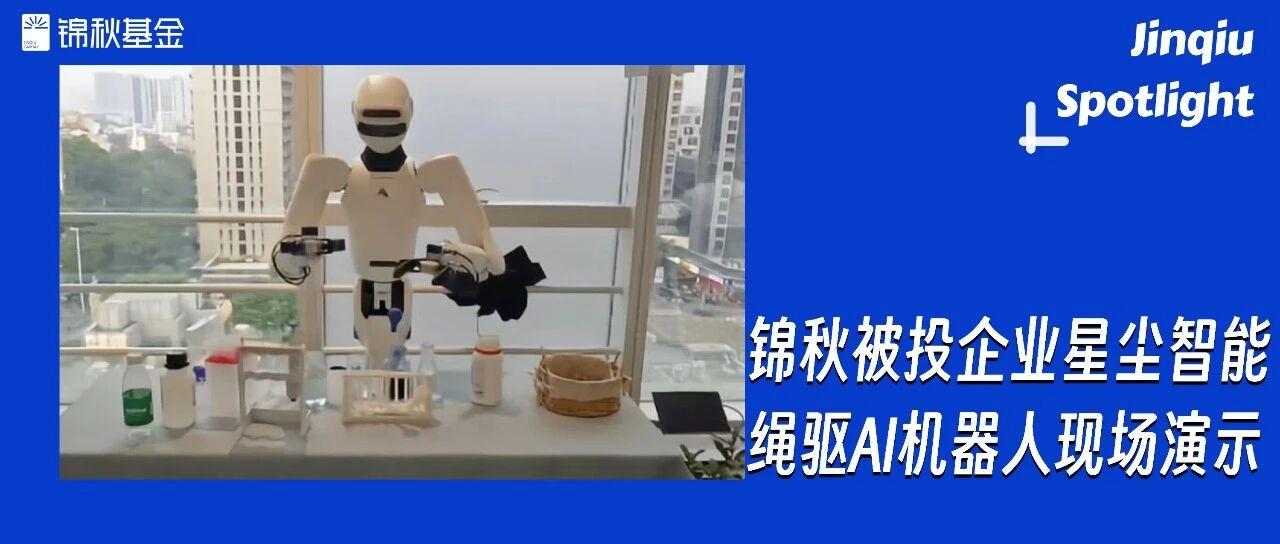
李强总理在广东调研,视察锦秋被投企业星尘智能绳驱AI机器人现场演示|Jinqiu Spotlight
锦秋集· 2026-01-15 10:28
Core Insights - The article highlights the advancements in robotics and AI technology, particularly focusing on the developments by the company Stardust Intelligence, which has created the first mass-produced rope-driven AI robot, the S1, showcasing its capabilities in various applications [4][7]. Group 1: Government Support and Industry Development - Premier Li Qiang emphasized the need to enhance the industrial ecosystem and explore effective business models for new technologies like robotics and drones during his visit to Guangdong [2]. - The demonstration of the S1 robot by Stardust Intelligence received positive feedback from Premier Li, indicating government interest in fostering innovation in the robotics sector [5]. Group 2: Technological Innovations - Stardust Intelligence's S1 robot features a unique rope-driven design that mimics human tendon movement, allowing for high dynamic response, dexterous operation, and safe interaction, making it suitable for complex tasks [7]. - The company has developed an end-to-end visual-language-action model, Lumo-1, which enables the robot to understand commands and make decisions autonomously, enhancing its operational capabilities [7]. Group 3: Market Position and Financial Backing - Stardust Intelligence has secured several thousand orders for its robots across various high-value scenarios, indicating strong market demand and commercial viability [8]. - The company completed a multi-hundred million yuan A++ financing round in November 2025, with continued investment from Jinqiu Fund, reflecting a commitment to supporting innovative AI startups [8].
全球首个生成式通用具身大脑企业眸深智能获天使轮追加投资
机器人圈· 2026-01-15 09:17
近日,全球首个生成式通用具身大脑公司 ——上海眸深智能科技有限公司(下称"眸深智能")完成超千万 人民币天使轮追加投资,投资方为徐汇资本。本轮融资资金主要用于算力采购、工程化团队扩建及机器人 实验平台搭建。同时,公司正式入驻徐汇区人工智能产业核心载体 "模速空间"。 在落地场景规划上,眸深智能明确聚焦工业物流搬运与家庭健康养老两大垂直领域。在工业物流搬运场景 中,模型需满足动态避障、多机协同等核心需求;在家庭健康养老场景,则计划推出从安全监护到肢体辅 助的渐进式服务。 谈及商业模式,陈涛表示,眸深智能立志成为机器人领域的通用 "大脑"供应商,专注于为全球多样化的机 器人本体提供可高效部署的智能核心,而非涉足硬件制造。他认为,具身智能产业生态将朝着分工协作的 方向发展,单一公司难以垄断全栈业务。眸深智能将聚焦"世界动作模型"这一核心层,凭借轻量化、泛化 能力强的技术优势,赋能下游本体厂商与集成商,共同推动物理智能的规模化落地。未来,公司将以"世 界动作模型+端侧+场景"为核心路径,持续推进技术突破与产业融合。 眸深智能成立于 2025年,专注于生成式跨本 体通用具身大脑研发,致力于为人形机器人及多形态物理智 能 ...

井下百万人的安全,产线百万人的重复:他找到了具身智能该去的地方 | 专访
机器人大讲堂· 2026-01-15 09:10
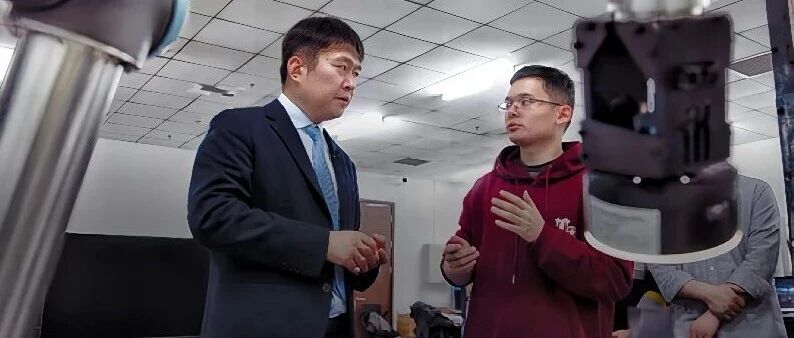
当 "具身智能" 成为科技界最炙手可热的词汇,当人形机器人纷纷从实验室走向聚光灯下的舞台,一位 科学 家出身的 创业者却将目光投向了那些 最 不 起 眼,甚至最危险的角落 ——工厂的质检台和幽深的矿井之下。 他,就是 张正涛,灵宝 CASBOT的创始人兼董事长。 从中国科学院自动化研究所的前沿探索,到工业质检 领域的十年深耕,再到如今具身智能赛道的领 航 , 他 打通了从顶尖科研到产业一线的完整链路, 身上沉淀 着一种贯通理论与实践的独特履历。 这种独特的背景,让灵宝 CASBOT 从诞生之初就刻上了 "聚焦场景落地" 的基因 。在 张正涛的蓝图中,机 器 人 要 从 舞 台 展 示 走 向 产 业 一 线 , 成 为 真 正 创 造 价 值 、 解 放 人 类 的 " 劳 动 者 " 。 今 天 , 他 正 带 领 灵 宝 CASBOT,以 "具身质检" 和 "具身 矿 工" 两大概念为利刃,劈开通往新型工业化的未来之路。 ▍ 20 年产业 长征 :打通从科研到落地的最后一公里 要理解灵宝 CASBOT为何能精准切入工业腹地,必须将时钟拨回到2007年。那时, 作为 中国科学院自动化 研究所 的博士生 ,张 ...