Semiconductor

Search documents
Edgewater Wireless Appoints Wi-Fi Semiconductor Pioneer Rick Bahr as Strategic Advisor
Businesswire· 2026-01-13 12:02
Core Viewpoint - Edgewater Wireless Systems Inc. has appointed Rick Bahr, a prominent figure in Wi-Fi semiconductor technology, as a strategic advisor, indicating the company's commitment to enhancing its expertise in AI-powered Wi-Fi Spectrum Slicing technology [1]. Company Summary - Edgewater Wireless Systems Inc. is recognized as a pioneer in AI-powered Wi-Fi Spectrum Slicing technology, targeting residential, enterprise, and Industrial IoT markets [1]. - The appointment of Rick Bahr, who has a notable background with companies like Atheros and Qualcomm, is expected to strengthen the company's strategic direction and innovation in Wi-Fi technology [1]. Industry Context - The Wi-Fi semiconductor sector is evolving, with increasing demand for advanced technologies that support IoT applications, highlighting the importance of expertise in this field [1].


CES 展会及科技行业更新-Greater China Semi and Tech - Nomura CES conference and tech industry update
2026-01-13 11:56
Summary of Key Points from the Conference Call Industry Overview - The conference focused on the technology sector, particularly the semiconductor and memory markets, highlighting the ongoing supply tightness and its implications for various applications, especially in AI and cloud computing [1][2]. Core Insights - **Memory Supply and Pricing**: There is a significant surge in memory prices, with Sandisk's NAND for enterprise SSDs expected to increase by over 100% quarter-on-quarter in the March quarter [2]. This price increase is driven by strong demand and supply constraints in the memory market [5]. - **AI Demand Divergence**: The demand for cloud AI applications is anticipated to grow significantly, while non-cloud AI applications may experience a decline. This divergence is attributed to uneven supply distribution favoring cloud AI [1]. - **Context Storage as a Bottleneck**: Jensen Huang from nVidia emphasized that as AI models grow, the retention and movement of context data will become critical, shifting the focus from just computing performance (FLOPS) to how context data is managed [3]. - **Incremental NAND Demand**: The introduction of the Inference Context Memory Storage Platform (ICMSP) by nVidia could lead to an incremental NAND demand of approximately 60EB in 2026, representing 10-20% of enterprise SSD demand [4]. Market Sentiment - Investor sentiment is increasingly optimistic regarding the memory upcycle, with a bullish outlook not only on DRAM but also on NAND, which was previously viewed with skepticism [5]. - The semiconductor wafer spot prices are recovering, with expectations of a 5-10% rebound in prices for certain memory makers in the first half of 2026 [14]. Supply Chain Dynamics - **CPO Demand**: The demand for CPO (Chip-on-Panel) version Spectrum-X switches is expected to be strong, with estimates suggesting 2-6 switches per Vera Rubin rack, indicating a positive outlook for the supply chain, particularly for companies like Himax and its partners [8]. - **Competitive Landscape**: Largan is partnering with TSMC to provide future CPO solutions, potentially positioning itself as a competitor to Himax and FOCI in the next generation of CPO technology [9]. Concerns and Risks - There are concerns regarding inventory restocking in non-cloud AI applications, particularly in the smartphone and PC markets, which may lead to weaker demand than previously expected. Global smartphone shipments are projected to decline by 2% year-on-year, with some companies forecasting declines of 10-15% [18]. Conclusion - The technology sector, particularly in semiconductors and memory, is experiencing significant changes driven by AI demand and supply chain dynamics. While there is optimism regarding memory pricing and demand, potential risks in non-cloud AI applications and inventory management could impact overall market performance [1][5][18].

中国半导体-非 AI 交易机会:市场情绪极度悲观 + 短期数据走强-Greater China Semi - Non-AI trading opportunity__ Extremely bearish market sentiment + stronger near-term datapoints
2026-01-13 11:56
Summary of Conference Call Notes Industry Overview - The focus is on the semiconductor industry, particularly non-AI applications and companies like Realtek, Silergy, and others within the technology sector [1][2]. Key Points and Arguments 1. **Market Sentiment and Performance**: - The market sentiment is extremely bearish, but there are stronger near-term datapoints indicating a potential upside for non-AI applications in Q1 2026 [1]. - Non-cloud AI-focused companies have recently outperformed the TAIEX index, driven by sector rotation dynamics [1]. 2. **Inventory Replenishment**: - There is evidence of inventory replenishment activities across various non-cloud AI applications, including PCs and smartphones, which is expected to drive a stronger-than-expected outlook for Q1 2026 [1][2]. 3. **Order Inflows and Trading Opportunities**: - Despite a potentially weaker second half of 2026, there are encouraging prospects for unexpected order inflows in Q1 2026, which could present trading upside opportunities [2]. 4. **Company-Specific Insights**: - **Silergy (6415 TT)**: - Faced challenges in 2025 due to tariffs but is expected to benefit from near-term restocking momentum and consumer subsidies in China [4]. - Likely to beat revenue forecasts for Q4 2025 and Q1 2026 due to earlier pull-in of PCs and subsidies [4]. - Aiming for a structural revenue growth target of 20% year-on-year in the second half of 2026 [4]. - **Realtek (2379 TT)**: - Positioned to exceed Bloomberg consensus sales expectations of 9.5% quarter-on-quarter growth in Q1 2026 [6]. - Recently showcased its SSD controllers at CES, marking a significant milestone despite not expecting substantial revenue contributions from this opportunity [9]. 5. **PC Semiconductor Market**: - Projected global PC shipments to decline by 2.8% year-on-year in 2026, following a growth of 5.8% in 2025 [5]. - Recent industry checks suggest that full-year shipment volumes could be lower than initial projections, but some companies may report a better outlook for Q1 2026 due to inventory restocking [6]. Additional Important Insights - The pricing strategies of competitors like Texas Instruments and Analog Devices may positively influence analog pricing, benefiting companies like Silergy [4]. - The overall structural positive view on AI semiconductors remains consistent, despite the focus on non-AI applications in the short term [2]. Conclusion - The semiconductor industry, particularly non-AI applications, is experiencing a complex landscape with bearish sentiment but potential for recovery driven by inventory restocking and consumer subsidies. Companies like Silergy and Realtek are positioned to capitalize on these trends, while the PC market faces challenges ahead.
台积电:2030 年营收有望达 3000 亿美元
2026-01-13 11:56
TSMC (2330.TW) Earnings Call Summary Company Overview - **Company**: TSMC (Taiwan Semiconductor Manufacturing Company) - **Market Cap**: NT$43,566,640 million (approximately US$1,380,482 million) [6][8] Key Industry Insights - **Revenue Growth**: TSMC is expected to achieve revenue growth of 20-25% in 2026, driven by strong demand from AI datacenters and edge AI applications [1][2] - **Long-term Revenue Target**: TSMC's revenue is projected to reach US$300 billion by 2030, aligning with a long-term CAGR of 20% [1][4] - **AI Revenue Growth**: TSMC anticipates a mid-40s% CAGR in AI revenue by 2029, with potential for upward revision during the upcoming earnings call [9][32] Financial Performance - **Recent Sales**: TSMC reported 4Q25 revenue of NT$1,046 billion, a 6% QoQ increase, surpassing guidance of a 1% decline [4] - **Earnings Projections**: - 2023A: Net Profit NT$838,498 million, EPS NT$32.33 - 2024A: Net Profit NT$1,173,268 million, EPS NT$45.24 - 2025E: Net Profit NT$1,670,190 million, EPS NT$64.40 - 2026E: Net Profit NT$2,200,192 million, EPS NT$84.84 - 2027E: Net Profit NT$2,805,252 million, EPS NT$108.17 [5][8] Capital Expenditure (Capex) - **Capex Guidance**: TSMC's capex for 2026 is expected to be around US$50 billion, with a focus on advanced nodes (N3/N2) and advanced packaging [3][11] - **Capacity Expansion**: TSMC plans to increase N3 capacity by 30% by early 2027 and aims for CoWoS capacity of 1.2-1.3 million wafers in 2026 and 1.8-2 million wafers in 2027 [3][11] Market Position and Competitive Landscape - **Customer Demand**: TSMC is expected to see strong demand from major customers like Nvidia and Google, particularly for AI chips and advanced packaging solutions [11][25] - **Pricing Strategy**: Anticipated price hikes of 5-10% due to technology mix and demand dynamics are expected to positively impact TSMC's gross margins [25][26] Valuation and Investment Outlook - **Target Price**: The target price for TSMC has been raised to NT$2,450 from NT$1,800, reflecting a 45.8% expected return [6][4] - **Investment Recommendation**: The recommendation remains a "Buy" based on strong growth prospects and favorable market conditions [1][4] Additional Insights - **Gross Margin Stability**: Despite potential impacts from foreign exchange and advanced node dilution, TSMC is expected to maintain a gross margin of around 60% throughout 2026 [4] - **Analyst Expectations**: Analysts expect TSMC to provide a positive outlook during the upcoming earnings call, with strong demand for its leading process nodes and advanced packaging business [32] This summary encapsulates the key points from TSMC's earnings call and provides a comprehensive overview of the company's financial health, market position, and future outlook.
World shares are mixed and Tokyo hits a record, tracking fresh highs on Wall Street
ABC News· 2026-01-13 11:01
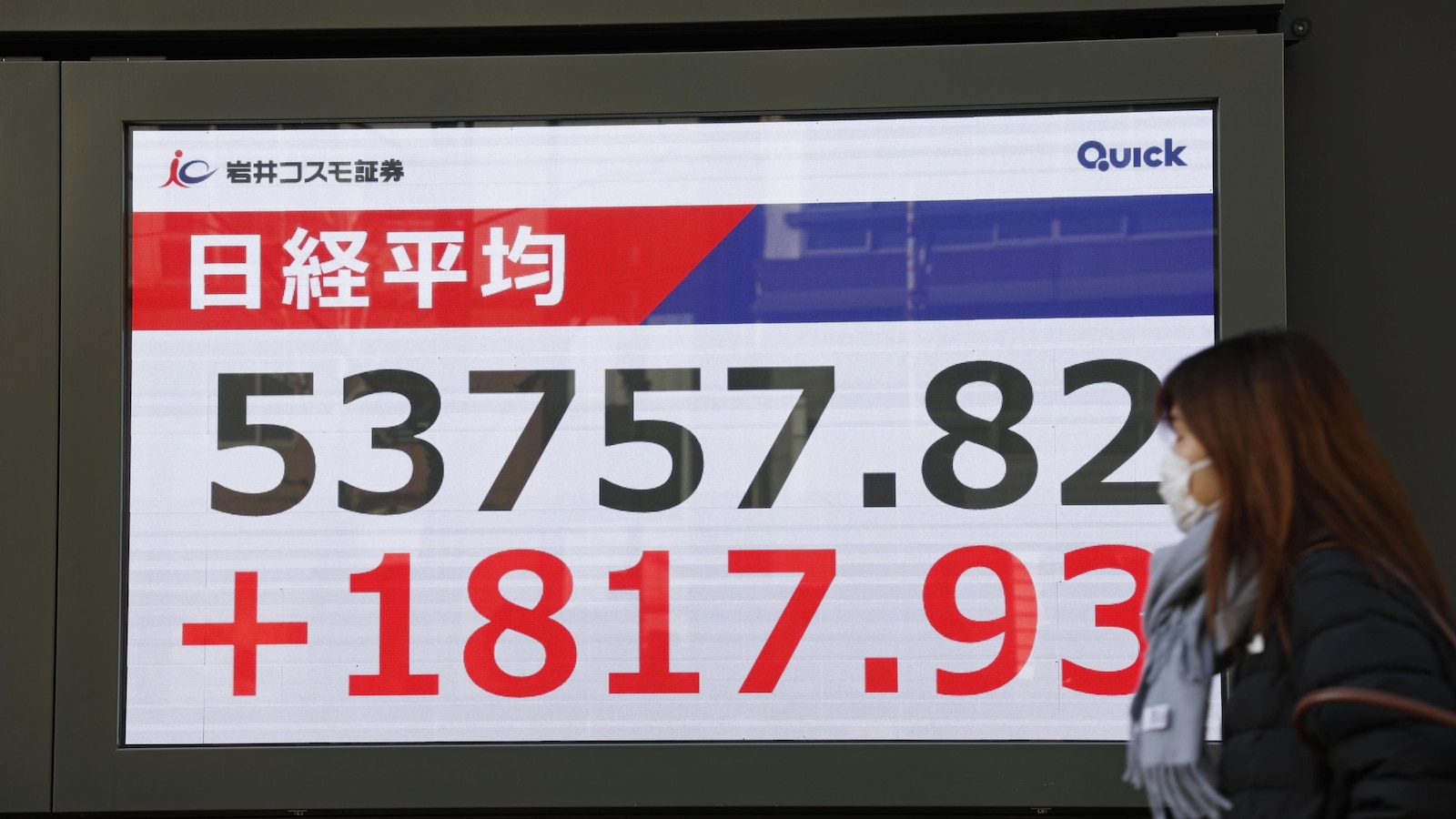
Market Overview - World shares exhibited mixed performance with U.S. futures declining slightly ahead of the U.S. consumer price update [1] - In early European trading, the FTSE 100 rose less than 1% while Germany's DAX and France's CAC 40 fell by 0.2% and 0.5% respectively [2] Inflation and Consumer Prices - U.S. consumer prices are expected to have risen by 2.6% in December compared to the previous year, according to economists' estimates [2] - Inflation pressures are likely to remain high due to increased costs in electricity, groceries, and clothing [3] Regional Market Performance - Asian shares mostly gained, with Japan's Nikkei 225 surging 3.1% to a record close of 53,549.16, driven by technology-related stocks [3] - Hong Kong's Hang Seng index advanced 0.9% to 26,848.47, while shares of GigaDevice Semiconductor jumped 54% in its trading debut [5] - South Korea's Kospi closed 1.5% higher at a record 4,692.64, and Australia's S&P/ASX 200 gained nearly 0.6% [5] U.S. Federal Reserve and Interest Rates - Concerns over the Federal Reserve's independence in setting interest rates were somewhat mitigated by investor expectations of potential rate cuts [6] - Tensions between President Trump and Fed Chair Jerome Powell escalated following a subpoena from the Department of Justice regarding Powell's testimony [7] - Trump has advocated for further interest rate cuts, which could benefit stock prices by lowering borrowing costs [8] Company-Specific Developments - Alphabet, Google's parent company, saw a 1% increase in market value, surpassing $4 trillion, following a deal with Apple to enhance Siri using Google's technology [8] - Credit card companies faced losses after Trump proposed a cap on credit card interest rates, impacting their profit margins [9]

Move Over, AI Stocks: Wall Street Is Likely to Welcome a New Member to the Trillion-Dollar Club in 2026
Yahoo Finance· 2026-01-13 09:11
Group 1: TSMC and AI Demand - TSMC is rapidly expanding its chip-on-wafer-on-substrate capacity to meet the high demand from Nvidia and other competitors, resulting in a significant backlog for AI-accelerated data centers, which is expected to drive sustained double-digit sales growth for TSMC [1] - TSMC reached a $1 trillion market cap in July 2024, largely due to the increasing demand for graphics processing units (GPUs) linked to artificial intelligence [2] - The AI-driven market for software and systems is projected to be worth $15.7 trillion by 2030, benefiting companies like TSMC that are integral to AI hardware and software applications [3] Group 2: Broadcom's Growth and AI Solutions - Broadcom also surpassed the $1 trillion market cap in December 2024, driven by its AI-networking solutions that connect numerous GPUs to enhance their computational capabilities [6][7] - The company is recognized for developing specialty AI chips aimed at hyperscale clients, which is anticipated to significantly boost Broadcom's AI-related sales [8] Group 3: Walmart's Path to Trillion-Dollar Status - Walmart is identified as a strong candidate to become the next trillion-dollar stock, leveraging its extensive history of stock splits and its significant market presence [10][11] - The company's size allows it to purchase products in bulk, enabling competitive pricing against local and national retailers, which enhances its value proposition [12] - Walmart's strategy includes utilizing AI for supply chain management and improving operational efficiency, which is expected to contribute to its growth [15] - The Walmart+ subscription service has driven a 27% increase in global e-commerce sales, positioning it as a key profit driver moving forward [16] - With a current market cap of $913 billion, Walmart requires only a 10% increase to join the trillion-dollar club, supported by various growth catalysts [17]

2026拥抱超级周期的核心资产
Ge Long Hui· 2026-01-13 08:33
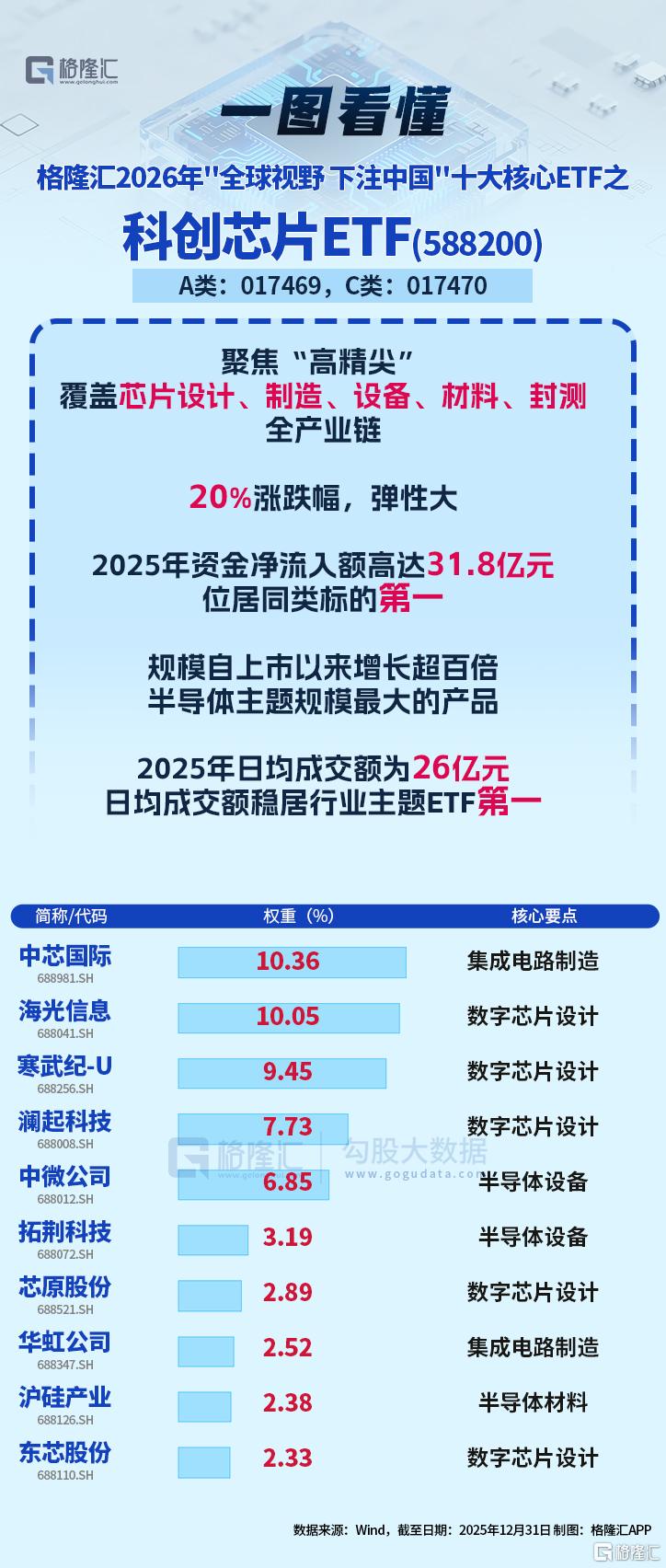
Core Insights - The global semiconductor industry underwent significant changes in 2025, transitioning from chaos to order and from divergence to consensus, driven by macroeconomic policies and the rise of artificial intelligence [1] - The A-share semiconductor sector experienced a recovery trajectory throughout the year, culminating in a strong performance in the second half [1] - The Kexin Chip ETF (588200) emerged as the largest product in the semiconductor theme, achieving a return of 154.35% since its listing, with an annualized yield of 34.88% [1] Industry Overview - The semiconductor industry is at a critical juncture, with AI transitioning from training to inference and domestic substitution moving into deeper waters [1][28] - The Kexin Chip Index has shown a cumulative increase of 69.94% since April 8, 2025, outperforming other semiconductor indices [4] - The market sentiment shifted positively towards semiconductor stocks, with 54% of tracked A-share semiconductor companies achieving record quarterly revenues in 2025 [6][12] Market Performance - The Kexin Chip ETF (588200) has seen significant inflows, with a net inflow of 3.18 billion yuan in 2025 and an average daily trading volume of 2.6 billion yuan [2][24] - The index's constituent stocks demonstrated impressive growth, with a 39% year-on-year revenue increase and a 94% rise in net profit in the first three quarters of 2025 [22] - The semiconductor market is expected to experience double-digit growth for three consecutive years, driven by AI infrastructure and traditional chip demand recovery [14] Investment Opportunities - The Kexin Chip ETF (588200) provides a convenient way to invest in core assets of the semiconductor industry, covering the entire supply chain from design to manufacturing [18][21] - The ETF's liquidity and strong market recognition make it an attractive option for both institutional and individual investors [24][25] - The underlying assets of the ETF include leading companies in the semiconductor sector, such as SMIC and Cambrian, which are positioned to benefit from ongoing industry trends [19][30] Future Outlook - The semiconductor industry is poised for growth, with domestic companies benefiting from increased production capacity and innovation in AI applications [28][30] - The Kexin Chip Index is expected to maintain its status as one of the most growth-oriented indices in the A-share market, capitalizing on trends in AI computing and domestic substitution [30][31]






兴业银行武汉分行:做“看得见的伙伴”,以长期主义赋能新质生产力
Zhong Guo Jin Rong Xin Xi Wang· 2026-01-13 06:52
Core Insights - Technological innovation is identified as the primary driving force for development, with a focus on enhancing the financial strategy and service system to support growth in the technology sector [1] Group 1: Company Development - Xiang Sai Optoelectronics, established in 2011, has focused on achieving self-sufficiency in high-end electronic materials, transitioning from reliance on imports to independent control [2] - The company has successfully integrated into the global semiconductor supply chain, with ambitions to contribute to the localization of upstream materials for the "light-chip-screen-end-network" ecosystem [2] Group 2: Financial Support - Industrial Bank's Wuhan branch has played a crucial role in supporting Xiang Sai Optoelectronics through various financing models, including a significant increase in credit lines to support the company's growth and new production base [2] - The bank has provided tailored financial solutions, such as a 30 million yuan credit loan processed in just three working days for another high-end copper strip manufacturer, demonstrating its commitment to addressing the financing needs of technology enterprises [3] Group 3: Strategic Focus - The bank has identified strategic emerging industries, including information technology, biomedicine, high-end equipment, new energy, and new materials, as core service areas, enhancing financial supply in these sectors [3] - The establishment of technology-focused branches in key innovation zones like Wuhan East Lake High-tech Zone is part of the bank's strategy to foster collaboration and innovation in the technology sector [3] Group 4: Performance Metrics - As of now, the bank has served 17,000 technology enterprises, with a total technology finance loan balance of 38.716 billion yuan [4]

存储价格继续上涨!芯片ETF(159995)跌2.89%,三安光电跌8%
Mei Ri Jing Ji Xin Wen· 2026-01-13 05:49
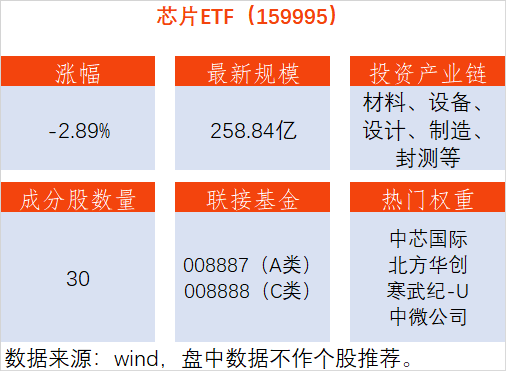
Group 1 - The A-share market experienced a collective decline on January 13, with the Shanghai Composite Index dropping by 0.55%. The biotechnology, education, and cultural media sectors showed positive performance, while aerospace and military, as well as chemical fiber sectors, faced significant declines [1] - The semiconductor sector remained sluggish, with the semiconductor ETF (159995) falling by 2.89%. Notable declines were observed in individual stocks such as Sanan Optoelectronics, which dropped by 8.10%, Loongson Technology by 7.82%, and Cambrian Technologies-U by 6.03%. However, some stocks like Zhaoyi Innovation and Chipone Technology saw increases of 2.24% and 0.55%, respectively [1] Group 2 - Global semiconductor sales are projected to grow by 29.8% year-on-year in November 2025, reaching $75.28 billion, marking 25 consecutive months of positive year-on-year growth. In China, semiconductor sales are expected to reach $20.23 billion, with a year-on-year growth of 22.9% and a quarter-on-quarter increase of 3.9% [3] - The trend of the global AI industry is shifting from model training to inference, which is expected to drive demand for high-performance chips. Domestic cloud service providers' AI computing power center construction plans will further stimulate the demand for SOC chips and other core components [3] - The semiconductor ETF (159995) tracks the National Chip Index, comprising 30 leading companies in the A-share semiconductor industry, including SMIC, Cambrian Technologies, Changdian Technology, and Northern Huachuang [3]


消息称韩国AI芯片企业Rebellions向马斯克xAI交付样品
Sou Hu Cai Jing· 2026-01-13 04:20
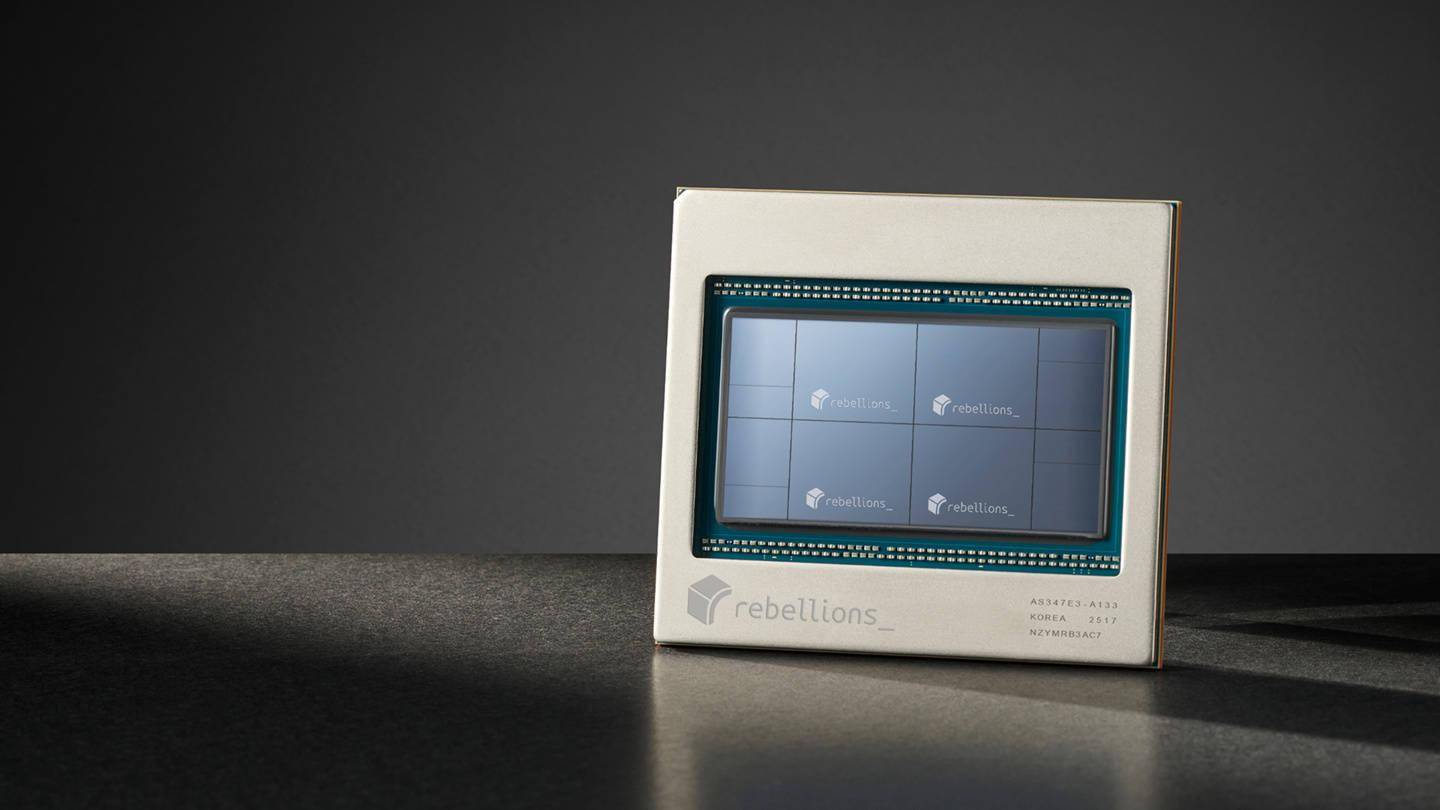
Core Insights - South Korean AI chip company Rebellions has delivered chip samples to Elon Musk's AI "unicorn" xAI [1] - Rebellions has previously supplied ATOM and ATOM Max chips to major domestic tech firms KT Cloud and SKT, and has also completed chip samples for Meta [1] - The latest AI chip from Rebellions is the REBEL-Quad NPU, which was announced last year [1] - Rebellions completed a Series C funding round with a valuation of $1.4 billion in September 2025, and plans to go public in the second half of this year [1]