
电动汽车充电

Search documents
Orion(OESX) - 2026 Q2 - Earnings Call Transcript
2025-11-05 16:00
Financial Data and Key Metrics Changes - Orion reported Q2 2026 revenue of $19.9 million, a slight increase from $19.4 million in Q2 2025, with a gross profit margin rising to 31% from 23.1% year-over-year, reflecting an 800 basis point improvement [8][17] - The net loss improved to $0.6 million or $0.17 per share from a net loss of $3.6 million or $1.10 per share in Q2 2025, indicating better financial performance [17] - Adjusted EBITDA turned positive at $0.5 million in Q2 2026 compared to a negative $1.4 million in Q2 2025, marking the fourth consecutive quarter of positive adjusted EBITDA [17] Business Line Data and Key Metrics Changes - The LED lighting segment revenue decreased by 2% to $10.7 million in Q2 2026 from $10.8 million in Q2 2025, impacted by lower ESCO channel sales despite increased project activity [13] - Maintenance segment revenue increased by 18% to $4.5 million in Q2 2026 from $3.8 million in Q2 2025, benefiting from new customer contracts and expanded existing relationships [15] - EV charging solutions revenue was $4.8 million in Q2 2026, slightly up from $4.7 million in Q2 2025, reflecting the completion of a significant project [15] Market Data and Key Metrics Changes - The Dodge Momentum Index report indicated that commercial, industrial, and public sector construction planning is 33% ahead of year-ago levels, suggesting a positive outlook for the lighting market [6] - The EV charging market outlook improved with the federal declaration of $5 billion in government EV charging funds, boosting confidence in the sector [7] Company Strategy and Development Direction - Orion aims to achieve three milestones in fiscal 2026, including maintaining its NASDAQ listing, implementing a growth profitability and cost containment initiative, and reaching $84 million in revenue with positive adjusted EBITDA for the full fiscal year [4][5] - The company is focusing on expanding its LED lighting distribution business and enhancing its electrical infrastructure offerings, integrating various services to meet customer demands [11][12] Management's Comments on Operating Environment and Future Outlook - Management expressed optimism about sustainable and profitable growth beginning in the second half of the fiscal year, driven by ongoing improvements in cost control and operational efficiency [4][11] - The company anticipates modest growth in LED lighting and electrical maintenance revenues, with flat to slightly lower EV charging revenues for the fiscal year [18] Other Important Information - Orion's total operating expenses declined to $6.4 million in Q2 2026 from $7.7 million in Q2 2025, reflecting ongoing cost control measures [16] - The company issued $1 million of common stock and made $875,000 in cash payments to partially satisfy an earn-out obligation during the quarter [18] Q&A Session Summary Question: What is the outlook for the EV business given recent government clarity? - Management noted an increase in enterprise customers integrating EV charging into their projects, with ongoing expansion in utility programs and infrastructure work [19] Question: Are there plans for geographic expansion in the EV segment? - The company is looking at geographic expansion and has hired personnel to lead efforts in new areas, particularly where EV infrastructure work is prominent [22] Question: Can you clarify the $42 million-$45 million recurring revenue potential? - This figure represents the total over the life of a three-year contract renewal with a major customer [22] Question: What are the expectations for gross margins moving forward? - Management indicated that while improvements are expected, gross margins are likely to remain in the high 20s to low 30s range, depending on revenue mix and sales volumes [24] Question: How much revenue headwind was faced due to the unprofitable maintenance contract? - The headwind from the unprofitable contract was estimated to be less than $500,000, as the company is growing in other areas [29] Question: Is the maintenance business a lead generator for product sales? - Yes, the maintenance business is seen as a lead generator, providing insights and opportunities for additional sales in lighting and EV segments [32]

Wallbox N.V.(WBX) - 2025 Q3 - Earnings Call Transcript
2025-11-05 14:00
Financial Data and Key Metrics Changes - Revenue for Q3 2025 was €35.5 billion, which was below expectations but represented a 2% increase year-over-year [5][31] - Gross margin improved to 39.8%, exceeding the guided range and reflecting a 200 basis point increase from the previous quarter [8][32] - Adjusted EBITDA loss for the quarter was €6.9 million, which was below the guided range but showed an 8% improvement quarter-over-quarter [11][35] - Cash costs, defined as labor costs and operating expenses excluding R&D, decreased by 34% year-over-year [9][34] Business Line Data and Key Metrics Changes - AC sales totaled €22.4 million, accounting for approximately 63% of global revenue, down 16% compared to the previous quarter and down 5% year-over-year [16] - DC sales reached €5.8 million, representing a 34% increase year-over-year and a 40% increase sequentially [18][31] - Software, services, and other categories generated €7.3 million, reflecting an 11% year-over-year increase [20][21] Market Data and Key Metrics Changes - North America contributed €11 million or 31% of total revenue, with a 1318% increase at constant FX compared to the same period last year [15] - The European market contributed €23.6 million or 66% of total revenue, reflecting a 3% increase year-over-year [13] - The Canadian market saw a 49% decline compared to the same period last year, impacting overall performance [15][28] Company Strategy and Development Direction - The company plans to reinforce its sales organization and integrate different sales teams across product segments for improved efficiency [11][39] - A new CEO has been appointed to drive expansion in strategic markets and develop scalable commercial models [11] - The focus remains on restoring revenue growth and achieving profitability through operational efficiency and strategic investments [12][39] Management's Comments on Operating Environment and Future Outlook - Management acknowledged the complex environment characterized by volatile market demand and evolving regulations [12] - The company is well-positioned for growth with a strong brand, complete product portfolio, and efficient organizational structure [12] - Future guidance for 2025 expects revenue in the range of €36 million to €39 million and a gross margin between 38% and 40% [41] Other Important Information - The company reached a standstill agreement with its banking partners to temporarily suspend payments on its €179 million debt [36] - Inventory levels decreased by 34% year-over-year, allowing for more efficient operations [37] Q&A Session Summary Question: Market share trends in Europe - Management indicated that market share varies by product line and country, with stable or increasing shares in countries like Spain, France, and the UK, while some regions like the Netherlands and Italy saw declines [44][46] Question: Announcement regarding €179 million debt - The standstill agreement matures on December 9, and further announcements are expected before that date [48][50]

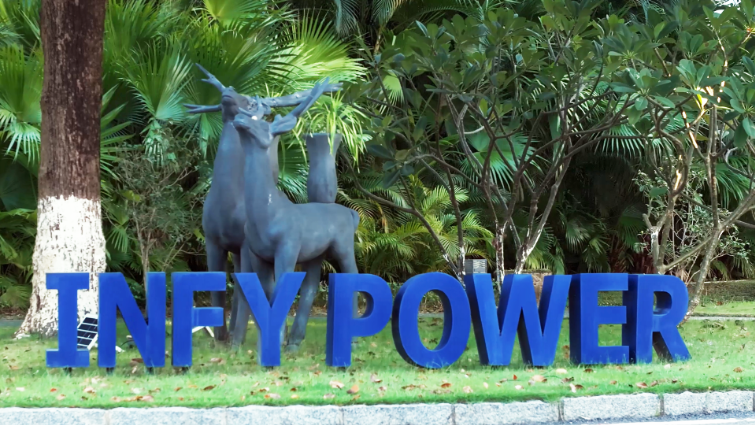
英飞源电动汽车充电模块领域技术获官方认证
Huan Qiu Wang· 2025-11-05 10:12
Core Insights - The Ministry of Industry and Information Technology of China has officially announced the ninth batch of manufacturing single champion enterprises, with Shenzhen Infineon Technology Co., Ltd. being recognized for its technological and market advantages in the electric vehicle charging module sector [1][3] Company Overview - Infineon has established a product ecosystem centered around charging modules, gradually expanding to include charging systems and energy storage solutions [1] - The company has delivered over 4.2 million charging modules globally, serving more than 3,500 customers across over 100 countries and regions [1] - Infineon's high-performance 40kW module holds over 40% market share in its power segment within the domestic market [1] Competitive Advantages - The core competitiveness of Infineon lies in its technological leadership, having entered the V2G (Vehicle-to-Grid) market in 2015 and achieving mass application of V2G modules by 2018, leading in market share within the domestic power grid system [3] - Infineon is one of the early adopters in promoting energy conversion modules based on all-SiC (Silicon Carbide) devices, recognized for high performance and reliability [3] Recent Developments - At a recent international energy storage exhibition, Infineon showcased its unique large-area three-dimensional liquid cooling technology, which effectively controls temperature differences in battery cells, enhancing system charge and discharge efficiency and safety [3] - In the construction of Shenzhen as a "supercharging city," charging equipment equipped with Infineon modules significantly supports the development of the city's new energy infrastructure network [3] Future Prospects - Infineon is actively expanding into a broader system ecosystem, with its China headquarters project expected to be completed by Q4 2025, enhancing its R&D and manufacturing capabilities [3] - The company's energy storage business is projected to double its revenue in 2024, with innovative products like the "Blue Ozean" integrated liquid cooling energy storage system showing promising growth [3] - Infineon is also exploring new models for participating in electricity market transactions through V2G [3] - The company aims to continue driving high-quality industry development through technology [3]

柬埔寨拟投入更多资金在全国主道建设电动汽车充电站
Shang Wu Bu Wang Zhan· 2025-11-03 17:03
Core Viewpoint - The Cambodian government plans to invest more in building electric vehicle charging stations along major roads to reduce environmental pollution and help citizens save costs [1] Group 1: Investment and Infrastructure - The Ministry of Mines and Energy, under the guidance of the government, will expedite funding for the construction of charging stations to ensure all major roads are equipped with fast charging stations for cars and motorcycles [1] - The government aims to reduce the charging time from the current 6 to 7 hours for home charging to just 20 to 30 minutes at charging stations along highways, allowing vehicles to travel 300 to 400 kilometers on a full charge [1] Group 2: Environmental and Economic Benefits - Research indicates that the benefits of using electric vehicles are approximately five times greater than those of fuel vehicles, highlighting significant environmental protection implications [1] - The Ministry of Public Works and Transport plans to lower charging fees from the current range of 1,600 to 1,700 riels and expand the coverage of charging stations to accommodate various vehicle types, achieving "charging anywhere" [1] Group 3: Green Energy and Investment Attraction - The Cambodian government intends to leverage green energy to attract more new investments, catering to the demand from emerging industries, investors, tourists, and the public for sustainable energy solutions [1] - This initiative is expected to contribute to national development and create sustainable job opportunities for the youth [1]
充电设施服务能力“三年倍增”行动蕴含战略深意
Zhong Guo Qi Che Bao Wang· 2025-11-01 04:31
Core Insights - The "Three-Year Doubling" Action Plan aims to establish 28 million charging facilities and exceed 300 million kilowatts of public charging capacity by the end of 2027, addressing structural issues in the current charging infrastructure [1][4] - The plan emphasizes the need for large-power charging technology, which will accelerate the adoption of advanced technologies like liquid-cooled supercharging and intelligent scheduling, leading to a significant transformation in the industry [2][3] - The initiative is not merely about increasing the number of facilities but involves a comprehensive systemic revolution across the entire charging service chain, including construction, management, usage, and integration [3][4] Infrastructure Development - The plan targets a balanced network layout, aiming for at least 14,000 direct current charging points in townships and full coverage in rural areas, addressing the "last mile" issues in charging services [1][2] - The current public charging infrastructure consists of 4.476 million charging guns with an average power of approximately 44.36 kilowatts, highlighting the need for higher power options to reduce charging times significantly [2][3] Economic Impact - Upgrading charging service capabilities is expected to stimulate economic growth by alleviating range anxiety, thereby boosting consumer confidence and unlocking market potential in lower-tier cities and rural areas [3][4] - The plan envisions a collaborative ecosystem involving 30,000 operators, fostering technological advancements and driving the development of upstream and downstream industries related to high-power modules and intelligent operations [3][4] Strategic Importance - The "Three-Year Doubling" plan is a critical step in China's energy strategy transformation, addressing public concerns about charging anxiety while supporting the transition to a new energy system [4] - The initiative reflects China's commitment to global climate governance by promoting intelligent, networked, and green charging infrastructure, ultimately contributing to the realization of carbon neutrality goals [4]
国家能源局:17个省份已开展车网互动规模化应用试点
Xin Hua Cai Jing· 2025-10-31 12:40
Core Insights - The domestic vehicle-grid interaction has effectively "broken the ice," allowing electric vehicles to act as "mobile power banks," enabling low-cost charging and potential earnings from selling electricity back to the grid [1][2] Group 1: Vehicle-Grid Interaction Development - 17 provinces in China have initiated large-scale vehicle-grid interaction pilot applications, aggregating 19.43 million kilowatts of resources and establishing 3,832 bidirectional charging and discharging stations [1] - The rapid adoption of high-power charging facilities, with charging power exceeding 250 kilowatts, has accelerated this year, enhancing the charging speed significantly [1] - As of September 2025, the total number of electric vehicle charging facilities in China is projected to reach 18.063 million, a year-on-year increase of 54.5%, effectively meeting the charging needs of 40 million new energy vehicles [1] Group 2: Charging Infrastructure and Policy Support - During the recent National Day holiday, there were 5.169 million charging instances on highways, with a total charging volume of 123 million kilowatt-hours, reflecting a 45.7% increase in daily charging volume compared to the previous year [2] - The total rated power of public charging facilities nationwide is approximately 200 million kilowatts, a 59.2% increase since the beginning of the year, with average power rising by 26.9% [2] - The rapid enhancement of electric vehicle charging infrastructure is driven by both demand and policy support, including the issuance of various policy documents to promote the construction of high-power charging facilities [2] Group 3: Future Plans and Market Dynamics - A joint action plan has been issued by six ministries, aiming to establish 28 million charging facilities by the end of 2027 to meet the charging needs of over 80 million electric vehicles [2] - The plan encourages fair market competition and supports the development of the private sector in the charging field [2] - Among the top ten charging operators, eight are private enterprises, which manage 70.7% of the public charging stations, indicating their significant role in the market [3]
总数突破1800万个!前三季度电动汽车充电基础设施发展呈现三大成效
Xin Hua She· 2025-10-31 11:29
Core Insights - The total number of electric vehicle charging facilities in China has surpassed 18 million, reaching 18.063 million by the end of September 2023, marking a year-on-year increase of 54.5%, effectively supporting the charging needs of 40 million new energy vehicles nationwide [1][2]. Group 1: Charging Infrastructure Development - The charging service capacity has continuously improved, with the total rated power of public charging facilities reaching approximately 200 million kilowatts, an increase of 59.2% since the beginning of the year, and the average power rising by 26.9% to about 44.4 kilowatts [1][2]. - The number of charging facilities at highway service areas has reached 68,000, contributing to the overall growth in charging infrastructure [1]. Group 2: Technological Advancements - Breakthroughs in new technologies and business models have been achieved, with over 37,000 high-power charging facilities (greater than 250 kilowatts) established, significantly enhancing charging speed [2]. - Smart charging technology has made progress, with 17 provinces conducting large-scale pilot applications for vehicle-grid interaction [2]. Group 3: Policy Support - The National Development and Reform Commission and the National Energy Administration have issued a "Three-Year Doubling Action Plan" for electric vehicle charging facilities, aiming to double the charging service capacity by the end of 2027 [2]. - The majority of the top 10 charging operators in China are private enterprises, with eight of them managing 70.7% of the public charging stations [2]. - Additional policies have been introduced to strengthen safety management and promote the scientific planning of high-power charging facilities, alongside financial support for numerous charging infrastructure projects [2][3].
四川瑞达特来电充电网运营有限公司成立
Zheng Quan Ri Bao Wang· 2025-10-28 09:47
Core Insights - A new company, Sichuan Ruida Telai Electric Vehicle Charging Network Co., Ltd., has been established with a registered capital of 10 million yuan [1] - The company's business scope includes electric vehicle charging infrastructure operations, centralized fast charging stations, motor vehicle charging sales, charging pile sales, sales of new energy vehicle accessories, IoT device sales, internet sales, and information consulting services [1] - The shareholders of the company are Yanjing District Energy Investment Co., Ltd. and Telai Electric New Energy Co., Ltd. [1]
消息 || 我国电动汽车充电基础设施(枪)总数达1806.3万个
Zhong Guo Qi Che Bao Wang· 2025-10-28 01:59
Core Insights - The National Energy Administration released data on electric vehicle charging facilities in September, indicating significant growth in infrastructure [1] Group 1: Overall Growth - As of September 2025, the total number of electric vehicle charging facilities in China reached 18.063 million, representing a year-on-year increase of 54.5% [1] - Public charging facilities accounted for 4.476 million units, with a year-on-year growth of 40% [1] - Private charging facilities totaled 13.587 million units, showing a year-on-year increase of 60% [1] Group 2: Power Capacity - The total rated power of public charging stations reached 199 million kilowatts, with an average power of approximately 44.36 kilowatts per station [1] - The installed electricity capacity for private charging facilities reached 12 million kilovolt-amperes [1]
截至9月底,我国电动汽车充电基础设施(枪)总数达1806.3万
Yang Shi Wang· 2025-10-23 00:13
Core Insights - The National Energy Administration reported significant growth in electric vehicle charging infrastructure in China, with a total of 18.063 million charging points by the end of September 2025, representing a year-on-year increase of 54.5% [1] Summary by Category Overall Infrastructure Growth - Total electric vehicle charging infrastructure reached 18.063 million units, a 54.5% increase year-on-year [1] Public Charging Facilities - Public charging facilities accounted for 4.476 million units, showing a 40% year-on-year growth [1] - The total rated power of public charging stations reached 199 million kilowatts, with an average power of approximately 44.36 kilowatts [1] Private Charging Facilities - Private charging facilities comprised 13.587 million units, marking a 60% year-on-year increase [1] - The installed electricity capacity for private charging facilities reached 120 million kilovolt-amperes [1]