
铁矿石开采

Search documents
多国总统见证世界级矿山投产,中资深度参与
Di Yi Cai Jing· 2025-11-12 05:21
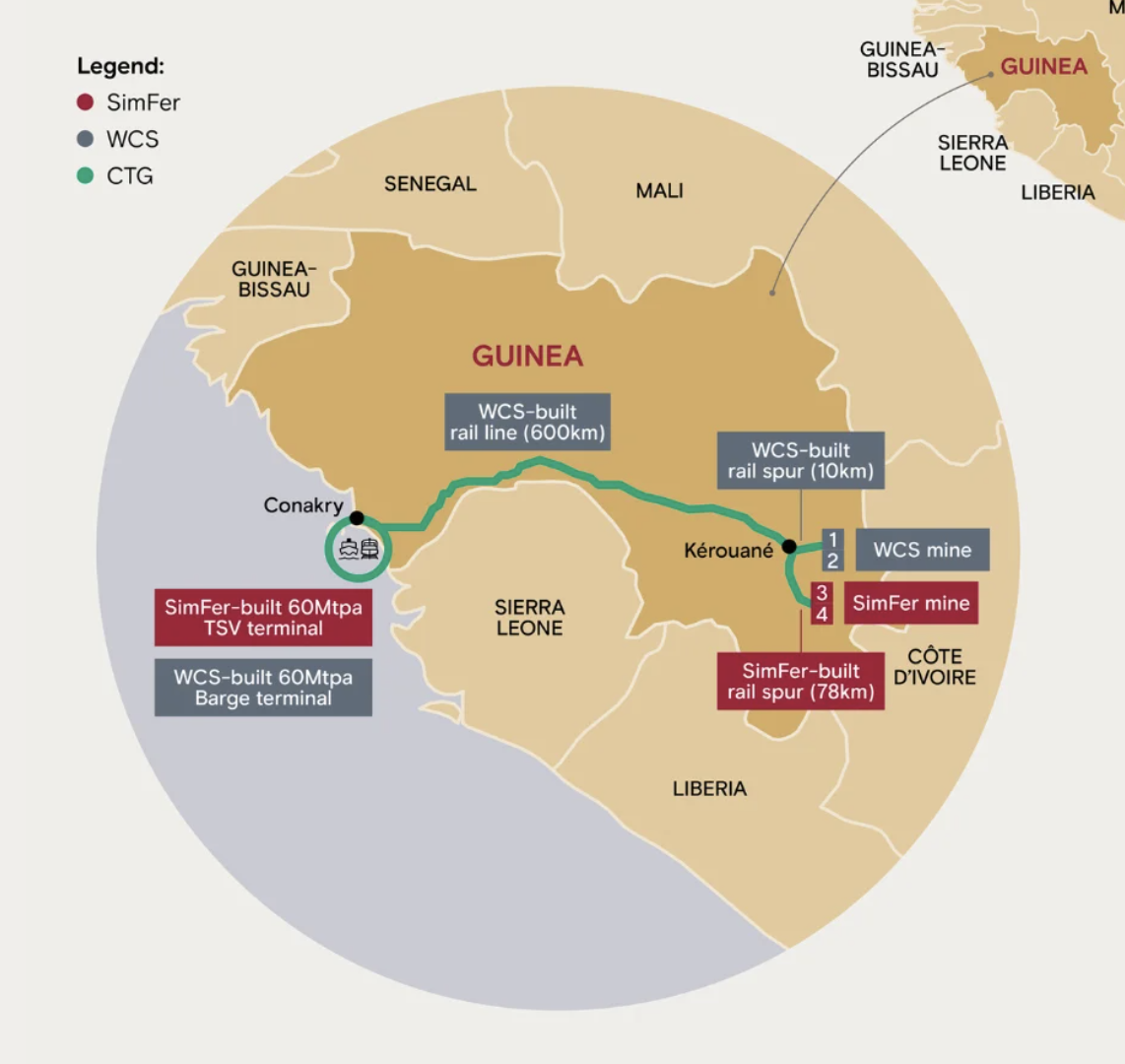
Core Viewpoint - The launch of the Simandou iron ore project in Guinea marks a significant milestone in the global mining industry, with deep involvement from Chinese enterprises, which is expected to influence the iron ore market and pricing dynamics in the future [3][4][7]. Group 1: Project Overview - The Simandou iron ore project is one of the largest and highest quality mining projects globally, with a total investment exceeding $20 billion and proven reserves of 4.4 billion tons, with an average iron content of over 65% [4]. - The project includes mining, railway, and port systems, with a total production capacity of 120 million tons per year once fully operational [4]. - The project is developed by the Guinean government, SimFer, and the Winning Consortium, with the infrastructure and equipment to be operated by the Cross Guinea Company, which is jointly owned by SimFer and Winning Consortium [4]. Group 2: Stakeholders and Ownership - The Winning Consortium consists of Weili International Group, Weiqiao Aluminum, and other companies, holding a collective 51% stake, while Baowu Resources holds 49% [4]. - Simfer Jersey, which holds the rights to the Simandou blocks 3 and 4, is a joint venture between Rio Tinto (53%) and Chalco Iron Ore (47%), with Chalco Iron Ore being led by Chalco Group and including several Chinese state-owned enterprises [5]. Group 3: Market Impact - The involvement of Chinese companies in the Simandou project is expected to significantly impact the iron ore market and pricing, potentially altering the global mining landscape [7]. - The successful operation of the Simandou project will provide a solid green raw material foundation for the steel industry in China and globally [7]. - China's iron ore imports from January to October 2023 reached 1,028.886 million tons, a year-on-year increase of 0.7%, with an average import price of $96.6 per ton [8]. - It is projected that the total iron ore import volume for the year will reach 1.2 billion tons, but domestic crude steel production is expected to continue its slow decline [8].




从“黑色”到“绿色”:铁矿石巨头发力新能源金属和低碳赛道
Sou Hu Cai Jing· 2025-11-12 04:40
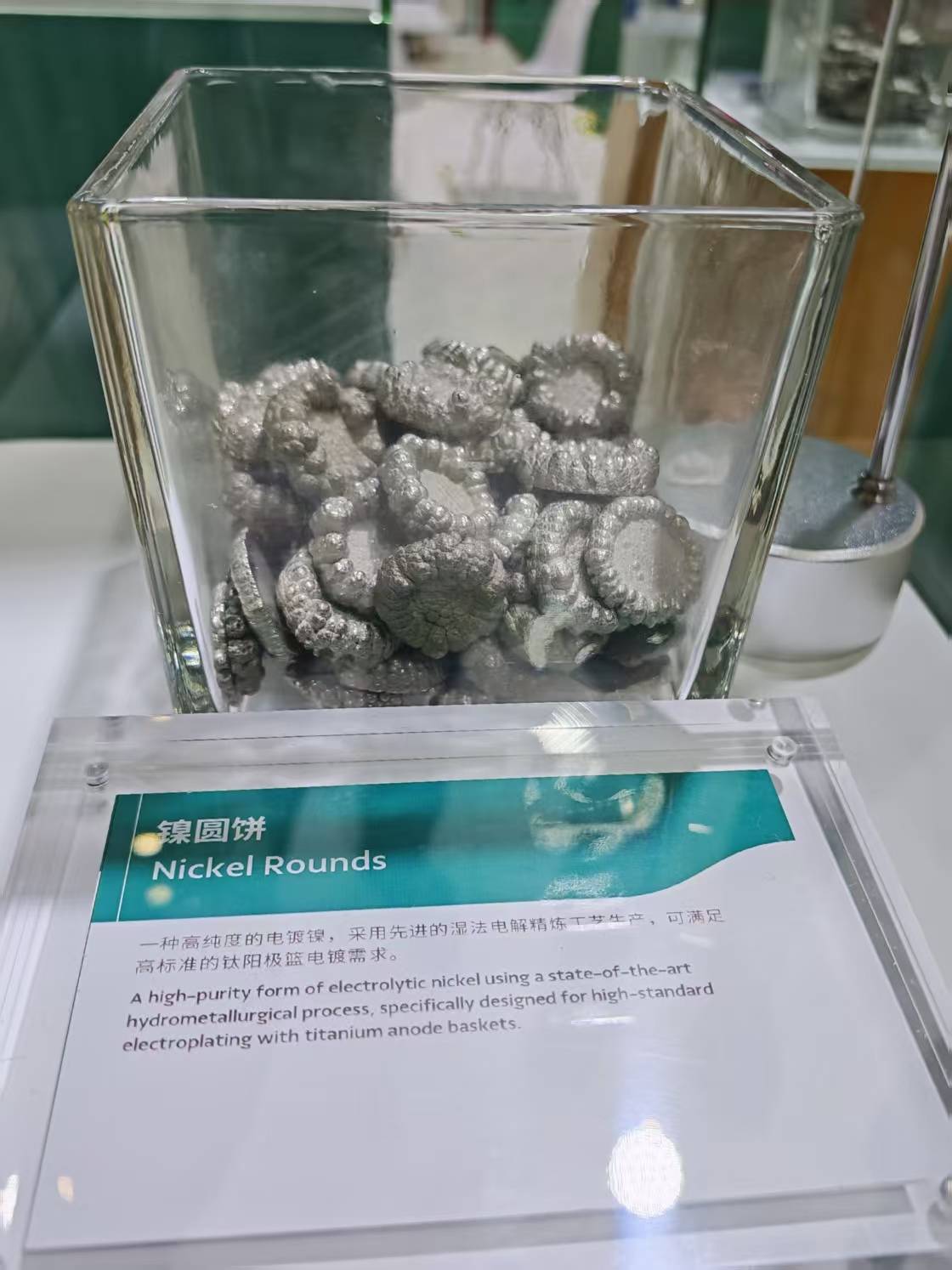
Core Viewpoint - The mining giants showcased their transformation at the recently concluded China International Import Expo, highlighting a shift from traditional iron ore to new energy metals and low-carbon technologies, particularly copper, which is emerging as a key focus for several iron ore companies [1][2]. Group 1: Industry Trends - Major mining companies like Vale, Rio Tinto, and BHP are diversifying their product offerings, moving beyond iron ore to include new energy metals in response to the plateauing demand for steel [2]. - The competition in the industry is evolving from a "black" (traditional) to a "green" (sustainable) focus, with companies exploring ways to produce greener iron ore and assist downstream steel producers in reducing carbon emissions [1][2]. Group 2: Company Strategies - Vale's financial report indicates that iron ore remains its primary product, generating $8.423 billion in net revenue for Q3 2025, while copper and nickel revenues were significantly lower at $1.086 billion and $1.01 billion, respectively [4]. - Vale is also expanding its copper production capacity in Brazil, with plans to increase annual output by 32% to approximately 350,000 tons by 2030, aiming for a long-term target of 700,000 tons [4]. - BHP's interest in copper is evident from its previous attempts to acquire Anglo American for £31.1 billion (approximately $38.8 billion), which would have made it the largest copper producer globally [4]. Group 3: Green Initiatives - Mining companies are increasingly integrating sustainability into their operations, with Vale showcasing its eco-friendly iron ore products that can reduce greenhouse gas emissions from steel production by up to 10% [6][9]. - BHP is utilizing innovative methods to convert carbon dioxide into high-value products, while Rio Tinto is developing technologies that significantly reduce greenhouse gas emissions during aluminum production [9].


西芒杜铁矿项目投产启动仪式举行!世界级大型优质露天赤铁矿,是中国和几内亚两国的重点合作项目
Sou Hu Cai Jing· 2025-11-12 03:44
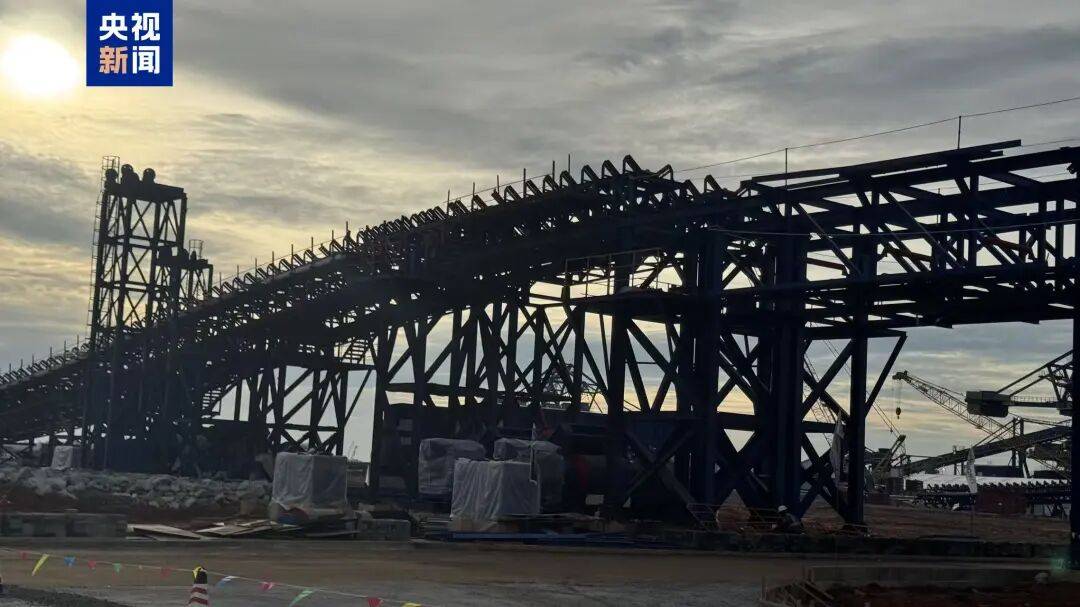
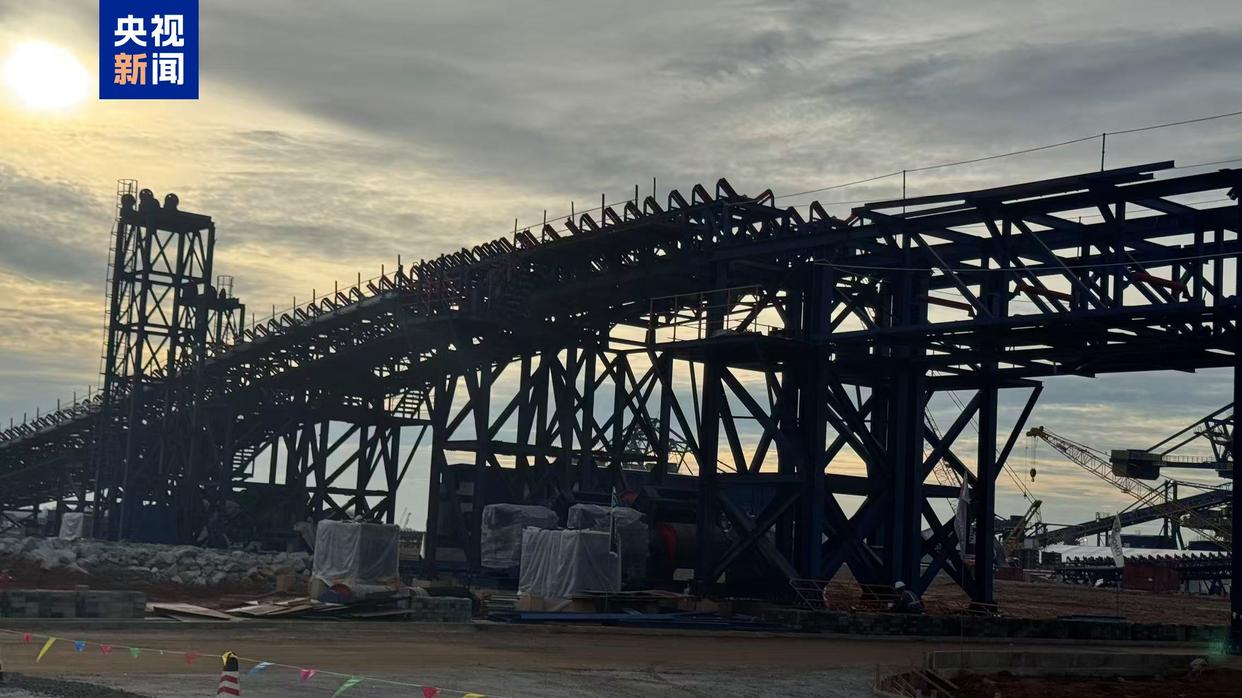
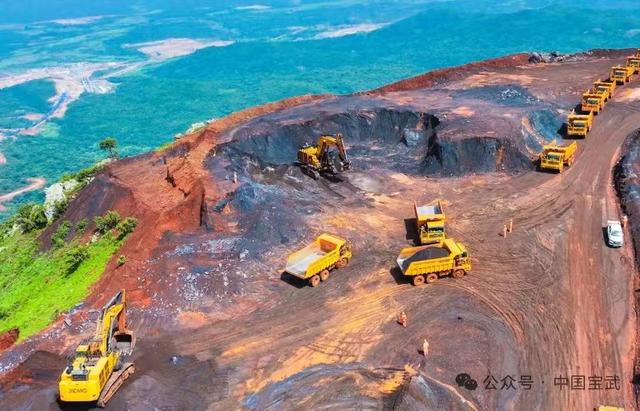
西芒杜铁矿位于几内亚境内东南部,是世界级的大型优质露天赤铁矿。该项目也是中国和几内亚两国的重点合作项目,中国企业在该项目的矿山、铁路、 港口等相关工程建设中发挥了重要作用。 11月10日,外交部发言人林剑介绍,西芒杜铁矿项目即将投产是中、几和有关各方团结协作的重要成果,中方表示热烈祝贺。中方愿同有关各方携手努 力,帮助几内亚人民将资源优势转化为更强的发展动力,实现合作共赢。 来源 | 央视新闻 编辑 | 赵天嫜 当地时间11月11日,西非国家几内亚在马瑞巴亚港举行西芒杜铁矿项目投产启动仪式。 △马瑞巴亚港 监制 | 王子轩 ...
多国总统见证世界级矿山投产,中资深度参与
第一财经· 2025-11-12 03:41
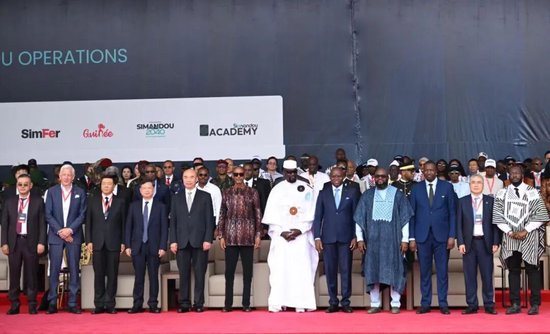
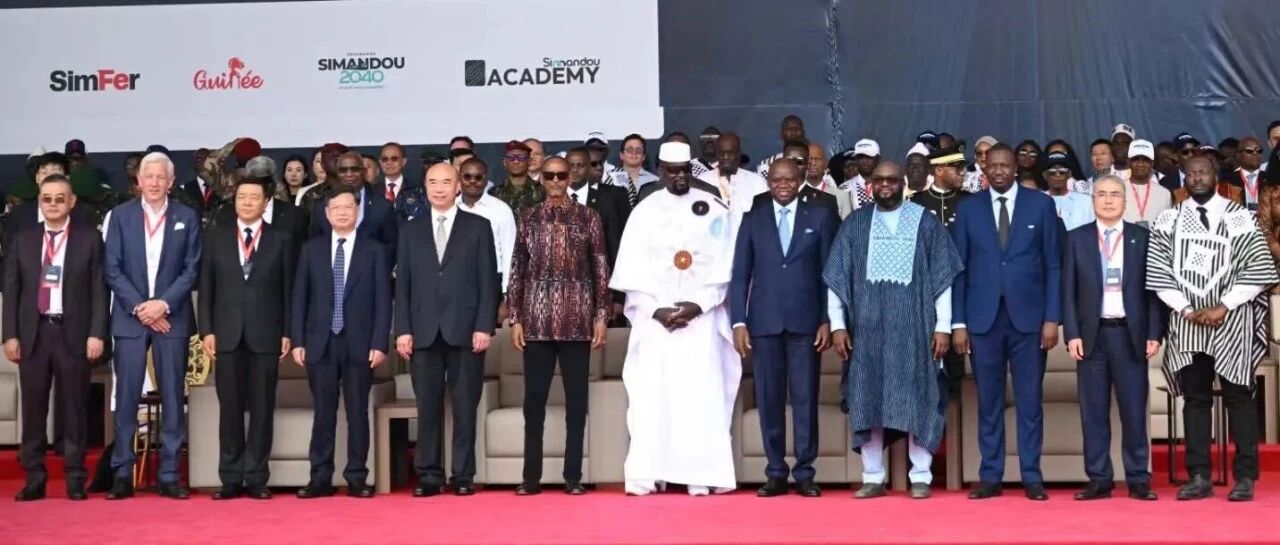
2025.11. 12 本文字数:1406,阅读时长大约2分钟 作者 | 第一财经 陈姗姗 当地时间11月11日,西芒杜项目投产启动仪式在几内亚马瑞巴亚港举行,几内亚总统马马迪·敦布 亚,习近平主席特别代表、国务院副总理刘国中,卢旺达总统卡加梅,加蓬总统恩圭马出席投产仪 式。 多国总统参加一个矿石新项目的投产,在此前极为罕见,也侧面反映出这一世界级矿山项目的重要意 义。 中方深度参与的世界级矿山 位于非洲西部几内亚共和国的西芒杜铁矿项目,是全球质量最优、规模最大的矿山项目之一,工程涵 盖矿山、铁路、港口等系统,总投资逾200亿美元。其中,矿山分为北部、南部两个区块,已探明储 量44亿吨,平均全铁品位65%以上,建成后总产能可达1.2亿吨/年。 目前,矿山、铁路及驳船港口系统基础设施的测试和调试工作正在进行中,部分矿石已开始通过跨几 内亚铁路线从矿区运输至港口。 记者注意到,中国宝武董事长胡望明,中铝集团总经理王石磊以及力拓集团首席执行官乔德(Simon Trott)也参加了投产启动仪式,两家企业也是西芒杜项目的重要股东。 西芒杜项目由几内亚共和国政府、 SimFer和赢联盟 共同开发。项目正式投产后,所有共建 ...
延宕28年后西芒杜项目投产,将重塑全球铁矿格局
Xin Lang Cai Jing· 2025-11-12 03:04
Core Viewpoint - The official production launch of the Simandou iron ore project in Guinea marks a historic moment for the global iron ore market, expected to reshape supply dynamics and enhance the bargaining power of consuming countries like China [3][8]. Group 1: Project Overview - The Simandou iron ore project, known as the "pearl on Guinea's crown," has a mineral reserve of approximately 4 billion tons, making it the largest undeveloped iron ore reserve globally [3][4]. - The project consists of two main blocks, with the northern section acquired by a consortium led by Winning Consortium for $14 billion in November 2019 [4][5]. - The infrastructure development for the Simandou project is set to begin in 2024, with an investment of $6.2 billion allocated for port and railway infrastructure [5]. Group 2: Market Impact - The production of Simandou is expected to alleviate supply constraints in China, which imports about 70% of the world's iron ore, and could meet nearly 10% of China's iron ore import needs with an annual output of 12 million tons [6][9]. - The project will significantly impact global iron ore prices, with expectations of downward pressure due to increased supply amid already high port inventories [10][11]. - The average iron content of Simandou ore is 65%, which is higher than most other iron ores, potentially leading to lower environmental impact during processing [14][15]. Group 3: Economic Implications - The International Monetary Fund predicts that the Simandou project will contribute to a 26% increase in Guinea's GDP by 2030 [16]. - The project is also anticipated to force some high-cost suppliers out of the market due to increased competition and supply [13].
西芒杜将重塑全球铁矿石供应格局
Bei Jing Ri Bao Ke Hu Duan· 2025-11-12 00:39
Core Insights - The commissioning of the Simandou iron ore mine in Guinea is expected to reshape the global iron ore supply landscape, with an initial annual production capacity of 120 million tons [1][2] - Guinea is poised to become the world's third-largest iron ore supplier after Australia and Brazil, potentially altering the supply and pricing structure of iron ore globally [2][3] - The high-grade iron ore from Simandou, with a content of approximately 66%, offers higher smelting efficiency and aligns with the steel industry's need to reduce emissions [1][3] Industry Impact - The development of the Simandou project is anticipated to double Guinea's GDP and create thousands of jobs, fostering economic corridors around railways and ports [3] - The project is a significant milestone in China-Guinea mining cooperation, enhancing Guinea's sustainable and inclusive development [2][3] - The diversification of iron ore imports through Simandou will strengthen China's supply chain security and reduce reliance on Australia and Brazil, enhancing China's bargaining power in the iron ore market [4]

中企参与开发全球储量最大铁矿
Bei Jing Wan Bao· 2025-11-11 23:28
Core Insights - The Simandou iron ore project in Guinea, which is the largest undeveloped iron ore deposit globally, is set to commence production, with an initial annual output of 120 million tons, significantly impacting the global iron ore supply landscape [1][2] - Chinese companies, including China Aluminum and China Baowu, are involved in the development of the Simandou project, which has an estimated iron ore reserve of 4.4 billion tons and a total estimated reserve of 5 billion tons [1][2] Group 1 - The Simandou iron ore has a high grade of approximately 66%, which is significantly above the average of major iron ores worldwide, leading to higher smelting efficiency and reduced metallurgical coal consumption [1] - The project faced challenges in infrastructure development due to natural obstacles, but Chinese companies managed to recover a six-month delay in the construction of the Maribaya port and a modern railway system [2] - The commencement of the Simandou project will enhance the security of China's steel raw material supply chain, reducing reliance on iron ore imports from Australia and Brazil, thus diversifying supply sources [2]
西芒杜铁矿项目投产启动仪式在几内亚举行
Yang Shi Xin Wen· 2025-11-11 15:38
西芒杜铁矿位于几内亚境内东南部,是世界级的大型优质露天赤铁矿。该项目也是中国和几内亚两国的重点合作项目,中国企业在该项目的矿山、铁路、港 口等相关工程建设中发挥了重要作用。 (文章来源:央视新闻) 当地时间11月11日,西非国家几内亚在马瑞巴亚港举行西芒杜铁矿项目投产启动仪式。 △马瑞巴亚港 ...
全球最大未开发铁矿投产,中企助力改写全球矿石供应格局
Bei Jing Ri Bao Ke Hu Duan· 2025-11-11 15:14
Core Viewpoint - Guinea's Simandou iron ore project, which is set to begin production, is expected to reshape the global iron ore supply landscape, with an initial annual output of 120 million tons, making Guinea a significant player in the iron ore market [1][3]. Group 1: Project Overview - Simandou iron ore has proven reserves of approximately 4.4 billion tons, with an estimated total of 5 billion tons, and a high grade of about 66%, significantly above the global average [3]. - The project is backed by Chinese companies, including China Aluminum and China Baowu, and is seen as a strategic partnership that will enhance Guinea's economic development [1][4]. - The successful development of the Simandou project is expected to create thousands of jobs and double Guinea's GDP, transforming its economy from a single-resource dependency [6]. Group 2: Economic Impact - The iron ore production from Simandou will position Guinea as the world's third-largest iron ore supplier after Australia and Brazil, altering the current supply and pricing structure dominated by a few multinational companies [3][4]. - Guinea's mining sector, which contributes about 35% to its GDP, has primarily relied on bauxite; the introduction of iron ore will diversify its economic base [4][6]. - The project is anticipated to strengthen China's iron ore supply chain security, reducing reliance on Australia and Brazil, and enhancing China's bargaining power in the global market [6]. Group 3: Infrastructure Development - Significant infrastructure challenges were overcome, including the construction of a modern railway and port facilities, which are crucial for the project's success [4][6]. - The development of the Maribaya port and the railway connecting Simandou is a testament to China's construction capabilities and has received recognition from the Guinean government [4]. Group 4: Regional Context - The political landscape in West Africa, including recent coups, has created both opportunities and risks for foreign investment, with Guinea's government pursuing a pragmatic economic policy [7][9]. - The historical ties between China and Guinea, established since 1959, have laid a foundation for ongoing cooperation in infrastructure and mining sectors [9].
西芒杜铁矿项目投产 外交部:这是中几和有关各方团结协作的重要成果
Yang Shi Xin Wen· 2025-11-10 09:49
Core Points - The visit of Liu Guozhong, a member of the Political Bureau of the CPC Central Committee and Vice Premier of the State Council, to Guinea and Sierra Leone is aimed at strengthening China-Africa relations and enhancing practical cooperation in various fields [1][2] - The successful conclusion of the 2024 China-Africa Cooperation Forum in Beijing marks a new phase in building a community with a shared future between China and Africa, with significant outcomes already being implemented in Africa this year [1] - The Simandou iron ore project is highlighted as a significant achievement of collaboration between China and relevant parties, with China expressing its willingness to help Guinea leverage its resource advantages for stronger development momentum and achieve win-win cooperation [2]