3D打印
Search documents
快造科技发布Snapmaker U1,京东预售2小时成交破2000台
Xin Lang Cai Jing· 2025-12-18 04:47
据介绍,Snapmaker U1在海外Kickstarter众筹平台曾以2061万美元创下3D打印机品类最高众筹纪录。12 月12日京东独家开启预售2小时内,Snapmaker U1成交便突破2000台,并登顶了京东3D打印类目TOP1 单品。作为创新搭载SnapSwap™独立四头并联系统的彩色3D打印机产品,Snapmaker U1有效解决了传 统单头3D打印的效能瓶颈,真正实现了"5倍高速,5倍省料"。 责任编辑:潘翘楚 新浪科技讯 12月18日午间消息,12月16日至18日,Snapmaker U1 3D打印机亮相位于京东MALL北京双 井店的京东新品超级现场线下新品体验会。 据介绍,Snapmaker U1在海外Kickstarter众筹平台曾以2061万美元创下3D打印机品类最高众筹纪录。12 月12日京东独家开启预售2小时内,Snapmaker U1成交便突破2000台,并登顶了京东3D打印类目TOP1 单品。作为创新搭载SnapSwap™独立四头并联系统的彩色3D打印机产品,Snapmaker U1有效解决了传 统单头3D打印的效能瓶颈,真正实现了"5倍高速,5倍省料"。 新浪科技讯 12月18 ...
爱司凯:公司已完成多头激光金属打印头的联机优化调试,完成了上机零件生产打印测试
Mei Ri Jing Ji Xin Wen· 2025-12-18 04:06
爱司凯(300521.SZ)12月18日在投资者互动平台表示,公司专注于工业化打印产品的技术研发、生产 销售及服务解决方案。公司目前的3D打印设备以砂型打印系列为主,同时,公司已完成多头激光金属 打印头的联机优化调试,完成了上机零件生产打印测试,测试通过后成3D金属打印设备的核心关键部 件,公司的多激光打印头产品将更适用于各类对生产效率及生产成本具备较高要求的应用领域。 (文章来源:每日经济新闻) 每经AI快讯,有投资者在投资者互动平台提问:公司产品是否可以应用在商业航天领域? ...
用3D打印机搞副业,包赚的?
Xin Lang Cai Jing· 2025-12-18 03:57
作者|娅沁 声明|题图来源于网络。惊蛰研究所原创文章,如需转载请留言申请开白。 3D打印,又称增材制造,是一种基于数字模型文件、使用可粘合材料逐层堆叠成实物的技术。简单来 说,只要能在电脑上设计出三维模型,它就能将数字模型变为实物——从精致的手办、实用的家居摆件 到个性化配件,形态几乎不受限制。 最初,3D打印技术主要应用于工业、航天、医疗等专业领域,随后逐步拓展至教育、影视、游戏等行 业。近年来,3D打印走出专业圈层,融入日常生活,成为普通人也可使用的创作工具。 在拓竹、创想三维等国产品牌的推动下,如今3D打印设备价格已下探至千元级别。随着设备操作流程 日益简化、免费模型资源不断丰富,AI建模工具也逐渐普及,使得技术门槛、成本大幅降低。 *本文为惊蛰研究所X新浪财经头条联合出品 如果你逛过周末的创意市集,或许已经注意到,3D打印的摊位正变得越来越常见。曾几何时,3D打印 还只是科技新闻中的热门概念;如今,一台性能不错的入门机型,价格已降至两三千元,甚至千元以内 也有了选择。 亲民的价格、简化的操作,加上丰富的免费模型资源,让越来越多人愿意动手尝试。更有人将其发展为 副业,在市集摆摊、在线接单"代打",或为特 ...
我市27家企业入围2025中国潜在独角兽企业名单——
Nan Jing Ri Bao· 2025-12-18 03:28
近日,长城战略咨询在深圳发布《GEI中国潜在独角兽企业研究报告2025》(以下简称《报 告》)。《报告》显示,南京27家企业上榜,新晋5家,位居全国第九。这些潜在独角兽企业,"潜"力 何在?探究这些企业的上榜"密码",也是在感知和触摸南京的创新脉搏。 "潜"力浮现:创新涌动、活力无限 作为独角兽企业的"后备军",潜在独角兽企业技术含量高、产业模式新、发展潜力大。在全市27家 潜在独角兽企业中,数量排名前三的领域分别为:芯片(9家)、创新药(6家)、新型半导体(3 家)。南京本次新晋的潜在独角兽企业分别是明空航天、铖联科技、奕泰微电子、中茵微电子、迈诺威 医药。这5家企业分布在商业航天、3D打印、芯片和创新药等领域,展现了我市在战略性新兴产业领域 强劲的发展势头。 这些潜在独角兽企业,主要集中在生物医药、集成电路等赛道,这与南京产业强市布局高度契合。 今年3月,南京成立人工智能(软件)、机器人、生物医药、新一代信息通信等4个产业攻坚推进办公 室以及智能电网、智能制造装备、新材料、智能网联新能源汽车、集成电路、低空经济(航空航天)等 6个产业专班,进一步凝聚攻坚突破合力。 今年我市印发《南京市关于加快培育独角兽企 ...
朝闻国盛:收支回落,关注年末冲量力度
GOLDEN SUN SECURITIES· 2025-12-17 23:59
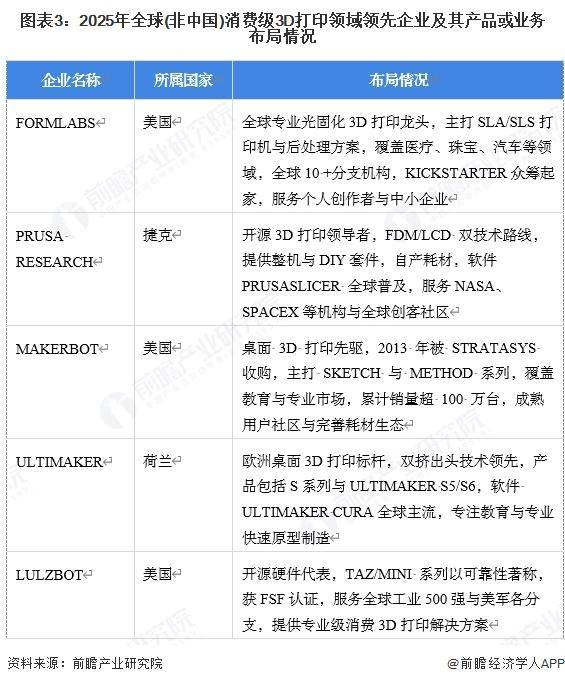
Group 1: Macroeconomic Insights - The report highlights a decline in both fiscal revenue and expenditure in November, with general fiscal revenue growth turning negative and both tax and non-tax revenue growth slowing down [3] - Cumulative fiscal expenditure from January to November was 83.7%, significantly below the seasonal average of 86.7% over the past three years, indicating a slower spending pace [3] - If December's expenditure growth can rise to 10%, the total fiscal revenue for the year could exceed expenditure by approximately 630 billion, potentially creating a surplus to support 2026 spending [3] Group 2: Employment and Monetary Policy - The U.S. non-farm employment data for October and November showed significant volatility, primarily due to government sector disruptions, while the private sector remained stable [4] - The unemployment rate slightly increased, indicating a moderate slowdown in overall employment, yet the resilience of the job market remains strong [4] - Market expectations for interest rate cuts by the Federal Reserve remain unchanged, with a 24% probability of a rate cut in January 2026, suggesting a critical period for monetary policy decisions [4] Group 3: 3D Printing Industry Overview - The global 3D printing market is projected to reach $21.9 billion in 2024, with printers and services accounting for 74% and materials for 20% of the market [7] - The consumer-grade 3D printing market is expected to grow from $4.1 billion in 2024 to $16.9 billion by 2029, with Chinese manufacturers dominating 94% of the global market [8] - Industrial-grade 3D printing is heavily utilized in the aerospace sector, with significant revenue contributions from companies like Plutotech and Huazhu High-Tech, indicating a robust growth trajectory in commercial space endeavors [9] Group 4: Investment Opportunities in 3D Printing - The report identifies key players in the consumer-grade 3D printing market, including TuoZhu Technology and Chuangxiang Sanwei, which are expected to benefit from the industry's accelerated growth [10] - The industrial-grade 3D printing market is also highlighted, with companies like Plutotech and Huazhu High-Tech positioned to capitalize on the increasing demand for advanced manufacturing solutions [10] - The report emphasizes the potential of 3D printing technology in various sectors, including electronics and aerospace, suggesting a broad range of investment opportunities [10]
占全球九成市场份额!深圳3D打印天团“暗战”升级
Nan Fang Du Shi Bao· 2025-12-17 12:52
手机软件一键操作,小至鞋子、潮玩手办,大至跑车、房屋装修器材,生活里能想到的统统"打印"出来 ——消费级3D打印正在以更低门槛、更强体验进入大众视野。 今年9月30日,拓竹科技在深圳湾万象城开出全球首家直营旗舰店:超大3D打印沙盘、由28台打印机协 作"组装"的巨型培养皿、"胶佬空间"和儿童书房、CyberBrick火车环店穿行,现场用可见可玩的方式 把"3D打印生活"具体化。 拓竹科技全球首家直营旗舰店。 两个月后,线下竞赛再被拉到新高度。12月,深圳宝安地标"湾区之眼"迎来创想三维3D打印全球超级 旗舰店,体量超过600㎡,主打沉浸式全链路体验与"从设备到成品"的完整生态展示。业内认为,消费 级3D打印的线下体验时代正在加速到来。 券商研报普遍认为消费级市场处于快速增长期:一方面主流机型价格下探至消费者可承受区间,另一方 面"模型社区繁荣+耗材成本下降"让用户更容易把创意转化为实物;申万宏源研报预计到2028年全球市 场规模将达到71亿美元,年复合增长率19.2%。 创想三维3D打印全球超级旗舰店。 就在门店扩张、用户教育加速的同时,赛道暗战同步升级:11月,大疆投资智能派(Elegoo)的消息在 市场发 ...
机器人+商业航天双buff,又一个科技赛道悄悄起风了
3 6 Ke· 2025-12-17 09:53
Core Insights - The 3D printing technology has transitioned from experimental stages to becoming a core productivity driver in high-end manufacturing, evidenced by successful applications in aerospace and robotics [1] - The global 3D printing market is projected to reach $21.9 billion in 2024 and is expected to grow to $114.5 billion by 2034, indicating a significant expansion phase [2] - Chinese manufacturers dominate the entry-level equipment market with over 90% market share, supported by rapid technological advancements and cost advantages [4] Market Growth - The 3D printing industry has entered a phase of large-scale expansion, with a notable increase in domestic exports, reaching 3.77 million units valued at 8.9 billion yuan in 2024 [4] - The export volume is expected to exceed 5 million units in 2025, with a potential for export value to surpass 10 billion yuan for the first time [4] Technological Advancements - Significant improvements in SLM metal printing precision and carbon fiber 3D printing have enhanced capabilities for aerospace and automotive applications [5] - AI modeling technology and advancements in consumer-grade 3D printing have made the technology more accessible, reducing operational complexity and costs [5] Application Expansion - The demand for 3D printing in humanoid robotics and commercial aerospace is rapidly increasing, with 3D printing reducing the number of parts in rocket engines by 80% and costs by 90% [6] - The consumer market is also experiencing a surge, with sales of 3D printed toys and custom home goods tripling during major shopping events [8] Investment Opportunities - The industry is poised for growth in 2025, driven by increased orders and capital investment, with three main investment lines identified: core equipment, core materials, and emerging applications [9] - Key players in industrial-grade 3D printing, such as Platinum and Huazhu, are well-positioned to benefit from the growing demand [9] - The domestic production of core materials, such as titanium alloy powders, is becoming increasingly competitive, with significant cost advantages over imports [10] Conclusion - The evolution of 3D printing technology from concept to reality has established it as a core production force, with Chinese companies leading in both consumer and industrial markets [12] - The structural opportunities in the industry, driven by exports and domestic production, warrant close attention from investors [12]
机器人+商业航天双buff,又一个科技赛道悄悄起风了!
Ge Long Hui· 2025-12-17 09:51
Core Insights - The 3D printing technology has transitioned from experimental stages to becoming a core productivity driver in high-end manufacturing, evidenced by successful applications in aerospace and robotics [2] - The global 3D printing market is projected to reach $21.9 billion in 2024 and is expected to grow to $114.5 billion by 2034, indicating a significant expansion phase [2] Market Growth and Domestic Manufacturers - The global 3D printing industry has moved beyond small-scale growth and is now in a phase of large-scale expansion, with Chinese manufacturers capturing over 90% of the entry-level equipment market due to high cost-performance ratios [4] - In 2024, China exported 3.7777 million 3D printing devices worth 8.9 billion yuan, with projections indicating that exports could exceed 5 million units and 10 billion yuan in 2025 [4] Domestic Production and Technological Advancements - The domestic production rate for metal 3D printing equipment has increased from less than 30% five years ago to 60%, while the local supply chain coverage for non-metal materials exceeds 85% [5] - Companies like Plater and Huazhu High-Tech are producing competitive metal 3D printers at prices 30% lower than their Western counterparts, successfully entering supply chains in aerospace and new energy vehicles [6] Technological Improvements and Application Expansion - Significant technological advancements have been made in industrial-grade 3D printing, with SLM metal printing achieving precision of 0.01 mm, suitable for aerospace engine components [7] - The efficiency of 3D printing has improved fivefold over the past three years, with entry-level device prices dropping by 60%, making the technology accessible to consumers and small businesses [7] Application Scenarios and Market Drivers - The demand for 3D printing in humanoid robotics and commercial aerospace is rapidly increasing, with 3D printing reducing the number of parts in rocket engines by 80% and cutting costs by 90% [8] - During the 618 shopping festival, sales of 3D printed toys and customized home goods surged over threefold, indicating a strong awakening of consumer demand [10] Investment Opportunities - The year 2025 is anticipated to be pivotal for 3D printing, with three main investment lines identified: core equipment, core materials, and emerging applications [10] - In the core equipment sector, companies like Plater and Huazhu High-Tech are positioned to benefit from industrial and consumer demand growth [11] - The core materials sector is expected to see further domestic production increases, with companies like Zhonghang Mite and Yuyuan Powder Materials offering competitive products [12] - Emerging applications in humanoid robotics and commercial aerospace are likely to experience significant growth, with companies like LZ Group and Yinbang Co. poised to capitalize on these trends [13]
机器人+商业航天双buff,又一个科技赛道悄悄起风了!
格隆汇APP· 2025-12-17 09:48
Core Insights - The article emphasizes the rapid growth and transformation of the 3D printing industry, highlighting its transition from experimental technology to a core productivity driver in high-end manufacturing [5][6][23]. - The global 3D printing market is projected to reach $21.9 billion in 2024, with expectations to grow to $114.5 billion by 2034 [6]. Market Expansion and Domestic Manufacturers - Chinese manufacturers dominate the entry-level 3D printing equipment market, capturing over 90% of the share due to high cost-performance and rapid technological iteration [10]. - In 2024, China exported 3.7777 million 3D printing devices worth 8.9 billion yuan, with projections for 2025 to exceed 5 million units and 10 billion yuan in export value [10][11]. - The domestic production rate for metal 3D printing equipment has increased from under 30% five years ago to 60%, while non-metal material supply chain coverage exceeds 85% [11]. Technological Advancements and Application Scenarios - Key technological breakthroughs in industrial-grade 3D printing have achieved precision levels of 0.01 mm, meeting aerospace manufacturing requirements [13]. - The cost of titanium alloy powder, a core material for metal printing, has halved from 600 yuan/kg in 2023 to below 300 yuan/kg [14]. - 3D printing is significantly reducing costs and production times in commercial aerospace, with SpaceX's Raptor engine comprising 85% 3D printed components, leading to a 90% cost reduction and a production cycle cut from 6 months to 1 month [14]. Investment Opportunities - The article identifies three main investment lines for 3D printing: 1. **Core Equipment Line**: Benefiting from industrial and consumer demand growth, with companies like Platinum and Huashu High-Tech leading the market [19]. 2. **Core Materials Line**: Focusing on domestic production advantages, with companies like Zhonghang Mite and Youyan Powder Materials providing competitive pricing [20]. 3. **Emerging Applications Line**: Companies in humanoid robotics and commercial aerospace are positioned to benefit directly from increased demand [22]. Conclusion - The 3D printing industry is at a pivotal moment, transitioning from concept to reality, with significant opportunities for investment as domestic companies lead in both consumer and industrial markets [23].
2026展会盘点,Formnext领航四大3D打印展会活动
Jiang Nan Shi Bao· 2025-12-17 08:14
Group 1 - The core viewpoint of the articles highlights the transformative impact of additive manufacturing technology, particularly 3D printing, on the global manufacturing industry, marking a shift from niche exploration to mainstream application [1] - The Formnext Asia Shenzhen 2026 event is positioned as a key integration platform for additive manufacturing in the Asia-Pacific region, showcasing significant growth in attendance and international participation, with 27,000 professional visitors (up 78% year-on-year) and 300 exhibitors covering the entire industry chain [1] - The Formnext 2026 event in Frankfurt is recognized as a global benchmark for the additive manufacturing sector, attracting nearly 40,000 professional visitors, with 47% being international attendees, and featuring 804 exhibitors, over 61% of which are international [2] Group 2 - The events provide a robust platform for deep industry exchanges, with 14 forums and 150 speeches scheduled, reflecting strong confidence in the additive manufacturing market and its role in driving innovation and ecosystem development [2] - The Fourth China Ceramic Additive Manufacturing Frontier Scientists Forum (FAME2026) will gather over 300 experts to discuss advanced materials and manufacturing processes, facilitating collaboration between academia and industry [3] - The AM EXPO 2026 in Japan serves as a strategic entry point for Chinese companies into the Japanese precision manufacturing market, addressing the rising demand for additive manufacturing in sectors like automotive and semiconductors [4][5] Group 3 - The four major events throughout 2026 create a comprehensive industry empowerment chain, starting with FAME2026 in April to establish innovation foundations, followed by AM EXPO in May to access the Japanese market, Formnext Asia in August to promote technology scaling, and culminating in Formnext in November for global integration and brand elevation [5]