
进出口贸易

Search documents
外交部喊话墨西哥:坚决反对在他人胁迫下,以各种名目对华设限
Xin Lang Cai Jing· 2025-08-28 07:45
Core Viewpoint - The Mexican government plans to increase tariffs on certain Chinese products in its 2026 budget proposal to protect domestic industries from cheap imports, which has drawn a response from the Chinese Foreign Ministry emphasizing mutual benefits in China-Mexico trade relations [1] Group 1: Trade Relations - Mexico is China's second-largest trading partner in Latin America, while China is Mexico's third-largest export destination [1] - The essence of China-Mexico economic cooperation is characterized by mutual benefit and win-win outcomes [1] Group 2: Economic Principles - The Chinese side advocates for inclusive and equitable economic globalization, opposing unilateralism, protectionism, and discriminatory measures [1] - The Chinese Foreign Ministry firmly opposes restrictions imposed under coercion that harm China's legitimate rights and interests [1] Group 3: Diplomatic Stance - The Chinese government expresses confidence that relevant countries will handle related issues independently and appropriately [1]
广东跃洋晟通国际进出口有限公司成立 注册资本500万人民币
Sou Hu Cai Jing· 2025-08-28 06:15
天眼查App显示,近日,广东跃洋晟通国际进出口有限公司成立,注册资本500万人民币,经营范围为 二手车经销;汽车拖车、求援、清障服务;汽车零部件及配件制造;汽车装饰用品销售;汽车零部件研发;汽 车零配件零售;汽车零配件批发;机动车充电销售;新能源汽车生产测试设备销售;新能源汽车换电设施销 售;新能源汽车电附件销售;机动车修理和维护;洗车服务;机动车检验检测服务;汽车旧车销售;非居住房地 产租赁;土地使用权租赁;食品进出口;信息技术咨询服务;电动汽车充电基础设施运营;货物进出口;二手车 鉴定评估;二手车经纪;新能源汽车整车销售;报废机动车拆解;网络预约出租汽车经营服务;燃气汽车加气 经营。 ...
印度多举措应对冲击
Sou Hu Cai Jing· 2025-08-27 22:31
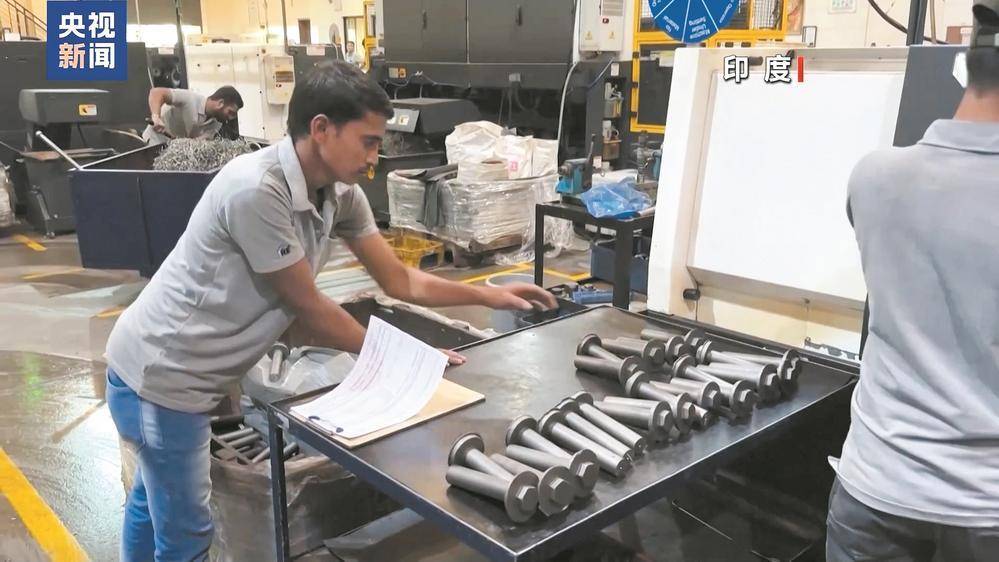
Core Points - The U.S. has implemented a 25% punitive tariff on Indian goods, effective from August 7, 2023, due to India's import of Russian oil, raising the total tariff rate on Indian products to 50% [3] - The tariffs are expected to reduce India's economic growth by 0.8 percentage points this year and next, with an estimated impact on $48.2 billion worth of Indian exports [3] - The Indian government is taking measures to mitigate the impact, including financial assistance for affected businesses and promoting exports to nearly 50 countries [4] Group 1 - The U.S. tariffs on Indian goods are a response to India's import of Russian oil, leading to a cumulative tariff rate of 50% [3] - The tariffs are projected to cause significant economic repercussions, including a decline in India's GDP growth and potential large-scale unemployment in key export regions [3] - The Indian government is committed to providing financial support to businesses affected by the tariffs, including increased bank loan subsidies and diversification of industries [4] Group 2 - India is actively seeking free trade agreements with major economies to enhance export opportunities and reduce reliance on the U.S. market [4] - The Reserve Bank of India is prepared to protect the economy from the adverse effects of the high tariffs imposed by the U.S. [4] - Prime Minister Modi has emphasized the government's commitment to safeguarding the interests of small businesses, farmers, and livestock owners amid these challenges [4]

泰国继续是越南在东南亚最大贸易伙伴
Shang Wu Bu Wang Zhan· 2025-08-27 15:39
Core Insights - Thailand continues to be Vietnam's largest trading partner in Southeast Asia as of July 2025, with positive trade dynamics observed [1] Trade Data Summary - Vietnam's total imports from Thailand reached $7.46 billion, marking a 10.32% increase compared to the same period in 2024 [1] - Vietnam's total exports to Thailand amounted to $4.84 billion, reflecting a growth of 4.6% [1] - The largest export category from Vietnam to Thailand is computers, electronic products, and components, with an export value of $875.1 million, which represents a significant year-on-year increase of 107% [1]
预计到2033年,阿联酋-安哥拉自贸协定将使非石油双边贸易额增至超100亿美元
Shang Wu Bu Wang Zhan· 2025-08-27 15:39
Core Insights - The UAE-Angola non-oil bilateral trade is projected to reach over $10 billion annually by 2033, driven by the Comprehensive Economic Partnership Agreement (CEPA) [1] Trade Performance - In 2024, the non-oil bilateral trade between the UAE and Angola is expected to be $2.17 billion, reflecting a year-on-year growth of 2.6% [1] - In the first half of 2025, the non-oil trade volume is approximately $1.4 billion, showing a significant year-on-year increase of 29.7% [1] Import and Export Dynamics - The UAE primarily imports diamonds, gold, copper and alloys, and grains from Angola, accounting for 99.8% of its imports [1] - Major exports from the UAE to Angola include light oil distillates, steel, faucets and valves, metal structures and parts, cigarettes, and perfumes, which constitute 50% of its exports [1] Economic Impact - The CEPA is expected to enhance the UAE's connections with sub-Saharan and West African markets [1] - The agreement is anticipated to contribute approximately $1 billion to the GDP of both countries and create nearly 30,000 new jobs [1]
“把自己当世界皇帝” 巴西总统批评美政府近期所作所为
Xin Jing Bao· 2025-08-27 07:18
Core Viewpoint - Brazilian President Lula criticizes the U.S. government for acting like a "world emperor" and emphasizes Brazil's willingness to negotiate on equal terms without being treated as a subordinate [1] Summary by Relevant Categories Trade Relations - Lula condemns the U.S. imposition of a 50% tariff on Brazilian goods as unreasonable [1] - Brazil aims to address trade disputes through negotiations while seeking consensus without compromising its principles [1]
苏州市领导在省政府新闻发布会上回答媒体记者提问
Su Zhou Ri Bao· 2025-08-26 23:05
Core Viewpoint - Suzhou is actively taking on the responsibility of being a major economic province, demonstrating significant growth and reform initiatives in the first half of the year [1] Economic Performance - In the first half of the year, Suzhou achieved a GDP of 1.3 trillion yuan, with a growth rate of 5.7%, ranking among the top ten cities in China for GDP growth [1] - The city's foreign trade performance was strong, with total imports and exports reaching 1.2959 trillion yuan, also growing by 5.7% [1] Foreign Investment and Open Policies - Suzhou attracted foreign investment amounting to 4.58 billion USD in the first half of the year [1] - The Suzhou Industrial Park has maintained its status as a national-level economic development zone, achieving a comprehensive evaluation "nine consecutive championships" [1] Innovation and Reform Initiatives - The city is committed to advancing technological innovation reforms, implementing eight major projects, with 85.2% of industrial enterprises having established R&D institutions [1] - Suzhou has pioneered the "four-loan linkage" mechanism for market-oriented reforms, contributing to the addition of 11 new listed companies [1] - The cumulative transaction volume of digital renminbi has surpassed 9 trillion yuan [1]
泰国7月出口激增11%
Shang Wu Bu Wang Zhan· 2025-08-26 17:42
Core Insights - Thailand's exports grew by 11% year-on-year in July, marking the 13th consecutive month of growth [1] - The export value reached $28.5 billion in July, while imports increased by 5.1% to $28.2 billion, resulting in a trade surplus of $322.1 million [1] - Strong global import demand prior to the expiration of U.S. tariff exemptions in August has driven continued export growth [1] Export and Import Performance - In the first seven months of the year, exports increased by 14.4% to $195.4 billion, and imports rose by 10.6% to $195.1 billion, yielding a trade surplus of $259.9 million [1] - Exports to major markets in July saw significant growth: 31.4% to the U.S., 23.1% to China, 7.1% to Japan, and 6.6% to the EU [1] - Exports to ASEAN countries grew by 5.6%, while Cambodia, Laos, Myanmar, and Vietnam saw a growth rate of 1.9% [1] Future Outlook - Although exports are expected to slow down in August and the remainder of the year, there remains an optimistic outlook [1] - If the average monthly export value stays between $22 billion and $23 billion, Thailand can achieve its export growth target of 2% to 3% for the year [1] - Potential risks for exports in the second half of the year include trade disruptions with Cambodia, restrictions on truck transport in Myanmar, and inventory levels in importing countries [1]
越南成为中国台湾第八大贸易伙伴
Shang Wu Bu Wang Zhan· 2025-08-26 17:42
Core Insights - Vietnam became Taiwan's eighth largest trading partner in the first half of 2025, accounting for 2.72% of Taiwan's total foreign trade [1] - Vietnam is Taiwan's tenth largest supplier with a market share of 2.49% and the ninth largest exporter with a market share of 2.91% [1] Trade Performance - The bilateral trade volume between Vietnam and Taiwan reached $13.92 billion in the first half of this year, representing a year-on-year increase of 31.06% [1] - Vietnam's exports to Taiwan amounted to $5.66 billion, showing a significant year-on-year growth of 48.7% [1] - In July alone, the bilateral trade volume hit $3.26 billion, marking a year-on-year increase of 76.15% [1] - Vietnam's exports in July were $1.56 billion, reflecting a remarkable year-on-year growth of 126.6% [1]
江苏舜天: 江苏舜天关于变更公司名称并完成工商变更登记的公告
Zheng Quan Zhi Xing· 2025-08-26 16:40
Core Viewpoint - The company has officially changed its name from "Jiangsu Shuntian Co., Ltd." to "Jiangsu Suhao Fashion Group Co., Ltd." and updated its English name accordingly, reflecting a strategic shift in branding and business focus [1][2]. Group 1 - The name change was approved during the 9th meeting of the 11th Board of Directors on August 8, 2025, and at the first extraordinary general meeting of shareholders on August 25, 2025 [1]. - The company has completed the business registration change and received a new business license from the Jiangsu Provincial Market Supervision Administration [2]. - The registered capital of the company is 438.847974 million RMB, and it is classified as a publicly listed joint-stock company [2]. Group 2 - The company was established on October 21, 1981, and is located at 21 Software Avenue, Yuhuatai District, Nanjing [2]. - The business scope includes a wide range of activities such as import and export, textile and clothing wholesale and retail, food sales, and various manufacturing and consulting services [2].
