港口航运

Search documents
李嘉诚228亿出售港口遇阻,中远海运强势介入,美国算盘要落空了
Sou Hu Cai Jing· 2025-07-26 14:00
Core Viewpoint - The impending sale of Li Ka-shing's port assets, valued at $22.8 billion, raises significant concerns regarding national security and geopolitical implications, particularly with the involvement of a U.S. asset management firm, BlackRock [3][5][34]. Group 1: Transaction Details - Li Ka-shing plans to sell his global port network under CK Hutchison Holdings for $22.8 billion, marking a high-value exit strategy [3][5]. - The buyer is BlackRock, the world's largest asset management company, which aims to acquire critical shipping nodes [5][34]. - The sale includes 43 port assets, with the Panama Canal ports being the most strategically significant [9][11]. Group 2: Geopolitical Implications - The Panama ports are crucial for global trade, handling 6% of the world's maritime trade and a significant portion of China's external trade [11][13]. - Concerns arise that U.S. control over these ports could disrupt China's trade routes, posing a direct threat to its economic interests [13][15]. - The transaction has sparked a nationalistic backlash in China, with calls for scrutiny over the potential risks to national security [17][21]. Group 3: Regulatory and Political Response - Chinese authorities have indicated that the transaction will undergo antitrust review due to its implications for market competition and public interest [21][23]. - The Chinese government has signaled its intent to intervene, emphasizing the need for Chinese state-owned enterprises to have a stake in the deal [25][28]. - BlackRock has been compelled to include China’s COSCO Shipping as an equal partner in the acquisition to mitigate regulatory pushback [32][34]. Group 4: Broader Implications for Global Business - The situation illustrates a shift in the global business landscape, where national security considerations increasingly influence commercial transactions [34][36]. - The evolving dynamics suggest that future deals involving critical infrastructure will require reassessment of their value within national borders [38].





全国首个海港口岸旅客国际中转区正式启用
Sou Hu Cai Jing· 2025-07-26 11:04
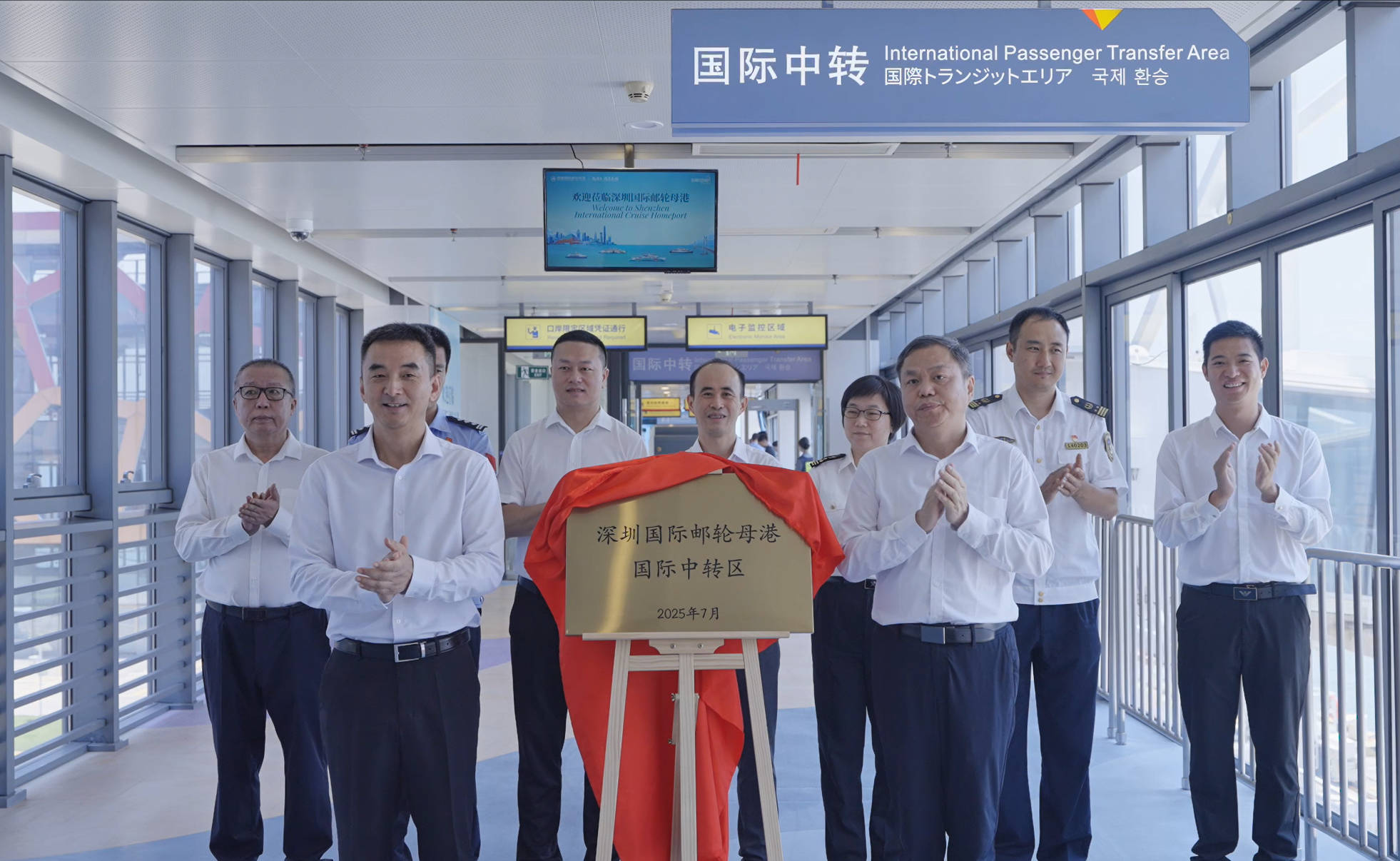
Core Points - The international transfer zone at the Shekou Cruise Home Port has officially opened, allowing travelers to transfer without traditional immigration procedures, marking a significant development in China's port capabilities [2][4] - The new transfer process reduces the number of steps from eight to four and shortens the transfer time from a maximum of 2.5 hours to under 30 minutes, enhancing the overall traveler experience [2][4] Group 1: International Transfer Zone - The international transfer zone is the first of its kind at a maritime passenger port in China, designed to streamline the transfer process for international travelers [2] - The zone's implementation involved extensive planning and collaboration between customs and the cruise home port company to ensure efficient operations and a high-quality experience for travelers [2][4] Group 2: Economic Impact - The opening of the international transfer zone is expected to attract more international travelers, enhancing the competitiveness of the Shekou Cruise Home Port as a hub in the Asia-Pacific region [4] - The initiative is anticipated to stimulate the cruise industry, increasing the number of international cruise calls and passenger volume, thereby boosting consumption and solidifying Shenzhen's position in the cruise market [4] Group 3: Future Developments - Shenzhen Customs plans to continue supporting the development of the cruise industry by implementing measures such as cross-border helicopter services and creating a comprehensive sea and air travel inspection port [5]
李嘉诚,又有新动作!
大胡子说房· 2025-07-26 07:08
Core Viewpoint - The article discusses the potential sale of ports by Li Ka-shing to a consortium led by BlackRock and COSCO, highlighting the geopolitical implications of this transaction, particularly in the context of U.S.-China relations [3][4][10]. Group 1: Transaction Details - Li Ka-shing's Cheung Kong Group announced the sale of 43 ports across 23 countries for $22.8 billion (approximately 165.7 billion RMB) to a consortium including BlackRock and Mediterranean Shipping Company [4]. - The ports involved include strategically significant locations, such as those at both ends of the Panama Canal, which are crucial for East Asia's exports to the Americas [6][7]. Group 2: Geopolitical Implications - The sale of these ports to BlackRock, a firm closely tied to U.S. interests, raises concerns about the potential for the U.S. to gain control over strategic resources that could impact East Asia's foreign trade [10][12]. - The article suggests that this transaction is not merely a commercial decision but also reflects a broader geopolitical alignment, as Li Ka-shing has a history of actions that align with Western interests [11][13]. Group 3: COSCO's Position - BlackRock has expressed willingness to accept COSCO into the acquisition consortium, indicating a potential collaboration [2][14]. - COSCO has significant experience in port management and development, demonstrated by its successful turnaround of Greece's Piraeus Port and its involvement in the construction of Peru's Chancay Port [16][17]. - COSCO may opt to pursue independent acquisition or partner with domestic firms like China Merchants or CITIC, which possess both financial and operational capabilities [19][20]. Group 4: Strategic Choices for COSCO - COSCO has several strategic options: to acquire the ports independently, collaborate with domestic partners, or remain passive, thereby preventing BlackRock from gaining control [21]. - The article emphasizes that regardless of the outcome, the influence over the transaction has shifted from BlackRock to COSCO, reflecting a change in power dynamics [21][22].

李嘉诚一条路走到黑,央企介入巴拿马运河,美军上演武力示威?
Sou Hu Cai Jing· 2025-07-26 06:55
Core Viewpoint - The Chinese government is insisting that China COSCO Shipping Corporation must participate in the Panama port transaction, indicating a strategic interest in controlling a key global trade route [1][3]. Group 1: Strategic Importance - The Panama Canal is a crucial global trade route, with thousands of cargo ships passing through annually, making control over the port vital for trade security [3]. - If a U.S.-led consortium were to take control of the port without Chinese involvement, it would pose a significant risk to China's trade security [3][11]. Group 2: U.S. Response - The U.S. Congress has expressed strong opposition to any Chinese control over the Panama Canal port, labeling it an "unacceptable risk" to national security [5]. - Following the news of the potential transaction, the U.S. conducted military exercises in Panama, signaling heightened vigilance regarding the strategic location [5][7]. Group 3: Potential Outcomes - There are three possible scenarios for the transaction: COSCO successfully joins the consortium, the deal becomes stalled due to U.S. and Chinese opposition, or the situation escalates into a geopolitical conflict [9][11]. - The ongoing scrutiny of the legality of Li Ka-shing's original port concession adds complexity to the transaction, potentially delaying any sale [7][9]. Group 4: Broader Implications - The situation reflects a larger geopolitical struggle, indicating that the transaction is not merely a business deal but a significant power play among major nations [9][11]. - The involvement of COSCO is seen as a move to prevent China from being marginalized in a strategically important area, highlighting the intersection of commercial interests and national strategy [11].

山东发布未来十年水运高质量发展“规划图” 到2035年基本建成世界级海洋港口群
Da Zhong Ri Bao· 2025-07-26 00:36
Core Viewpoint - The release and implementation of the "Shandong Province Port and Waterway Layout Plan (2025-2035)" aims to build a modern, high-quality water transport system to provide strong support for the province's economic and social development [1][2]. Group 1: Port and Waterway Development - The plan proposes to establish a "fully capable, secure, efficient, smart, and green" port and waterway system by 2035, forming a world-class marine port cluster and an improved inland waterway network [1][2]. - The layout emphasizes the role of Qingdao Port as an international hub, supported by Yantai Port and Rizhao Port, with additional ports like Weihai, Binzhou, Dongying, and Weifang [1][2]. Group 2: Inland Waterway Network - The plan outlines a "one main, four auxiliary, multi-point" inland port cluster centered around Jining Port, with supporting ports in Zaozhuang, Heze, Tai'an, and Jinan [2]. - It specifies a total length of approximately 3,100 kilometers for the inland waterway network, structured as "one vertical, two horizontal, three main, and multiple branches" [2]. Group 3: Transportation System and Integration - The plan focuses on building a first-class, professional, and efficient port transportation system to meet the demands of the new era and optimize the port transportation structure [2]. - It aims to enhance the integration of ports and waterways with urban and industrial development, promoting a coordinated approach to water transport innovation, green development, and safety [2][3]. Group 4: Strategic Opportunities and Infrastructure - The plan provides significant strategic opportunities for Jining's inland shipping development, with a focus on establishing logistics centers and multi-modal transport hubs [4]. - Shandong aims to enhance its international logistics corridor, linking domestic and international markets, and expanding sea-rail and land-sea transport services [3][4].
山东擘画未来十年水运蓝图 打造“三主四辅”世界级海洋港口群
Zhong Guo Xin Wen Wang· 2025-07-25 13:03
Core Viewpoint - The "Shandong Province Port and Waterway Layout Plan (2025-2035)" aims to establish a world-class marine port cluster and an inland port network, enhancing transportation infrastructure and supporting the construction of a strong transportation demonstration zone in Shandong [1][2]. Group 1: Marine Port Development - The plan outlines the formation of a "three main and four auxiliary" world-class marine port cluster led by Qingdao Port, with Yantai and Rizhao Ports as wings and Weihai Port as a supplement [2]. - By 2035, the marine port cluster is expected to enhance Qingdao's status as an international hub and develop a "5+5" maritime transport corridor, positioning Shandong as a key player in Northeast Asia's international shipping [2][3]. Group 2: Inland Port and Waterway Network - The plan proposes an "one main, four auxiliary, and multiple points" inland port cluster centered around Jining Port, with Jinan Port and other regional ports as support [2]. - A comprehensive inland waterway network of approximately 3,100 kilometers is planned, featuring upgraded waterway scales and port functionalities, including the addition of two high-grade national waterways [2][3]. Group 3: Logistics and Infrastructure - Shandong has established 54 inland ports and opened 106 sea-rail intermodal routes, aiming to expand cross-border transport and create an inland port cluster that radiates nationwide [3]. - Qingdao Port is projected to handle a cargo throughput of 710 million tons and a container throughput of 30.87 million TEUs in 2024, ranking fourth and fifth globally, respectively [3][4].

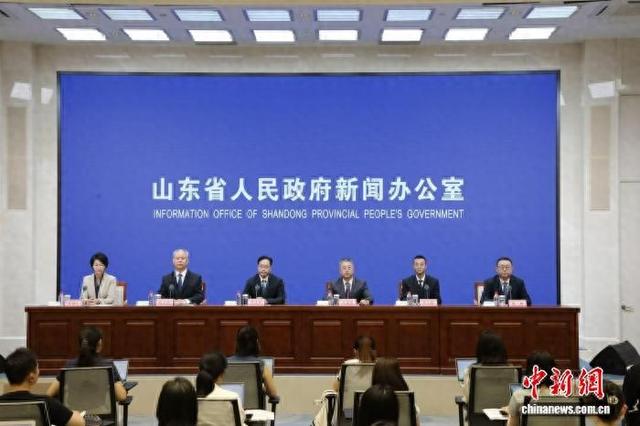
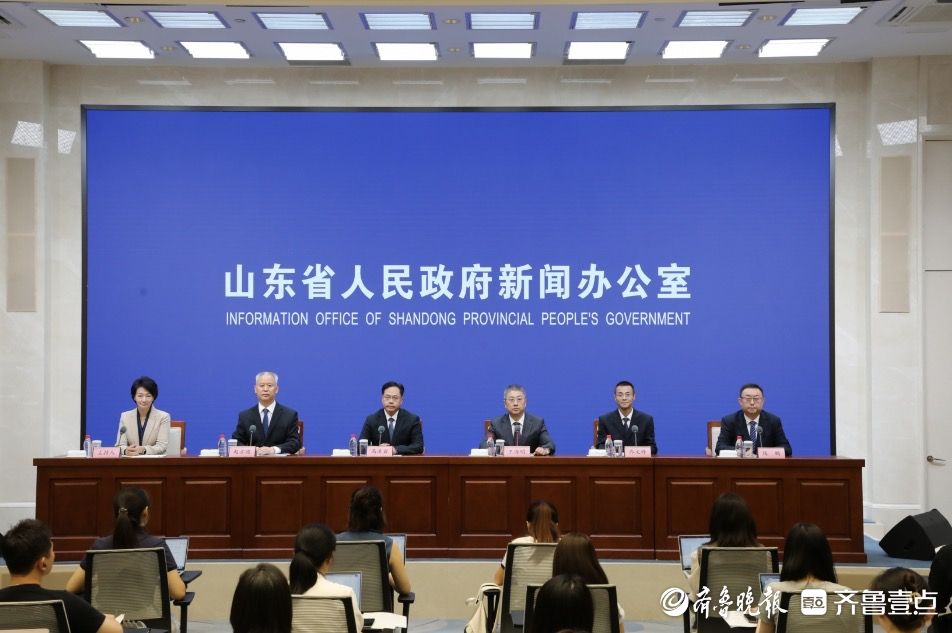
山东规划形成以青岛港为龙头的“三主四辅”世界级海洋港口群布局
Qi Lu Wan Bao· 2025-07-25 08:42
Core Viewpoint - The Shandong Provincial Government has released the "Shandong Port and Waterway Layout Plan (2025-2035)", emphasizing the integration of national strategies and the development of a modern water transport system to enhance both domestic and international logistics [3][4]. Group 1: Planning Approach - The new layout plan focuses on implementing major national strategies, including ecological protection and high-quality development, leveraging Shandong's strategic location in the "Belt and Road" initiative and Northeast Asia economic cooperation [3]. - The plan aims to create a modern water transport system that connects coastal ports and inland waterways, facilitating the construction of international logistics corridors [3]. Group 2: Planning Principles - The plan emphasizes integrated development, highlighting the coordination between land and sea, and the synergy between coastal and inland waterway planning [4]. - It aims for systematic planning and overall layout, enhancing cooperation with key regions such as Beijing-Tianjin-Hebei, Yangtze River Delta, and Guangdong-Hong Kong-Macau Greater Bay Area [4]. - The plan introduces a "three categories and ten types" cargo transport system, optimizing the layout of maritime transport channels and defining the roles of inland ports in key material transport systems [4]. - It incorporates innovative, smart, green, and safe development elements into the planning, reinforcing its leading role [4]. Group 3: Planning Content - The plan aims for high-quality development, enhancing the status of Qingdao as an international hub port and establishing a world-class marine port cluster [5]. - It includes upgrades to inland waterways and port functions, adding two high-grade national waterways and elevating Jinan Port's status [5]. - The plan outlines six key areas for promoting integrated high-quality development in water transport, including land-sea linkage, smart water transport, and green safety [5].
山东将加快构建国内国际“5+5”海上运输通道
Qi Lu Wan Bao· 2025-07-25 08:33
Core Viewpoint - The Shandong Provincial Government has officially released the "Shandong Port and Waterway Layout Plan (2025-2035)", aiming to enhance the province's water transport infrastructure and support economic development through a modernized and high-quality water transport system [1][3]. Group 1: Overview of the Plan - The plan outlines a comprehensive layout for Shandong's coastal and inland ports and waterways over the next decade, focusing on building a world-class marine port cluster and an integrated inland water transport network [1][3]. - The plan is a response to the uneven development and regional coordination issues in Shandong's water transport sector, necessitating an update from previous plans issued in 2009 and 2012 [3][4]. Group 2: Key Components of the Plan - The plan includes eight sections: planning foundation, overall requirements, world-class marine port cluster, inland water transport network, port transport system, high-quality integrated water transport development, environmental impact assessment, and supporting measures [4][6]. - By 2035, the plan aims to establish a "fully capable, secure, efficient, smart, and green" port and waterway system, featuring a "three main and four auxiliary" world-class marine port cluster and a "one main, four auxiliary, and multiple points" inland port cluster [4][5]. Group 3: Marine and Inland Port Development - The plan emphasizes the role of Qingdao Port as an international hub, supported by Yantai Port and Rizhao Port, with additional ports like Weihai, Binzhou, Dongying, and Weifang enhancing the marine port cluster [5][6]. - For inland water transport, the plan identifies Jining Port as the core, with supporting ports in Zaozhuang, Heze, Tai'an, and Jinan, and outlines a comprehensive inland waterway network of approximately 3,100 kilometers [5][6]. Group 4: Transport System and Integration - The plan focuses on creating a first-class, efficient port transport system tailored to the needs of the province's industries and energy demands, optimizing the transport structure and enhancing service capabilities [6]. - It promotes integrated high-quality development of water transport, emphasizing multi-modal transport systems, coordination between ports and urban areas, and the advancement of smart, green, and safe water transport solutions [6].
全球首个港口服务类大模型方舟TaaS开启公测
Qi Lu Wan Bao· 2025-07-25 08:13
Core Viewpoint - The Shandong Provincial Government is actively promoting the development of the Qingdao International Shipping Center as part of its strategic plan for port and channel layout from 2025 to 2035, aiming to enhance modern shipping service efficiency and overall competitiveness in the region [1][3]. Group 1: Strategic Initiatives - Qingdao has established a dedicated task force led by top city officials to drive the construction of the Qingdao International Shipping Center, reflecting its importance in local government priorities [3]. - The city aims to align its development plans with the "Layout Planning" requirements, proposing a five-year plan (2024-2028) and a long-term vision for 2035, focusing on enhancing urban capabilities and establishing itself as a key hub in Northeast Asia [3][4]. Group 2: Infrastructure Development - Significant infrastructure projects have received approval, including the construction of major port facilities and enhancements to rail and road connectivity, which are crucial for improving logistics and transportation efficiency [4]. - The completion of the 400,000-ton port investment project and the ongoing expansion of rail and road networks are expected to create a more integrated transportation system [4]. Group 3: Service Industry Enhancement - The establishment of key institutions, such as the Asian headquarters of the Greek Phoenix Classification Society and the first marine insurance center in China, indicates a strategic push to elevate the service level of the modern shipping industry in Qingdao [4]. - The introduction of innovative logistics models and tax incentives for offshore trade in the Qingdao Free Trade Zone aims to attract more shipping enterprises and enhance the overall service ecosystem [4][5]. Group 4: Future Directions - Qingdao plans to continue implementing the "Layout Planning" and attract leading shipping companies and professional institutions to elevate various sectors, including shipping trade, finance, and maritime services [5].
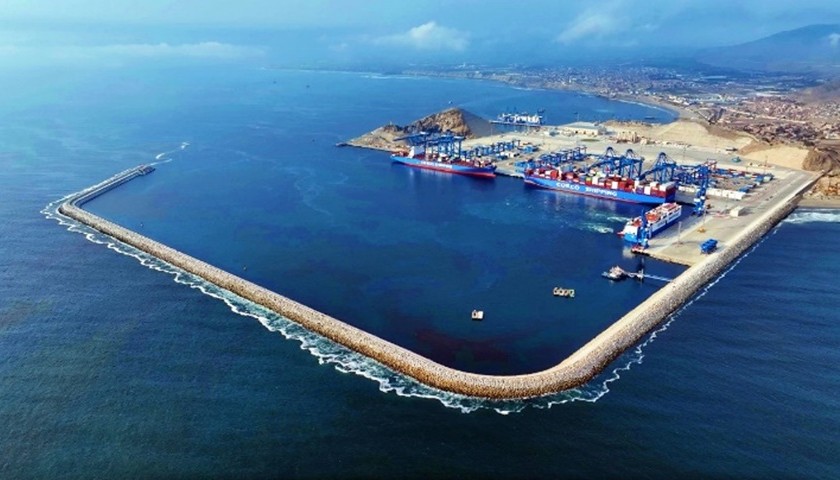
秘鲁蓝莓23天直航中国,这座南美港口迎进博首秀
Xin Lang Cai Jing· 2025-07-25 03:21
Group 1 - The Peru Chancay Port will debut at the upcoming China International Import Expo, significantly reshaping South American trade dynamics with a direct shipping route to Shanghai that reduces transit time to 23 days, saving 10 days and over 20% in logistics costs compared to traditional routes [1][2] - The Chancay Port project, with a total investment of $1.298 billion, is a joint venture between COSCO Shipping Ports and the Peruvian Volcano Mining Group, with COSCO holding a 60% stake [1][3] - The first phase of the Chancay Port includes the construction of four berths with a total length of 1,500 meters and a maximum capacity for 200,000-ton container ships, aiming for an initial throughput capacity of 1 million TEU [3] Group 2 - The Chancay Port is set to officially open on November 1, 2024, with commercial operations commencing after the issuance of the port operation license on June 5, 2025 [3][4] - The port has established three main shipping routes and three regional feeder lines, connecting directly to major Chinese ports like Shanghai and Ningbo, enhancing logistics efficiency with a three-dimensional logistics system [3][4] - The port integrates functions for automotive engineering, bulk commodities, and refrigerated goods, providing comprehensive services that enhance trade convenience between China and Peru [4] Group 3 - In the first five months of 2025, the Chancay Port's import and export total exceeded $777 million, with significant trade volumes directed towards countries like the Netherlands, China, Spain, the United States, and Chile [5] - China has maintained its position as Peru's largest trading partner for ten consecutive years, with bilateral trade reaching $39.758 billion in 2024 [5] - The operational Chancay Port is expected to boost exports of Chinese consumer goods to South America and facilitate the entry of Peruvian agricultural products, such as blueberries and avocados, into Asian markets [5]