
智能汽车

Search documents
第三届中国国际供应链促进博览会今起在北京举行 链博会“南京日”邀全球共赴“南京之约”
Nan Jing Ri Bao· 2025-07-16 02:27
Group 1 - The third China International Supply Chain Promotion Expo (Chain Expo) is held in Beijing from July 16 to 20, with a new summer schedule and the introduction of "Nanjing Day" on July 17 to showcase Nanjing's strengths [1][2] - The "Nanjing Day" event aims to create a dialogue platform between Nanjing and global business communities, highlighting the city's advantages in key industrial supply chains and promoting international cooperation [1][2] - The event will feature over 100 attendees, including leaders from international business associations, Fortune 500 companies, and supply chain industry leaders, to foster partnerships and innovation in supply chains [1][2] Group 2 - The Chain Expo will promote Nanjing's investment environment, key industries, and projects, aiming to attract investment and talent through the event [2] - Five projects will be signed on-site during the event, covering fields such as artificial intelligence, biomedicine, digital trade, and precision manufacturing [2] - The expo includes six major supply chain categories and service exhibition areas, showcasing the latest achievements and experiences in global supply chain cooperation, with participation from 651 companies and institutions from 75 countries [2][3]
特朗普宣布对印尼征收19%关税;黄仁勋访华,H20回归,英伟达市值一夜增超1万亿元;泡泡玛特业绩炸裂;山姆紧急下架好丽友丨每经早参
Mei Ri Jing Ji Xin Wen· 2025-07-15 22:04
Group 1 - The third China International Supply Chain Promotion Expo will be held in Beijing until July 20 [2] - The 12th Aviation Power and Gas Turbine Focus Conference will take place in Shanghai from July 16 to 18 [2] - The 2025 China International Nuclear Fusion and Nuclear Energy Expo is scheduled for July 16 to 18 in Shanghai [2] Group 2 - The U.S. Consumer Price Index (CPI) increased by 0.3% month-on-month in June, with a year-on-year increase of 2.7% [3] - The core CPI, excluding food and energy, rose by 0.2% month-on-month and 2.9% year-on-year [3] - U.S. stock indices showed mixed results, with the Nasdaq up 0.18% and the Dow down 0.98% [3] - Nvidia's stock rose over 4%, adding approximately $161.8 billion (about 1160.5 billion RMB) to its market capitalization [3] Group 3 - International precious metal futures generally declined, with COMEX gold futures down 0.85% at $3330.50 per ounce [4] - COMEX silver futures fell 1.95% to $37.99 per ounce [4] Group 4 - International oil prices slightly decreased, with WTI crude oil down 0.34% at $66.75 per barrel [5] - Brent crude oil fell 0.52% to $68.85 per barrel [5] Group 5 - European stock indices closed lower, with Germany's DAX down 0.42%, France's CAC40 down 0.54%, and the UK's FTSE 100 down 0.66% [6] Group 6 - China's economy grew by 5.3% year-on-year in the first half of 2025, with a GDP of 660,536 billion RMB [8] - The National Bureau of Statistics indicated that despite challenges, the economy shows resilience and positive trends [8] Group 7 - The Ministry of Commerce announced adjustments to the "Catalog of Technologies Prohibited from Exporting and Restricted from Exporting," adding new restrictions on battery cathode material preparation technologies [10] Group 8 - Nvidia's CEO Jensen Huang announced the start of H20 chip sales to the Chinese market, following U.S. government approval [17] - The launch of a new graphics card, RTX Pro, designed for computer graphics and AI, was also announced [17] Group 9 - Xiaozhu Technology reported significant growth in the humanoid robot sector, with expectations for accelerated application in the next 3-5 years [18] - The company has seen a notable increase in shipment volume compared to last year [18] Group 10 - Pop Mart anticipates a revenue increase of no less than 200% and a profit growth of no less than 350% for the first half of 2025 [19] - This reflects the potential of the trendy toy market [19] Group 11 - BMW announced a partnership with Momenta to develop a new generation of intelligent driving assistance solutions for the Chinese market [20] - This collaboration aims to enhance BMW's competitiveness in the smart automotive sector [20] Group 12 - Geely Holding Group signed a merger agreement with Zeekr, aiming to strengthen its global competitiveness in the intelligent electric vehicle sector [21] - The merger will allow Geely to cover various powertrain forms [21] Group 13 - XPeng Huitian completed a $250 million Series B financing round to accelerate the development and mass production of flying cars [23] - The company plans to deliver its "land aircraft" by 2026 [23] Group 14 - Loobo announced a strategic partnership with Uber to integrate thousands of autonomous vehicles into Uber's global network [25] - The initial deployment will occur in Asia and the Middle East by the end of this year [25] Group 15 - Zhiyuan Robotics received strategic investment from Charoen Pokphand Group to explore business opportunities in various verticals [27] - This investment aims to support the company's development in life sciences, new retail, and wellness services [27]



新华解码丨链博会是个什么会?如何“链”起你我他?
Xin Hua Wang· 2025-07-15 12:44
Core Insights - The China International Supply Chain Promotion Expo (Chain Expo) is the world's first national-level exhibition focused on supply chains, organized by the China Council for the Promotion of International Trade, and will be held annually starting from 2023 [2][4] - The expo emphasizes the importance of collaboration among upstream and downstream enterprises in the global supply chain, aiming to foster long-term mutually beneficial partnerships rather than short-term transactions [4][7] - This year's Chain Expo has attracted over 650 companies and institutions from 75 countries and regions, with more than 65% being Fortune 500 and industry-leading companies, and 35% of exhibitors being from overseas [4][5] Supply Chain Definition - The supply chain encompasses the entire process from product development, raw material procurement, component production, transportation, assembly, distribution, to final consumption, highlighting the interconnectedness and efficiency of various organizational forms [3] Expo Features - The Chain Expo will feature six thematic areas including advanced manufacturing, smart vehicles, green agriculture, clean energy, digital technology, health living, and supply chain services, along with multiple themed activities and a dedicated area for new product launches [7] - The event aims to provide a high-level platform for communication and collaboration among global enterprises, enhancing opportunities for cooperation and resource optimization [7][8] Strategic Importance - The Chain Expo serves as a significant international public product, encouraging diverse participation from institutions, enterprises, and experts to promote a collaborative environment [5][8] - It reflects China's commitment to maintaining the stability and security of global industrial and supply chains while fostering innovation and sustainable development [8]
王建强:自动驾驶正从规则驱动与数据驱动向认知驱动演进
Zhong Guo Jing Ji Wang· 2025-07-15 12:29
Core Viewpoint - Intelligent automotive technology is a key solution for traffic safety, which remains a perpetual theme in the development of smart vehicles [1] Group 1: Current State of Intelligent Vehicles - Low-level intelligent vehicles have achieved a high market penetration rate, but accidents still occur as the industry transitions to higher levels of autonomous driving [1] - There are significant challenges in safety technology that need to be addressed in the context of complex long-tail scenarios [1] Group 2: Technological Approaches - The early development of intelligent vehicles relied on rule-driven approaches, while current mainstream autonomous driving methods include data-driven techniques [4] - Rule-driven systems are observable and interpretable but are inflexible in complex environments, whereas data-driven systems utilize deep learning but suffer from a "black box" nature that obscures decision-making processes [4] - A proposed third route, "cognitive-driven," aims to combine the interpretability of rule-driven systems with the learning capabilities of data-driven systems, enhancing adaptability and transparency [4][5] Group 3: Cognitive-Driven Architecture - The cognitive-driven approach is based on a deep understanding of the interactions between humans, vehicles, and roads, leading to accurate modeling and digital representation of system characteristics [5] - The architecture consists of three layers: perception, cognition, and decision-making, integrating physical state estimation, semantic understanding, and human-like adaptive decision generation [5][6] Group 4: Future Trends and Goals - The evolution of autonomous driving is shifting from rule-driven and data-driven methods to cognitive-driven systems, focusing on human-like cognition, learning, and evolution [5] - A new paradigm of "self-learning + prior knowledge" is necessary to enhance environmental understanding and reasoning capabilities, improving safety and generalization in long-tail scenarios [5] - The ultimate goal is to develop a high-level intelligent driving system that possesses self-learning, self-reflection, and adaptive capabilities, ensuring safety and verifiability [6]
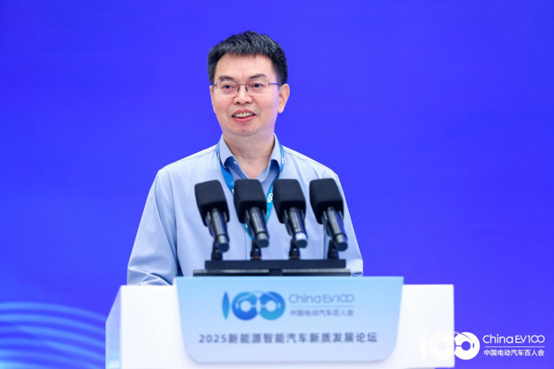
中国电动汽车百人会副理事长张永伟:AI 成为智能汽车核心驱动力 重构产业竞争格局
Zheng Quan Ri Bao Wang· 2025-07-15 08:59
Core Insights - AI has become the core engine driving the transformation of the smart automotive industry, reshaping product definitions and industry ecosystems, and pushing global automotive competition into a new "AI-driven" phase [1][4][8] Industry Transformation - The automotive industry's value structure is undergoing a disruptive reconstruction, with AI technology as the driving force; the cost of mechanical hardware in traditional fuel vehicles has decreased from 70% to below 50%, and is expected to drop below 30% in the coming years, while electronic hardware costs are projected to reach 70% by 2030 [4][5] - The integration of software and AI is redefining automotive products, with "intelligence" now accounting for 54% of consumer purchasing decisions, second only to cost at 60%, indicating the necessity for companies to convert AI capabilities into product competitiveness [4][5] AI Application Progression - AI penetration in the smart automotive sector is advancing in three stages: 1. AI as a tool for optimizing R&D and management processes 2. AI evolving into the core of products, leading to the emergence of "AI cars" with self-learning capabilities 3. Companies transforming into "AI-native enterprises," developing diversified products based on foundational algorithms and data capabilities [5][6] Ecosystem Construction - The nature of AI technology necessitates breaking traditional boundaries in the automotive industry, with a "three verticals and three horizontals" framework highlighting the importance of collaboration between software, chips, data, and the automotive supply chain [6][7] - The "pairing" model is crucial for the implementation of AI technology, where tech companies collaborate closely with automakers to address AI technology gaps and facilitate commercialization [6][7] Globalization and Cross-Industry Opportunities - AI-enabled smart vehicles present new opportunities for global expansion, with China's L2-L3 smart vehicle penetration rates exceeding the global average by nearly 20%, although challenges such as compliance with international data privacy and cybersecurity regulations remain significant [7][8] - The universality of AI technology allows for cross-industry empowerment, with the automotive sector's scale capabilities aiding in cost reduction for emerging industries like robotics and low-altitude aircraft [7][8] Strategic Summary - AI is not only the technological core of smart vehicles but also a "new productive force" driving industry reconstruction; China must strengthen its terminal advantages while addressing core deficiencies in AI chips and operating systems to build ecological barriers and secure a leading position in global smart automotive competition [8]



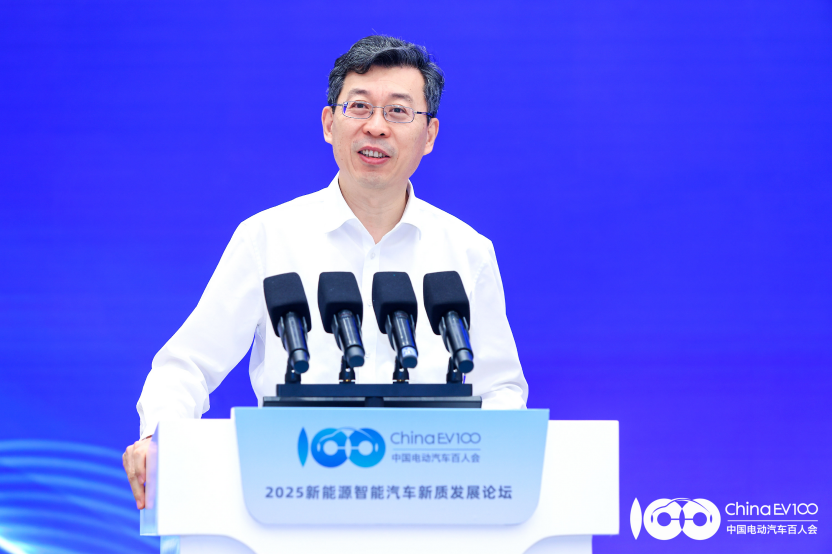
地平线机器人-W(9660.HK):规模化量产构建起完整的智能普惠生态
Ge Long Hui· 2025-07-15 06:46
Group 1 - The cumulative shipment of the Journey series is expected to exceed 10 million units, with over 8 million units already shipped, indicating that one in three smart cars is equipped with Horizon's driving assistance solutions [1] - The company has established close collaborations with several leading Tier-1 companies, including Bosch, Denso, and ZF, to develop differentiated intelligent driving solutions based on the Journey 6 series [1] - The HSD system, the first domestic full-stack development for urban driving assistance, includes HSD300, HSD600, and HSD1200, designed for various performance levels and scenarios [2] Group 2 - The HSD system utilizes the Journey 6P computing solution and features an end-to-end architecture that enhances user experience by providing a seamless and safe driving experience [2] - The company anticipates revenues of 3.562 billion, 5.529 billion, and 7.983 billion yuan for the years 2025, 2026, and 2027, respectively, with projected net profits of -196.9 million, -94.5 million, and 10.5 million yuan [2]

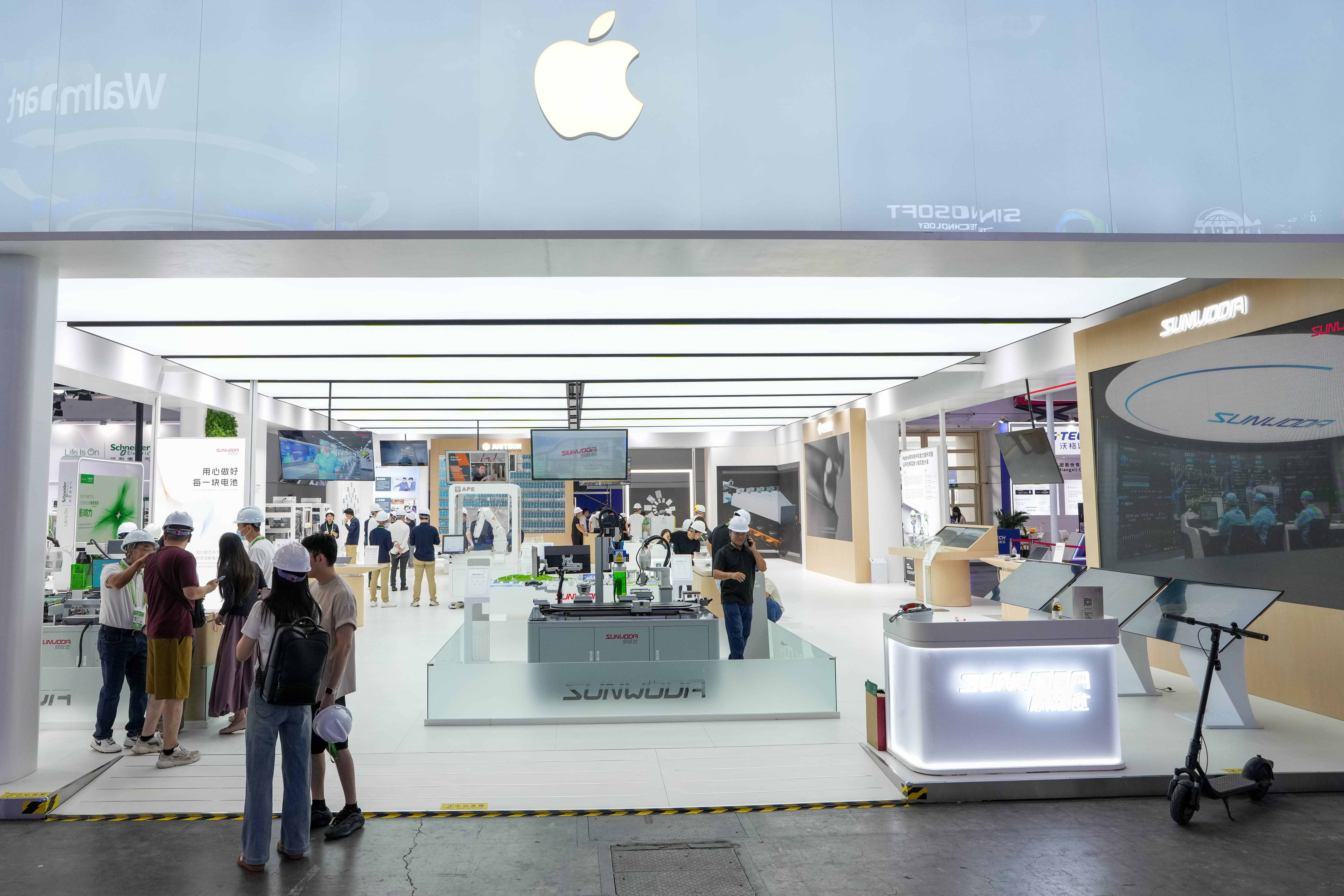
探访第三届中国国际供应链促进博览会现场
Sou Hu Cai Jing· 2025-07-14 14:48
Core Points - The third China International Supply Chain Promotion Expo will be held from July 16 to 20 in Beijing, focusing on the theme "Linking the World, Creating the Future" [1] - The expo will feature six major chains: advanced manufacturing, smart automotive, green agriculture, clean energy, digital technology, and healthy living, along with a supply chain service exhibition area [1] Group 1 - The event aims to enhance collaboration and innovation within the supply chain industry [1] - Various sectors will showcase their advancements and contributions to supply chain efficiency and sustainability [1] Group 2 - The expo will include notable exhibitors such as Tesla and Syngenta, highlighting the importance of smart automotive and green agriculture sectors [31][35] - The event is expected to attract significant attention from industry leaders and stakeholders, promoting networking and partnership opportunities [1]
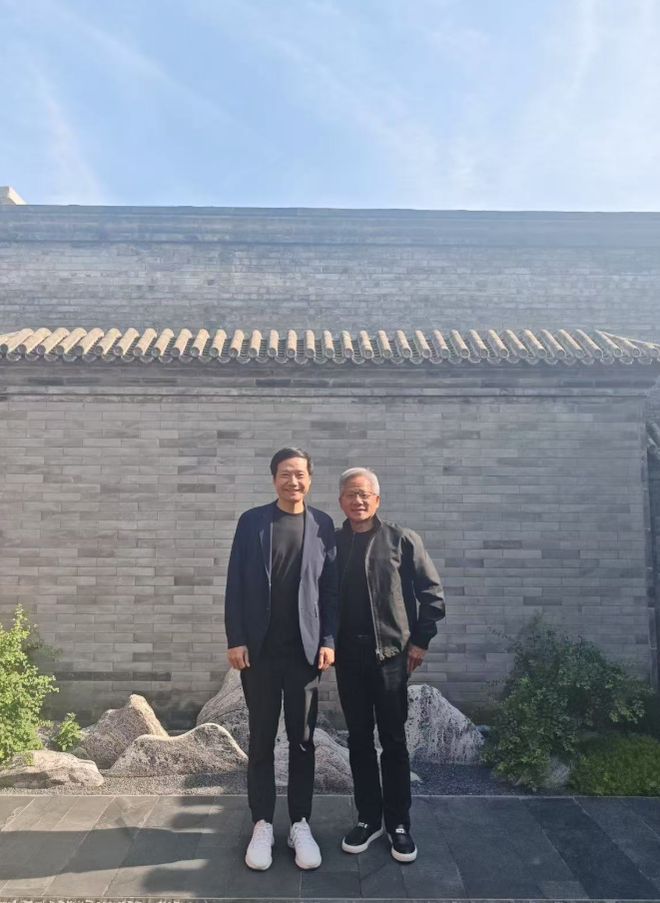
黄仁勋年内第三次访华,高温下与雷军微笑合影
Guan Cha Zhe Wang· 2025-07-14 09:36
Core Viewpoint - Nvidia's CEO Jensen Huang is making his third visit to China this year, indicating the company's commitment to the Chinese market amidst geopolitical tensions and U.S. export controls [5][8]. Group 1: CEO's Visit and Meetings - Huang was photographed with Xiaomi's CEO Lei Jun in Beijing, suggesting a close relationship and potential business discussions [1][5]. - The visit includes participation in the China International Supply Chain Promotion Expo on July 16, where Huang is expected to reaffirm Nvidia's commitment to China [5][8]. - Huang's previous visits in January and April 2023 highlight Nvidia's ongoing efforts to maintain its presence in the Chinese market [8]. Group 2: New AI Chip Development - Nvidia plans to launch a new AI chip designed specifically for China, expected to be introduced as early as September 2023 [5][6]. - This new chip will be a modified version of the existing Blackwell RTX Pro 6000 processor, omitting advanced technologies to comply with U.S. export regulations [6][8]. Group 3: Historical Context and Relationship - Huang and Lei have a history of collaboration, dating back to the launch of the Xiaomi 3 smartphone in 2013, where Huang promoted Nvidia's chips [10]. - The relationship between the two CEOs has been characterized by mutual respect and shared interests in technology and innovation [10][12].


华为计划2027年实现城区L4规模商用
Guan Cha Zhe Wang· 2025-07-14 03:10
Core Insights - Huawei plans to pilot commercialize L3 autonomous driving this year and conduct L4 pilot tests in urban areas, aiming for large-scale L3 commercialization on highways by next year and L4 in urban scenarios by 2027 [1][2] - The company has released its next-generation ADS4 system, which includes four versions, with the Ultra flagship version supporting various advanced driving features [1] - The transition from L2 to L3 is critical, with expectations for L3 commercial capabilities to emerge by 2025 [2] Group 1 - Huawei's ambitious timeline includes achieving pilot projects for unmanned logistics by 2027 and commercializing them by 2028, positioning itself competitively against Tesla [1] - The ADS4 system features capabilities such as high-speed L3, parking valet, and full-scene parking, indicating a comprehensive approach to autonomous driving [1] - The market for urban intelligent driving is expected to grow significantly, with projections of 394 million units this year and 1,496 million by 2027 [2] Group 2 - Huawei emphasizes a multi-sensor fusion approach for safety, aiming to reduce accidents and enhance time efficiency, which is deemed necessary for higher levels of autonomous driving [3] - The company acknowledges the competitive landscape in active safety features, highlighting ongoing development in responding to various obstacles beyond just vehicles and pedestrians [4] - The reliance on pure vision for future autonomous driving raises questions about its reliability and safety, suggesting a need for a more robust approach [2][3]

华为汽车业务核心竞争力剖析
2025-07-14 00:36
Summary of Huawei's Automotive Business Conference Call Industry and Company Overview - The conference call focuses on Huawei's automotive business, particularly its collaboration with Seres and the high-end automotive market in China [1][5][19]. Key Points and Arguments Market Position and Strategy - Huawei has successfully captured opportunities in the high-end automotive market through its "Smart Selection" model, significantly outperforming traditional methods [1][5]. - The company aims to consolidate its position in the intelligent industry over the next 3-5 years, focusing on aesthetics, technology, and cost-effectiveness to launch popular smart vehicles [1][6]. Technological Innovations - Seres' range-extended technology has reached the Super Range Extender 5.0 stage, achieving an oil-to-electricity conversion rate of over 3.6 kWh per liter and a thermal efficiency of 44.8% [1][7]. - Huawei's vehicles, such as the Aito M9, utilize an 800V high-voltage platform, showcasing advantages like a 5C charging rate and rapid charging capabilities [1][8]. - The company is developing solid-state batteries using a sulfide route, which offers advantages in energy density, cycle life, and fast charging [1][9][10]. Revenue Growth - Huawei's automotive business revenue is projected to reach 26.4 billion yuan in 2024, representing a 12-fold increase compared to 2022 [4][18]. Collaborations and Product Offerings - Huawei's partnership with various automakers covers multiple vehicle categories, including SUVs, sedans, and MPVs, targeting different market segments from ultra-luxury to low-end [19]. - The collaboration with Jianghuai to create the "Zun Jie" brand has shown promising results, with the first model, S800, achieving significant pre-orders [21]. Future Outlook - Huawei plans to enhance its capabilities in computing, algorithms, and data management to maintain its competitive edge in the intelligent automotive sector [6]. - The company is optimistic about the performance of its existing models and the introduction of new models in the low-end market [6][22]. Additional Important Information - Huawei's thermal management technology has been updated to version 2.0, significantly reducing failure rates and optimizing lifecycle diagnostics [2][11]. - The company has made significant advancements in laser radar technology, aiming for high-precision solid-state applications by 2025 [16]. - The organizational structure of Huawei's automotive business has undergone several adjustments since 2019 to enhance operational efficiency and collaboration with external partners [17]. Conclusion - Huawei's automotive business is positioned for substantial growth, driven by technological innovations, strategic partnerships, and a focus on market needs. The company is expected to continue its upward trajectory in the intelligent automotive sector, with a strong emphasis on product development and market expansion [25].