
饮料

Search documents
娃哈哈陷品牌混战:“娃小智”高调招商,“娃小宗”暂未启用
Di Yi Cai Jing· 2025-10-24 13:28
Core Insights - The resignation of Zong Fuli has triggered a market competition over the "Wahaha" brand, leading to the emergence of the "Wawaozhi" brand, which closely resembles Wahaha's products but claims to be independent [2][4] - The "Wawaozhi" brand has initiated a nationwide recruitment campaign for distributors, offering lower prices than Wahaha while maintaining similar product formulations [2][5] - The competitive landscape in the beverage market is being reshaped by the different strategies of three brands during this industry transformation [2][9] Company Developments - "Wawaozhi" is set to hold a national ordering meeting, with a minimum purchase requirement of 100,000 yuan for exclusive distribution rights in a region [2][4] - The brand has reportedly signed over 150 clients and is leveraging state-owned capital to quickly integrate industry resources and build a nationwide sales network [5][6] - The actual controlling shareholders of "Wawaozhi" are linked to Zong Zehou, indicating a familial connection to the Wahaha brand [6] Brand Positioning - The "Wawaozhi" brand is positioned as a separate entity from Wahaha, with its representatives stating that they do not seek to capitalize on the Wahaha brand [4][5] - The "Wawaozhi" products are marketed as ordinary brands, similar to various brands of Longjing tea, despite criticisms of imitation [4] - The "Wawaozhi" brand's supply chain and factory distribution details are not disclosed to potential distributors until agreements are signed [4] Market Impact - The internal turmoil at Wahaha, including family disputes and leadership changes, has negatively impacted its brand image and market sales, allowing competitors like Nongfu Spring and Yibao to gain market share [9] - The ongoing instability within Wahaha may lead to further declines in market share unless internal conflicts are resolved to restore market confidence [9]

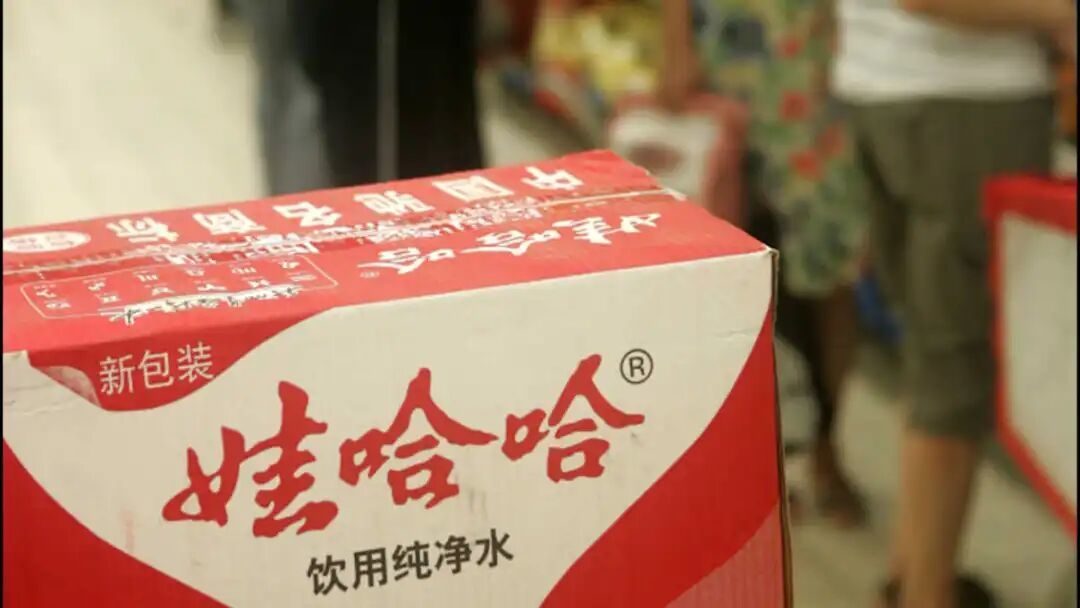
娃哈哈陷品牌混战:“娃小智”高调招商,“娃小宗”暂未启用
第一财经· 2025-10-24 13:16
Core Viewpoint - The resignation of Zong Fuli has triggered a significant upheaval within the Wahaha system, leading to a competitive struggle for the brand's influence in the market, particularly with the emergence of the "Wah Xiaozhi" brand [3][4]. Group 1: Brand Developments - The newly launched "Wah Xiaozhi" brand, created by Zong Zehou, is initiating a nationwide recruitment for distributors, with product packaging closely resembling that of Wahaha, yet claiming to be independent [3][5]. - The "Wah Xiaozhi" brand is set to hold a national ordering meeting, with a minimum purchase requirement of 100,000 yuan for exclusive distribution rights in a region [6][9]. - The product formula of "Wah Xiaozhi" is reported to be identical to that of Wahaha, but at a lower price point [6][9]. Group 2: Market Positioning and Competition - The market perception of "Wah Xiaozhi" includes views of it being a copycat or imitation of Wahaha, which the brand representatives downplay, suggesting it is just another ordinary brand [8][9]. - The brand has already signed over 150 clients and is leveraging state-owned capital to quickly integrate industry resources and establish a nationwide sales network [9][10]. - The competitive landscape is shifting, with rivals like Nongfu Spring and Yibao benefiting from Wahaha's internal turmoil, leading to a decline in Wahaha's market share [13]. Group 3: Internal Dynamics and Future Outlook - The "Wah Xiaozong" brand, registered by Zong Fuli, has not yet been utilized, and existing distributors have been instructed to continue selling Wahaha products [11][12]. - The internal conflicts within Wahaha, including family disputes and leadership changes, have negatively impacted its brand image and sales, prompting recommendations for the company to stabilize its internal issues to regain market confidence [13].

娃哈哈陷品牌混战:宗泽后的“娃小智”高调招商,宗馥莉的“娃小宗”尚未被启用
Di Yi Cai Jing Zi Xun· 2025-10-24 13:09
Core Insights - A market competition surrounding the "Wahaha" brand influence has emerged following the resignation of Zong Fuli, leading to significant shifts within the Wahaha system [1] - The launch of "Wawaozhi" by Zong Zehou, which closely resembles Wahaha's classic products, has sparked speculation about its relationship with Wahaha, although it claims to be independent [1][4] - The beverage market is undergoing a transformation as three major brands navigate this period of change, impacting competitive dynamics [1] Company Developments - "Wawaozhi" is set to hold a national ordering meeting, with a minimum purchase requirement of 100,000 yuan for exclusive regional distribution rights [2] - The product formula of "Wawaozhi" is reported to be identical to Wahaha's, but at a lower price point [2] - The branding and packaging of "Wawaozhi" products are similar to Wahaha's, which has led to perceptions of it being a copycat brand [5] Market Positioning - "Wawaozhi" has signed over 150 clients and is leveraging state-owned capital to rapidly integrate industry resources and establish a nationwide sales network [5] - The company is backed by significant investments from state-owned enterprises, indicating strong financial support for its market entry [5] - The actual control of "Wawaozhi" lies with Zong Zehou, highlighting a familial connection to the Wahaha brand [7] Competitive Landscape - The emergence of "Wawaozhi" and the registration of "Wawazong" by Zong Fuli indicate a strategic pivot within the Wahaha ecosystem, with implications for existing distributors [8][9] - Distributors have been instructed to continue selling Wahaha products, suggesting a potential internal conflict and uncertainty regarding brand loyalty [9] - The ongoing turmoil within Wahaha, including family disputes and leadership changes, has negatively impacted its brand image and market share, benefiting competitors like Nongfu Spring and Yibao [9]

港股IPO二次递表后 业绩屡创新高的东鹏饮料官宣岗位调整
Zheng Quan Shi Bao Wang· 2025-10-24 11:32
Core Viewpoint - The resignation of Zhang Lei as the Secretary of the Board at Dongpeng Beverage coincides with a critical phase in the company's Hong Kong IPO process, raising questions about the implications for the company's capital market strategy [1][2][3] Financial Performance - In 2024, Dongpeng Beverage achieved a revenue of 15.839 billion yuan, a year-on-year increase of 40.63%, and a net profit of 3.327 billion yuan, up 63.09%, significantly surpassing the industry average growth rate [1] - As of Q3 2025, the company reported a revenue of 16.844 billion yuan, a year-on-year growth of 34.13%, and a net profit of 3.761 billion yuan, reflecting a 42.45% increase, both marking historical highs for the same period [1] Market Capitalization - Dongpeng Beverage's market capitalization rose from approximately 125.9 billion yuan at the beginning of 2025 to over 156.5 billion yuan by October, an increase of nearly 30 billion yuan, solidifying its position as the "first stock of functional beverages" in the A-share market [2] Investor Relations and IPO Process - Zhang Lei played a crucial role in enhancing investor relations, establishing regular communication mechanisms, and organizing multiple investor briefings to convey the company's strategic plans and core values [2] - During the Hong Kong IPO process, Zhang Lei was instrumental in restructuring the capital framework and liaising with international sponsors, laying a solid foundation for the company's IPO application [2] Strategic Implications of Resignation - Zhang Lei's resignation during the IPO process may be seen as a proactive measure to eliminate potential obstacles for the company's cross-border listing, as management stability is a key focus for regulators and global investors [3] - Dongpeng Beverage has initiated the selection process for a new Secretary of the Board to ensure a smooth transition in management responsibilities [3]

东鹏饮料:前三季度净利润同比增长38.91%
Zheng Quan Shi Bao Wang· 2025-10-24 11:21
Core Insights - Dongpeng Beverage (605499) reported a third-quarter revenue of 6.107 billion yuan, representing a year-on-year growth of 30.36% [1] - The net profit for the third quarter reached 1.386 billion yuan, with a year-on-year increase of 41.91% [1] - For the first three quarters, the company achieved a revenue of 16.844 billion yuan, up 34.13% year-on-year, and a net profit of 3.761 billion yuan, reflecting a growth of 38.91% [1] - The basic earnings per share stood at 7.2324 yuan [1] Revenue and Profit Growth - Third-quarter revenue increased by 30.36% to 6.107 billion yuan [1] - Third-quarter net profit rose by 41.91% to 1.386 billion yuan [1] - Year-to-date revenue for the first three quarters was 16.844 billion yuan, a 34.13% increase [1] - Year-to-date net profit for the first three quarters was 3.761 billion yuan, up 38.91% [1] Strategic Initiatives - The company continues to implement an all-channel cultivation strategy [1] - Active expansion of national sales channels has contributed to the growth in sales of new products, including the 500ml gold bottle and "Dongpeng Water" [1]
东鹏饮料(605499) - 东鹏饮料(集团)股份有限公司2025年前三季度主要经营数据的公告
2025-10-24 11:16
东鹏饮料(集团)股份有限公司 2025 年前三季度主要经营数据的公告 本公司董事会及全体董事保证本公告内容不存在任何虚假记载、误导性陈 述或者重大遗漏,并对其内容的真实性、准确性和完整性承担法律责任。 东鹏饮料(集团)股份有限公司(以下简称"公司")根据上海证券交易所《上 市公司行业信息披露指引第十二号——酒制造》的有关规定,现将公司 2025 年 前三季度主要经营数据公告如下: 一、主要业务经营情况 (一) 主营业务产品类别分类情况 证券代码:605499 证券简称:东鹏饮料 公告编号:2025-065 单位:万元 币种:人民币 | 产品 | 年 2025 | 月 1-9 | 年 2024 | 月 1-9 | | --- | --- | --- | --- | --- | | | 收入 | 占比 | 收入 | 占比 | | 能量饮料 | 1,256,315.56 | 74.63% | 1,052,551.34 | 83.90% | | 电解质饮料 | 284,677.03 | 16.91% | 121,250.45 | 9.66% | | 其他饮料 | 142,432.39 | 8.46% | 80,737 ...
养元饮品(603156) - 养元饮品2025年前三季度经营数据公告
2025-10-24 11:01
河北养元智汇饮品股份有限公司 2025 年前三季度经营数据公告 本公司董事会及全体董事保证本公告内容不存在任何虚假记载、误导性陈 述或者重大遗漏,并对其内容的真实性、准确性和完整性承担法律责任。 根据《上海证券交易所上市公司自律监管指引第 3 号行业信息披露:第十二 号——酒制造》的相关规定,现将河北养元智汇饮品股份有限公司(以下简称"公 司")2025 年前三季度主要经营数据(未经审计)公告如下: 一、公司 2025 年前三季度主要经营情况 证券代码:603156 证券简称:养元饮品 公告编号:2025-028 1.按销售渠道分类情况 2.按区域分类情况 单位:万元 币种:人民币 渠道类型 2025 年 1-9 月 销售收入 2024 年 1-9 月 销售收入 增减变动幅度(%) 经销 361,681.83 396,465.71 -8.77 直销 25,819.77 23,941.46 7.85 合计 387,501.60 420,407.17 -7.83 河北养元智汇饮品股份有限公司董事会 2025 年 10 月 25 日 二、公司 2025 年前三季度经销商变动情况 | 单位:个 | | --- | | ...

承德露露前三季度营收净利双降,年产15万吨饮料项目仍在施工
Xin Jing Bao· 2025-10-24 10:19
Core Viewpoint - Chengde Lulule's financial performance in the first three quarters of 2025 shows a decline in both revenue and net profit, reflecting ongoing challenges in consumer demand and seasonal sales fluctuations [1] Financial Performance - For the first three quarters of 2025, the company achieved operating revenue of approximately 1.956 billion yuan, a year-on-year decrease of 9.42% [1] - The net profit attributable to shareholders was about 384 million yuan, down 8.47% year-on-year [1] - The net profit attributable to shareholders after deducting non-recurring gains and losses was approximately 382 million yuan, a decline of 8.55% year-on-year [1] Sales and Market Conditions - The company experiences significant seasonal sales variations, with the first quarter of 2025 facing pressure due to an early Spring Festival and a continuation of weak overall consumer sentiment [1] - Revenue in the first half of 2025 decreased by 15.30% year-on-year [1] - Despite underperformance in the first half, the third quarter showed better-than-expected revenue performance as the company accelerated its efforts to meet targets for the second year of its equity incentive plan [1] Product Development - The main product contributing to revenue remains almond milk, while new products are still in the cultivation phase, with some contribution in the third quarter but not yet significant [1] Project Development - The construction project for "annual production of 150,000 tons of Lulule series beverages" is progressing, with 90% of the foundation work completed, 85% of the main structure finished, and 10% of the secondary structure completed as of September 30, 2025 [1]

东鹏饮料在汕尾新设公司,注册资本6000万元
3 6 Ke· 2025-10-24 06:28
36氪获悉,爱企查App显示,近日,汕尾市东鹏食品饮料有限公司成立,法定代表人为刘美丽,注册资 本6000万元人民币,经营范围含食品生产、饮料生产、食品销售、食品用塑料包装容器工具制品生产、 道路货物运输、保健食品销售、非居住房地产租赁等。股东信息显示,该公司由东鹏饮料(集团)股份 有限公司全资持股。 ...
东鹏饮料在汕尾成立新公司,注册资本6000万
Xin Lang Cai Jing· 2025-10-24 06:08
Core Insights - A new company, Shanwei Dongpeng Food and Beverage Co., Ltd., was established on October 22, with a registered capital of 60 million RMB [1] - The company is wholly owned by Dongpeng Beverage and has a diverse range of business activities including food and beverage production, sales, and logistics [1] Company Overview - The legal representative of the new company is Liu Meili [1] - The registered capital of the company is 60 million RMB [1] - The business scope includes food production, beverage production, food sales, production of plastic packaging containers, road cargo transportation, health food sales, and non-residential real estate leasing [1] Shareholder Information - The company is fully owned by Dongpeng Beverage [1]