
Semiconductors

Search documents
AI boom threatened as Iran war triggers helium rationing
Yahoo Finance· 2026-03-23 16:37
Supply Chain Impact - Helium supplies have been significantly affected by missile strikes on QatarEnergy's Ras Laffan facility and a shipping shutdown in the Strait of Hormuz, leading to a reduction in liquid natural gas (LNG) production, which is essential for helium production [3][4] - The current situation has resulted in warnings of a global shortage of vital fibre-optic cables, which heavily rely on helium during their production [4][5] Industry Response - Prysmian, the world's largest fibre-optic cable manufacturer, has indicated a "risk to production across the sector" due to helium shortages [4] - Air Liquide, a major helium supplier, has stated it is prioritizing "critical applications" in response to the helium shortfall [4][8] Demand Dynamics - The demand for fibre-optic cables is expected to double in 2024 and again in 2025, particularly for use in AI data centres, which increases the urgency of addressing helium supply issues [6] - Helium is also crucial for high-end semiconductor manufacturing and medical applications, although these sectors may face less disruption compared to fibre manufacturing [7] Price and Production Risks - The helium shortage is likely to lead to increased prices and potential shortages for telecom operators, as any disruption in helium supply can escalate costs [6][9] - Air Liquide has mobilized teams to support clients and is taking actions such as prioritizing critical applications and allocating available helium supply from various sources [8][9]
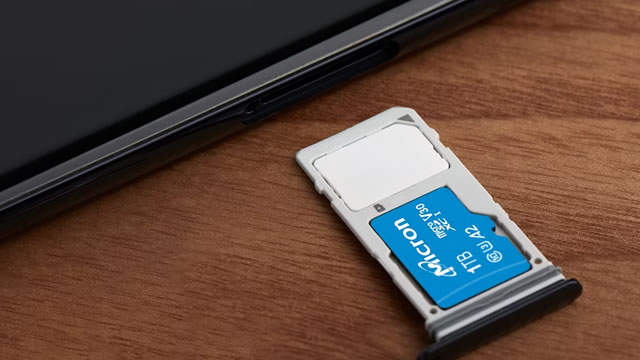
Micron Drops 4% Despite Strong Earnings: Is This a Buying Opportunity?
247Wallst· 2026-03-23 16:35
Core Viewpoint - Micron Technology reported strong Q1 earnings with a revenue of $13.64 billion, a 57% year-over-year increase, and a non-GAAP EPS of $4.78, exceeding estimates by 21%. Despite these strong results, the stock dropped 4%, raising questions about whether this presents a buying opportunity [1][7][9]. Financial Performance - Q1 revenue was $13.64 billion, up 57% year-over-year [1]. - Non-GAAP EPS was $4.78, beating estimates by 21% [1]. - Q2 guidance is set at $18.70 billion in revenue and $8.42 EPS, with expected non-GAAP gross margins of 68% [2][7]. Market Dynamics - Micron's stock fell 4% despite broader market gains, attributed to geopolitical tensions in the Middle East and profit-taking by investors [4][5][9]. - The stock had previously gained 48% year-to-date, making a pullback after significant gains not unusual [9]. Product Demand - High Bandwidth Memory (HBM) products are sold out through 2026, with strong demand from AI hyperscalers leading to premium pricing and wider margins [8]. - The Cloud Memory Business Unit generated $5.28 billion in revenue at a 66% gross margin last quarter [8]. Investor Sentiment - Retail investor sentiment on platforms like Reddit shifted negatively after the earnings report, reflecting frustration over the stock's decline despite strong fundamentals [12]. - Institutional investors, however, have shown increased confidence, with Procyon Advisors raising their stake in Micron by nearly 393% [14]. Geopolitical and Capital Expenditure Concerns - Geopolitical risks and concerns over capital expenditures are influencing investor sentiment, with questions about the sustainability of high margins while scaling capacity [2][10][15]. - Historical patterns show that Micron's stock has previously declined after strong earnings, indicating a potential trend of selling into strength [11][15].


Geopolitical Thaw: Why this Rally has Legs
ZACKS· 2026-03-23 16:35
Market Overview - US stock futures surged following President Trump's announcement to halt plans for military action against Iran, indicating a potential easing of geopolitical tensions [1] - The stock market is showing signs of resilience, with technical indicators suggesting a possible upward trend as uncertainty diminishes [8] Earnings Performance - Earnings from leading companies, particularly in the AI sector, remain strong despite market volatility and geopolitical issues [2] - Micron reported a record revenue increase of 196% year-over-year, driven by high demand for its high-bandwidth memory products, and provided optimistic Q3 revenue guidance [2] - Other AI-related companies such as NVIDIA, Broadcom, and Dell also exceeded Wall Street expectations and raised their forward guidance, indicating robust fundamentals in the sector [3] Market Sentiment - The recent rally in stocks is attributed to a reduction in Middle East tensions and a significant volume spike in the S&P 500 Index ETF, which is often associated with market capitulation [5][6] - The high trading volume on Friday marked the highest levels since the market bottom in November, suggesting a potential turning point for the market [6]



The Big 3: SPY, AVGO, VRT
Youtube· 2026-03-23 16:30
Market Overview - The market experienced a notable upward movement, prompting discussions on its sustainability amidst ongoing economic and geopolitical uncertainties [2][3] - The Federal Reserve's stance on inflation remains a critical factor influencing market dynamics [2] S&P 500 (SPY) - The S&P 500 ETF (SPY) showed a significant pop but is still trading lower year-to-date [3] - A put spread strategy is being employed for downside protection, reflecting cautious sentiment due to recent market volatility [4][6] - Technical indicators suggest a breakdown in the S&P 500, with the RSI reaching oversold conditions around 30, indicating potential for a bounce [7][8] - Resistance is noted at the 200-day moving average, with a potential trend shift if the index breaks above this level [10][11] Broadcom - Broadcom's stock is benefiting from a pause in geopolitical tensions, with a 4.5% increase noted [12] - A call spread strategy is being utilized, taking into account technical resistance at the 50 and 200-day moving averages [13][19] - The stock has seen a year-to-date decline of approximately 6%, with significant resistance levels identified around $350 to $400 [15][21] - Current trading is around $323.71, with a potential consolidation pattern observed [20] Verdive - Verdive has shown strong performance, up over 66% year-to-date, with recent price target increases from major financial institutions [21][22] - An iron condor strategy is being implemented, allowing for premium collection regardless of short-term price movements [22][23] - The stock is currently trading near all-time highs, with significant resistance at $276.78 [24][26] - Technical indicators suggest a potential pullback to the 50-day moving average around $223, indicating hesitance among buyers at current levels [28][29]

Musk Drives Tesla Closer to Its Transformation With New Chip Factory Plans
Investopedia· 2026-03-23 16:30
Core Insights - Tesla is advancing towards becoming an AI powerhouse with plans for a new chip factory in Austin, Texas, named "Terafab" [2][6] - The factory will produce two types of chips: one for Tesla's electric vehicles and Optimus robots, and another high-power chip for SpaceX and xAI [2][3] Financial Implications - The establishment of the new chip plant is expected to play a crucial role in supporting Tesla's AI initiatives, although it may require an investment of billions of dollars and take several years to complete [4] - Morgan Stanley analysts estimate that launching the chip factory could cost between $35 billion and $45 billion, with the earliest production timeline projected for mid-2028 [5] Market Reaction - Tesla's stock recently saw an increase of approximately 4% amid market volatility, indicating investor interest in the company's future plans [7]


Nvidia Partners With 6 US Energy Giants To Unlock 100 Gigawatts For AI
Benzinga· 2026-03-23 16:18
Core Insights - Nvidia Corp has partnered with six major U.S. energy companies to create AI data centers that can utilize up to 100 gigawatts of underutilized capacity in the U.S. power grid [1][2] - The partnership may provide a new revenue stream for publicly traded companies involved, allowing them to sell flexible power services to AI data centers [1] - Nvidia's Vera Rubin DSX AI Factory reference design, which includes DSX Flex software, enables real-time interaction between data centers and power grids [2] Group 1: AI Data Centers and Energy Utilization - The AI factories can leverage co-located generation and battery storage as bridge power initially, and later supply electricity back to the grid during peak demand [2] - Vistra's CEO emphasized that AI factories with flexible power usage can enhance grid utilization more rapidly, particularly with co-located generation [3] - Nscale's West Virginia campus is expected to scale from 2 to 8 gigawatts of onsite generation, transforming it into a power asset rather than merely a load [3] Group 2: Nvidia's Market Position and Challenges - Nvidia's primary challenge is not demand but the slow pace of data center construction due to grid interconnection delays, which can back up projects for years [4] - If DSX Flex allows AI factories to come online more quickly using bridge power, it could accelerate Nvidia's chip sales [5] - The potential emergence of competitors, such as Terafab, poses a risk to Nvidia's ecosystem [5] Group 3: Market Sentiment and Future Outlook - The AI Bubble Burst market indicates a 21% chance of an AI industry downturn by year-end, with a significant trigger being a 50% drop in Nvidia's stock from its all-time high [6] - The current deals, which secure real energy infrastructure commitments for AI capital expenditures, may help mitigate the risk of an industry downturn [6]

深度解读:热界面材料,芯片散热的“第一毫米”
DT新材料· 2026-03-23 16:05
Core Viewpoint - The article emphasizes the critical role of Thermal Interface Materials (TIM) in managing heat dissipation in AI chips, particularly as power densities increase significantly in the era of AI computing [2][3]. Group 1: AI Era Challenges in Chip Thermal Management - The rapid growth of AI model parameters has led to an exponential increase in chip power density, presenting a fundamental engineering challenge for the semiconductor industry [3]. - The total power of GPU packages is projected to rise dramatically, with NVIDIA's B200 GPU exceeding 1000W and future models potentially reaching 15,360W by 2032 [4]. Group 2: Consequences of Ineffective Thermal Management - Poor thermal management can cause irreversible damage to chip systems, including thermal throttling and accelerated wear of metal interconnects, significantly reducing chip lifespan [5]. - A 10°C increase in junction temperature can decrease MOSFET carrier mobility by 2-5%, leading to a substantial drop in device performance [5]. Group 3: Advanced Packaging Technologies and New Challenges - Modern AI chips utilize advanced packaging techniques, integrating multiple chiplets, which complicates thermal management due to increased thermal resistance [6]. - The CoWoS packaging by NVIDIA exemplifies this trend, with unprecedented dimensions and thermal management requirements [6]. Group 4: Strategic Importance of TIM - TIM contributes approximately 30-50% of the total thermal resistance in the heat path from chip to cooling liquid, making its optimization crucial for enhancing system performance [11]. - The effectiveness of cooling systems is limited if heat cannot be efficiently transferred from the chip surface to the cooling plate, highlighting the importance of TIM [8]. Group 5: TIM Layer System - TIM is categorized into three layers: TIM1 (between die and IHS), TIM1.5 (for lidless packages), and TIM2 (between IHS and heatsink), each with specific performance requirements [12][18]. - TIM1 is critical for heat flow density and is primarily composed of high-fill thermal grease and nano-silver sintering materials [16]. Group 6: Market Trends in TIM Materials - The market for TIM materials includes various technologies such as thermal grease, phase change materials, and thermal pads, each with distinct advantages and limitations [22][23][24]. - Liquid metal is emerging as a high-end TIM option due to its superior thermal conductivity, although it faces challenges in material compatibility and long-term reliability [26]. Group 7: Supply Chain of TIM Materials - Key suppliers in the TIM market include Dow, Henkel, DuPont, and Indium Corporation, each offering a range of thermal interface materials tailored for high-performance applications [27][28][29][30]. - The competitive landscape for thermal management materials is evolving, with a focus on innovations in TIM technologies that can meet the demands of next-generation AI infrastructure [56].

16+超精密加工知名企业,邀您参加FINE2026先进半导体展丨6月10-12日 上海
DT新材料· 2026-03-23 16:05
Core Viewpoint - The article emphasizes the explosive demand for high-performance, high-power, and high-frequency devices driven by future industries such as artificial intelligence, 6G, embodied intelligence, and new energy vehicles, leading to accelerated iterations in third and fourth generation semiconductor materials and advanced packaging processes [1] Group 1: Industry Trends - The demand for third and fourth generation semiconductor materials, including silicon carbide, diamond, gallium nitride, gallium oxide, and aluminum nitride, is rapidly increasing due to technological advancements [1] - Key processes such as wafer thinning, laser micro-nano processing, ultra-precision grinding and polishing, and hard and brittle material forming are becoming essential to overcome challenges like "power consumption walls" and "thermal management" [1] Group 2: Technological Advancements - The article highlights the importance of advanced packaging techniques in meeting the high-performance requirements of emerging technologies [1] - Innovations in semiconductor manufacturing processes are crucial for enhancing device efficiency and performance in response to the growing market demands [1]

The $1 Trillion Opportunity Advanced Micro Devices, Inc. (AMD) Wants In On
Yahoo Finance· 2026-03-23 16:02
Core Insights - Advanced Micro Devices, Inc. (NASDAQ:AMD) is recognized as one of the top five tech stocks with the best earnings growth projected for 2026, focusing on data center and AI markets [1] - The company anticipates a compound annual growth rate (CAGR) of 35% over the next three to five years, aiming for earnings per share (EPS) exceeding $20 during this period [2] - AMD plans to capture $120 billion in AI revenue from a projected $1 trillion market by 2030, with an expected CAGR of over 80% in its data center AI segment [2] Operational Positioning - AMD is strategically positioned to benefit from partnerships with Meta and OpenAI, indicating strong future growth potential [5] - The CEO expressed optimism about the company's trajectory, emphasizing the ambitious EPS target and market dynamics [5] - Wolfe Research has reiterated an Outperform rating for AMD, setting a price target of $300, although caution was noted regarding the client and gaming segments due to rising memory prices [5] Company Overview - AMD is a California-based semiconductor company operating in three segments: Data Center, Client and Gaming, and Embedded, serving a diverse clientele including original equipment manufacturers and system integrators [6]

What Street Thinks About Broadcom Inc. (AVGO)
Yahoo Finance· 2026-03-23 16:02
Core Insights - Broadcom Inc. (NASDAQ:AVGO) is recognized as one of the top five tech stocks with the best earnings growth projected for 2026, supported by a recent earnings report and guidance update [1] - The company anticipates that networking will contribute up to 40% of total AI revenues, which is expected to help maintain gross margins between 72% and 74% [1] - Broadcom's AI revenues are projected to exceed $100 billion in FY27, with EPS estimates raised to $20 for CY2027, and a target range of $23-$25 now considered achievable [2] Price Target Adjustments - Cantor Fitzgerald has maintained an Overweight rating on Broadcom with a price target of $525, while Rosenblatt has increased its price target to $500 from a previous undisclosed level, both indicating strong confidence in the company's future performance [1][3] Company Overview - Broadcom Inc., headquartered in Palo Alto, California, specializes in the development and supply of semiconductor devices and infrastructure software solutions, operating in two segments: Semiconductor Solutions and Infrastructure Software [4]