
电池

Search documents
金龙羽投建固态电池量产线 加速研发成果落地
Zheng Quan Shi Bao Wang· 2026-01-12 13:31
Core Viewpoint - Jinlongyu is accelerating the production capacity of solid-state batteries by investing approximately 1.2 billion yuan in a new production line project in Shenzhen, aiming to capitalize on opportunities in the new energy and solid-state battery sectors [1][2]. Group 1: Investment and Production Plans - Jinlongyu plans to invest around 1.2 billion yuan in a solid-state battery production line with an estimated annual capacity of 2 GWh, with construction expected to take 24 months [1]. - The investment includes approximately 900 million yuan for construction, equipment procurement, and facility renovations [1]. - The project will be executed by Jinlongyu's subsidiary, Jinlongyu New Energy (Shenzhen) Co., Ltd., in which Jinlongyu holds about 91.67% of the shares [1]. Group 2: Strategic Development and R&D - The investment aligns with Jinlongyu's strategic development plan to leverage opportunities in the solid-state battery field and further industrialize research results [1][2]. - Since 2021, Jinlongyu has committed to investing up to 300 million yuan over five years in collaboration with Jintianyi for the research and development of solid-state batteries and key materials [2]. - The company has made progress in R&D, including successful customer testing of semi-solid batteries and oxide electrolyte products, as well as validation of silicon-based anode materials [2]. Group 3: Industry Context and Future Outlook - The solid-state battery industry is moving towards a clear timeline, with goals for small-scale production by 2027 and large-scale production by 2030, indicating a shift from concept to practical implementation [3]. - Over 20 battery and material companies in China are reportedly initiating solid-state battery production capacity by 2025, marking a critical phase of technological convergence and acceleration [3].
新宁物流:关于重大诉讼事项的公告
Zheng Quan Ri Bao Zhi Sheng· 2026-01-12 13:12
Core Viewpoint - The company XinNing Logistics announced a lawsuit against Zhuhai Guanyu Battery Co., Ltd. for damages resulting from a fire incident in December 2015, where the battery company's products were identified as the cause of the fire [1] Group 1: Incident Details - In December 2015, a fire occurred at Shenzhen XinNing Warehouse, which was determined to be caused by lithium batteries stored at the fire point, belonging to Zhuhai Guanyu Battery Co., Ltd. [1] - The court ruling has established that Zhuhai Guanyu is responsible for 30% of the damages caused by the fire [1] Group 2: Legal Action - XinNing Logistics' subsidiary, Shenzhen XinNing Modern Logistics Co., Ltd., has filed a lawsuit in the People's Court of Pingshan District, Shenzhen, seeking compensation of RMB 64.5264 million and interest from Zhuhai Guanyu [1] - As of the date of the announcement, the case has not yet been heard in court, and the impact on the company's current or future profits remains uncertain [1]


全球电池企业加码“新材料”扩产
高工锂电· 2026-01-12 12:23
Core Viewpoint - The article highlights a shift in the battery supply chain, where leading battery companies are increasingly driving the expansion of new battery materials through production lines, equity investments, and long-term supply commitments, rather than relying solely on material companies [2][3]. Group 1: Expansion of Battery Materials - Guoxuan High-Tech has commenced a project in Anhui, which includes an annual production capacity of 100,000 tons of positive electrode materials and a 10,000-ton capacity for silicon-carbon negative materials, indicating a move towards large-scale production of silicon-carbon [2]. - Tianhua New Energy's subsidiary, Yili Technology, has started the construction of a production line for high-nickel ternary positive electrode materials for solid-state batteries, with a planned annual output of 5,200 tons [2]. - The close relationship between Tianhua New Energy and CATL is emphasized, as CATL has acquired a 12.95% stake in Tianhua New Energy, becoming the second-largest shareholder [2]. Group 2: Strategic Investments and Partnerships - The investment by CATL in the Fujian Shidai Zeyuan equity investment fund, which has become a shareholder in Tianmu Xian Dao Battery Material Technology Co., Ltd., reflects a strategic move to secure material supply [4]. - Tianmu Xian Dao's business includes high-end nano-silicon-based negative electrodes, solid-state electrolytes, and sodium-ion battery hard carbon negative electrodes, showcasing a diverse material focus [5]. - CATL's partnership with Rongbai Technology includes a commitment to source at least 60% of its sodium battery positive electrode powder from Rongbai, effective until December 31, 2029, which solidifies supply chain stability [6][7]. Group 3: Market Trends and Global Examples - The article notes a global trend where leading battery companies are driving material expansion, as seen in Panasonic's agreement with silicon-based negative material company Sila to procure next-generation silicon negative materials [9][10]. - Sila plans to complete its factory in Moses Lake, Washington, by Q1 2025, with deliveries of qualified materials expected to start in Q4 2025, indicating a focus on local supply chains in North America [10][11]. - Samsung SDI's collaboration with BMW and SolidPower for a solid-state battery validation project emphasizes the importance of establishing a stable supply chain and quality standards across materials, cells, and vehicles [13]. Group 4: Conclusion on Material Expansion Logic - Since the second half of 2025, a consistent logic has emerged in new material expansion, with silicon-carbon, sodium-ion, and solid-state technologies advancing simultaneously [14]. - Leading battery companies are addressing uncertainties in material expansion through three main strategies: integrating key materials into their production plans, acquiring potential key material companies through equity, and securing long-term supply commitments to transform material expansion into a manageable engineering issue [14].


金龙羽:控股子公司拟投资建设年产2GWh固态电池量产线项目,项目总投资约12亿元
Xin Lang Cai Jing· 2026-01-12 11:17
金龙羽公告,公司控股子公司金龙羽新能源(深圳)有限公司拟在深圳市大鹏新区投资建设年产2GWh 固态电池量产线项目,项目估算总投资约12亿元。 ...
CINE2026(第三届)固态电池及钠电国际展定档2026年11月6-7日,广州南沙举办!
起点锂电· 2026-01-12 10:58
Group 1 - The CINE2026 (3rd Solid-State Battery and Sodium Battery International Exhibition) will take place from November 6 to 7, 2026, at the Guangzhou Nansha International Convention and Exhibition Center [1][3] - The event will feature over 200 exhibitors, 2000 participating companies, and 20,000 professional attendees [1] - Concurrent activities include the 2026 Starting Point Solid-State Battery Annual Conference and the Sodium Battery Annual Conference, along with the respective award ceremonies [1][3] Group 2 - The exhibition will have various registration fees, including 15,000 RMB for a standard 9 square meter booth and 1,300 RMB per square meter for special construction booths [6] - Participation in the annual conferences will cost 3,188 RMB for VIP attendees and 2,188 RMB for regular attendees [6] - Free admission is available for those who share promotional articles on social media [6] Group 3 - The organizing committee includes multiple contacts for inquiries related to exhibition participation, sponsorship, and media cooperation [7][8] - A list of past exhibitors includes companies such as Jin Na Technology, Tian Neng Sodium Battery, and others, indicating a diverse representation in the sodium battery and solid-state battery sectors [9]

邀请函丨2026(第6届)起点锂电两轮车换电大会暨轻型动力电池鲁班奖颁奖典礼定档2026年7月,深圳举办!
起点锂电· 2026-01-12 10:58
Event Overview - The 2026 (6th) Qidian Lithium Battery Two-Wheeled Vehicle Battery Swap Conference and the Luban Award Ceremony for Lightweight Power Batteries will be held on July 16, 2026, in Shenzhen [2][3] - The theme of the event is "Co-creating a New Chapter in Lightweight Power and Leading the Future of Two-Wheeled Battery Swapping" [2] Agenda Highlights - The conference will include discussions on innovative business models for battery swapping, lifecycle management of two-wheeled vehicle batteries, and connector technology trends [4] - Specialized sessions will focus on electric motorcycles and battery technology, including applications of lithium iron phosphate cylindrical batteries and safety design standards [4] - A dedicated session for electric bicycles will cover topics such as the application of full-tab cylindrical batteries and the development trends of battery technology under new national standards [4] Participating Companies - Over 100 electric two-wheeled vehicle and battery swap operation companies are expected to attend, including major players like Yadea, Aima, and Niu Technologies [5] - More than 150 lightweight power and battery swap battery companies will participate, including companies like EVE Energy, BYD, and CATL [5][6] - Additional participation from over 30 battery management system (BMS) companies and various battery material and equipment manufacturers [6] Registration Information - Three registration options are available: SVIP at 3188 RMB, VIP at 2188 RMB, and a free option with promotional requirements [8] - The registration deadline is June 30, 2026, and on-site registration will not be accepted [8] Additional Services - Attendees will receive benefits such as a 2026 two-wheeled vehicle and battery swap industry chain map, self-service lunch, and access to the latest industry summary presentations [9]

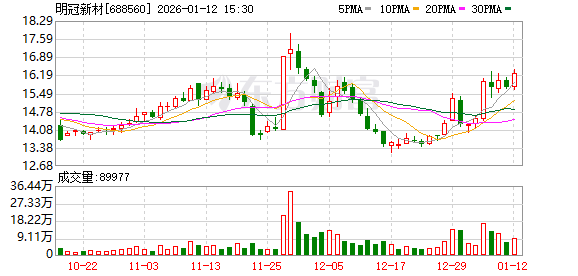
明冠新材:公司铝塑膜客户主要有冠宇、赣锋、孚能、国轩、骆驼、派能、华宇钠电等
Mei Ri Jing Ji Xin Wen· 2026-01-12 10:13
Core Viewpoint - The company is focusing on enhancing the consistency and stability of its aluminum-plastic film products for power and energy storage batteries, while also promoting their application in consumer electronics, low-altitude economy, and artificial intelligence sectors [2]. Group 1: Product Application and Market Focus - The company is exploring the application of its products in commercial aerospace, low-altitude economy, and artificial intelligence fields [2]. - The gradual recovery in the consumer electronics sector is driving the company's efforts to improve its product offerings [2]. Group 2: Clientele and Market Position - Key clients for the company's aluminum-plastic film products include prominent names such as Guanyu, Ganfeng, Funeng, Guoxuan, Camel, Pylon, and Huayu Sodium Battery [2]. - The company aims to steadily enhance the competitiveness and market share of its aluminum-plastic film products within the industry [2].

我国取消光伏、电池等产品增值税出口退税
Sou Hu Cai Jing· 2026-01-12 09:34
Core Viewpoint - The announcement from the Ministry of Finance and the State Taxation Administration indicates significant changes to the export tax rebate policies for photovoltaic products and batteries, which may impact the financial performance of companies in these sectors starting from 2026 [2] Group 1: Policy Changes - From April 1, 2026, the export tax rebate for photovoltaic products will be canceled [2] - From April 1, 2026, to December 31, 2026, the export tax rebate rate for battery products will be reduced from 9% to 6%, and will be completely canceled starting January 1, 2027 [2] - The consumption tax policy for products subject to consumption tax will remain unchanged, continuing to apply the consumption tax rebate (exemption) policy [2] Group 2: Implementation Details - The applicable export tax rebate rates for the listed products will be determined based on the export date indicated on the customs declaration [2]
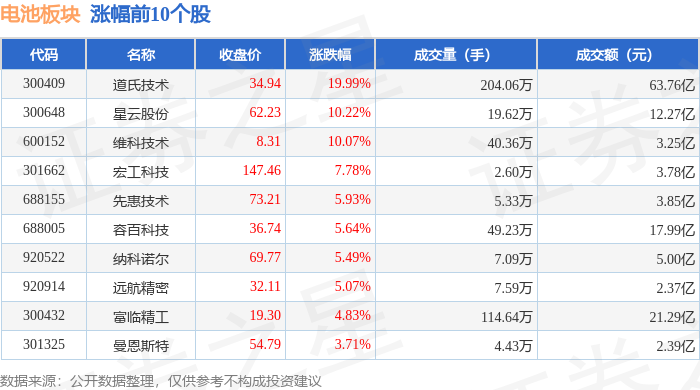
电池板块1月12日跌0.99%,德福科技领跌,主力资金净流出72.48亿元
Zheng Xing Xing Ye Ri Bao· 2026-01-12 09:10
| 代码 | 名称 | 收盘价 | 涨跌幅 | 成交量(手) | 成交额(元) | | --- | --- | --- | --- | --- | --- | | 301511 | 德福科技 | 32.26 | -9.10% | 80.69万 | 25.60亿 | | 300619 | 金银河 | 45.38 | -4.98% | 17.87万 | 8.22亿 | | 600884 | 杉杉股份 | 13.33 | -3.82% | 138.41万 | 18.55 亿 | | 300450 | 先导智能 | 56.24 | -3.70% | 135.95万 | 76.42 亿 | | 603659 | 璞泰来 | 26.95 | -2.74% | 48.21万 | 12.98 Z | | 002850 | 科达利 | 162.13 | -2.69% | 8.56万 | 13.74亿 | | 001283 | 蒙腊科技 | 70.99 | -2.42% | 5.42万 | 3.84亿 | | 301358 | 湖南裕能 | 62.08 | -2.37% | 28.50万 | 17.74亿 | | 300953 ...


每经热评:取消光伏和电池出口退税 有利产业进化和财政资源优化
Sou Hu Cai Jing· 2026-01-12 09:10
Core Viewpoint - The Ministry of Finance and the State Taxation Administration announced the cancellation of export tax rebates for photovoltaic and battery products, indicating a shift towards a mature industry that no longer requires policy support [1][2]. Group 1: Policy Changes - Starting from April 1, 2026, the export VAT rebate for photovoltaic products will be eliminated, and the rebate rate for battery products will be reduced from 9% to 6% until the end of 2026, after which it will also be canceled [1]. - Prior to this, the export rebate rate for certain products, including photovoltaic and battery products, was reduced from 13% to 9% on December 1, 2024 [1]. Group 2: Industry Competitiveness - The reduction and eventual cancellation of export tax rebates reflect the enhanced global competitiveness of China's photovoltaic and battery products, which account for approximately 80% of global solar cells and 70% of lithium batteries [1][2]. - The industry has reached a stage where the support from export tax rebates is limited due to established technological, scale, and cost advantages [2]. Group 3: Market Dynamics - The cancellation of export tax rebates is expected to accelerate market clearing, leading to the elimination of smaller companies that rely heavily on these rebates for profitability, while larger firms with technological and cost advantages will strengthen their market positions [2]. - The photovoltaic industry has faced severe price declines, with prices dropping from $0.24 per watt at the beginning of 2023 to $0.09 per watt, resulting in a 33% year-on-year decrease in export value for 2024 [2]. Group 4: Fiscal Resource Optimization - The removal of export tax rebates for strong industries allows for better allocation of fiscal resources towards domestic demand and social welfare, addressing challenges such as insufficient effective demand and overcapacity in certain sectors [3]. - The adjustments in export tax rebates are part of a broader strategy to enhance macroeconomic regulation, ensuring that fiscal resources are directed towards areas that require more support, such as consumer subsidies and employment assistance [3].