脑机接口

Search documents
离开Neuralink后,麦克斯・霍达克在打造更离奇的东西
Xin Lang Cai Jing· 2025-12-05 14:14
Core Insights - The article discusses the advancements and ambitions of Science Corp, particularly in the field of brain-computer interface (BCI) technology, led by CEO Max Hodak, who previously co-founded Neuralink [1][2][3] Company Overview - Science Corp was founded by Max Hodak and three former Neuralink colleagues approximately four years ago, aiming to create innovative BCI solutions [2][3] - The company is focused on generating revenue by manufacturing and selling tools for researchers, transforming expensive systems into affordable devices [3][19] Product Development - The initial commercial product, named Prima, involves a tiny computer chip implanted in the retina to restore vision for patients with late-stage macular degeneration, achieving an 80% success rate in clinical trials [4][20] - The company acquired the Prima technology from Pixium Vision and has optimized it for clinical trials, with plans to launch in Europe next summer [4][20] Future Innovations - Science Corp is exploring optogenetic gene therapy to make neurons light-sensitive, aiming to eliminate the need for electrodes in BCI applications [5][21][22] - The company is also investigating the potential to cultivate new brain tissue, which could overcome limitations associated with traditional electrode technology [7][23] Long-term Vision - Hodak envisions that BCI technology could eventually lead to the creation of conscious machines, addressing the fundamental nature of consciousness and its implications for human experience [10][24][25] - By 2035, Hodak predicts that BCI technology will be available for patients, potentially allowing for consciousness uploading as a treatment option for terminal illnesses [12][26] Economic Implications - The article highlights concerns about the economic model of healthcare as BCI technology becomes more prevalent, suggesting that it may lead to increased healthcare costs and a divide between wealthy and less affluent individuals [14][27] - Hodak argues that while consumer technology tends to become cheaper and more accessible, the healthcare sector operates under a fixed funding model that may not sustain the rising costs associated with advanced BCI technologies [14][27]
【股市20251205】
债券笔记· 2025-12-05 12:54
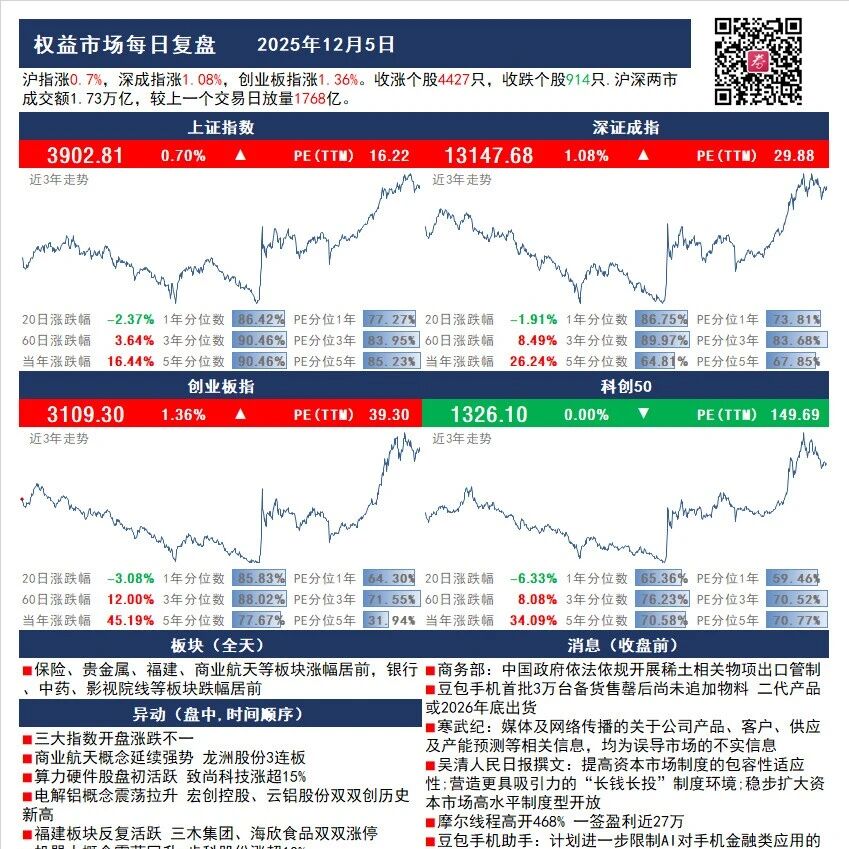
Market Overview - The Shanghai Composite Index rose by 0.7% to 3902.81, while the Shenzhen Component Index increased by 1.08% to 13147.68, and the ChiNext Index gained 1.36% to 3109.30 [1][2] - A total of 4427 stocks closed higher, while 914 stocks closed lower, indicating a positive market sentiment [1][3] - The trading volume in the Shanghai and Shenzhen markets reached 1.73 trillion, an increase of 176.8 billion compared to the previous trading day [1] Performance Metrics - The 20-day performance for the Shanghai Composite Index showed a decline of 2.37%, while the Shenzhen Component Index experienced a decrease of 1.91% [2] - The annual performance for the Shanghai Composite Index is up by 16.44%, and the Shenzhen Component Index has increased by 26.24% [2] - The ChiNext Index has seen a significant annual increase of 45.19% [2] Sector Performance - Sectors such as insurance, precious metals, and commercial aerospace showed strong gains, while traditional sectors like Chinese medicine and film exhibition faced declines [2] - The electric aluminum concept stocks experienced volatility, with companies like Hongchuang Holdings and Yun Aluminum reaching historical highs [2] - The robotics sector saw a rebound, with companies like Boke Technology rising over 10% [2] Notable Stock Movements - The stock of Moer Thread opened high with a 468% increase, leading to significant profits for investors [2] - Companies in the Fujian sector, such as Sanmu Group and Haixin Food, reached their daily limit [2] - The AI glasses concept saw a surge, with Doctor's Glasses rising over 10% [2] Market Sentiment - The overall market sentiment is improving, with a board sealing rate close to 80% [2] - The National Development and Reform Commission has allocated 35.5 billion for investment projects, indicating government support for economic growth [2]




大湾区城市群有大动作!点题10类产业,建三大都市圈委员会
2 1 Shi Ji Jing Ji Bao Dao· 2025-12-05 12:28
Core Viewpoint - The Guangdong Provincial People's Congress has unanimously passed a decision to promote high-quality development in the nine cities of the Guangdong-Hong Kong-Macao Greater Bay Area, focusing on innovative and sustainable urban development [2]. Group 1: Strategic Industry Development - The decision emphasizes accelerating the development of strategic emerging industries such as integrated circuits, low-altitude economy, new energy storage, and new materials, while also planning for future industries like quantum technology and artificial intelligence [4][6]. - The goal is to create a synergistic effect in the industrial chain within urban clusters, enhancing collaboration between cities through various innovative cooperation models [4][7]. Group 2: Economic Growth Projections - The GDP of the nine cities in the Greater Bay Area is projected to reach 11.54 trillion yuan in 2024, accounting for over 80% of Guangdong's total economic output, with nine industry clusters exceeding one trillion yuan each [6]. Group 3: Administrative and Institutional Innovations - The decision includes establishing a joint meeting system for integrated development among the nine cities to address major issues and break down administrative barriers [11]. - It aims to enhance urban integration by forming planning committees for major urban clusters, ensuring unified planning and implementation [11]. Group 4: Coordination and Collaboration - The focus is on both "hard connectivity" (infrastructure) and "soft connectivity" (policy and regulatory frameworks) to facilitate collaboration among the cities [5][12]. - The decision encourages the optimization of industrial layouts to reduce redundancy and promote differentiated investment directions [12]. Group 5: Future Directions - The next steps involve leveraging major cooperation platforms to enhance cross-border flow of people, goods, and capital, aiming to create a world-class urban cluster through continuous exploration of high-quality development [12].

脑机接口加速临床普惠:首例政府指导价手术落地武汉
2 1 Shi Ji Jing Ji Bao Dao· 2025-12-05 10:39
Core Viewpoint - The first government-guided pricing brain-computer interface (BCI) surgery in China has been successfully implemented, marking the formal inclusion of implantable BCI technology into the standardized medical service system [1][3]. Group 1: Clinical Application and Policy Support - The BCI technology is rapidly transitioning from laboratory research to clinical application, with the first surgery performed in Wuhan on a patient with spinal cord injury [1][3]. - The surgery utilized a 64-channel high-throughput flexible electrode device, which accurately monitors brain signals related to hand movement and sensation [3]. - The National Healthcare Security Administration has established specific pricing for BCI services, including a placement fee of 6,552 yuan per procedure, which provides a regulatory framework for clinical implementation [3][4]. Group 2: Industry Development and Market Potential - The successful surgery at Tongji Hospital is seen as a critical step towards the large-scale clinical application of BCI technology, fostering its accessibility and industrial development [4][5]. - Multiple cities in China have established clinical transformation centers for BCI, indicating a growing ecosystem and collaborative environment for BCI technology [4][6]. - The BCI market in China is projected to reach 3.2 billion yuan in 2024, with an expected growth rate of 18.81% year-on-year, indicating significant market potential [6][7]. Group 3: Investment and Competitive Landscape - Investment activity in the brain science and BCI sector is increasing, with 14 financing events reported in the first half of 2025, totaling over 800 million yuan [7]. - China has a unique advantage in the BCI industry, with over 800 core enterprises in the sector, primarily located in China and the United States [7]. - The BCI technology is becoming a focal point of global technological competition, with advancements in flexible, minimally invasive, and intelligent solutions being pursued [7].
南京熊猫电子股份走高,2025脑机接口大会开幕,国内临床转化进入关键阶段
Zhi Tong Cai Jing· 2025-12-05 05:58
Group 1 - The 2025 Brain-Computer Interface Conference will be held in Shanghai from December 4 to 5, focusing on the theme "Connecting Minds, Innovating Shanghai" [3] - The conference will feature a main forum, eight sub-forums, a product launch, a developer forum, and four competitions to showcase the latest advancements and application prospects in brain-computer interface technology [3] - The conference venue is located in the Minhang District's New Hongqiao International Medical Center, near Fudan University Huashan Hospital, leveraging clinical resources for development [3] Group 2 - The conference aims to establish Shanghai as a global hub for brain-computer interface innovation and industry development, supported by the local government and the Shanghai Municipal Science and Technology Commission [3] - Significant clinical trials related to brain-computer interfaces have been initiated, including the first domestic implantable brain-computer interface GCP clinical trial and the first real-time Chinese language decoding IIT trial [4] - These advancements have garnered attention from prestigious international journals such as Nature and MIT Technology Review, highlighting the global interest in the developments [4]
马斯克收心了?官宣了39岁印度裔伴侣:相貌普通为他生了4个孩子
Sou Hu Cai Jing· 2025-12-05 04:04
Group 1: Elon Musk's Background and Achievements - Elon Musk was born in 1971 in South Africa and has a strong interest in technology from a young age, leading to his self-education in programming [1] - He moved to Canada in 1989, attended Queen's University, and later transferred to the University of Pennsylvania, where he majored in physics and economics [1] - Musk founded several companies including Zip2, PayPal, SpaceX, and Tesla, amassing a fortune worth hundreds of billions of dollars [1] - Tesla's factory in Shanghai has contributed significantly to the growth of the new energy vehicle industry in China [1] Group 2: Musk's Personal Life and Family - Musk has a complex personal life, having been married three times and fathering 14 children, with a focus on encouraging intelligent individuals to have more children [3][5] - His relationship with Shivon Zilis, a high-ranking executive at Neuralink, has garnered attention, especially after they had multiple children together [11][15] - Zilis, who has a strong academic background and experience in AI, has been a significant partner in Musk's ventures, particularly in the field of brain-machine interfaces [8][18] Group 3: Neuralink and Future Prospects - Neuralink, co-led by Zilis, is working on groundbreaking brain-machine interface technology that could revolutionize medical fields and assist disabled individuals [18][20] - The company is expected to achieve new breakthroughs in 2025, with Zilis playing a crucial role in its development [24] - Musk's focus on expanding his technological empire continues, with a strong emphasis on the importance of family and cultural diversity in his personal life [22][24]

南京熊猫电子股份涨近7% 2025脑机接口大会开幕 国内临床转化进入关键阶段
Zhi Tong Cai Jing· 2025-12-05 03:41
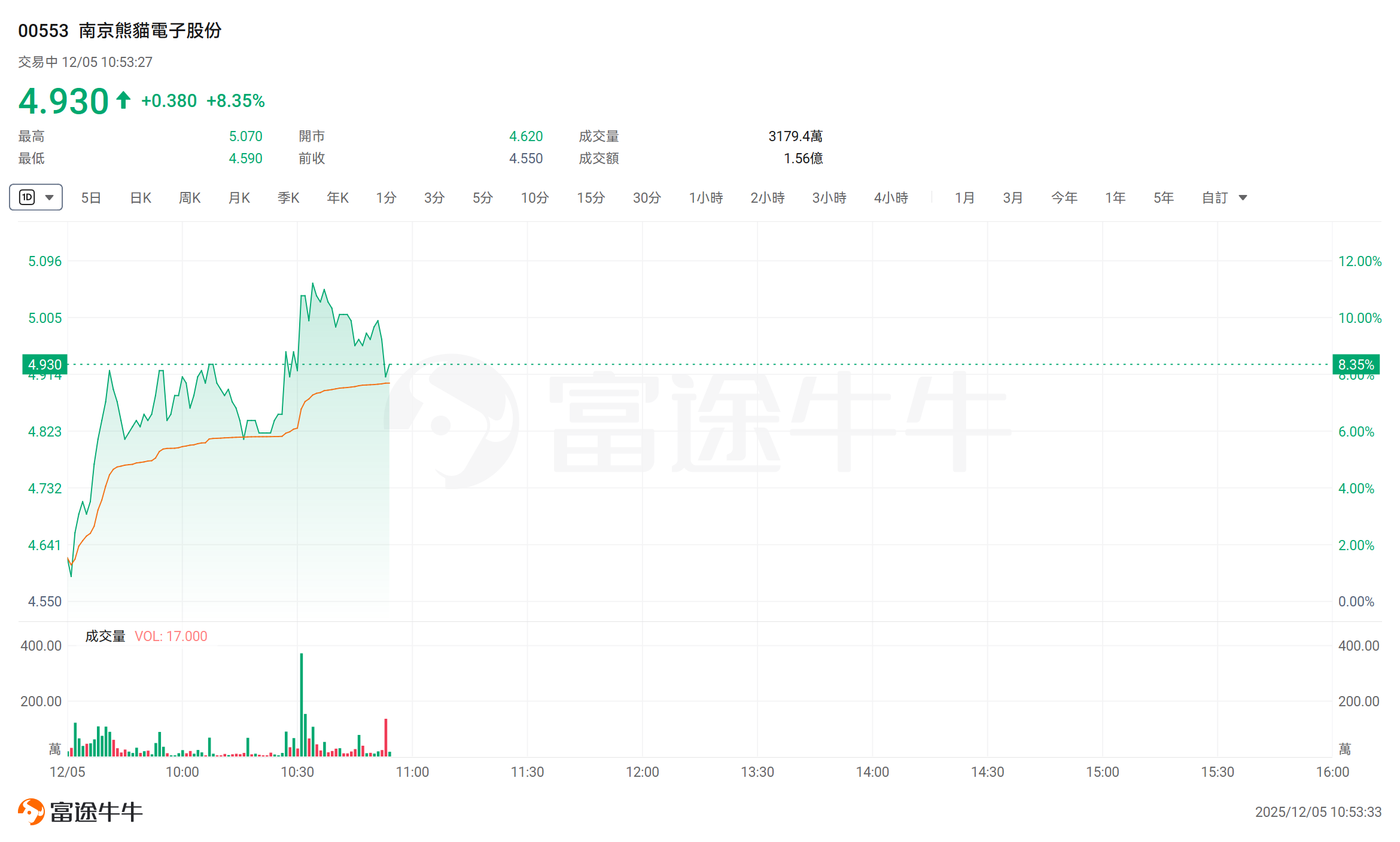
Core Viewpoint - Nanjing Panda Electronics (600775) shares increased nearly 7%, reaching HKD 4.86 with a trading volume of HKD 71.7075 million, driven by news related to the upcoming 2025 Brain-Computer Interface Conference in Shanghai [1] Group 1: Event Overview - The Shanghai Municipal Science and Technology Commission held a press conference for the 2025 Brain-Computer Interface Conference on December 1 [1] - The conference will take place from December 4 to 5, themed "Connecting the Brain World, Intelligence Gathering in Shanghai," featuring one main forum, eight sub-forums, one product launch, one developer forum, and four competitions [1] Group 2: Industry Development - The conference will showcase the latest advancements and application prospects in brain-computer interface technology [1] - The event is set in the "Brain Intelligence Land" future industry cluster area, located in the Minhang District near Fudan University Huashan Hospital [1] - The local government and the Shanghai Municipal Science and Technology Commission are establishing platforms for concept validation, testing certification, and pilot processing to attract top domestic and international teams and companies [1] Group 3: Clinical Trials and Research - The first domestic implantable brain-computer interface GCP clinical trial and several pioneering trials in real-time Chinese language decoding and invasive brain-computer interface systems have been initiated [1] - These advancements have garnered significant attention from international journals such as Nature and MIT Technology Review [1]
脑机接口概念异动拉升 南京熊猫涨停
Xin Lang Cai Jing· 2025-12-05 03:23
Core Viewpoint - The brain-computer interface concept has seen significant market activity, with notable stock price increases among related companies on December 5th [1][2] Group 1: Stock Performance - Nanjing Panda reached its daily limit up, indicating strong investor interest [1][2] - Dineike experienced a nearly 10% increase in stock price, reflecting positive market sentiment [1][2] - Other companies in the sector, including Beiyikang, Innovation Medical, Chengyitong, and Aipeng Medical, also saw their stock prices rise [1][2]
港股异动 南京熊猫电子股份(00553)涨近7% 2025脑机接口大会开幕 国内临床转化进入关键阶段
Jin Rong Jie· 2025-12-05 03:22
Core Viewpoint - Nanjing Panda Electronics Co., Ltd. (00553) experienced a nearly 7% increase in stock price, reaching 4.86 HKD with a trading volume of 71.7075 million HKD, following news related to the upcoming 2025 Brain-Computer Interface Conference in Shanghai [1]. Group 1: Event Overview - The Shanghai Municipal Science and Technology Commission held a press conference on December 1 for the 2025 Brain-Computer Interface Conference, scheduled for December 4-5, themed "Brain Link World · Intelligent Shanghai" [1]. - The conference will feature one main forum, eight sub-forums, one product launch, one developer forum, and four competitions, showcasing the latest advancements and application prospects in brain-computer interface technology [1]. Group 2: Industry Development - The conference will take place in the "Brain Intelligence World" future industry cluster area located in the Minhang District, near Fudan University Huashan Hospital [1]. - The local government and the Shanghai Municipal Science and Technology Commission are establishing platforms for concept validation, testing certification, and pilot processing to attract outstanding domestic and international teams and companies, aiming to make Shanghai a global hub for brain-computer interface innovation [1]. Group 3: Clinical Trials and Research - The first domestic implantable brain-computer interface GCP clinical trial, the world's first real-time Chinese language decoding IIT trial, the first domestic cerebrospinal interface IIT trial, and the first domestic invasive brain-computer interface system prospective clinical trial have been initiated, receiving significant attention from international journals such as Nature and MIT Technology Review [1].
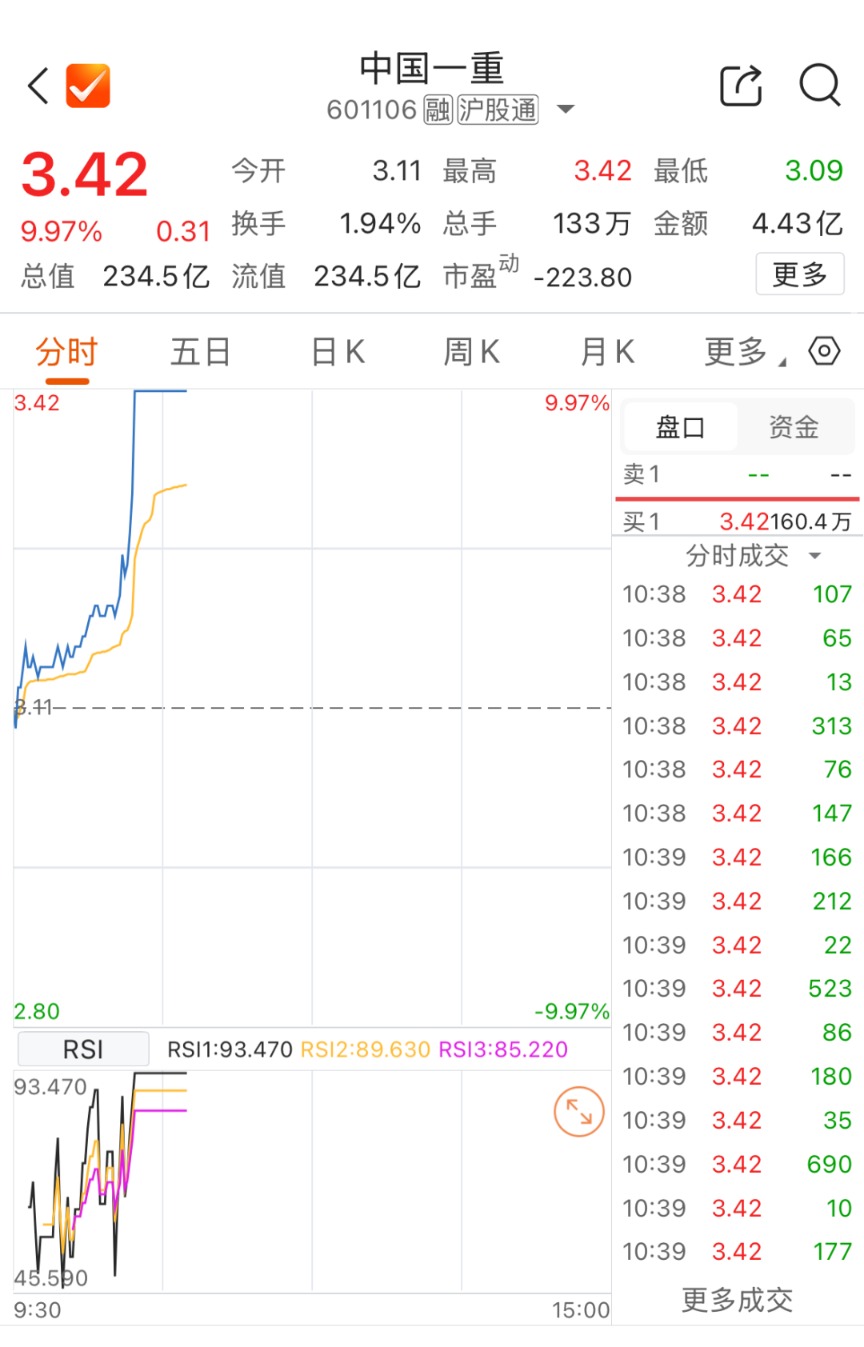
601106,直线涨停
Shang Hai Zheng Quan Bao· 2025-12-05 03:17
Group 1: Industrial Mother Machine Sector - The industrial mother machine sector shows a positive trend with a total index increase of 1.29% to 1754.21 [2] - Key stocks in this sector include: - GuoJi Heavy Industry (601399) with a price of 4.63, up by 9.98% and 42.46% over the past five days [2] - China First Heavy Industries (601106) at 3.42, also up by 9.97% and 13.62% over the last five days [2] - Weihong Co., Ltd. (300508) at 38.12, increasing by 9.29% and 10.05% in five days [2] - Other notable performers include: - Yuhuan CNC (002903) at 24.54, up by 6.70% [2] - Ruineng Technology (603933) at 30.40, with a 5.89% increase [2] Group 2: Brain-Computer Interface Sector - The brain-computer interface sector experienced significant activity, highlighted by the upcoming "Brain Link World, Intelligence Gathering in Shanghai" conference scheduled for December 4-5, 2025 [3] - Key stocks in this sector include: - Dineike (300884) with a price of 16.82, up by 14.34% and 18.09% over the past five days [3] - Nanjing Panda (600775) at 12.55, increasing by 9.99% and 13.78% [3] - Chengyitong (300430) at 18.99, up by 3.94% [3] - Other stocks showing positive movement include: - Beiyikang (920199) at 34.70, up by 3.89% [3] - Innovation Medical (002173) at 22.29, with a 3.05% increase [3]