
数据产业

Search documents
万亿级数字产业集群,长三角如何“下好这盘棋”?
Guo Ji Jin Rong Bao· 2025-10-23 12:07
Core Insights - The Chinese government plans to establish a trillion-level digital industry cluster in the Yangtze River Delta region, focusing on artificial intelligence and digital supply chains to enhance the integration of the digital economy with advanced manufacturing and modern services [1][2] - The Yangtze River Delta data cooperation group has been formed to accelerate resource integration and innovation application across Shanghai, Jiangsu, Zhejiang, and Anhui [1][2] - By 2024, the data industry scale in the Yangtze River Delta is expected to account for 22.6% of the national total, highlighting the region's strength and potential in the digital industry [1] Group 1: Regional Development - The Yangtze River Delta's integration into a national strategy emphasizes efficient circulation and collaborative sharing of data elements as key drivers for high-quality regional development [2] - Shanghai is taking a leading role by leveraging its data resources and application capabilities, exploring new mechanisms for data element circulation in collaboration with Jiangsu and Zhejiang [2][3] - The establishment of two innovation laboratories in Shanghai aims to enhance the city's digital industry, with expectations of over 30 new data products or application scenarios by the end of the year [2] Group 2: Innovation and Growth - The Shanghai Commerce and Trade Data Innovation Laboratory focuses on various sectors, including commerce, finance, shipping, and transportation, involving 11 leading enterprises for market practice [3] - The Quality and Risk Control Data Innovation Laboratory addresses the need for high-quality public data, providing data products and solutions based on specific business scenarios [3] - By 2026, the data industry scale in Shanghai's Xuhui District is projected to grow by 20%, benefiting over 500 small and micro enterprises [3] Group 3: Future Outlook - The blueprint for the trillion-level digital industry cluster in the Yangtze River Delta is set, with innovation driving active participation from various regions [4] - The region is expected to become a new highland for digital industry development in China, providing replicable experiences and models for national digital economic growth [4]


中经社曹杰:我国人工智能治理政策体系为中小企业发展带来四重红利
Xin Hua Cai Jing· 2025-10-22 13:42
Core Insights - Artificial intelligence is a significant driving force in the new technological revolution and industrial transformation, leading various sectors from digitalization and networking to intelligence [1] Group 1: Policy and Governance - The policy framework for AI governance in China provides four major benefits for SMEs, offering comprehensive support in strategic direction, application implementation, foundational support, and risk management [1][3] - The Chinese government has included "AI+" in its work reports for two consecutive years, with 23 provinces explicitly deploying "AI+" in their government work reports during this year's local two sessions [3] Group 2: Market Opportunities - The government is opening high-value scenarios, significantly lowering the entry barriers for enterprises into the "AI+" field and guiding them towards the core paths of technology commercialization [3][4] - There are approximately 400,000 data companies in China, with around 60% engaged in data mining, analysis, and security, indicating substantial growth opportunities in the data industry for SMEs [4] Group 3: Compliance and Innovation - Regulatory innovation is a key approach for local governments to promote "AI+", with cities like Beijing and Shenzhen exploring regulatory sandbox mechanisms, which help define innovation boundaries and reduce compliance costs for enterprises [4]

长三角“数据合作群”换新“群主”
Xin Hua Ri Bao· 2025-10-20 07:31
Core Points - The Yangtze River Delta Data Cooperation Group has appointed a new rotating leader, with Shanghai's Data Bureau taking over from Jiangsu's Data Bureau for the 2026 term [1] - The group was established in October 2024 and represents a significant growth area for China's data industry, accounting for 22.6% of the national data industry scale and housing over 100,000 data enterprises [2] - The cooperation group focuses on eight areas, including data circulation infrastructure, standard research, and application expansion, under the guidance of the National Data Bureau [2] Group Leadership and Achievements - Jiangsu was the current rotating leader and emphasized the importance of breaking down silos in data work, aiming for a unified approach across the province [3] - Jiangsu has implemented the "Jiangsu Data Regulations" and established a unified data exchange platform, promoting a comprehensive data industry development [3] - The cooperation group has achieved significant results in integrated data market construction, resource sharing, and standard co-construction since its inception [3] Computing Power and Practical Applications - Computing power is highlighted as a crucial component of the data landscape, with collaborative efforts from Shanghai, Jiangsu, and Anhui to create a unified computing resource scheduling system [4] - The first cross-domain computing power trading platform was launched in Anhui, with similar platforms set to launch in Shanghai and Jiangsu [4] - A total of 48 typical cases showcasing data element collaboration and cross-domain circulation were announced, covering key sectors such as industrial manufacturing and modern agriculture [4] Public Welfare and Future Cooperation - The data bureaus have collectively achieved significant public service outcomes, including the sharing of over 6.71 billion government data records, enhancing services like cross-province medical billing and housing fund withdrawals [5] - Jiangsu proposed a series of cooperation initiatives, including establishing a data standard collaboration mechanism and a cross-regional data trading framework [5] - The aim is to strengthen cooperation mechanisms and expand collaboration areas to enhance the digital economy in the Yangtze River Delta region [5]
国家数据局局长刘烈宏主持召开数据产业投资座谈会
Mei Ri Jing Ji Xin Wen· 2025-10-18 00:16
国家数据局数据资源司、数字经济司、数字科技和基础设施建设司负责同志,中国国新、国开金融、中 金资本、高瓴投资、启明创投等投资机构代表参加会议。 会议认为,随着人工智能等新技术加速应用,数据企业的创新活力显著增强。培育数据产业,成为我国 壮大数字经济、发展新质生产力的重要一环。 会议指出,数据领域创新研发投入大、周期长,要把握数据企业成长的客观规律,要强化数据作为关键 要素的保障力,培育"愿为优质数据买单、敢为数据价值投入"的市场共识,构建应用牵引、技术迭代、 生态完善的数据产业发展良性循环体系。 据国家数据局网站消息,为推进数据要素市场化价值化进程,促进数据产业高质量发展,10月17日,国 家数据局党组书记、局长刘烈宏主持召开数据产业投资座谈会。与会投资企业分享了数据领域投资案例 和未来投资考虑,并就更好发挥资本作用,加快培育数据产业提出意见建议。 (文章来源:每日经济新闻) ...
苏州3平台入选全省首批数据产业公共服务平台
Su Zhou Ri Bao· 2025-10-17 00:17
Core Insights - Jiangsu Province has officially launched its first batch of 15 public service platforms for the data industry, with Suzhou having three platforms selected, ranking among the top in the province [1][2] Group 1: Selected Platforms - The three selected platforms focus on providing public services such as circulation and transaction, innovation development, and entrepreneurial incubation for data industries and enterprises, showcasing distinct characteristics of industrial integration [1] - Su Data Communication - One-stop Public Service Platform for Enterprises Going Abroad, led by Suzhou New Jian Yuan Digital Technology Co., integrates services for cross-border data, e-commerce, and offshore trade, offering comprehensive support from data export declaration guidance to compliance counseling, effectively helping enterprises reduce compliance costs and enhance efficiency [1] - The Public Service Demonstration Platform for Information System and Product Quality Safety Testing and Certification, led by the East China Branch of the Ministry of Industry and Information Technology's Fifth Research Institute, focuses on data-enabled testing and certification, providing services such as information system testing and data security assessment [1] - Tsinghua Suzhou Environmental Innovation Research Institute's Ecological Environment Data Industry Public Service Platform aims to create a full-chain service ecosystem for ecological environment data, focusing on "innovation development" and "entrepreneurial incubation," and is involved in developing the world's first fully open-source carbon footprint management platform [1] Group 2: Policy and Future Plans - Suzhou has taken the lead in the province by formulating relevant policy documents to accelerate the data industry's development through top-level design, aiming for effective supply, fluid circulation, optimal usage, and security [2] - The city plans to continue strengthening the cultivation and guidance of public service platforms for the data industry, focusing on demonstration leadership, resource integration, and capability release, to establish a comprehensive public service system for the data industry and accelerate the development ecosystem [2]
数读“十四五”·产业新答卷① 数字经济不断做强做优做大
Ren Min Wang· 2025-10-15 02:47
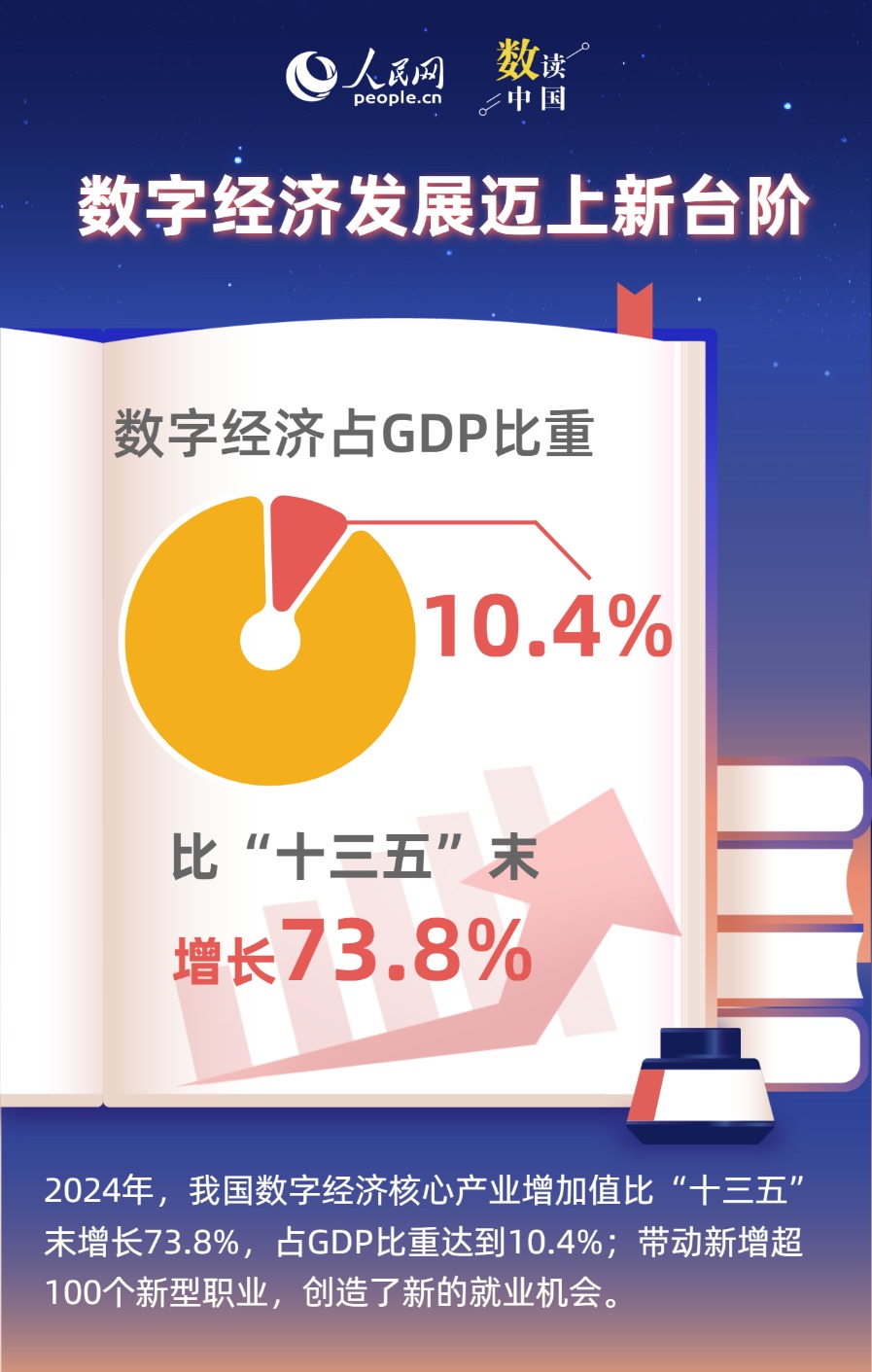
Core Insights - The "14th Five-Year Plan" period marks a significant transformation in China's industrial landscape, with a focus on upgrading traditional industries and fostering emerging sectors [1] Digital Infrastructure Development - By mid-2025, the number of 5G base stations reached 4.55 million, a fivefold increase compared to 2020 [4] - Gigabit broadband users grew 34 times to 226 million [4] Data Industry Growth - The data industry scale reached 5.86 trillion yuan, reflecting a 117% increase during the "13th Five-Year Plan" [5] - By 2024, the number of data enterprises exceeded 400,000, with over 35,000 high-quality data sets constructed, totaling over 400 petabytes [6] Intelligent Manufacturing - Over 10,000 smart factories have been established, covering more than 80% of major manufacturing sectors [8] E-commerce Expansion - Online retail sales reached 15.5 trillion yuan in 2024, a 31.4% increase from the end of the "13th Five-Year Plan," maintaining China's position as the largest online retail market globally for 12 consecutive years [12] Telemedicine Services - By the end of 2024, the number of internet medical users reached 418 million, nearly doubling since the end of the "13th Five-Year Plan," with over 3,300 internet hospitals established [14] Artificial Intelligence Growth - Daily token consumption surged from 100 billion at the beginning of 2024 to over 30 trillion by mid-2025, marking a growth of over 300 times [17] International E-commerce Partnerships - The number of "Silk Road e-commerce" partner countries increased to 36 by 2024 [18]
全国总决赛见,广东这场誓师大会藏着数据突围密码
2 1 Shi Ji Jing Ji Bao Dao· 2025-10-14 15:24
Core Insights - The 2025 "Data Element ×" competition in Guangdong concluded with 14 tracks, showcasing over 1,300 projects, with 223 teams awarded [1][2] - The competition highlighted three significant changes: increased participation, technological innovation, and enhanced incentives for project implementation [2][3] Group 1: Competition Overview - The competition was guided by the National Data Bureau and involved collaboration among various provincial departments, attracting projects from both local and external entities [1] - The event included a final award ceremony and a rallying meeting in Dongguan, attended by approximately 500 participants from various sectors [1] Group 2: Key Changes in the Competition - More participants were involved compared to 2024, with a 30% increase in projects, particularly emphasizing collaboration among the Guangdong-Hong Kong-Macao Greater Bay Area [2] - Technological innovations were prominent, with projects focusing on high-quality data sets for AI model training and exploring new paths for cross-border data compliance and utilization [2] - The competition established connections with other events to accelerate the transformation of outstanding projects into industrial momentum [2] Group 3: Future Directions and Expectations - The National Data Bureau emphasized the need for Guangdong to lead in data market prosperity, AI empowerment, and cross-border data integration [3] - The competition awarded 14 first prizes, 28 second prizes, and 70 third prizes, along with several special awards, with 28 projects set to represent Guangdong in the national finals [3] Group 4: Project Highlights and Initiatives - Projects showcased breakthroughs in technology, commercial value, practical applications, and potential for industry transformation [4] - The event featured project roadshows, results releases, and collaborative initiatives to build data industry clusters [4][6] - A joint initiative was launched to develop a trustworthy data space, enhancing data circulation and industry integration [5][6] Group 5: Strategic Focus Areas - Guangdong aims to enhance data supply, infrastructure, and security, while fostering a supportive policy environment for data-driven industry development [6][7] - The province is focusing on cultivating high-quality data sets, establishing standard systems, and creating efficient compliance mechanisms [6][7] - The government is actively promoting digital economy policies and training programs to nurture talent in the data sector [7][8]
数据驱动AI创新,江苏省数据产业发展现场推进会在宁举办
Yang Zi Wan Bao Wang· 2025-10-14 12:21
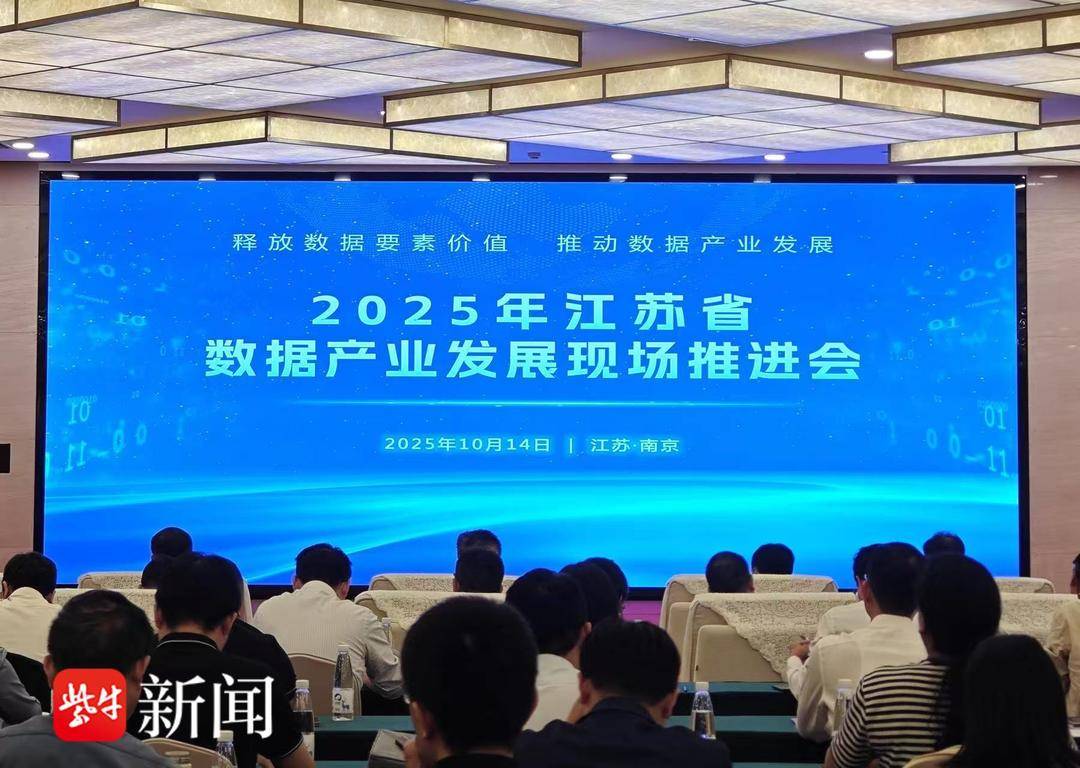
扬子晚报网10月14日讯(记者万承源)10月14日,2025年全省数据产业发展现场推进会在南京召开。 会议要求,要坚持"数据驱动、价值引领"为核心导向,深化"数实融合"。要深化人工智能、数据产业融合创新,推动形成"数据驱动AI创新、AI赋能产业 升级、产业反哺数据生产"的良性循环,构建面向智能原生的数据产业服务体系。 校对陶善工 会议指出,发展数据产业是把握数字时代机遇的战略选择,更是推动产业转型升级的关键引擎。要始终坚持以数据要素市场化配置改革为主线,锚定国家 数字经济创新发展试验区建设目标,通过先行先试、创新探索,加快构筑产业竞争新优势,着力打造数据产业发展的"江苏样本"。 会上发布了首批15家数据产业公共服务平台,并为建设运营单位授牌,标志着我省数据产业公共服务能力迈上新台阶;首批数据产业创新发展联合体代表 介绍了建设思路和协同创新经验。国际数据协会(IDA)主席、中国科协决策咨询首席专家王春晖教授和先维公司总裁周世波应邀作主题演讲,深入解读数 据产业发展趋势与实践路径。期间,与会代表还实地调研了南钢集团智慧中心、南京江北新区生物医药公共服务平台、江苏数交所、玄武大模型工厂和江 苏国际数据港(60388 ...
西城区开展优化营商环境三年行动,发布五项惠企政策
Xin Jing Bao· 2025-09-30 03:48
Core Viewpoint - The recent conference in Xicheng District highlighted the launch of five enterprise-supporting policies aimed at optimizing the business environment, with a maximum funding support of 50 million RMB for eligible projects [1][2]. Group 1: Policy Initiatives - The five key policies include measures for promoting technological innovation, data industry development, cultural industry growth, low-efficiency building renovation, and green low-carbon initiatives [2]. - The "Data Industry Ten Measures" provides up to 50 million RMB in project funding for entities undertaking key national and municipal data projects [3]. - The "Technology Innovation Twelve Measures" offers up to 25 million RMB for leading enterprises or organizations recognized by municipal or higher-level departments [3]. - The low-efficiency building renovation measures provide financial rewards of up to 1 million RMB, calculated as 30% of the actual investment [3]. - Since the beginning of the 14th Five-Year Plan, Xicheng District has disbursed approximately 6.2 billion RMB in policy funds [3]. Group 2: Business Environment Improvement - From 2025 to 2027, Xicheng District will implement a three-year action plan to enhance the business environment through project-based and checklist-driven approaches [4]. - The "1+15+N" business environment brand matrix was launched to integrate various enterprise service resources and improve service capabilities [5]. - The "Xicheng Enterprise Service Platform" offers comprehensive support, including policy search, interpretation, and resource mapping for businesses [5]. - The "Financial Street Youth Experience Officer" project focuses on the needs of young professionals, providing immersive experiences in finance, culture, and personal development [6].
从3个“更”看“数据要素×”行动
Ren Min Ri Bao Hai Wai Ban· 2025-09-30 01:27
Core Viewpoint - The National Bureau of Statistics announced the launch of the "Data Element ×" three-year action plan by the end of 2023, aimed at empowering local transformation and development through data elements [1][2]. Group 1: Policy Implementation - Local governments have effectively strengthened policy alignment and support for the "Data Element ×" action, with over 10 provinces and cities, including Shandong, issuing comprehensive or specific work plans [1]. - Many regions have established project, scenario, case, and expert databases to implement tailored strategies for enterprises, enhancing investment and problem-solving efforts [1]. Group 2: Value Release and Innovation - Various regions are exploring diverse paths for releasing the value of data elements, including optimizing internal data for cost reduction and enhancing collaboration among supply chain enterprises [2]. - Public data is being utilized to improve government governance and public service levels, with new applications emerging from the integration of various data sources [2]. Group 3: Competitions and Future Directions - The "Data Element ×" competition has seen over 22,000 teams register, with nearly 900 projects selected for the national finals, scheduled for mid to late October in Beijing and Shanghai [3]. - The National Bureau of Statistics plans to guide localities in deepening the action's implementation and exploring innovative applications of data elements to drive high-quality local development [3].