
保险业

Search documents
美联储降息冲击波
Bei Jing Shang Bao· 2025-09-18 16:40
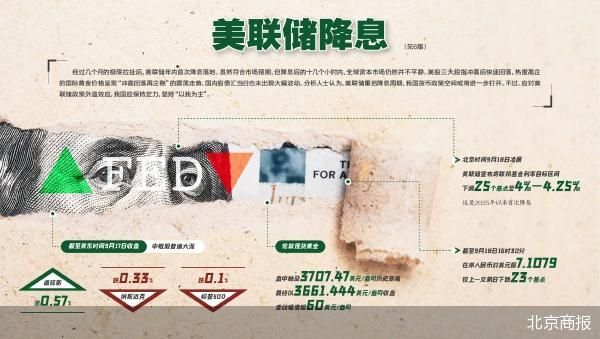
北京时间9月18日凌晨,美联储公开市场委员会(FOMC)公布最新货币政策会议纪要,决定将联邦基 金利率目标区间下调25个基点,至4%—4.25%之间。这是美联储2025年第一次降息,也是继2024年三次 降息后的再次降息。 据悉,此次政策调整的背后,是美联储平衡通胀与就业的现实考量。近期指标显示,美国上半年经济活 动增长放缓,就业增长放缓。经济前景的不确定性依然存在,就业下行风险上升。尽管美国通胀率有所 上升,并维持在略高水平,但近几个月新增就业远低于预期让美联储终于采取降息措施。 今年首次降息 一如市场预期,美联储降息25基点。当地时间9月17日,美联储宣布将联邦基金利率目标区间下调到4% —4.25%之间的水平。美联储主席鲍威尔表示,当前劳动力市场活力不足且略显疲软,降息旨在提振劳 动力市场。 这是美联储今年以来的首次降息。9个月时间,也是一场关于通胀预期与经济数据的博弈。2025年上半 年,美联储历次议息会议将联邦基金利率目标区间维持在4.25%—4.5%之间不变,多名官员强调"在降 息之前,需要看到通胀进一步下降的证据"。到6月,美联储内部意见分歧明显,联邦公开市场委员会会 议纪要显示,19名官员中只 ...

「2025亚太母基金财富论坛」即将在悉尼盛大启幕:首批LP名单及议程重磅发布
FOFWEEKLY· 2025-09-18 09:56
Group 1 - The article highlights the significant increase in foreign investment in China, with many international institutions raising their economic growth forecasts for the country [1] - There is a notable rebound in private equity merger and acquisition activities in the Asia-Pacific region since 2024, with expectations for a trading boom in 2025 driven by corporate investors [1] - Long-term capital from sovereign wealth funds in the Middle East and family offices in Southeast Asia is increasingly being allocated to key sectors in China, such as technology manufacturing, energy transition, and consumption upgrades [1] Group 2 - The Asia Pacific Fortune Forum 2025 (APFOF 2025) will be held from November 12 to 14 in Sydney, Australia, focusing on enhancing economic cooperation in the Asia-Pacific region and promoting efficient global capital flow [2][4] - The forum aims to provide a high-level platform for communication and collaboration across eight key sectors, gathering global business leaders, policymakers, and top investors [2][5] Group 3 - The confirmed attendees include prominent figures from various sectors, such as healthcare, renewable energy, advanced manufacturing, and technology innovation [9] - The event will feature a range of speakers, including government officials and executives from major corporations, enhancing the forum's credibility and networking opportunities [14][17][19][21][23][25][27][29][30] Group 4 - Shiny Fund, a private equity mother fund established in Sydney, aims to bridge global capital markets and focuses on sectors like technology innovation and green economy [39] - The fund has a global network and has established partnerships with numerous general partners, emphasizing its commitment to delivering superior returns for investors [39]

新华保险股价连续5天下跌累计跌幅7.8%,汇安基金旗下1只基金持7100股,浮亏损失3.59万元
Xin Lang Cai Jing· 2025-09-18 07:18
Group 1 - Xinhua Insurance's stock price has declined for five consecutive days, with a total drop of 7.8% during this period, currently trading at 59.71 CNY per share and a market capitalization of 186.268 billion CNY [1] - The company's main business revenue composition includes traditional insurance at 59.47%, dividend insurance at 35.37%, and other businesses at 5.89% [1] - Xinhua Insurance was established on September 28, 1996, and went public on December 16, 2011, with its headquarters located in Beijing [1] Group 2 - Huian Fund has one fund heavily invested in Xinhua Insurance, specifically the Huian Value Blue Chip Mixed A fund, which increased its holdings by 400 shares in the second quarter, now holding 7,100 shares [2] - The fund's current net asset value proportion for Xinhua Insurance is 2.65%, ranking it as the fourth-largest holding [2] - The fund has experienced a floating loss of approximately 7,384 CNY today, with a total floating loss of 35,900 CNY during the five-day decline [2]

人身险营销员总数连续5年下降,“客户资源枯竭”成离开主因
Nan Fang Du Shi Bao· 2025-09-18 04:20
Core Insights - The "China Insurance Intermediary Market Ecological White Paper" was officially released on September 16, highlighting the theme of "Long-termism, Forge Ahead" [1][3] - The report indicates a high-quality development trend in China's insurance industry, with a projected increase in total insurance premium income for 2024 [4] Industry Overview - The total insurance premium income in mainland China is expected to reach 5.7 trillion yuan in 2024, with a year-on-year growth rate increasing from 9.1% in 2023 to 11.2% in 2024 [4] - The life insurance premium growth rate is projected to rise from 9.9% in 2023 to 13.3% in 2024, indicating a stable upward trend in both scale and growth rate [4] Workforce Dynamics - The number of insurance marketing agents in life insurance companies has decreased for five consecutive years, dropping to 2.64 million by the end of 2024, a reduction of over 70% from the peak of 9.12 million in 2019 [4] - The decline in the number of agents has shown signs of stabilization, with a smaller decrease compared to the previous year [4] Gender and Age Distribution - The insurance marketing workforce remains predominantly female, with women accounting for 76.94% and men 23.06%, marking the third consecutive year of increasing male representation [6] - The age group of 35-54 years constitutes approximately 68.56% of the workforce, while younger (25-34 years) and older (55 years and above) age groups have seen an increase in representation [8] Educational and Income Trends - The proportion of insurance agents with a bachelor's degree or higher has surpassed 30%, reflecting a year-on-year increase of approximately 3.38 percentage points [8] - The most common monthly income brackets for insurance marketing agents are 3,000-6,000 yuan and 6,000-10,000 yuan, each accounting for around 26% of the workforce, while higher income brackets have seen a decline [8] Regional Concentration - The proportion of insurance marketing agents working in major cities has significantly increased, reaching 59%, a rise of 13.4 percentage points from the previous year [10][11] Challenges and Attrition - A significant 71.8% of insurance marketing agents report increased difficulty and pressure in their work, an increase of about 3.6 percentage points from the previous year [14] - The primary reason for leaving the industry, cited by 66.3% of agents, is "customer resource depletion," which has risen by approximately 6 percentage points compared to last year [20] New Entrants - Despite the attrition of experienced agents, new entrants continue to join the industry, with those in the field for less than 13 months making up 20.23% of the workforce, reflecting a consistent annual growth of 4% in new agent representation [20] - New agents face significant challenges, with nearly 80% completing fewer than 12 policies annually, and 62% earning below 6,000 yuan per month [21]

前8月税收收入同比增长2%
Jing Ji Ri Bao· 2025-09-18 01:33
Group 1 - The core viewpoint of the articles indicates that tax revenue in China has shown a year-on-year growth of 2% from January to August, with significant recovery in July and August [1] - Major tax categories such as domestic value-added tax, domestic consumption tax, corporate income tax, and individual income tax have all maintained positive growth during the first eight months [1] - The manufacturing and financial sectors have experienced rapid tax revenue growth, with manufacturing accounting for over 30% of total tax revenue and showing an increase of over 5% [1] Group 2 - High-end manufacturing sectors, including railway, shipbuilding, aerospace, and other transportation equipment manufacturing, have seen tax revenue growth exceeding 30% [1] - The capital market service industry and related insurance sectors have also reported double-digit growth in tax revenue, alongside positive trends in modern service industries such as leasing and business services [1] - Eastern regions of China have demonstrated a tax revenue growth rate significantly higher than the national average, particularly in economically strong provinces like Shanghai, Jiangsu, Guangdong, and Zhejiang [1] Group 3 - The recent increase in tax revenue is attributed to three main factors: stable economic performance, active capital market transactions, and enhanced taxpayer compliance [2] - The heightened activity in the capital markets during July and August has not only boosted tax revenue from capital market services but also positively impacted related industries [2] - Increased corporate investment returns and stock dividends have contributed to the growth in corporate income tax and individual income tax [2]
9月18日投资早报|新华保险前8月原保险保费收入为1580.86亿元同比增长21%,品茗科技筹划重大事项股票停牌,华润三九拟以合计不超100亿元自有资金投资理财产品
Sou Hu Cai Jing· 2025-09-18 00:49
Market Overview - On September 17, 2025, the A-share market saw all three major indices rise, with the Shanghai Composite Index closing at 3876.34 points, up 0.37%. The Shenzhen Component Index rose 1.16% to 13215.46 points, and the ChiNext Index increased by 1.95% to 3147.34 points. Despite the overall rise, more than 2700 stocks declined, with total trading volume reaching 2.38 trillion yuan, an increase of 35.3 billion yuan from the previous trading day [1][5] - The Hong Kong stock market opened high and continued to rise, with the Hang Seng Index gaining 1.78% or 469.88 points, closing at 26908.39 points. The total trading volume was 360.284 billion HKD, while the Hang Seng China Enterprises Index rose 2.24% to 9596.77 points, and the Hang Seng Tech Index surged 4.22% to 6334.24 points [1][5] - In the U.S., the Federal Reserve lowered interest rates by 25 basis points, leading to mixed results in the stock market. The Dow Jones Industrial Average rose by 260.42 points, or 0.57%, closing at 46018.32 points, while the Nasdaq fell by 72.63 points, or 0.33%, to 22261.33 points, and the S&P 500 decreased by 6.41 points, or 0.10%, to 6600.35 points [1][5] Fiscal Data - The Ministry of Finance reported that from January to August 2025, the national general public budget revenue reached 148198 billion yuan, a year-on-year increase of 0.3%. Tax revenue was 121085 billion yuan, showing a slight increase of 0.02%, while non-tax revenue was 27113 billion yuan, up 1.5%. Central government revenue was 64268 billion yuan, down 1.7%, while local government revenue increased by 1.8% to 83930 billion yuan [2][6] Consumer Initiatives - The Ministry of Commerce announced plans to conduct pilot projects for new consumption formats, models, and scenarios in approximately 50 cities. This initiative aims to enhance quality consumption supply, innovate diverse consumption scenarios, and better meet the varied consumption needs of the public, thereby supporting high-quality economic development [2][6] Financial Market Reforms - Hong Kong's Chief Executive, John Lee, proposed exploring the reduction of the stock settlement cycle to T+1 and promoting more overseas companies to list in Hong Kong. The government aims to assist mainland tech companies in financing and enhance financial support for national technological development [3][7] Automotive Industry Standards - The Ministry of Industry and Information Technology is seeking public input on mandatory national standards for intelligent connected vehicles, focusing on safety requirements for combined driving assistance systems. The proposed standards include comprehensive safety technical requirements and mechanisms for detecting driver disengagement, ensuring a robust safety framework for the industry [3][7]
一线调研看变化|养老“新支柱”扩面增效遇堵点 相关部门探索“默认投资”机制
Shang Hai Zheng Quan Bao· 2025-09-18 00:15
Core Insights - The development of a multi-tiered pension system in China is progressing, with the first pillar being basic pension insurance and the second and third pillars consisting of enterprise annuities, personal pensions, and commercial pensions [1][2] Group 1: Pension System Overview - As of the end of 2024, approximately 1.073 billion people are participating in basic pension insurance, with a cumulative fund balance of 8.72 trillion yuan [2] - The average monthly basic pension for retired employees has doubled since 2012 [2] - The second pillar, which includes enterprise annuities and occupational annuities, has an investment scale of about 6.75 trillion yuan, showing over 90% growth since the end of 2020 [2] Group 2: Financial Institutions' Role - Financial institutions are actively developing pension financial products to meet diverse retirement needs, utilizing tools such as credit, insurance, and bonds [3] - Agricultural Bank has established a pension financial wealth management center, adding 12,000 new elder clients in the first half of the year [3] - China Life is enhancing its commercial annuity products to cater to the differentiated needs of the elderly population [3] Group 3: Challenges and Recommendations - Despite rapid development, the new pillars face challenges such as insufficient coverage and low contribution amounts [4] - Experts suggest optimizing tax incentives, increasing contribution limits, and diversifying investment products to enhance the system [4][5] - Recommendations include adjusting the personal pension tax exemption limit and allowing a broader range of investment options, including QDII products and REITs [5]
养老“新支柱”扩面增效遇堵点,相关部门探索“默认投资”机制
Shang Hai Zheng Quan Bao· 2025-09-18 00:06
Core Insights - The development of a multi-tiered pension financial system in China is progressing, with significant growth in enterprise annuities and personal pension accounts, indicating a shift towards diversified retirement savings options [1][2][3] Group 1: Pension System Overview - By the end of 2024, the combined investment scale of enterprise annuities and occupational annuities is expected to reach approximately 6.75 trillion yuan, representing over a 90% increase since the end of 2020 [2] - As of November 2024, more than 72 million personal pension accounts have been opened across 36 cities [2] - The market size for commercial pension business has surpassed 100 billion yuan in 2024 [1][2] Group 2: Financial Institutions' Role - Financial institutions are actively exploring various financial tools such as credit, insurance, and bonds to meet diverse retirement needs [3] - Agricultural Bank has established a pension financial wealth management center, adding 12,000 new elder clients in the first half of the year [3] - China Life is enhancing its commercial annuity products to cater to the differentiated needs of the elderly population [3] Group 3: Challenges and Recommendations - Despite rapid development, challenges such as insufficient coverage and low contribution amounts remain, necessitating policy support to optimize tax incentives and increase contribution limits [5] - Experts suggest that tax exemption limits for personal pensions should be gradually increased and adjusted flexibly to match actual retirement needs [5] - There is a call for more investment options in personal pensions, including high-quality public funds and REITs, to provide investors with greater choices [5]
前8月税收收入同比增长2% 四大主体税种保持正增长
Jing Ji Ri Bao· 2025-09-17 22:09
Tax Revenue Growth - In the first eight months of the year, tax revenue (excluding export tax rebates) increased by 2% year-on-year, with significant recovery in growth observed in July and August [1] - Major tax categories, including domestic value-added tax, domestic consumption tax, corporate income tax, and individual income tax, all maintained positive growth [1] - The manufacturing sector accounted for over 30% of total tax revenue, with a growth rate exceeding 5%, highlighting its stabilizing role in the economy [1] Sector Performance - High-end manufacturing industries, such as railway, shipbuilding, aerospace, and other transportation equipment manufacturing, experienced tax revenue growth exceeding 30% [1] - The capital market service industry and related insurance sectors saw tax revenue growth in double digits, while modern service industries like leasing and business services also showed strong growth [1] Regional Insights - Tax revenue growth in eastern regions significantly outpaced the national average, particularly in economically strong provinces such as Shanghai, Jiangsu, Guangdong, and Zhejiang [1] Economic Factors - The recent increase in tax revenue is attributed to three main factors: stable economic performance, active capital market transactions, and enhanced taxpayer compliance [2] - The heightened activity in the capital markets during July and August not only boosted tax revenue from capital market services but also positively impacted related industries [2] - Increased corporate investment returns and stock dividends contributed to the rise in corporate income tax and individual income tax [2]
国家税务总局:七八月份税收同比增幅明显 和股市活跃等有关
Nan Fang Du Shi Bao· 2025-09-17 19:28
Core Insights - Tax revenue in China for the first eight months of the year increased by 2% year-on-year, with significant growth observed in July and August, where revenue growth exceeded 5% [1] - Major tax categories, including domestic value-added tax, domestic consumption tax, corporate income tax, and individual income tax, all maintained positive growth [1] - The manufacturing and financial sectors showed robust tax revenue growth, with manufacturing accounting for over 30% of total tax revenue and experiencing a growth rate above 5% [1] Tax Revenue by Sector - High-end manufacturing sectors, such as railway, shipbuilding, aerospace, and other transportation equipment manufacturing, saw tax revenue growth exceeding 30% [1] - Capital market services and related insurance sectors also reported double-digit tax revenue growth, while modern service industries like leasing and business services showed strong performance [1] Regional Tax Revenue Trends - Eastern regions of China exhibited tax revenue growth significantly above the national average, particularly in economically strong provinces like Shanghai, Jiangsu, Guangdong, and Zhejiang [1] Factors Contributing to Revenue Growth - Economic stability and progress, driven by effective policies from the central government, laid a solid foundation for tax revenue growth [2] - Increased activity in the capital markets during July and August, with the Shanghai Composite Index surpassing 3,800 points and A-share market capitalization exceeding 100 trillion yuan, contributed to substantial tax revenue increases in capital market services and related industries [2] - Enhanced taxpayer compliance and awareness, supported by tax authorities' initiatives to promote lawful tax practices and compliance, significantly bolstered tax revenue [3]