商业航天

Search documents
申万宏源策略一周回顾展望:春季行情仍沿着既定路径前进
Shenwan Hongyuan Securities· 2026-01-24 12:28
Group 1 - The core viewpoint emphasizes that the spring market is progressing along a predetermined path, supported by incremental game dynamics and favorable conditions for bullish windows, which lays the foundation for a perfect spring market with widespread profit effects [1][5][6] - The spring market is characterized by a complete rotation of sectors and sufficient diffusion of profit effects, with short-term adjustments in industrial trend themes and a deepening focus on bottom asset exploration [2][6][7] - The report reiterates the positioning of the spring market within a larger wave, indicating it is an extension and expansion phase of the 2025 technology structural market, with high valuation investment directions entering a phase of high volatility [7][8] Group 2 - Short-term, the focus is on cyclical Alpha as a key direction for market exploration of low positions, with cyclical investments expanding towards cyclical turning points in sectors like construction materials, oil, and steel [8][11] - The report highlights that while cyclical sectors such as non-ferrous metals and chemicals are nearing high profit effects, the resistance in the cyclical market is gradually increasing [11][12] - Long-term outlook remains optimistic for both cyclical Alpha and technology sectors, with a focus on overseas computing chains, AI applications, semiconductors, energy storage, robotics, and commercial aerospace [11][12][17]
北京火箭大街六大共性平台启动 助力提升产业国际竞争力
Zhong Guo Xin Wen Wang· 2026-01-24 11:21
记者24日从北京经济技术开发区(简称"北京经开区")获悉,北京经开区正式启动商业航天测运控中心、 共性试验平台、商业航天公共服务平台、商业航天元器件及其应用支持一站式服务平台、时空信息服务 平台、太空态势感知服务合作平台等六大共性服务平台,进一步完善北京火箭大街产业发展引领支撑功 能及科研生产服务体系。 其中,北京火箭大街展示与运控中心作为商业航天测运控中心、商业航天公共服务平台的空间载体,将 为企业提供卫星运控服务和交流推介平台。 北京经开区有关负责人表示,六大共性服务平台将精准把握商业航天加快创新发展需要,联合国内龙头 单位,解决制约产业化发展上台阶的关键问题,降低研发成本,缩短开发周期,对统筹实现商业航天高 质量发展与高水平安全,提升产业国际竞争力发挥重要推动作用。 与此同时,以北京火箭大街为核心,北京经开区空天街区内多项重点工程正加快建设。该负责人表示, 作为商业航天主要聚集地,北京经开区将发挥新质生产力典范区的科技、产业、政策、资源、生态优 势,支持商业航天企业对标世界最高水平加速创新发展,加快建设"千企联动、千星入轨、千亿营收"的 商业航天创新集群,建成具有全球影响力的商业航天产业高地。 (文章来 ...
百亿商业航天创始人最新发声:太空科创时代已经到来
Zhong Guo Ji Jin Bao· 2026-01-24 10:57
Core Insights - The era of space technology innovation has arrived, with commercial space transitioning from a supplementary force to a strategic pillar in China's aerospace landscape [1] - The global space economy is projected to reach $1.8 trillion by 2035, contributing approximately $7.9 trillion to the broader economy and society by 2040, with cumulative value exceeding $80 trillion from 2025 to 2040 [1] Group 1: Space Infrastructure and Technology - The construction of space infrastructure is characterized by four new features: low orbit, low cost, scalability, and constellation [1] - The integration of satellite communication with mobile technology is expected to drive the development of 6G communication, fundamentally changing the perception of communication boundaries [2] - The current phase of the space innovation era is focused on digital infrastructure, enabling data to be transmitted to space, with over 10,000 satellites already launched globally [2] Group 2: Future Developments and Market Potential - Future developments in space may include the establishment of energy and manufacturing centers, utilizing solar energy to provide electricity and the potential for mining asteroids for resources [2] - The construction of space civilization bases is anticipated, which could lead to the establishment of spaceports and cities, expanding human civilization into the universe [2] Group 3: Company Valuation and Recognition - In 2023, the company was valued at 11 billion yuan and ranked 668th in the Hurun Global Unicorn List, while in 2024, it was valued at 11.5 billion yuan and ranked 720th [3]
百亿商业航天创始人最新发声:太空科创时代已经到来
中国基金报· 2026-01-24 10:54
Core Viewpoint - The era of space technology innovation has arrived, with commercial space transitioning from a supplementary force to a strategic pillar in China's aerospace landscape [2] Group 1: Space Infrastructure and Market Potential - The global number of operational satellites has exceeded 12,000, indicating significant growth in space infrastructure [2] - The characteristics of space infrastructure construction are defined by "new four modernizations": low orbit, low cost, large scale, and constellation [2] - The global space economy is projected to reach $1.8 trillion by 2035, with contributions to broader economic and social value expected to reach approximately $7.9 trillion by 2040, and cumulative value exceeding $80 trillion from 2025 to 2040 [2][3] Group 2: 6G Communication and Satellite Connectivity - The integration of satellite broadband and mobile direct connection is set to revolutionize 6G communication, creating a network architecture that combines terrestrial networks with satellite capabilities [3] - The current phase of the space technology innovation era is focused on space digital infrastructure, enabling data to be transmitted to space [3] - Future developments may include energy and manufacturing centers in space, utilizing solar energy and potential asteroid mining for materials [3] Group 3: Company Achievements and Valuation - Galaxy Aerospace has successfully launched over 40 advanced satellites and recently launched a second group of 19 low-orbit satellites for satellite internet [4] - In 2023, Galaxy Aerospace was valued at 11 billion yuan and ranked 668th in the "2023 Hurun Global Unicorn List," with a slight increase to 11.5 billion yuan and a ranking of 720th in 2024 [4]


中国商业航天企业“加足马力”竞逐“星赛道”
Zhong Guo Xin Wen Wang· 2026-01-24 10:45
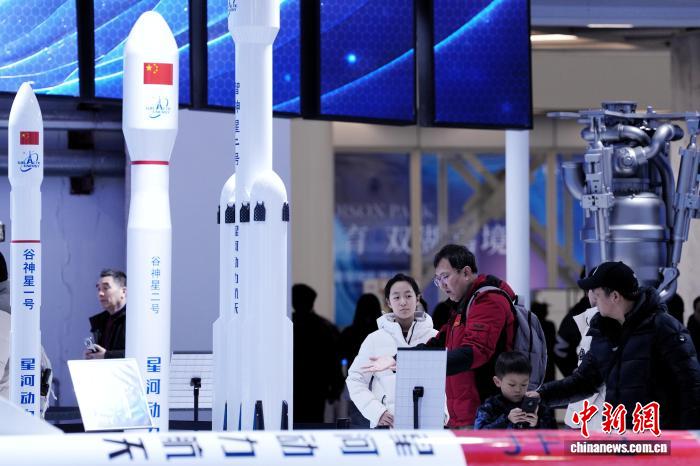
Core Insights - The 2026 Beijing International Commercial Aerospace Exhibition is showcasing over 300 commercial aerospace companies and related institutions, highlighting advancements in rocket launch, satellite manufacturing, aerospace applications, and financial services [1][3][6] - Chinese commercial aerospace is transitioning from a supplementary force to a strategic pillar, with significant potential to play a crucial role in global space infrastructure development [3][6] Group 1: Industry Developments - The exhibition features cutting-edge products such as the Zhuque-2 and Zhuque-3 rockets from Blue Arrow Aerospace, and various models from Star River Dynamics, including the "Zhishenxing" and "Gushenxing" rockets [1][3] - Innovations in satellite technology are represented by Galaxy Aerospace's "Lingxi 03" satellite and Zhongke Xingtou's digital earth products, integrating AI and big data for enhanced space information services [3][5] Group 2: Market Trends - The commercial aerospace sector is viewed as a "new blue ocean," with companies encouraged to identify clear commercial value and application prospects in niche markets for successful development [5][6] - Key industry terms such as "cost," "iteration," and "batch" are frequently mentioned, indicating a focus on low-cost, high-frequency, and mass delivery as critical goals for the sector [5][6] Group 3: Company Insights - Companies like Shanghai Yunzu 3D Technology are enhancing manufacturing efficiency through advanced 3D printing technologies, which allow for complex structures while reducing weight [5] - The growth of the commercial aerospace sector is supported by national and local policies, leading to a surge in orders and a commitment to ramping up research and production capabilities [6]
头部拟IPO火箭企业同台
财联社· 2026-01-24 10:38
Core Viewpoint - The 2026 Beijing International Commercial Aerospace Exhibition showcases the latest developments in China's commercial aerospace industry, highlighting a significant increase in investor participation and the focus on liquid reusable rockets as a mainstream path for high-frequency, high-capacity, and low-cost launches [2][4][7]. Group 1: Exhibition Highlights - The exhibition features a wide range of displays, including rockets, satellite manufacturing, space tourism, and supporting services, demonstrating the full industrial chain of China's commercial aerospace [4][6]. - Major companies such as Blue Arrow Aerospace, Star River Dynamics, and China Aerospace Science and Technology Corporation presented their latest technologies, with a particular emphasis on liquid reusable rockets [4][7][9]. Group 2: Technological Innovations - Blue Arrow Aerospace showcased the world's first continuously successful liquid oxygen-methane rocket, the Zhuque-2, and the Zhuque-3, which has completed China's first orbital-level launch verification for a reusable rocket [7][9]. - Star River Dynamics introduced the "Zhishen" series of medium-sized reusable liquid rockets, with the Zhishen-2 having a takeoff mass of approximately 757 tons and a low Earth orbit (LEO) capacity of 20 tons [9][11]. Group 3: Space Tourism Developments - The "Lihong-2" reusable spacecraft from China Aerospace Science and Technology Corporation, designed for space tourism, can carry at least 3 tons of scientific payload or 7 passengers, with a planned reuse of at least 30 times [12][13]. - Beijing Chuanxie Technology Co., Ltd. announced the "Chuanxie-1" commercial manned spacecraft, expected to achieve its first manned flight in 2028, with ticket pre-sales starting at 3 million yuan [12][13]. Group 4: Satellite Manufacturing and Applications - Galaxy Aerospace presented the "Lingxi-03" satellite, China's first satellite using flexible solar wings, which successfully launched in July 2023 and is designed for high-density deployment [14][16]. - The exhibition highlighted advancements in satellite internet technology, with Galaxy Aerospace achieving mobile direct connection capabilities comparable to SpaceX's Starlink [14][16]. Group 5: Industry Ecosystem - The Beijing Economic and Technological Development Area has become a hub for commercial aerospace, hosting over 210 companies and 75% of China's commercial rocket manufacturers, creating a dense industrial ecosystem [19].

2026北京两会丨市政协委员张昌武:航天成果已深度融入城市发展与民生
Bei Jing Shang Bao· 2026-01-24 10:37
Group 1 - The core viewpoint emphasizes the significant development of Beijing's commercial aerospace sector during the 14th Five-Year Plan, transitioning from cultivation to full-scale momentum, akin to a rocket taking off [1] - Over the past five years, the number of companies in Beijing's commercial aerospace industry has increased from less than 50 to over 300, forming a complete industrial chain covering rockets, satellites, ground equipment, and operational services, with the industry scale surpassing 100 billion [1] - Notable technological advancements include the successful transition of reusable rockets from concept validation to engineering application, showcasing a strong commitment to overcoming challenges [1] - The policy environment has improved, shifting from general guidance to precise support, with initiatives like launch insurance subsidies reducing costs and risks for companies [1] Group 2 - Aerospace achievements have been integrated into urban development and public welfare, with satellite navigation and remote sensing technologies enhancing advanced autonomous driving, urban governance, and emergency management [2] - The company Blue Arrow Aerospace is set to launch the "Zhuque-3" rocket by the end of 2025, marking China's first orbital flight of a reusable launch vehicle, which will gather critical data and experience for future recoveries [2] - Looking ahead to the 15th Five-Year Plan, the company aims to transform trust from various stakeholders into motivation for tackling challenges, contributing to the development of Beijing's commercial aerospace sector and the establishment of a strong aerospace nation [2]

独家|300万元太空船票预售牵出学历风波,载人商业航天公司90后创始人回应
Xin Lang Cai Jing· 2026-01-24 10:16
据悉,穿越者的预售船票价格为300万元/张,预付10%可锁定名额,2023年售出第一张,目前已预售近 20张,迅速引发公众对这家载人商业航天企业及其掌舵者的关注。 一张300万元的"太空船票",首批游客包括青年演员黄景瑜,在社交媒体引发热议。 随着热度攀升,雷诗情的教育背景成为部分网友关注的焦点。有网友指出,雷诗情多次公开表示自己从 2021年起攻读中国人民大学人因工程方向硕士,但并未在官方硕士录取名单中查询到其姓名,同时,雷 诗情称师从人因工程国家级重点实验室主任、中国载人航天工程副总设计师陈善广院士,但陈善广与中 国人民大学并没有官方公布的研究生联合培养合作机制,由此引发对其学历真实性的质疑。 1月22日,北京穿越者载人航天科技有限公司(以下简称"穿越者")在成都举办了太空旅游全球发布 会,揭晓首批太空游客名单,包括穿越者创始人兼CEO雷诗情、中国工程院院士李立浧、智元机器人 CMO邱恒、青年演员黄景瑜、探路者创始人王静、啟赋资本董事长兼创始人傅哲宽、众擎PM01人形机 器人等11名游客。 1月23日晚间,雷诗情就此事向智通财经记者表示,"陈老师(注:陈善广)是人因工程的学科泰斗,也 是我湖南衡阳的老乡, ...

第三届北京商业航天产业高质量发展推进会举办
Xin Lang Cai Jing· 2026-01-24 09:19
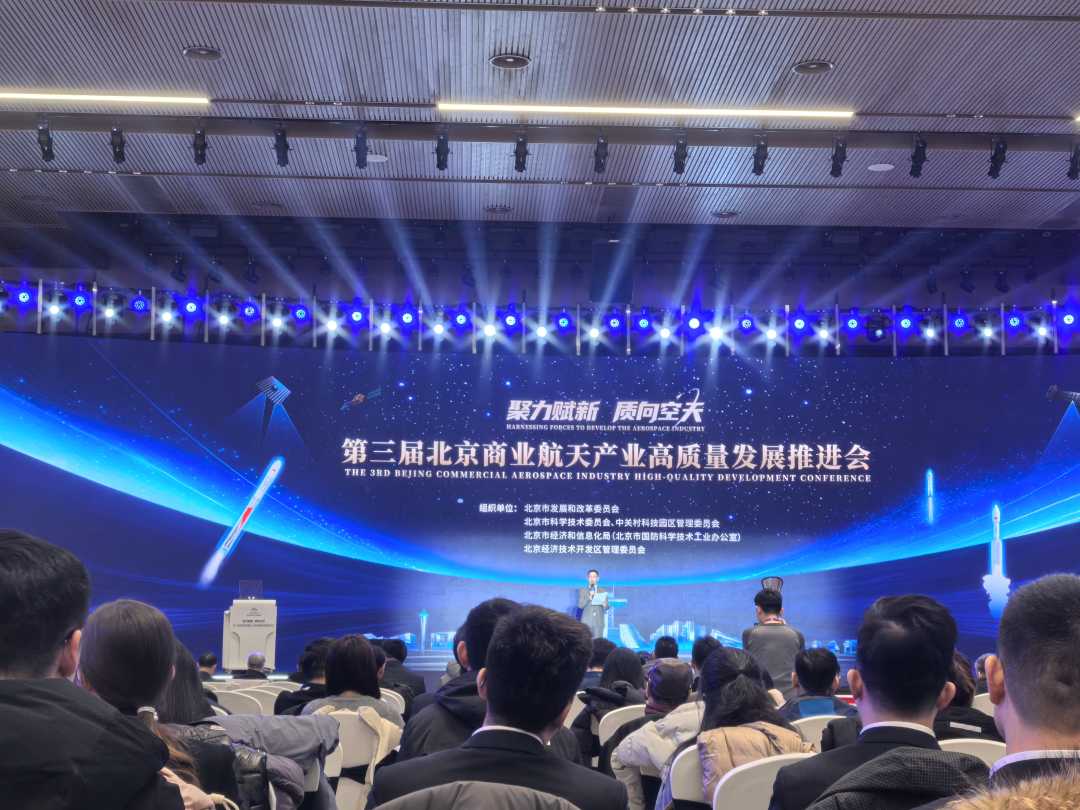
Core Insights - The third Beijing Commercial Aerospace Industry High-Quality Development Promotion Conference was held on January 23, focusing on advancing the commercial aerospace sector in Beijing [1][4] - Seven key laboratories in Beijing were awarded, aimed at supporting original innovation and core technology breakthroughs in key industries [2] - A new policy for the development and utilization of commercial satellite remote sensing data resources was announced, targeting the years 2026-2030 [2] Group 1: Key Laboratories and Policies - Seven key laboratories were established, including those focused on low-orbit satellite communication and new power systems [2] - The policy aims to enhance the infrastructure for remote sensing data, optimize the development environment, and expand application scenarios for satellite data [2] Group 2: Investment and Projects - Nine major production capacity projects and six satellite projects were announced, with total investments exceeding 15 billion yuan (approximately 2.3 billion USD) [2] - The Beijing Economic and Technological Development Area will initiate the construction of a satellite internet supply chain industrial park by 2025 [2] Group 3: Support for Commercial Aerospace - The establishment of six common platforms for commercial aerospace research and production is set to support high-quality development and safety [3] - The Beijing Economic and Technological Development Area aims to provide comprehensive support for commercial aerospace enterprises through policy, investment, and space [3]
商业航天利好!北京:鼓励对卫星数据上下游企业进行并购重组
Xin Lang Cai Jing· 2026-01-24 09:18
Group 1 - The core document outlines measures to promote the development and utilization of commercial satellite remote sensing data resources in Beijing from 2026 to 2030 [1] - The measures include optimizing financial support by coordinating existing fiscal funds and industry development funds to encourage investment in quality remote sensing data projects [3] - The document emphasizes six key areas: strengthening basic capabilities, enhancing common support capabilities, boosting technological innovation, optimizing the development environment, and expanding application scenarios for remote sensing data [3] Group 2 - The measures encourage internet and geographic information companies to develop value-added services based on commercial satellite data and promote mergers and acquisitions among upstream and downstream satellite data enterprises [4] - Beijing will support the planning and construction of commercially viable satellite constellations with clear application prospects and enhance spatial infrastructure resources [4] Group 3 - The document advocates for the construction of a multi-source integrated satellite big data platform, encouraging the aggregation of various data resources and the development of satellite data processing algorithms [5] - It promotes the integration of remote sensing big data with artificial intelligence technologies and the establishment of urban spatial digital foundations [5] Group 4 - The measures encourage enterprises to actively manage data assets and support the registration, evaluation, circulation, and credit enhancement of satellite data assets through platforms like the Beijing International Big Data Exchange [6] - It emphasizes the importance of inter-departmental sharing of remote sensing data resources and exploring new models for data cooperation with research institutions and enterprises [6] Group 5 - The document supports the creation of innovative application cases in key industries such as low-altitude industries, smart connected vehicles, finance, culture and tourism, urban governance, and agriculture [7] - It aims to enhance the support capabilities of remote sensing data in both emergency and routine scenarios, providing rewards for exemplary solutions that address typical application needs [7] Group 6 - Beijing plans to promote a series of remote sensing large models to improve service efficiency in areas like natural resources, disaster prevention, and ecological protection [8] - The measures will also facilitate the establishment of a technical standard system for the integration of navigation, communication, and remote sensing data [8]