
卫星数据

Search documents
连续报道·报效祖国 建功西部丨春节,他们忙碌在第一线……
Xin Lang Cai Jing· 2026-02-17 03:54
Core Viewpoint - The article highlights the dedication of young professionals in the western regions of China who choose to work during the Spring Festival, emphasizing their commitment to ensuring the smooth operation of critical infrastructure and services [1]. Group 1: Power Sector - The Ningxia ±800 kV Lingzhou Converter Station plays a crucial role in the "West-East Power Transmission" project, delivering over 56 billion kilowatt-hours of electricity annually, equivalent to one-tenth of Zhejiang's total electricity consumption [1]. - The station employs advanced technology, including drones and robotic dogs for inspections, significantly improving efficiency and transitioning from reactive to proactive maintenance strategies [1]. Group 2: Satellite Data Services - The Kashgar Station, part of the Chinese Academy of Sciences, operates 24/7, receiving nearly 300 satellite data tracks daily with a success rate of 99.6%, supporting various applications from disaster monitoring to urban planning [1]. - The station's development reflects significant technological advancements, with staff expressing pride in the station's growth and the retention of young talent [1]. Group 3: Petrochemical Industry - The Lanzhou Petrochemical Company serves as a vital hub for the petrochemical sector, with young professionals actively contributing to its transformation and technological upgrades [1]. - The company has created opportunities for talent development, with employees participating in research and innovation projects that enhance system stability and efficiency [1].
商业航天事件点评:北京发布未来5年重磅措施,助推商业航天产业发展
Guolian Minsheng Securities· 2026-01-25 05:46
Investment Rating - The report maintains a "Recommendation" rating for the industry [2] Core Insights - Beijing has announced significant measures to promote the development of the commercial aerospace industry from 2026 to 2030, focusing on satellite data resource development and utilization [7] - The measures encourage capable enterprises to engage in mergers and acquisitions within the satellite data industry, aiming to create globally competitive leading companies [7] - The report highlights the importance of strengthening space infrastructure and supports the planning and construction of commercially viable satellite constellations [7] - The first satellite of the space computing constellation, "Chenguang No. 1," is expected to be launched in early 2026, marking a significant step in the establishment of a space data center [7] - The report suggests focusing on key players in the space computing sector, such as Shunhao Co., Ltd., and other members of the Beijing Space Computing Innovation Consortium [7] Summary by Sections - **Policy Measures**: The report outlines Beijing's initiatives to support the commercial aerospace sector, including financial support for qualifying space infrastructure projects and the integration of new technologies like AI and big data [7] - **Technological Advancements**: The report details advancements in core technologies for space computing, including energy supply and heat dissipation solutions, which are crucial for the operation of space data centers [7] - **Investment Opportunities**: The report identifies potential investment opportunities in companies involved in space computing and satellite data services, emphasizing the strategic importance of these sectors in the coming years [7]
商业航天利好!北京:鼓励对卫星数据上下游企业进行并购重组
Xin Lang Cai Jing· 2026-01-24 09:18
Group 1 - The core document outlines measures to promote the development and utilization of commercial satellite remote sensing data resources in Beijing from 2026 to 2030 [1] - The measures include optimizing financial support by coordinating existing fiscal funds and industry development funds to encourage investment in quality remote sensing data projects [3] - The document emphasizes six key areas: strengthening basic capabilities, enhancing common support capabilities, boosting technological innovation, optimizing the development environment, and expanding application scenarios for remote sensing data [3] Group 2 - The measures encourage internet and geographic information companies to develop value-added services based on commercial satellite data and promote mergers and acquisitions among upstream and downstream satellite data enterprises [4] - Beijing will support the planning and construction of commercially viable satellite constellations with clear application prospects and enhance spatial infrastructure resources [4] Group 3 - The document advocates for the construction of a multi-source integrated satellite big data platform, encouraging the aggregation of various data resources and the development of satellite data processing algorithms [5] - It promotes the integration of remote sensing big data with artificial intelligence technologies and the establishment of urban spatial digital foundations [5] Group 4 - The measures encourage enterprises to actively manage data assets and support the registration, evaluation, circulation, and credit enhancement of satellite data assets through platforms like the Beijing International Big Data Exchange [6] - It emphasizes the importance of inter-departmental sharing of remote sensing data resources and exploring new models for data cooperation with research institutions and enterprises [6] Group 5 - The document supports the creation of innovative application cases in key industries such as low-altitude industries, smart connected vehicles, finance, culture and tourism, urban governance, and agriculture [7] - It aims to enhance the support capabilities of remote sensing data in both emergency and routine scenarios, providing rewards for exemplary solutions that address typical application needs [7] Group 6 - Beijing plans to promote a series of remote sensing large models to improve service efficiency in areas like natural resources, disaster prevention, and ecological protection [8] - The measures will also facilitate the establishment of a technical standard system for the integration of navigation, communication, and remote sensing data [8]

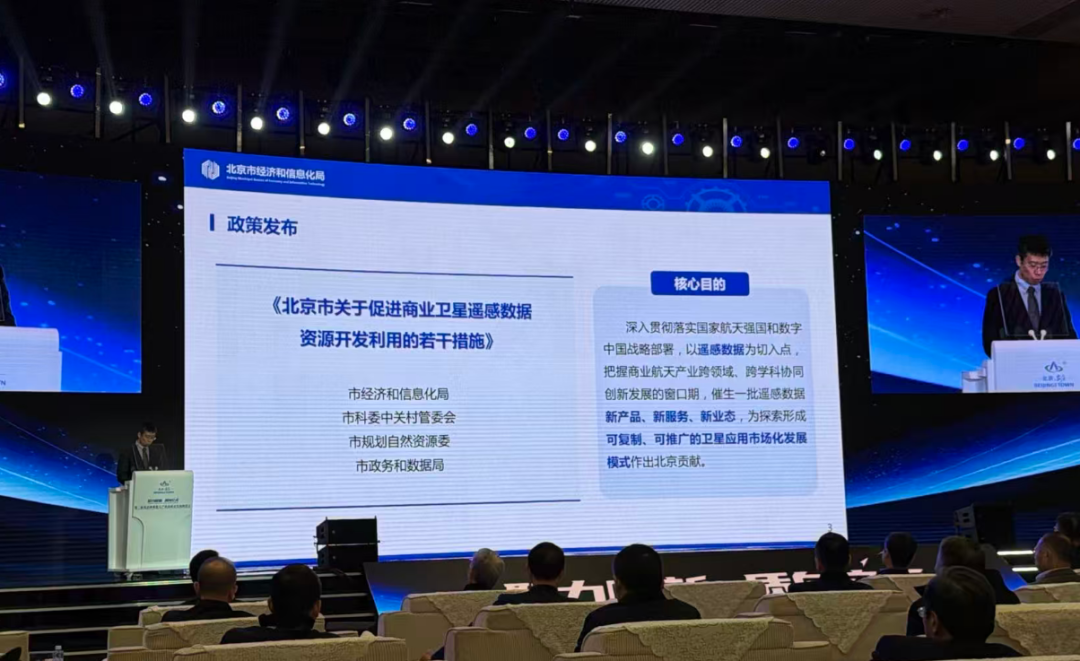
北京:进一步深化卫星出口、卫星数据沙盒监管和跨境流动试点
Zheng Quan Shi Bao Wang· 2026-01-24 06:58
Core Viewpoint - Beijing is implementing measures to promote the development and utilization of commercial satellite remote sensing data resources from 2026 to 2030, focusing on expanding international cooperation and market outreach [1] Group 1: Policy Initiatives - The new measures support various entities in actively expanding the international market for remote sensing data resources [1] - The initiative leverages the advantages of Beijing's Free Trade Pilot Zone and the National Comprehensive Demonstration Zone for Service Industry Expansion to test policies [1] - The plan aims to establish Beijing as a pilot for geographic information service export bases [1] Group 2: Strategic Goals - The measures are designed to deepen satellite exports and enhance regulatory frameworks for satellite data sandbox and cross-border flow trials [1] - The initiative contributes to the construction of the "Digital Silk Road" and the "Belt and Road" spatial information corridor, providing a "Beijing solution" [1]
2025文昌国际航空航天论坛举行
Xin Lang Cai Jing· 2025-12-22 23:27
Group 1 - The 2025 Wenchang International Aerospace Forum was held in Wenchang, Hainan, attracting around 500 guests from the global aerospace sector to discuss the development paths and opportunities for commercial aerospace under the backdrop of the Hainan Free Trade Port's full island closure operation [1][2] - Hainan Province has entered a new phase of high-level institutional opening, which aligns with the construction of a strong aerospace nation, presenting significant opportunities for commercial aerospace [1] - The Wenchang International Aerospace City is being developed with a strategy to build a complete ecosystem covering rockets, satellites, data applications, and "aerospace+" initiatives, with regular launch operations already established [1][2] Group 2 - China's commercial aerospace has entered a new stage of innovative and large-scale development, with the operational launch of the Hainan Free Trade Port expected to enhance launch efficiency, optimize industry layout, and deepen international cooperation [2] - The China Aerospace Science and Technology Corporation is focusing on a comprehensive layout of the "star, rocket, launch site, and application" chain, leveraging Hainan's geographical and policy advantages to expand into space tourism and satellite data sectors [2] - During the forum, the Asia-Pacific Space Hainan International Practice Training Center was inaugurated, and multiple strategic cooperation agreements were signed with various organizations, indicating strong industrial attraction and ecological cohesion [2]

防灾可呼叫 卫星来“接单”
Ren Min Ri Bao· 2025-12-22 22:27
Core Viewpoint - The integration of commercial and civil remote sensing satellites in China has significantly enhanced the emergency response speed for disaster monitoring and mitigation, creating a unified platform for efficient data utilization [1][2]. Group 1: Satellite Resources and Capabilities - China currently has over 400 remote sensing satellites in orbit, covering optical, hyperspectral, infrared, and microwave types, enabling all-weather and all-time Earth observation [1]. - The National Space Administration has established a virtual satellite constellation and an emergency response mechanism for civil and commercial remote sensing satellites, leveraging the advantages of different satellite technologies [1]. Group 2: Emergency Response and Data Utilization - The "space taxi" model allows for rapid scheduling and data sharing among remote sensing satellites, transforming dispersed data into actionable disaster monitoring information [2]. - By 2025, the National Space Administration is expected to conduct 159 domestic and international remote sensing emergency disaster monitoring operations, completing over 5,700 satellite imaging tasks and providing more than 23,000 high-quality remote sensing images domestically and over 1,600 images internationally [2].
海南正式封关:既是红利,也有风险
虎嗅APP· 2025-12-22 11:08
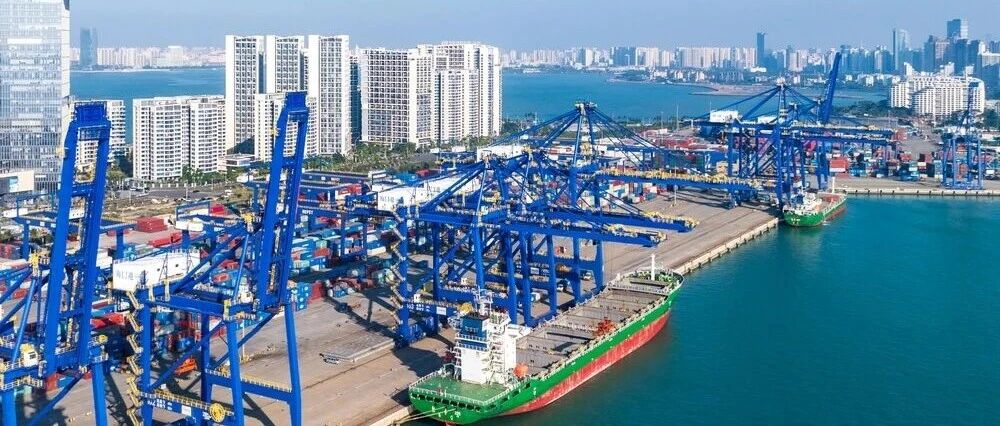
Core Viewpoint - The article discusses the implications of Hainan's recent closure and its potential as a free trade zone, highlighting both opportunities and risks associated with this transition [4][5][7]. Group 1: Economic Opportunities - Hainan's closure represents a significant leap towards a higher level of openness, offering a unique environment characterized by "zero tariffs, low tax rates, and simplified tax systems" [5][7]. - The potential for Hainan to become a new Singapore and the heart of the RCEP (Regional Comprehensive Economic Partnership) is emphasized, contingent on overcoming development bottlenecks [8]. - The introduction of the policy allowing "30% value-added processing to be exempt from tariffs" is seen as a key to reshaping the real economy in Hainan [17]. Group 2: Industrial Challenges - Hainan's economic structure is described as "dumbbell-shaped," with a weak industrial base, relying heavily on agriculture and low-end tourism [9][10]. - The risk of falling into "industrial hollowing" is highlighted, where the economy could become overly reliant on service sectors without a solid manufacturing foundation [11][14]. - Historical examples suggest that economies lacking a robust industrial backbone ultimately face challenges in employment and income stability [14][15]. Group 3: Strategic Development Areas - Three key sectors for development are identified: luxury goods assembly, biomedicine, and future technologies like aerospace and deep-sea industries [19][22][25]. - The luxury goods sector can benefit from a model where high-value assembly occurs in Hainan, leveraging its tariff exemptions [20][21]. - The biomedicine sector can utilize special policies in Boao Lecheng to import and assemble advanced medical devices, enhancing local capabilities [22][24]. Group 4: Logistics and Connectivity - Hainan's geographical isolation poses challenges for becoming a global shipping hub, as it is not located on major shipping routes [28][30]. - The article suggests that Hainan should focus on creating a "functional platform" rather than merely competing on logistics speed [34]. - Strategies include leveraging "seventh freedom rights" for air travel and establishing a competitive fuel pricing model to attract international shipping [35][41]. Group 5: Unique Selling Propositions - Hainan's potential lies in offering unique privileges that cannot be found elsewhere in China, particularly in healthcare, education, data access, airspace, and culture [52][53]. - The establishment of international medical facilities and educational institutions can attract both domestic and international students, capturing significant educational spending [57][59]. - The development of a "digital nomad zone" with unrestricted internet access aims to attract global talent, enhancing Hainan's appeal as a destination for professionals [61]. Group 6: Future Challenges - The article outlines a "triangle dilemma" that Hainan must navigate: overcoming geographical disadvantages, avoiding industrial homogenization, and preventing economic hollowing [64]. - The success of Hainan will depend on integrating high-level open policies with unique local resources to create a vibrant economic ecosystem [65].
海南正式封关:既是红利,也有风险,这取决于……
Sou Hu Cai Jing· 2025-12-22 03:08
Core Insights - The official launch of Hainan's zero-tariff and low-tax policy marks a significant step towards higher levels of openness, but it poses both opportunities and risks for policymakers, entrepreneurs, and residents [3][5] - The success of Hainan's free trade zone will depend on its ability to transition from a policy-driven economy to one that fosters industrial growth and innovation [5][9] Industry Challenges - Hainan's economic structure is characterized by a weak industrial base, primarily reliant on agriculture and low-end tourism, lacking a robust manufacturing sector [7][9] - The risk of "deindustrialization" looms if Hainan attempts to bypass traditional manufacturing in favor of high-end services without a solid industrial foundation [7][9] Economic Opportunities - The introduction of a 30% value-added tax exemption for processing and manufacturing presents a unique opportunity to revitalize Hainan's economy by attracting high-value industries [9][11] - Potential growth sectors include luxury goods assembly, biomedicine, and advanced technology, leveraging Hainan's unique geographical and regulatory advantages [11][15][17] Strategic Positioning - Hainan must transform from a geographical outlier to a functional hub by creating a platform for international trade and logistics, similar to Dubai's model [19][22] - The implementation of the "seventh freedom" in aviation could enhance Hainan's connectivity and attractiveness for international logistics [22][25] Consumption and Market Differentiation - Hainan's tourism strategy must evolve beyond low-cost offerings to focus on unique privileges and high-value experiences that cannot be found elsewhere in China [35][37] - Key areas for differentiation include healthcare, education, data access, airspace management, and cultural experiences, which can attract both domestic and international consumers [37][38][40][42][45] Future Outlook - Hainan faces a complex challenge of overcoming its geographical disadvantages, avoiding homogeneous competition, and preventing industrial hollowing [47] - The future success of Hainan will hinge on integrating high-level open policies with its unique resources, aiming for a transformation from a policy landscape to a thriving industrial ecosystem [47]

国泰海通|机械:国内政策细则出台助推太空算力发展,再提能源强国指引核聚变进程
国泰海通证券研究· 2025-12-17 14:07
Group 1 - The mechanical equipment index increased by 1.80% during the week of December 8-12, 2025, driven by domestic policy details that support the development of space computing capabilities [1] - The National Space Administration issued a plan to promote high-quality and safe development of commercial aerospace from 2025 to 2027, focusing on satellite data security and efficient utilization [1] - The Central Economic Work Conference reiterated the goal of building an "Energy Power" and provided strategic guidance for the development of controllable nuclear fusion, aiming to create a multi-layered solution for energy transition and security [2] Group 2 - In Q3 2025, global semiconductor equipment shipments increased by 11% year-on-year, reaching $33.66 billion, with strong investments in advanced technologies supporting AI computing [3] - China's semiconductor equipment sales in Q3 2025 amounted to $14.56 billion, a 13% year-on-year increase, maintaining its position as the largest market [3] - The establishment of a multi-crystalline silicon capacity integration and acquisition platform was officially announced, aimed at addressing the issue of excessive competition in the photovoltaic industry [3]

将科技报国之志融入强国复兴伟业——习近平总书记给天津大学全体师生的回信激励广大学子和教育科技工作者砥砺前行、奋发有为
Xin Hua She· 2025-10-02 12:53
Core Points - The letter from General Secretary Xi Jinping to Tianjin University on its 130th anniversary emphasizes the importance of cultivating talent and achieving technological self-reliance, inspiring students and faculty to contribute to national development [1][2][3] - The university's commitment to fostering a sense of national responsibility and innovation in education aligns with the broader goal of building a strong educational and technological nation [1][2][3] Group 1 - Tianjin University, founded in 1895, is recognized as China's first modern university, and its history reflects a commitment to national service and education [1] - The university's leadership expresses a determination to enhance talent cultivation and align educational goals with national strategic needs, focusing on producing innovative and globally-minded graduates [1][2] - Faculty and students are motivated to engage in research that supports national goals, such as the "dual carbon" targets and technological advancements [3][4] Group 2 - The response from students and alumni highlights a collective responsibility to uphold the university's legacy and contribute to scientific innovation and national development [2][3] - The emphasis on integrating education with industry and research is seen as crucial for fostering a talent pool that meets the demands of the economy and society [3][4] - The commitment to addressing key technological challenges and enhancing research capabilities is underscored by various academic leaders, reflecting a unified approach to achieving national objectives [3][4]