脑机接口

Search documents
20cm速递|创业板医药ETF国泰(159377)涨超0.7%,脑机接口技术突破引关注
Mei Ri Jing Ji Xin Wen· 2025-12-01 06:44
Group 1 - The core viewpoint of the news highlights the significant advancements in the domestic brain-computer interface (BCI) industry, particularly in technology breakthroughs and policy support [1] - The Shanghai Brain Tiger Technology has achieved a maximum information transmission rate of 4.15 bits per second with its 256-channel flexible electrode array, matching the performance of leading international companies [1] - The invasive BCI implant developed by the Chinese Academy of Sciences is noted to be one of the smallest in the world, with a size only half that of Neuralink's device [1] Group 2 - Since the "13th Five-Year Plan," brain science and brain-like research have been included in national strategies, with policies favoring expedited review and approval for high-end medical equipment like BCI devices [1] - Key breakthroughs have been made in the payment sector, with BCI-related medical service projects receiving insurance approval and clear pricing standards established [1] - The application of BCI technology has seen significant advancements in medical fields, such as stroke rehabilitation and paraplegic walking, as well as in non-medical areas like fatigue monitoring and identity verification [1] Group 3 - McKinsey projects that the global market for BCI applications in the medical field could reach $40 billion by 2030 and exceed $145 billion by 2040 [1] - Domestic companies are excelling in areas such as device miniaturization, signal transmission rates, and safety performance, indicating favorable long-term development opportunities within the related industry chain [1]

12.1犀牛财经早报:年末公募自购热情升温 安妮股份拟筹划控制权变更事项股票停牌
Xi Niu Cai Jing· 2025-12-01 01:47
Group 1 - Public fund self-purchase enthusiasm has increased, with net subscriptions for equity funds reaching 2.1 billion yuan in November, and total net subscriptions for the year exceeding 4.5 billion yuan, more than double the same period last year [1] - The public fund issuance market saw a "small spring" in November, with new fund establishment totaling 966.16 billion yuan, indicating strong investor interest and increased demand for year-end capital allocation [1][2] - The scale of public funds has reached nearly 37 trillion yuan, growing over 4 trillion yuan this year, reflecting the industry's maturation and the potential for further breakthroughs in serving the real economy and enhancing residents' wealth [1] Group 2 - The pilot program for commercial real estate REITs has made significant progress, with the China Securities Regulatory Commission seeking public feedback on the draft announcement, indicating a key period for the development of the REITs market [2] - The launch of commercial real estate REITs is expected to support a new model for real estate development and inject new vitality into the REITs market by revitalizing trillions of yuan in existing assets [2] Group 3 - The importance of the energy storage industry is increasing as the demand for AI computing power surges, with energy storage becoming a key driver for electricity supply in the AI era [3] - By 2025, China's energy storage industry is expected to shift to a market-oriented profit model, with installed capacity surpassing 100 million kilowatts, highlighting the growing market potential of energy storage [3] Group 4 - The first automatic nuclear power calibration system in China's nuclear power industry has been put into operation, significantly reducing calibration time from 8 hours to 70 seconds, enhancing operational efficiency [2] - The launch of the "Heqi No. 1" nuclear energy industrial steam project provides a low-carbon solution with a carbon footprint only 1/600 of that of coal, supporting industrial structure upgrades and energy transition [2] Group 5 - The valuation of Teslian Smart Technology has increased by approximately 310 times over nine years, with participation from SenseTime and JD.com, although the company has not yet achieved profitability [5] - Dongpeng Beverage is in the process of issuing H-shares and has received a filing notice from the China Securities Regulatory Commission, with plans to issue no more than 66.45 million shares [6]

国家航天局设立商业航天司,持续推动商业航天高质量发展;量子模拟迈向量子优势,国内量子纠错技术有望迎来重要突破——《投资早参》
Mei Ri Jing Ji Xin Wen· 2025-12-01 00:12
Important Market News - China successfully launched the Shijian-28 satellite using the Long March 7 rocket on November 30, 2025, marking the 611th flight of the Long March series [1] - The establishment of the Commercial Space Administration by the National Space Administration signifies dedicated regulatory oversight for China's commercial space industry, which is expected to drive high-quality development across the industry chain [2] Industry Insights - The National Space Administration has announced a plan to promote high-quality and safe development in the commercial space sector from 2025 to 2027, integrating commercial space into the national space development framework [2] - There are currently over 600 commercial space enterprises in China, with potential for growth as safety measures are prioritized [2] - The satellite internet market is projected to grow from approximately 40-50 billion yuan to over 200-400 billion yuan by 2030, with an annual compound growth rate of 10%-28% [3] - The brain-computer interface (BCI) medical application market is expected to reach $40 billion by 2030 and $145 billion by 2040, indicating significant potential for treating neurological disorders [4] - Quantum computing is seen as a transformative technology with the potential to create a market exceeding $100 billion by 2030, driven by technological breakthroughs and market demand [5]
首例医保价脑机接口手术完成,前沿疗法惠及患者:机械设备
Huafu Securities· 2025-11-30 08:33
行 业 研 究 华福证券 机械设备 2025 年 11 月 30 日 首例"医保价"脑机接口手术完成,前沿疗法惠及患者 "十五五"重点赛道,脑机接口市场规模有望快速增长 根据 precedence research,2024 年全球脑机接口市场规模约为 26.2 亿美元,预计 2025 年将达到 29.4 亿美元,到 2034 年有望增长至 124 亿美元,十年间复合年增长率为 17.35%;据工信微报,2024 年中国脑 机接口市场规模为 32.0 亿元,预计到 2028 年将达 61.4 亿元。《中共 中央关于制定国民经济和社会发展第十五个五年规划的建议》提出前 瞻布局未来产业,推动脑机接口等成为新的经济增长点。这些产业蓄 势发力,未来 10 年将再造一个中国高技术产业。 建议关注 华福证券 风险提示 政策破冰推动技术规范化普及 今年 3 月 31 日,湖北省医保局在国家医保局指导下发布全国首个 脑机接口医疗服务价格,破解了该技术因缺乏收费标准难以进入常规 医疗服务体系的难题。此次同济医院的临床实践,标志着植入式脑机 接口技术正式纳入规范化医疗服务体系,为其大规模临床应用奠定制 度基础,助力技术普惠化与产 ...
2只脑机接口概念股年内股价翻倍!政策持续加码 中国有望领跑
2 1 Shi Ji Jing Ji Bao Dao· 2025-11-29 23:53
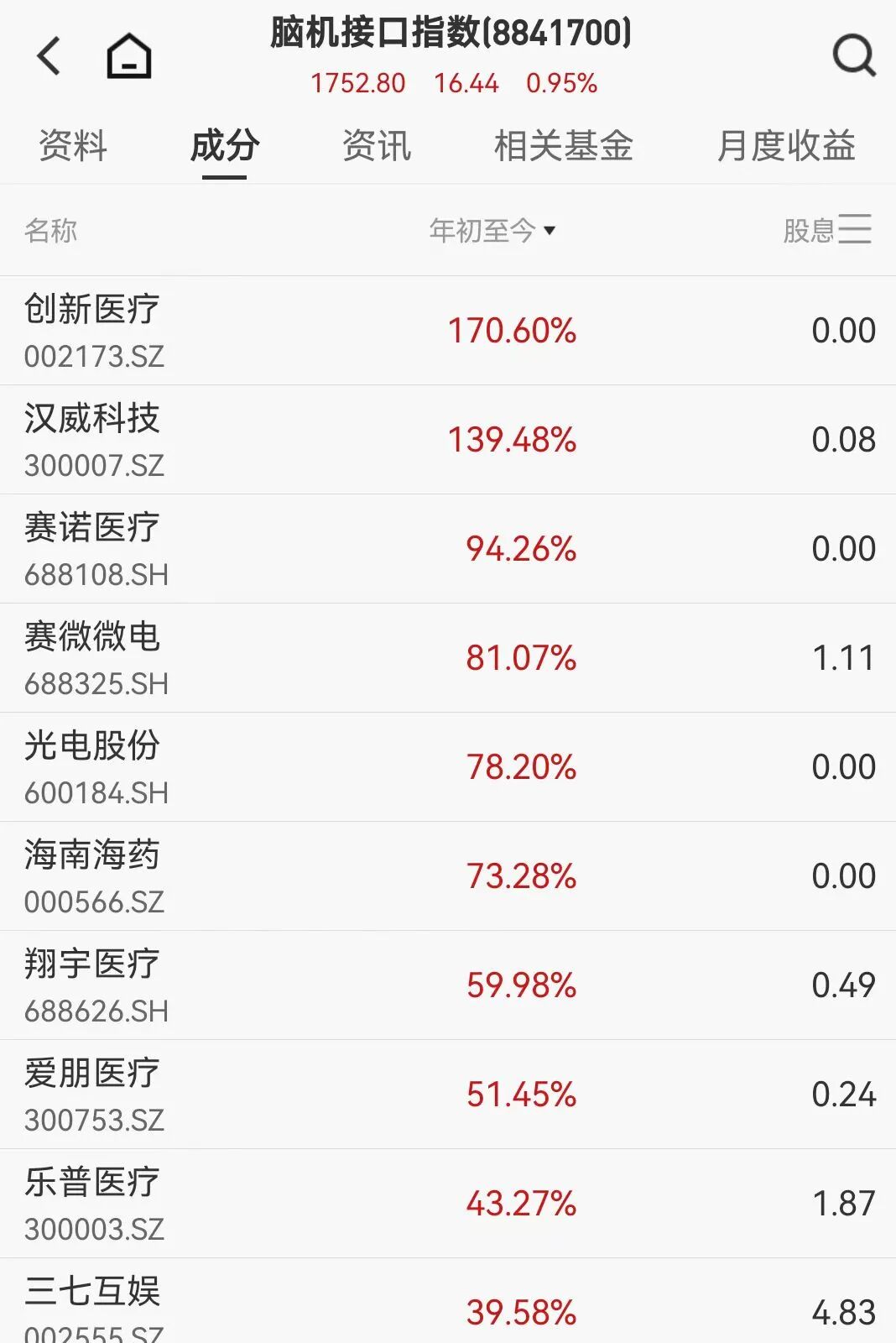
Core Insights - The year 2025 is viewed as a pivotal year for China's "brain-computer interface" (BCI) industry, with significant policy support and investment activity driving growth [2][5][7] Policy Support - The "14th Five-Year Plan" emphasizes BCI as one of the six key future industries, indicating strong governmental backing [7] - In July, multiple departments released implementation opinions to promote innovation and development in the BCI sector, establishing clear timelines for industry growth [5] - By 2027, breakthroughs in key technologies are expected, with the establishment of advanced technical, industrial, and standard systems [6] Market Performance - As of November, the BCI sector in China has seen 28 financing rounds totaling over 5 billion yuan [2] - The BCI concept index in the A-share market has surged by 52.13% over the past year, significantly outperforming the CSI 300 index, which rose by 15.04% [2] - Notable A-share companies in the BCI space, such as Innovation Medical and Hanwei Technology, have seen stock price increases of 170% and 139.48%, respectively [2] Industry Development - Shanghai has proactively laid out plans for BCI development, aiming for high-quality brain control and clinical applications by 2027 [8] - The BCI industry in China is rapidly advancing, with over 800 core enterprises identified, primarily located in China and the U.S. [9] - China is positioned to potentially lead in the BCI sector, with significant clinical advancements, including the first invasive clinical trial conducted in June [9][10] Financial Performance - In the A-share market, 24 companies related to BCI reported an average revenue of 3.428 billion yuan and an average net profit of 431 million yuan for the first three quarters [11] - Despite high gross profit margins, with 18 companies exceeding 30% and 9 over 60%, some companies are facing negative growth in revenue and net profit [12] Company Initiatives - Companies like Lepu Medical and Meihua Medical are actively pursuing commercialization of BCI products, with Lepu focusing on deep brain stimulation devices and Meihua collaborating with leading cochlear implant firms [13][14] - Aipeng Medical has received regulatory approval for its EEG collection products, which are part of a new ADHD treatment system, and is working with hospitals to implement these solutions [14]


2只脑机接口概念股年内股价翻倍
2 1 Shi Ji Jing Ji Bao Dao· 2025-11-29 23:36
Core Insights - The brain-computer interface (BCI) industry in China is expected to enter a significant development phase by 2025, driven by strong policy support and capital investment [1][5][6] - The BCI sector has seen substantial investment activity, with 28 financing rounds completed in 2023, totaling over 5 billion yuan [1] - The A-share market has recognized BCI as a hot investment trend, with the BCI concept index rising by 52.13% over the past year, significantly outperforming the Shanghai and Shenzhen 300 index [1] Policy Support - The "14th Five-Year Plan" emphasizes BCI as one of the six key future industries, with a clear timeline for technological breakthroughs and industry development by 2027 and 2030 [5][6] - In July, a joint initiative from seven departments outlined strategies for BCI innovation and development, aiming to establish a robust industry ecosystem [5] - Shanghai has proactively developed a BCI action plan, targeting clinical applications and technological advancements by 2027 and 2030 [6] Market Performance - The BCI concept index (8841700.WI) has shown a remarkable increase, with notable stocks like Innovation Medical and Hanwei Technology experiencing gains of 170% and 139.48% respectively [2][1] - A total of 24 A-share companies are involved in the BCI sector, with an average revenue of 3.43 billion yuan and an average net profit of 431 million yuan for the first three quarters of the year [11] Industry Landscape - The BCI industry in China is rapidly evolving, with over 800 core enterprises identified, positioning China among the leading countries in this field [8] - Recent clinical trials, including the first invasive clinical trial in China, indicate significant advancements in BCI technology [8][9] - The launch of the "North Brain No. 1" GCP multi-center clinical trial marks a new phase in large-scale clinical validation of BCI systems [9] Company Developments - Companies like Lepu Medical and Aipeng Medical are actively pursuing commercialization of BCI products, with Lepu focusing on deep brain stimulation devices and Aipeng on EEG collection products [12][13] - Aipeng Medical has established a joint laboratory for ADHD treatment, indicating a focus on integrating BCI technology into clinical applications [13] - Recent regulatory changes, including the establishment of a "green channel" for insurance coding of innovative medical products, are expected to accelerate the clinical application of BCI technologies [13]




2只脑机接口概念股年内股价翻倍
21世纪经济报道· 2025-11-29 23:34
Core Viewpoint - The article highlights the rapid development and investment opportunities in China's brain-computer interface (BCI) industry, which is expected to become a key focus area by 2025, supported by strong government policies and significant capital market activity [1][6][9]. Policy Support - The "14th Five-Year Plan" emphasizes BCI as one of the six key future industries, with increasing policy support and strategic importance [6][7]. - In July, multiple government departments released implementation opinions to promote BCI innovation, setting clear development milestones for the industry [6]. - By 2027, breakthroughs in key technologies are expected, with the establishment of advanced technical, industrial, and standard systems [6]. - Shanghai has initiated a plan to cultivate the BCI industry from 2025 to 2030, aiming for clinical applications of semi-invasive BCI products by 2027 [7][8]. Market Performance - The BCI concept index in the A-share market has seen a significant increase of 52.13% over the past year, outperforming the Shanghai and Shenzhen 300 index, which rose by 15.04% [1]. - Notable BCI-related stocks include Innovation Medical and Hanwei Technology, with year-to-date increases of 170% and 139.48%, respectively [2][1]. Industry Landscape - China is positioned to lead in the BCI sector, with over 800 core enterprises in the industry, primarily located in China and the U.S. [10]. - The first invasive clinical trial in China was successfully conducted in June, marking a significant milestone in the country's BCI technology development [10][11]. - The "North Brain No. 1" GCP multi-center clinical trial was launched in October, representing a new phase in large-scale clinical validation of BCI systems [11]. Financial Performance - In the A-share market, 24 companies related to BCI reported an average revenue of 3.428 billion yuan and an average net profit of 431 million yuan for the first three quarters [13]. - 18 companies have a gross margin exceeding 30%, indicating strong profitability, although many companies are facing challenges in revenue and profit growth [13]. - Companies like Lepu Medical and Aipeng Medical are actively working on commercialization and product development in the BCI space, with recent regulatory approvals and strategic partnerships [14].

脑机接口,投资新风口
2 1 Shi Ji Jing Ji Bao Dao· 2025-11-28 23:02
2025年被产业界视为中国"脑机接口"的元年。 首先是政策端,"十五五"规划建议明确将"脑机接口"作为重点布局的六大未来产业之一;其次,资本市 场投融资表现火热,据动脉橙数据库不完全统计,截至今年11月,我国脑机接口领域今年已完成28起融 资,融资总额超过50亿元。 在A股市场,"脑机接口"也成为投资风口。以万得脑机接口概念指数(8841700.WI)为例,近一年涨幅 高达52.13%,同期沪深300上涨15.04%。 喊了多年的脑机接口,产业到底发展如何?离商业化还有多远?A股业内公司业务进展情况又是怎样? 政策持续加码 从"脑机接口"政策推动来看,今年以来力度不断加大,并且上升至国家战略。 7月,七部门发布关于推动脑机接口产业创新发展的实施意见,提出了明确的产业发展时间节点。 到2027年,脑机接口关键技术取得突破,初步建立先进的技术体系、产业体系和标准体系。产业规模不 断壮大,打造2至3个产业发展集聚区,开拓一批新场景、新模式、新业态。 到2030年,脑机接口产业创新能力显著提升,形成安全可靠的产业体系,培育2至3家有全球影响力的领 军企业和一批专精特新中小企业,构建具有国际竞争力的产业生态,综合实力迈 ...
A股晚间热点 | 茅台再度出手!拟最高30亿元回购股份
智通财经网· 2025-11-28 15:27
Group 1: Guizhou Moutai Share Buyback - Guizhou Moutai plans to repurchase shares with an amount between RMB 1.5 billion and RMB 3 billion, using its own funds through centralized bidding [1] - The maximum repurchase price is set at RMB 1,887.63 per share, with an estimated repurchase quantity of approximately 794,647 to 1,589,294 shares, representing about 0.0635% to 0.1269% of the total issued share capital [1] Group 2: Battery Industry Regulation - The Ministry of Industry and Information Technology (MIIT) is accelerating the regulation of the power and energy storage battery industry to improve competition order and promote high-quality development [2] - The MIIT emphasizes the need for effective monitoring and regulation of production capacity to prevent irrational competition in the battery sector [2] - Analysts are optimistic about the future demand for batteries, driven by increased electrification and higher battery capacity per vehicle [2] Group 3: Tianfeng Securities Investigation - Tianfeng Securities is under investigation by the China Securities Regulatory Commission (CSRC) for information disclosure violations related to the previous major shareholder's fund occupation [3] - The occupied funds and interest were fully repaid by the end of 2022, which may mitigate long-term uncertainties for the company [3] Group 4: Commercial Real Estate Investment Trusts - The CSRC is drafting a proposal for a pilot program for commercial real estate investment trusts (REITs) to enhance the quality of the REITs market and support new real estate development models [4] Group 5: State-Owned Enterprises Profit Decline - From January to October, the total profit of state-owned enterprises reached RMB 34,214.4 million, reflecting a year-on-year decline of 3% [5] Group 6: Lifan Technology Penalties - The CSRC has imposed penalties on Lifan Technology for falsely reporting financial data, resulting in a cumulative inflation of revenue by RMB 638 million and costs by RMB 628 million from 2021 to 2023 [6] - The company is facing a potential delisting process due to serious violations of securities laws [6] Group 7: Global Memory Chip Shortage - A global shortage of memory chips is intensifying, with predictions of a 50% price increase by the second quarter of 2026 due to rising demand from AI infrastructure [7] - Major consumer electronics companies are warning of potential price hikes for their products due to chip shortages [7] Group 8: Positive and Negative Announcements - Positive announcements include China Jushi's shareholder plan to increase holdings between RMB 550 million and RMB 1.1 billion [9] - Negative announcements involve investigations into Yongtai Energy and other companies facing regulatory scrutiny [10]


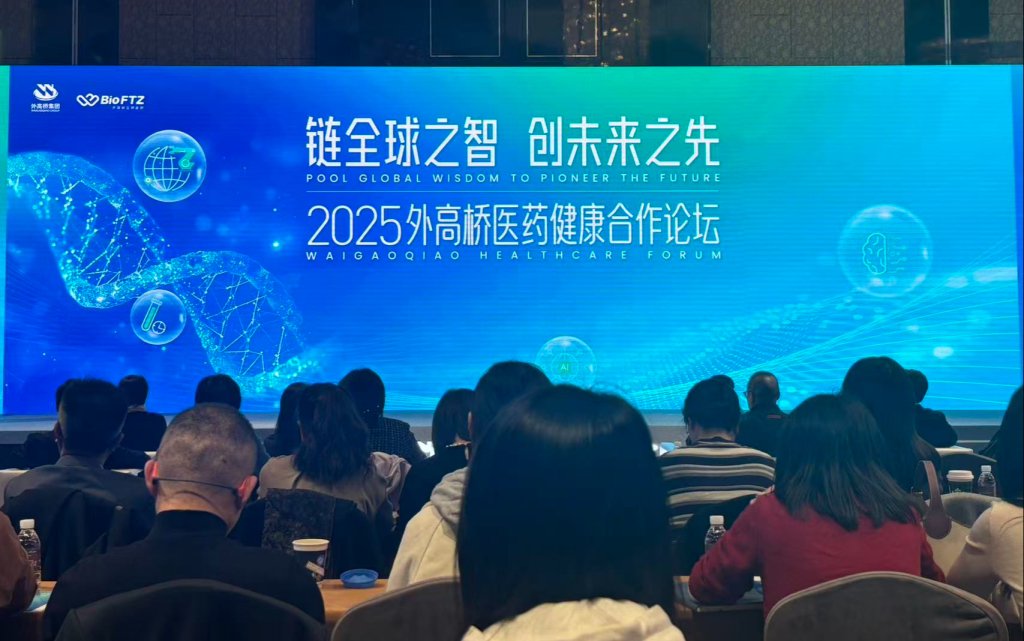
上海外高桥启动“脑机接口创新发展伙伴计划”,构建协同创新生态
Xin Lang Cai Jing· 2025-11-28 08:35
11月28日,海关总署牵头的国家十部委对上海东方枢纽国际商务合作区先行启动区进行联合验收,并颁发验收合格证书。同日,智通财经记者从 上海外高桥集团获悉,位于"东方枢纽"核心区的上海外高桥,已于11月27日启动首个"脑机接口创新发展伙伴计划",同步发布"外高桥脑机接口产 品服务包"。这也标志着外高桥将这一前沿科技纳入其核心产业版图,致力于打造生物医药产业"加速器"。 11月27日,上海外高桥"脑机接口创新发展伙伴计划"发布现场。智通财经实习记者 张云鹏 摄 "外高桥给企业的帮助是多元化的,从政策到资源,全方位为企业保驾护航。"上海阶梯医疗科技有限公司总经理助理陈垚旭告诉智通财经记者, 作为国内侵入式脑机接口领域的创新代表,企业不仅获得了专业的政策解读与市场准入辅导,还通过政府资源对接与合作生态协同,快速链接行 业优质资源。 陈垚旭透露,对于东方枢纽商务合作区未来可能推出的数据跨境功能,企业也寄予厚望。长期来看,这一功能对脑机接口领域的跨国研发、多中 心研发意义重大,现阶段公司已在学习相关政策与流程,为未来布局做好准备。 "中国脑机接口产业与美国差距不大,部分领域已实现超越。"外高桥生物医药公司总经理诸耀鹏告诉智 ...