
军工

Search documents
收评:沪指跌0.22%,4000点得而复失,券商等板块走低
Sou Hu Cai Jing· 2025-10-28 07:55
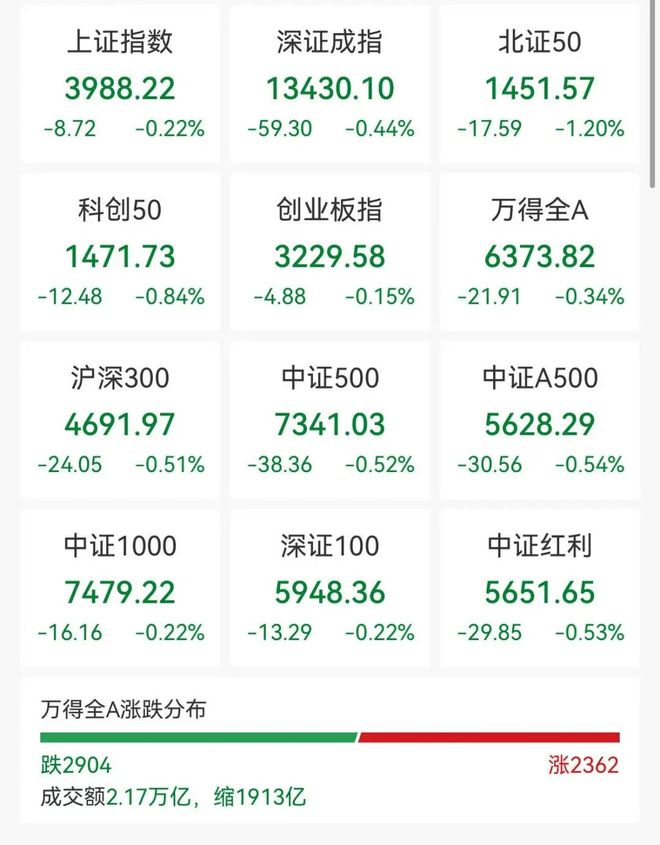
Market Overview - The stock indices experienced a pullback after an initial rise, with the Shanghai Composite Index falling below 4000 points, closing down 0.22% at 3988.22 points, the Shenzhen Component down 0.44% at 13430.1 points, and the ChiNext Index down 0.15% at 3229.58 points [1] - The total trading volume in the Shanghai and Shenzhen markets reached 21,656 billion yuan [1] Sector Performance - Sectors such as non-ferrous metals, brokerage, steel, gas, and electricity saw declines, while military, automotive, pharmaceuticals, and semiconductors experienced gains [1] - Active concepts included military trade, storage chips, and solid-state batteries [1] Market Outlook - HuLong Securities indicated that the market is likely to continue being driven by positive factors, including progress in China-US economic negotiations and a potential rebound in risk appetite following adjustments in growth sectors [1] - Key areas for industry and thematic allocation include: - Growth sectors like technology and advanced manufacturing, benefiting from positive fundamental data and policy catalysts, with a focus on AI+, self-controllable technologies, humanoid robots, low-altitude economy, and national defense [1] - Sectors benefiting from the "anti-involution" policy, with positive feedback from data, including power equipment and basic chemicals [1] - Industries benefiting from domestic demand policies, such as machinery, home appliances, automobiles, consumer electronics, and service consumption [1]
A股收评:沪指跌0.22%盘中站上4000点,福建板块掀涨停潮
2 1 Shi Ji Jing Ji Bao Dao· 2025-10-28 07:53
Market Overview - The market experienced a pullback after an initial rise, with all three major indices turning negative. The Shanghai Composite Index fell by 0.22%, the Shenzhen Component Index decreased by 0.44%, and the ChiNext Index dropped by 0.15% [1][2] - The Shanghai Composite Index briefly surpassed the 4000-point mark, reaching a ten-year high during the trading session [1][2] - The total trading volume in the Shanghai and Shenzhen markets was 2.15 trillion yuan, a decrease of 192.3 billion yuan compared to the previous trading day [1][2] Sector Performance - The Fujian sector saw a surge, with over ten stocks hitting the daily limit, including Pingtan Development, which achieved six consecutive limit-ups in eight days. Other stocks like Xiamen Port Development and Xiamen Airport also reached their daily limits [1][2] - The nuclear power sector was active, with Dongfang Tantalum Industry achieving three limit-ups in four days, and Antai Technology securing two consecutive limit-ups [1][2] - Robotics concept stocks strengthened, with Qingdao Double Star and Yashichuangneng both achieving three consecutive limit-ups, alongside other stocks like Ningbo Jingda and Fangzheng Electric also hitting their daily limits [1][2] - The military industry sector saw a rapid increase, with Jianglong Shipbuilding hitting the maximum limit of 20% [1][2] Declining Sectors - The non-ferrous metals sector experienced a collective decline, with Tongling Nonferrous Metals hitting the daily limit down [1][2] - Sectors with notable declines included non-ferrous metals, wind power equipment, and oil and gas [1][2]
亚太股市集体飘绿,金价跌破3940美元关口,国内金饰跌破1200元
2 1 Shi Ji Jing Ji Bao Dao· 2025-10-28 07:45
Market Overview - On October 28, the A-share market experienced a high and then a pullback, with the Shanghai Composite Index briefly surpassing the 4000-point mark, reaching a ten-year high [1] - By the market close, all three major indices ended lower, with the Shanghai and Shenzhen stock exchanges recording a total trading volume of 2.17 trillion yuan, a decrease of 191.3 billion yuan from the previous trading day [1][2] Index Performance - Shanghai Composite Index: 3988.22, down 8.72 points (-0.22%) - Shenzhen Component Index: 13430.10, down 59.30 points (-0.44%) - ChiNext Index: 3229.58, down 4.88 points (-0.15%) [2] Sector Highlights - The market saw rapid rotation of hot sectors, with the Fujian sector experiencing a surge, leading to over ten stocks hitting the daily limit [2] - Notable performers included Pingtan Development, which achieved six consecutive limit-ups in eight days, and several stocks in the nuclear power sector, such as Dongfang Tantalum, which had three limit-ups in four days [2][3] Declining Sectors - The non-ferrous metals sector faced collective declines, with Tongling Nonferrous Metals hitting the daily limit down [5] - Other sectors that saw significant declines included wind power equipment and oil and gas [5] International Market Insights - Asian markets, including Japan, closed lower, with experts warning of potential bubble risks in the Japanese stock market due to a lack of economic fundamentals and over-reliance on monetary easing [7][9] - The Nikkei 225 index had previously surpassed the 50,000-point mark, but concerns about structural resistance and policy uncertainties may limit further upward movement [9] Gold Market Update - International gold prices saw a sharp decline, with spot gold dropping below $3940 per ounce, reflecting a nearly 1% decrease [12] - Domestic gold jewelry prices also saw significant reductions, with some brands reporting prices below 1200 yuan per gram [14] - Analysts attribute the gold price correction to three main factors: changes in the macro environment, technical selling pressure due to overbought conditions, and fluctuations in the U.S. dollar and Treasury yields [15][16]

收评:沪指冲高回落4000点得而复失 福建板块掀涨停潮
Xin Hua Cai Jing· 2025-10-28 07:43
Market Overview - A-shares experienced a slight rise followed by a pullback, with the Shanghai Composite Index briefly surpassing the 4000-point mark, reaching a ten-year high before closing at 3988.22 points, down 0.22% [1] - The Shenzhen Component Index closed at 13430.10 points, down 0.44%, while the ChiNext Index ended at 3229.58 points, down 0.15% [1] - Total trading volume in the Shanghai and Shenzhen markets was 2.15 trillion yuan, a decrease of 192.3 billion yuan from the previous trading day [1] Sector Performance - The Fujian, military industry, and port shipping sectors saw significant gains, while the non-ferrous metals, wind power equipment, and oil and gas sectors experienced declines [1][3] - The Fujian sector had a surge in stocks hitting the daily limit, with over ten stocks reaching the limit, including Pingtan Development [3] Institutional Insights - Market trends are perceived to be upward, with the third-quarter report season beginning and a valuation recovery underway [4] - Investment focus is recommended on high-growth sectors such as semiconductors, consumer electronics, artificial intelligence, robotics, and low-altitude economy [4] - The China Securities Regulatory Commission (CSRC) chairman's positive remarks are expected to support the capital market's high-quality development [4] Economic Outlook - The economic structure is undergoing adjustments, with consumer spending becoming increasingly important amid external uncertainties [5] - The current valuation of consumer stocks is at historical lows, indicating significant potential for valuation recovery [6] Regulatory Developments - The CSRC is advancing a new round of capital market reforms to enhance the coordination of investment and financing functions [7] - The Shanghai Stock Exchange emphasizes support for "hard technology" companies, aiming to facilitate their listing and participation in global competition [8] Specific Company News - The wholesale price of Feitian Moutai has dropped below 1700 yuan per bottle for the first time, marking a new low since its launch, with a cumulative decline of over 31% from its initial price [9]
收评:创业板指冲高回落跌0.15%,沪指盘中突破4000点大关
Mei Ri Jing Ji Xin Wen· 2025-10-28 07:22
Market Overview - The market experienced a pullback after an initial rise, with all three major indices turning negative, while the ChiNext index briefly rose over 1% before retreating [1] - The Shanghai Composite Index broke through the 4000-point mark, reaching a ten-year high [1] - The total trading volume in the Shanghai and Shenzhen markets was 2.15 trillion yuan, a decrease of 192.3 billion yuan compared to the previous trading day [1] Sector Performance - The Fujian sector saw a surge, with over ten stocks hitting the daily limit, including Pingtan Development, which achieved six consecutive limit-ups in eight days [1] - The nuclear power sector was active, with Dongfang Tantalum Industry achieving three limit-ups in four days, and Antai Technology securing two consecutive limit-ups [1] - Robotics concept stocks performed strongly, with Qingdao Double Star and Yashichuangneng both achieving three consecutive limit-ups, alongside several other stocks hitting the daily limit [1] - The military industry sector experienced a rapid increase, with Jianglong Shipbuilding hitting the daily limit with a 20% rise [1] Declining Sectors - The non-ferrous metals sector collectively declined, with Tongling Nonferrous Metals hitting the daily limit down [1] - Sectors with the largest gains included Fujian, military, and port shipping, while non-ferrous metals, wind power equipment, and oil and gas sectors saw the largest declines [1] Closing Summary - At the close, the Shanghai Composite Index fell by 0.22%, the Shenzhen Component Index decreased by 0.44%, and the ChiNext Index dropped by 0.15% [1]

创业板指冲高回落
财联社· 2025-10-28 07:14
盘面上,市场热点快速轮动, 福建板块掀起涨停潮 ,10余只个股涨停,平潭发展8天6板,厦门港务、厦门空港等多股涨停。 核电板块表现活跃 , 东方钽业4天3板,安泰科技2连板。机器人概念股走强,青岛双星、亚士创能双双3连板,宁波精达、方正电机等多股涨停。军工板块盘中快速拉 升,江龙船艇直线20cm涨停。下跌方面,有色金属板块集体下跌,铜陵有色跌停。 板块方面,福建、军工、港口航运等板块涨幅居前,有色金属、风电设备、油气等板块跌幅居前。 今日A股市场冲高回落,三大指数全部翻绿,创业板指冲高回落,此前一度涨超1%。 沪指盘中突破4000点大关,再创十年新高。 沪深两市成交额 2.15万亿,较上一个交易日缩量1923亿。 今日预测量能: 100 2.15万亿 -1923亿 50 0 下载财联社APP获取更多资讯 准确 快速 权威 专业 7x24h电报 头条新闻 VIP资讯 实时盯盘 截至收盘,沪指跌0.22%,深成指跌0.44%,创业板指跌0.15%。 创业板指 上证指数 深证成指 ▼3988.22 ▼13430.10 ▼3229.57 -0.22% -4.88 -0.15% -8.72 -59.3 -0.44% 市 ...

收盘丨沪指冲高回落跌0.22%,福建、军工板块集体爆发
Di Yi Cai Jing· 2025-10-28 07:12
Market Overview - The A-share market experienced a decline with the Shanghai Composite Index falling by 0.22% to 3988.22 points, the Shenzhen Component Index down by 0.44% to 13430.10 points, and the ChiNext Index decreasing by 0.15% to 3229.58 points [1][2] - The total trading volume in the Shanghai and Shenzhen markets was 2.15 trillion yuan, a decrease of 192.3 billion yuan compared to the previous trading day [1][2] Sector Performance - The Fujian sector showed strong performance with multiple stocks hitting the daily limit, including Haixia Innovation and Fujian Cement [2] - The military industry sector saw a collective surge, with stocks like Jianglong Shipbuilding and Great Wall Military Industry performing well [2] - Conversely, the non-ferrous metals sector experienced widespread declines, particularly in gold, rare earths, and cobalt mining [2] Capital Flow - Main capital inflows were observed in the biopharmaceutical, cultural media, and software development sectors, while outflows were noted in semiconductors, non-ferrous metals, and communication equipment [4][5] - Specific stocks with significant net inflows included N He Yuan-U, N Yi Cai-U, and Great Wall Military Industry, attracting 1.775 billion yuan, 1.291 billion yuan, and 1.107 billion yuan respectively [4] - Stocks facing notable net outflows included Northern Rare Earth, Huayou Cobalt, and ZTE, with outflows of 2.089 billion yuan, 1.377 billion yuan, and 1.197 billion yuan respectively [5] Institutional Insights - Qianhai Bourbon Fund noted that the market's recent breakthrough of 4000 points requires observation due to influences from tariff negotiations and the Federal Reserve's decisions, suggesting a cautious approach [6] - Guodu Securities described the A-share market as exhibiting a "slow bull pattern," with frequent rotations between blue-chip dividends and technology sectors, indicating a potential for increased volatility in the coming months [6]

市场冲高回落,沪指收跌0.22%,两市成交额萎缩近2000亿
Feng Huang Wang Cai Jing· 2025-10-28 07:07
Core Points - The market experienced a pullback after an initial rise, with all three major indices closing in the red, despite the Shanghai Composite Index briefly surpassing the 4000-point mark, reaching a ten-year high [1] - The trading volume in the Shanghai and Shenzhen markets was 2.15 trillion yuan, a decrease of 192.3 billion yuan compared to the previous trading day [1] Index Performance - Shanghai Composite Index closed at 3988.22, down 0.22%, with 984 gainers and 1273 decliners [2] - Shenzhen Component Index closed at 13430.10, down 0.44%, with 1325 gainers and 1483 decliners [2] - ChiNext Index closed at 3229.58, down 0.15%, with 690 gainers and 663 decliners [2] Sector Performance - The market saw rapid rotation of hot sectors, with the Fujian sector experiencing a surge, leading to multiple stocks hitting the daily limit [2] - The nuclear power sector was active, with stocks like Dongfang Tantalum and Antai Technology showing strong performance [2] - The robotics sector also saw gains, with companies like Qingdao Double Star and Yashichuangneng achieving consecutive limit-ups [2] - Conversely, the non-ferrous metals sector faced collective declines, with Tongling Nonferrous Metals hitting the daily limit down [3]

军工概念强势上扬,江龙船艇20%涨停,北方长龙等大涨
Zheng Quan Shi Bao Wang· 2025-10-28 06:56
Core Viewpoint - The military industry is experiencing a strong performance, with significant stock price increases observed in various companies, indicating a transition from performance expectations to actual performance realization [1] Industry Summary - The military sector has seen a maximum increase of 50% since the "924" period, reflecting new cycle growth expectations, with a performance realization phase expected to begin in 2025 [1] - Structural and differentiated characteristics of the sector are anticipated to become more pronounced, as personnel adjustments and institutional reforms within the military gradually take effect [1] - The backlog of orders combined with new demand is expected to stabilize and rebound the industry's order volume and performance growth rate by 2025 [1] - The military industry is transitioning into a new cycle, moving from "volume and price increase" to "volume increase and price stability," and from "platform expansion" to "system building, addressing shortcomings, and international expansion" [1] Market Dynamics - Recent tensions in the Middle East and heightened expectations for military parades have increased risk appetite among investors, leading to a concentrated release of market sentiment in the military sector [1] - Multiple favorable factors are driving short-term increases in the military sector, which is currently at a dual bottom in terms of performance growth and capital allocation [1] - Domestic and international catalysts are expected to continue emerging, providing new momentum for the sector's growth, with ongoing developments in new domains and quality fields [1]




国防实力纳入2035目标,军工ETF(512660)涨超1%,规模超150亿元居同类第一
Mei Ri Jing Ji Xin Wen· 2025-10-28 06:33
Group 1 - The core viewpoint is that national defense strength has been added as a new long-term goal for 2035, emphasizing its importance for social stability, strategic initiative, manufacturing expansion, and the internationalization of the RMB [1] - The "15th Five-Year Plan" includes a significant enhancement of national defense capabilities compared to the "14th Five-Year Plan," continuing the "new three-step strategy" established since the 19th National Congress [1] - The military modernization strategy focuses on accelerating advanced combat capabilities, promoting military governance modernization, and strengthening the integrated national strategic system and capabilities [1] Group 2 - The military ETF (512660) tracks the CSI Military Industry Index (399967), which selects listed companies in sectors such as aviation, aerospace, shipbuilding, armaments, and military electronics to reflect the overall performance of China's military industry [1] - The index components exhibit a small and mid-cap style, primarily focusing on the aviation equipment and military electronics sectors [1] - As of October 27, 2025, the military ETF has a scale of 15.092 billion, ranking first among 12 similar products [2]