脑机接口

Search documents
不是科幻!听韩璧丞聊聊“意念控物”的真相
新华网财经· 2025-11-28 05:14
Core Viewpoint - The article highlights the emergence of brain-computer interface (BCI) technology, emphasizing that Chinese company BrainCo has become a leading player in the non-invasive BCI sector, competing with Elon Musk's Neuralink [1]. Group 1: Technological Breakthroughs - BrainCo, founded by Han Bicheng and a team of Chinese students at Harvard in 2015, has focused on developing non-invasive BCI technology for the past decade [3]. - The company has developed a super sensor capable of detecting human neural signals, which are extremely weak, comparable to one-millionth of a 5-volt battery [4]. - Unlike Neuralink's invasive approach, BrainCo's sensor captures neural and brain electrical signals through electrodes without the need for complex surgeries, acting as a "translator" between the brain and the external world [6]. Group 2: Industry Application - BrainCo's products are designed to address real-world needs, with the first application targeting rehabilitation for patients with limb disabilities [8]. - Training for using the device can be completed in one day for hand control, allowing patients to perform tasks like drinking and eating using their thoughts [10]. - The Zhejiang province has included non-invasive BCI adaptation fees in basic medical insurance, facilitating the development of the industry and providing strong motivation for innovative companies [12]. Group 3: Future Prospects - BCI technology has been recognized as one of the six future industries in China's 14th Five-Year Plan, indicating its strategic importance [15]. - The potential for human-machine interaction is expected to revolutionize the relationship between humans and technology, with applications ranging from alleviating neurological diseases to enhancing human capabilities [17]. - The article suggests that the BCI sector is on the verge of a significant breakthrough, with Chinese companies poised to lead in this innovative field [17].


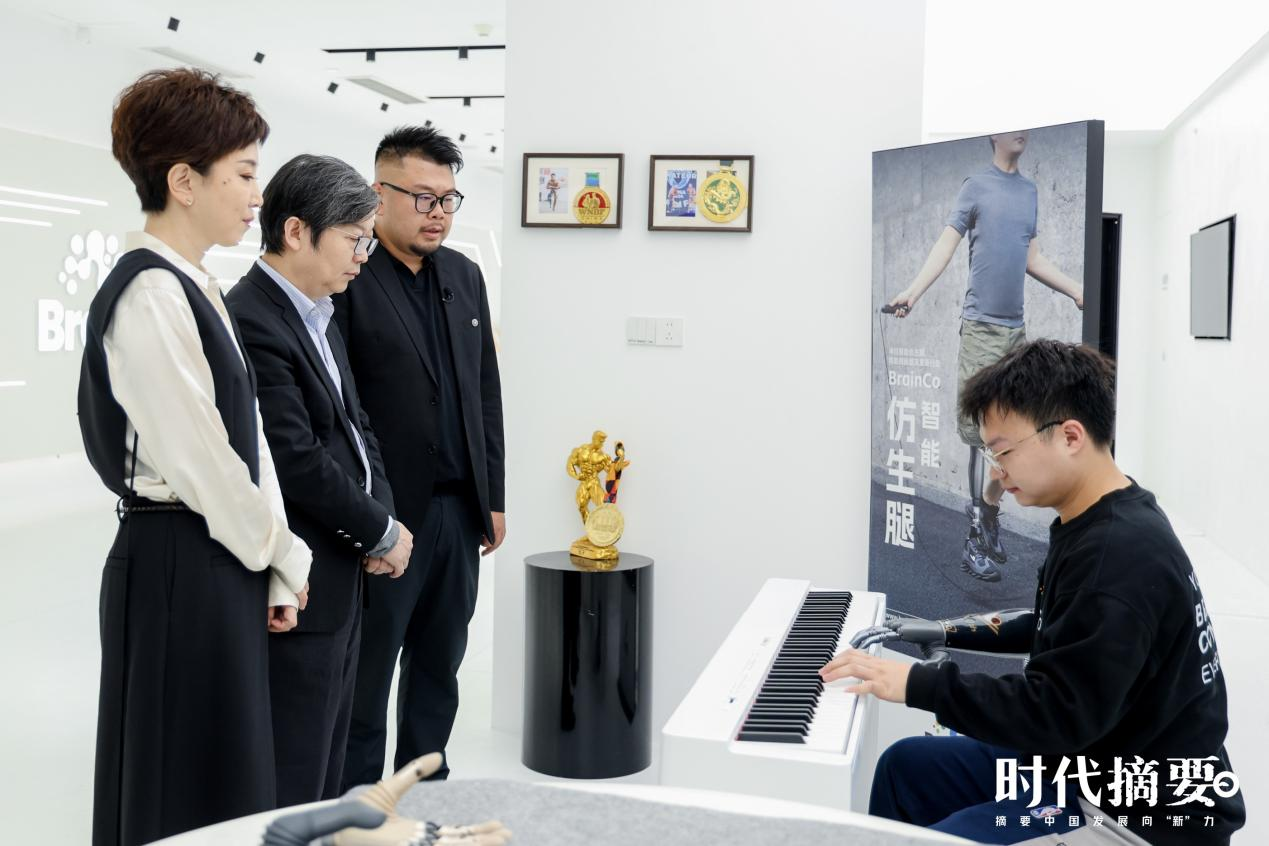
《时代摘要》对话强脑科技韩璧丞:脑机接口产业迎来“奇点时刻”
Xin Hua Wang· 2025-11-28 03:06
Core Insights - Brain-computer interface (BCI) technology is on the verge of a breakthrough, recognized as one of the six future industries in China's 14th Five-Year Plan, alongside quantum technology and hydrogen energy [1][13] - BrainCo, headquartered in Hangzhou, has emerged as a leading player in non-invasive BCI technology, competing with Neuralink, and is focused on transforming future industries into new growth points [1][10] Group 1: Technological Breakthroughs - BrainCo was founded in 2015 by Han Bicheng and a team of Chinese students from Harvard, focusing on developing non-invasive BCI technology [2][4] - The company has dedicated ten years to perfecting a "super sensor" capable of detecting human neural signals, achieving a signal recognition accuracy of over 95% [4][7] - The non-invasive sensor captures neural and brain signals without the need for complex surgeries, making it safer and more accessible compared to invasive methods [6][10] Group 2: Market Applications - BrainCo's products target critical needs, particularly in rehabilitation, offering bionic hands that are significantly cheaper than imported smart prosthetics, priced at 1/7 to 1/10 of similar products [10][12] - The company has established a presence in over 400 hospitals and rehabilitation centers across China, aiming to assist over 6,000 disabled individuals this year [10][12] - Non-invasive BCI technology has been included in basic medical insurance in Zhejiang Province, facilitating wider adoption and market growth [12] Group 3: Future Prospects - The BCI technology is now part of China's strategic planning, providing unprecedented opportunities for companies in this sector [13][15] - BrainCo aims to help 1 million disabled individuals obtain smart prosthetics within the next 5-10 years, enhancing their quality of life [13] - Future developments include devices for treating Alzheimer's, depression, and Parkinson's disease, with the goal of revolutionizing human-machine interaction [15]
全国首例“医保价”脑机接口手术在武汉完成
Jing Ji Guan Cha Bao· 2025-11-28 02:48
Core Insights - The first brain-computer interface (BCI) surgery in China was successfully completed at Tongji Hospital in Wuhan, marking a significant step in integrating BCI technology into the medical service pricing system [1][2] - The surgery was performed on a paraplegic patient and was funded by research grants, highlighting the importance of establishing a clear pricing standard for BCI procedures [1][2] - The procedure utilized a BCI device produced by Wuhan Zhonghua Brain-Machine Fusion Technology Development Co., which specializes in BCI technology research and industrialization [2] Industry Developments - The National Healthcare Security Administration guided the establishment of a standardized pricing for invasive BCI procedures, setting the cost at 6,552 yuan per operation, which facilitates the inclusion of BCI technology into the regular medical service system [1] - The successful implementation of this surgery indicates a shift from research exploration to clinical application, paving the way for broader adoption of BCI technology in medical practices [1][2] - Zhonghua Brain-Machine is focused on developing implantable BCI systems, neural signal processing algorithms, and clinical application solutions, positioning itself as a key player in the BCI industry [2]
脑机接口临床应用加速, 光莆股份、 泰和科技 前景可期
Jin Rong Jie· 2025-11-27 23:40
Group 1 - The first clinical application of brain-computer interface (BCI) technology in China has been successfully performed, marking a new phase in its clinical application [1] - The surgery was conducted at Huazhong University of Science and Technology's Tongji Hospital and is the first BCI operation priced according to government-approved medical service pricing [1] - The invasive BCI implantation fee is set at 6,552 yuan per procedure, excluding the cost of the BCI device, indicating a significant step towards the commercialization and accessibility of this technology [1] Group 2 - Paradromics, a US-based BCI company, has received FDA approval to conduct its first long-term clinical trial for its brain-computer interface [2] - The trial aims to explore the ability to accurately detect neural activity when volunteers imagine hand movements, potentially allowing them to control a computer cursor with their thoughts [2] - Initial results suggest the trial may expand to include 10 volunteers, who will receive two cortical implants to enhance signal richness and cover more brain areas [2]

晚报 | 11月28日主题前瞻
Xuan Gu Bao· 2025-11-27 14:42
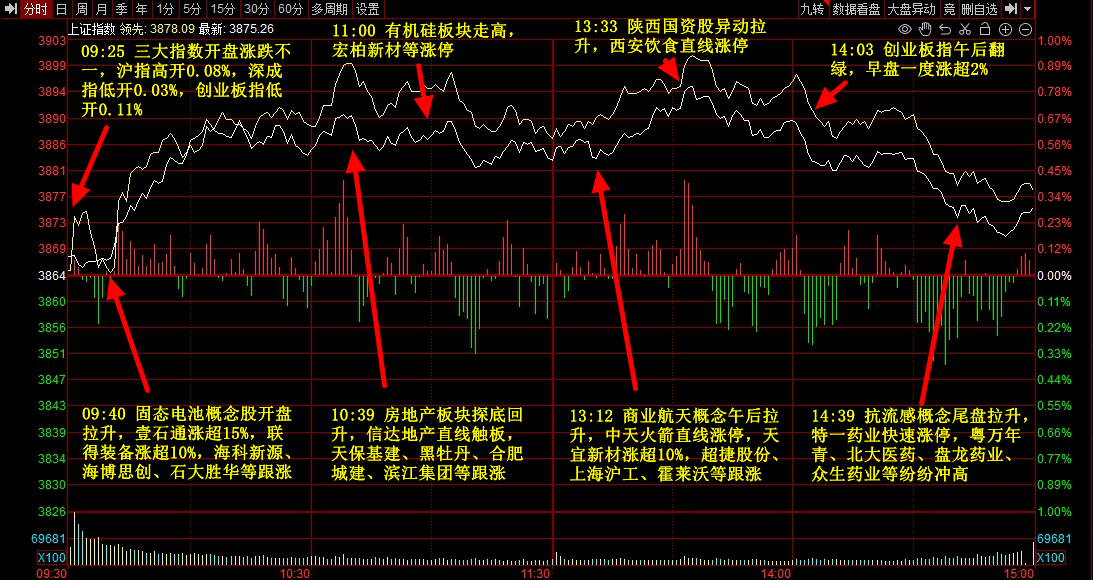
Hydrogen Energy - The National Development and Reform Commission (NDRC) plans to create a favorable environment for the healthy development of emerging industries such as energy storage and hydrogen energy [1] - The NDRC will deepen electricity market reforms and encourage energy storage projects to participate in various electricity markets to obtain reasonable returns [1] - The green hydrogen and ammonia industry in China is entering a dual-driven phase of "policy promotion + market traction," with significant growth momentum expected in 2024 [1] Smart Glasses - XREAL and Google are set to launch the first AI glasses, Project Aura, powered by the AndroidXR platform and Google Gemini AI [2] - The glasses will allow users to interact naturally with Gemini through built-in cameras and sensors, marking a significant advancement in AR technology [2] - XREAL aims to establish a benchmark for the next generation of XR human-computer interaction, enhancing the Google AI ecosystem [2] Brain-Computer Interface (BCI) - The first clinical application of an invasive brain-computer interface in China was successfully completed, marking a new phase for BCI technology in medical services [3] - The procedure was conducted at Huazhong University of Science and Technology and is now included in the medical service pricing directory [3] - The BCI industry in China is rapidly growing, with significant policy support paving the way for clinical applications [3] Robotics - The market for six-dimensional force sensors in humanoid robots is expected to see explosive growth, with an estimated shipment of 12,300 units in China this year, a year-on-year increase of 510.1% [4] - The market is becoming increasingly concentrated, with the leading company, Blue Dot Touch, holding over 70% market share [4] Lithium Batteries - In December, the total production capacity of power batteries, energy storage, and consumer batteries in China is projected to reach 220 GWh, a month-on-month increase of 5.3% [4] - Energy storage cells account for approximately 35.3% of the production, while ternary cells make up about 17.3% [4] - The demand for energy storage cells is strong, with leading companies' orders scheduled until 2026 [4] Gaming Industry - In November, 178 domestic games and 6 imported games were approved by the National Press and Publication Administration [5] - The gaming industry is experiencing high market sentiment, with increasing user ARPU values driving steady market growth [5] - AI's multi-modal capabilities are expected to significantly enhance efficiency and innovation in gaming products, leading to improved profitability and valuation [5] Macro and Industry News - The State Council is advancing the provincial coordination of basic medical insurance and discussing the revision of the Certified Public Accountant Law [6] - The Ministry of Commerce plans to promote consumption expansion and upgrade through various initiatives, including fostering "AI + consumption" [6] - The NDRC has cautioned against the oversaturation of humanoid robot products in the market [6]


外高桥集团启动脑机接口伙伴计划
Di Yi Cai Jing· 2025-11-27 12:29
Core Insights - The Waigaoqiao Group has launched the "Brain-Computer Interface Innovation Development Partnership Program" to enhance its position in the brain-computer interface (BCI) sector, aiming to become a preferred "landing point" and "accelerator" for BCI innovations [1] Group 1: Partnership Program Details - The partnership program aims to unite enterprises, hospitals, and government departments to collaboratively build an innovative ecosystem that addresses bottlenecks in clinical transformation, cross-border data, and market access for BCI technology [1] - Participating companies will receive the "Waigaoqiao Brain-Computer Interface Product Service Package," which includes comprehensive support from cross-border R&D pilot projects to clinical approval acceleration and market expansion [1] - Initial participants will also benefit from preferential support in terms of space and guidance on relevant industrial policies provided by the Waigaoqiao Group [2] Group 2: Industry Context and Developments - The BCI sector is on the verge of transitioning from laboratory research to clinical application, with companies aiming to establish a full-service capability from R&D to market entry to capture future industry opportunities [2] - Recently, Ladder Medical's "Implantable Wireless Brain-Computer Interface System" has entered the special review process by the National Medical Products Administration, marking a significant milestone for invasive BCI products in China [2] - Ladder Medical has developed the world's smallest brain-controlled implant and is progressing towards full domestic production, collaborating with Fudan University Huashan Hospital for prospective clinical trials [2] Group 3: Strategic Advantages - The development of BCI technology relies heavily on interdisciplinary collaboration, cross-border R&D, and international cooperation, which aligns with Waigaoqiao's strategic advantages [3] - Waigaoqiao offers "bonded R&D" policy functions and serves as a hub connecting domestic and international markets, facilitating data cross-border and personnel movement [3] - The company provides comprehensive policy adaptation services for BCI enterprises, covering the entire process from clinical trials to overseas registration [4]

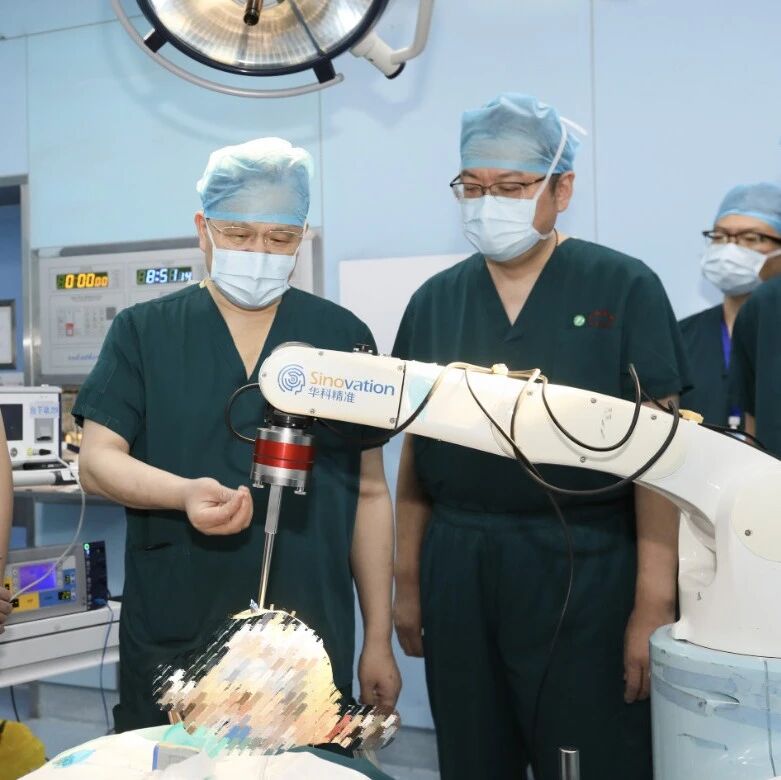
武汉完成全国首例“医保价”脑机接口手术
第一财经· 2025-11-27 11:16
Core Insights - The article discusses the successful implantation of a brain-computer interface (BCI) in a spinal cord injury patient in China, marking a significant advancement in the clinical application of BCI technology [3][4] - This procedure is the first in China to be executed under a government-approved medical service pricing system, indicating a shift from research to standardized medical practice for BCI [3][4] Group 1: Clinical Application of BCI - The first invasive BCI surgery in China was performed on a 31-year-old patient, who suffered from high-level paraplegia due to an accident, using a device with 64-channel flexible electrodes to monitor brain signals [3] - The surgery was conducted at Huazhong University of Science and Technology's Tongji Hospital, with the procedure costing 6,552 yuan per instance, excluding the cost of the BCI device [3][4] Group 2: Policy and Regulatory Framework - In March 2023, the Hubei Provincial Medical Insurance Bureau established the first national pricing for BCI medical services, setting the invasive BCI implantation fee at 6,552 yuan per instance [4] - The implementation of this pricing policy is seen as a crucial step in integrating BCI technology into the standardized medical treatment system, paving the way for broader clinical applications in the future [4]
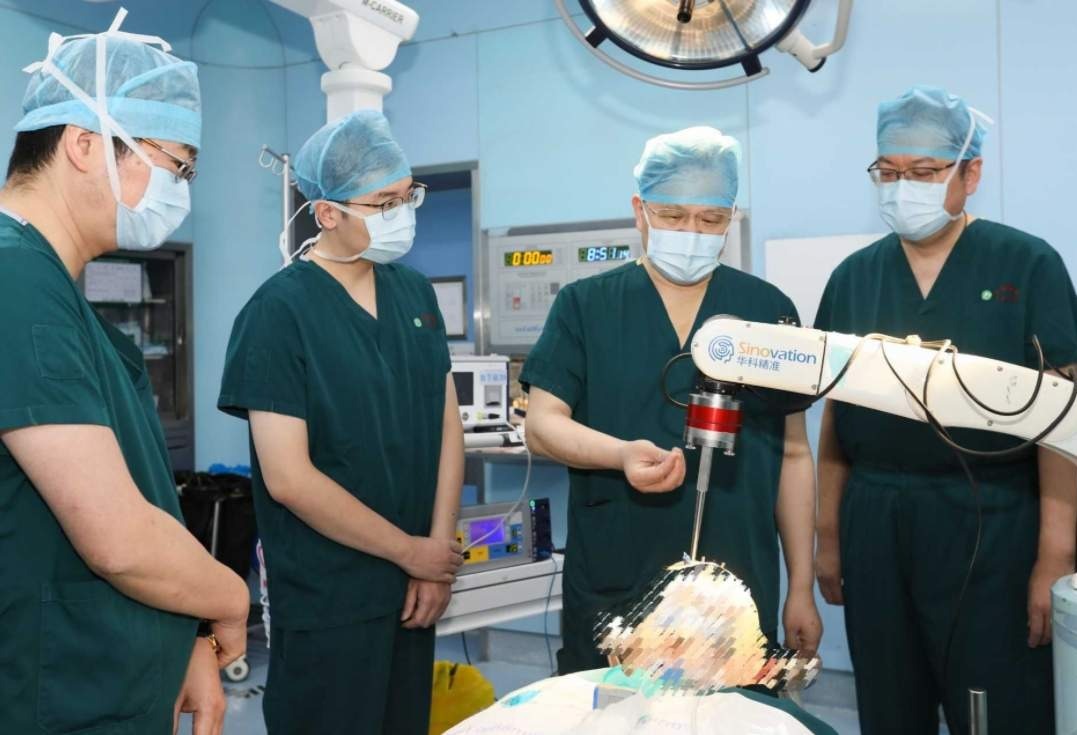
全国首例“医保价”脑机接口手术在武汉完成,技术普惠化产业化迈出关键一步
Chang Jiang Ri Bao· 2025-11-27 11:04
Core Insights - The first clinical implantation of a brain-computer interface (BCI) in China was successfully completed at Huazhong University of Science and Technology Tongji Hospital, marking a significant step in the commercialization and accessibility of BCI technology [1][2] - The procedure is the first to be executed under a government-approved medical service pricing project, indicating a shift from research to clinical application [2][3] Group 1: Clinical Implementation - The surgery was performed on a 31-year-old patient with spinal cord injury, utilizing a BCI device with 64-channel flexible electrodes to monitor brain signals related to hand movement and sensation [1][2] - The operation was funded by research grants, as BCI technology is still in the clinical trial phase and has not yet entered market application [2] Group 2: Policy and Pricing - In March 2025, Hubei Province will implement the first national pricing project for BCI medical services, establishing fees for invasive and non-invasive procedures [2] - The invasive BCI implantation fee is set at 6,552 yuan per procedure, with additional fees for extraction and non-invasive adaptation, providing a regulatory framework for clinical application [2] Group 3: Future Implications - The successful execution of this surgery is seen as a foundational step for future large-scale clinical applications of BCI technology, establishing a critical institutional basis for subsequent healthcare reimbursements [3]
脑机行业12月将迎重要大会,多家上市公司出席,产业正与政策趋势共振
Xuan Gu Bao· 2025-11-27 08:22
Event Overview - The Fifth Brain Science Frontier and Industry Conference will be held in Shenzhen from December 28 to 29, 2025, focusing on brain science, technology, health, intelligence, diseases, and rehabilitation [1] Industry and Policy Trends - The brain-machine interface industry is entering a phase of resonance between industry and policy, with significant government support [3] - In July, a joint opinion was released by seven departments, including the Ministry of Industry and Information Technology, to promote innovation in the brain-machine interface industry [3] - The brain-machine interface has been included as one of the six major directions in the national strategic plan for future industries [3] - In June, China became the second country globally to enter the clinical trial phase for invasive brain-machine interface technology [3] - The "North Brain No. 1" GCP multi-center clinical trial was launched in October, marking a significant advancement in semi-invasive brain-machine systems [3] Market Potential - According to McKinsey, the global market for brain-machine interfaces in the medical application sector is expected to reach $40 billion by 2030 and exceed $145 billion by 2040 [5] - By 2027, breakthroughs in key technologies for brain-machine interfaces are anticipated, establishing advanced technical, industrial, and standard systems [5] Investment Landscape - Current investment events in China's brain-machine interface industry are primarily concentrated in the A round and earlier, with the highest number of angel round investments [3] - Over half of the funding is directed towards invasive overall solutions, followed by brain-like chips and non-invasive brain-machine interface solutions [3] Stock Performance - The stock of leading innovative medical companies has seen a rise of over 65% in the eight trading days following the release of the government opinion [5] Related Stocks - A list of relevant stocks in the industry has been compiled by Zhongyou Securities [7]

「微光力量」让科技更有温度!用脑机接口解码生命信号,强脑科技推动科技助残走向普惠
Hua Xia Shi Bao· 2025-11-27 08:15
Core Viewpoint - The article discusses how technology is transforming the support for disabled individuals from a model based on humanitarian aid to one that systematically addresses their core challenges through advanced technology, particularly focusing on brain-computer interface (BCI) and smart prosthetics [2][6]. Group 1: Technological Innovations - Strong Brain Technology is a leading company in non-invasive brain-computer interface technology, which helps individuals with autism communicate with the outside world and assists physically disabled individuals through smart prosthetics [2][6]. - The smart prosthetics developed by Strong Brain Technology, such as the bionic hand and the lightweight M3 bionic leg, utilize AI algorithms to interpret muscle and nerve signals, enabling users to perform various tasks with precision and ease [4][5]. - The bionic hand can perform complex movements, including playing the piano and climbing, while the M3 bionic leg adapts in real-time to the user's movements, providing a natural walking experience [4][5]. Group 2: Social Impact and Accessibility - Strong Brain Technology aims to expand its impact from individual improvements to societal norms through ongoing public welfare collaborations and product innovations [2][8]. - The company has partnered with various organizations to provide free or low-cost smart prosthetics to disabled individuals, enhancing their quality of life and enabling them to participate actively in society [7][8]. - A recent initiative in Zhejiang Province, supported by local organizations, has successfully provided smart prosthetics to 400 individuals, demonstrating the positive social response to such technology-driven projects [8]. Group 3: Future Directions - Strong Brain Technology plans to continue upgrading its smart prosthetics in terms of functionality, comfort, and cost-effectiveness, aiming to make them more accessible to a broader range of users [8]. - The company is also focusing on expanding its offerings in brain disease rehabilitation, particularly for autism and cognitive recovery in older adults, to cover the entire lifecycle of care from rehabilitation to prevention [8].