
智慧交通

Search documents
千方科技(002373):产品化转型效果良好 智能物联业务与AI 融合潜力可期
Xin Lang Cai Jing· 2025-08-25 00:38
Core Insights - The company reported a total revenue of 3.31 billion yuan for the first half of 2025, a year-on-year decrease of 7.21%, while net profit reached 170 million yuan, reflecting a significant year-on-year increase of 1287.12% due to growth in the smart IoT business and fair value changes [1] Smart Transportation - Transitioning from "project integration" to "technology products + ecological operation" with significant technological breakthroughs, including the launch of a domestic large model-driven urban traffic optimization platform and the first portable mobile terminal road patrol and intelligent monitoring solution for road diseases [1] - Successful project bids include the smart traffic command center integration project in Wuhan and the new smart city project in Changchun, reinforcing the provincial TOCC market [1] - Revenue from traffic cloud and industry software reached 250 million yuan, with a year-on-year growth rate exceeding 90%, indicating significant success in product transformation [1] Smart IoT - Deep integration of AIoT with industry large models, establishing a "cloud-edge-end" collaborative AIoT intelligent body, and launching the Agent Link computing chain technology [2] - Expansion of industry applications, including partnerships for smart logistics ports and digital twin platforms, with overseas revenue reaching 1.19 billion yuan, a year-on-year increase of approximately 10% [2] - New scene business developments include strategic collaborations for urban emergency and security patrols, along with the introduction of a digital health solution in partnership with Zhejiang Sports Science Institute [2] Investment Outlook - The company is a leader in the smart IoT and smart transportation sectors, with a strong market position and promising growth potential in these areas. Projected net profits for 2025-2027 are estimated at 303 million, 490 million, and 675 million yuan, respectively, with corresponding PE ratios of 61X, 38X, and 27X [2]

金溢科技: 深圳市金溢科技股份有限公司2025年度向特定对象发行股票募集资金使用的可行性分析报告
Zheng Quan Zhi Xing· 2025-08-22 12:20
Group 1 - The total amount of funds to be raised in the issuance is not more than 1 billion RMB, and the net amount after deducting issuance costs will be used entirely to supplement working capital [1] - The issuance of funds is necessary to enhance the company's financial strength and seize industry development opportunities, driven by national policies promoting digital transformation in the transportation sector [2][3] - The actual controller and controlled enterprises will fully subscribe to the issuance, reinforcing control and boosting market confidence [3] Group 2 - The use of raised funds complies with relevant laws and regulations, enhancing the company's capital strength and optimizing its capital structure [4] - The company has established a sound corporate governance structure and internal control system, ensuring proper management of the raised funds [4] - The issuance will improve the company's operational management by effectively supplementing working capital and enhancing competitive and profitability capabilities [5] Group 3 - The financial impact of the issuance includes an increase in total assets and net assets, a decrease in the asset-liability ratio, and enhanced financial strength [5] - Although the total share capital will increase, there may be a short-term dilution of earnings per share and a potential decrease in return on net assets [5] - The overall conclusion is that the fundraising plan aligns with the company's strategic development and will enhance its sustainable development capabilities [5]
金溢科技: 深圳市金溢科技股份有限公司2025年度向特定对象发行股票方案论证分析报告
Zheng Quan Zhi Xing· 2025-08-22 12:20
Core Viewpoint - Shenzhen Genvict Technologies Co., Ltd. plans to issue up to 53.67 million shares to specific investors, raising a total of no more than 1 billion yuan to enhance its capital strength and optimize its capital structure, with all net proceeds aimed at supplementing working capital [2][10][24]. Group 1: Background and Purpose of the Issuance - The issuance is driven by the integration of ETC and C-V2X technologies, which is expected to advance smart transportation in China [2]. - The digital transformation of transportation infrastructure is accelerating, supported by government initiatives to upgrade highways and waterways, with a focus on smart transportation systems [3]. - The "cloud-edge-end" collaborative model is being adopted to enhance the efficiency of toll collection systems, promoting the transition to intelligent and automated toll stations [4]. Group 2: Industry Trends and Opportunities - The automotive electronics sector is witnessing a rise in domestic technology maturity, leading to increased market share for local manufacturers and reduced reliance on imports [8]. - The shift towards electric, intelligent, and connected vehicles is driving demand for automotive electronics, marking a significant transformation in consumer perception of vehicles [9]. - The integration of new technologies such as AI, big data, and cloud computing is crucial for alleviating traffic congestion and optimizing travel services, indicating a key development phase for digital transportation [5][6]. Group 3: Financial Aspects of the Issuance - The issuance price is set at 21.43 yuan per share, which is not less than 80% of the average trading price over the previous 20 trading days [13][16]. - The total amount to be raised is capped at 1 billion yuan, with net proceeds allocated entirely for working capital [18][24]. - The issuance is expected to improve the company's cash position and support its rapid business development, enhancing its market position [10][24]. Group 4: Governance and Compliance - The issuance plan has been approved by the company's board and will be subject to shareholder approval, ensuring compliance with relevant laws and regulations [19][20]. - The company has established a robust governance structure to ensure transparency and protect shareholder interests during the issuance process [26][27].
深城交:新质业务营收占比过半 战略转型成效凸显
Zhong Zheng Wang· 2025-08-22 11:21
Group 1 - The company reported a revenue of 415 million yuan in the first half of 2025, with new quality businesses such as big data software and smart transportation generating 234 million yuan, accounting for 56.27% of total revenue, indicating a strong growth momentum [1] - The company signed new contracts worth 830 million yuan during the reporting period [1] - Research and development expenses increased by 26.19% year-on-year to 68.397 million yuan, representing 16.47% of total revenue [1] Group 2 - The company is focusing on a new generation of urban transportation systems that are unmanned, autonomous, and integrate air and ground operations, building a technology and product system based on "1 platform + N hardware" [2] - The company has been approved to lead two national key research and development projects related to autonomous road traffic systems and has made significant progress in developing key technologies for the intelligent transportation industry [2] - The company has established four specialized teams to explore innovative business models and is actively expanding its business in key domestic cities and internationally, including setting up an international headquarters in Hong Kong [2]

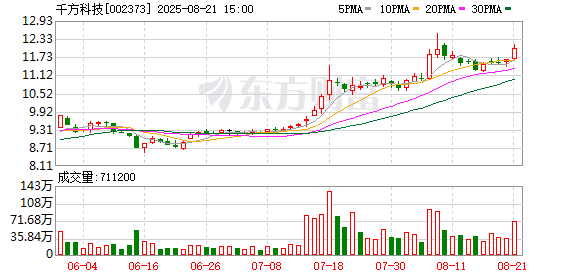
千方科技:8月21日召开董事会会议
Mei Ri Jing Ji Xin Wen· 2025-08-21 08:37
Group 1 - The company, Qianfang Technology, announced the convening of its sixth board meeting on August 21, 2025, to discuss the revision of the annual audit work system of the board's audit committee [2] - For the first half of 2025, the revenue composition of Qianfang Technology was as follows: smart security accounted for 72.54%, smart transportation accounted for 27.29%, and other businesses accounted for 0.17% [2]

2025年服贸会交通运输服务专题展吸引全球100余家领军企业参展
Zhong Guo Xin Wen Wang· 2025-08-20 10:07
Group 1 - The China International Service Trade Fair will host a transportation service exhibition from September 10 to 14, focusing on transportation technology, logistics, and smart transportation, aiming to showcase advanced technologies and solutions in the transportation sector [1] - The exhibition has attracted over 100 leading global companies, achieving a 100% completion rate for exhibitors, with 60% being Fortune 500 and industry leaders, and 24% international participation [2] - Notable first-time exhibitors include COSCO Shipping Group and Beijing Investment Yijia, showcasing cutting-edge products in digital transportation, smart manufacturing, and green low-carbon technologies [2] Group 2 - Several companies will debut new products during the exhibition, including Beijing Investment Yijia, which will present an intelligent passenger flow control system aimed at creating a leading subway smart service system [3] - The exhibition features two main areas: smart public transportation and smart logistics services, highlighting Beijing's solutions for large urban transportation challenges [4] - Beijing Subway will showcase innovations such as smart stations and maintenance robots, while other companies will present projects focused on low-carbon operations and smart logistics [4][5] Group 3 - The smart logistics service area will demonstrate global supply chain innovations, with COSCO Shipping presenting blockchain delivery orders and automated terminal technologies [5] - China Post will showcase cross-border bonded warehouse achievements and drone delivery solutions, while Meituan will introduce a delivery matrix involving drones and autonomous vehicles [5] - An interactive experience area will allow attendees to engage with smart transportation systems, enhancing the exhibition experience [5] Group 4 - The exhibition will also host over ten supporting activities, including product launches and signing agreements, facilitating connections between exhibitors and clients [6] - A specialized forum on September 12 will focus on new paradigms in transportation services for mega cities, featuring discussions with experts and industry leaders [6]
展现超大城市交通治理“北京方案”,服贸会交通专题展有这些亮点
Xin Jing Bao· 2025-08-20 09:36
Core Viewpoint - The China International Service Trade Fair will host a transportation service exhibition in Beijing, focusing on smart public transport and logistics solutions, showcasing advanced technologies and innovations in urban traffic management [1][2]. Group 1: Exhibition Overview - The exhibition will take place from September 10 to 14 at the Shougang Park, featuring two main areas: smart public transport and smart logistics services [1][2]. - The theme of the exhibition is "People Enjoy Their Travel, Goods Flow Smoothly," emphasizing the integration of technology and innovation in the transportation sector [2]. - Over 100 leading global companies will participate, achieving a 100% exhibition completion rate, with 60% being Fortune 500 and industry leaders [2]. Group 2: Key Exhibitors and Innovations - Beijing Subway will showcase new operational models such as smart stations and maintenance robots, along with services like "face recognition entry" [3]. - China Postal Express Logistics will present its comprehensive logistics network, achieving "village postal service" and 24-hour delivery in counties, with a focus on smart logistics solutions [6]. - The smart logistics area will feature innovations from companies like COSCO Shipping, which will demonstrate blockchain technology and automated port solutions [3][6]. Group 3: Smart Parking Solutions - The Beijing Static Traffic Sharing Parking Platform aims to address urban parking challenges by integrating government, industry, and consumer resources [7]. - The platform has dynamically connected 5,076 parking lots and 1.257 million parking spaces, significantly improving parking resource utilization [7][8]. - A second phase of the platform will introduce a C2C model for personal parking space sharing, enhancing economic benefits for citizens [8].
众合科技H1智慧交通订单大增52.89%,助力实现营收6.88亿元
Ju Chao Zi Xun· 2025-08-20 08:57
Financial Performance - The company reported a total operating revenue of 688.45 million yuan, representing a year-on-year increase of 13.77% [4] - The net profit attributable to shareholders was -66.70 million yuan, showing a year-on-year improvement of 24.77% [4] - The net profit after deducting non-recurring gains and losses was -74.21 million yuan, which is a 21.23% increase compared to the previous year [4] - The net cash flow from operating activities was -461.21 million yuan, a decrease of 5.02% year-on-year [4] - Basic and diluted earnings per share improved to -0.10 yuan, a 37.50% increase from -0.16 yuan in the previous year [4] - The weighted average return on equity improved to -1.98%, up from -3.27% [4] Business Segments - In the smart transportation sector, the company achieved revenue of 439 million yuan, a year-on-year growth of 16.77% [2] - New orders in the smart transportation business reached 1.046 billion yuan, marking a significant increase of 52.89% compared to the previous year [2] - The company successfully completed projects including the signal system for the first phase of the light rail in Astana, Kazakhstan, showcasing a breakthrough in technology export under the Belt and Road Initiative [2] - In the low-altitude sector, the company made progress with its flight control computer products and established partnerships for ground and flight testing [2] Strategic Investments - The company strategically invested in Chenji Smart Satellite Technology (Zhejiang) Co., Ltd. through share transfer and capital increase [3] - Chenji Smart has launched several core software products, all of which have received software copyright and recognition as an innovative small and medium-sized enterprise in Zhejiang Province [3]


预见2025:《2025年中国智慧交通行业全景图谱》(附市场规模、竞争格局、细分市场发展现状等)
Qian Zhan Wang· 2025-08-20 04:42
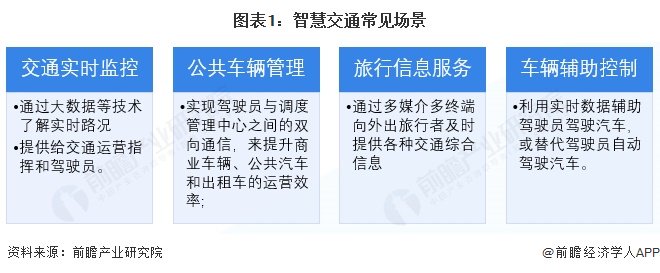
Industry Overview - The concept of smart transportation has evolved from intelligent transportation systems (ITS) to incorporate advanced technologies such as IoT, cloud computing, and big data, enhancing real-time traffic data services [1][2] - Smart transportation aims to improve traffic efficiency through integrated applications of information technology, data communication, and control systems [1][2] Industry Chain Analysis - The smart transportation industry chain includes upstream components like algorithm design, chip parts, data centers, and sensing devices; midstream focuses on infrastructure and services; and downstream applications cover smart highways, public transport, and smart ports [5][7] - Key players in the industry include traditional security companies, internet firms, and algorithm providers, with notable companies like Hikvision, Tencent, and Baidu involved in various segments [7] Industry Development Status - Transportation fixed asset investment in China reached 3.9 trillion yuan in 2023, with expectations to maintain high levels in 2024 [17] - The market size for urban intelligent transportation projects (excluding parking) is projected to be approximately 5.46 billion yuan in 2024, with a slight decrease from 2023 [19][20] Market Size and Growth - The smart transportation market in China has grown from 97.3 billion yuan in 2016 to 236.7 billion yuan in 2023, with projections to exceed 240 billion yuan in 2024 [25][26] - The average project size for urban intelligent transportation projects has remained stable between 200 million to 250 million yuan in recent years [20] Competitive Landscape - Major players in the smart transportation sector include telecommunications and internet companies, with China Mobile and China Telecom leading in project bids, accounting for over 22% of the total bid amounts [27][29] - The competitive landscape is characterized by a mix of regional players, with pilot projects concentrated in coastal areas like East China and South China [31][33] Future Trends - The smart transportation market is expected to grow significantly, driven by policy support, technological integration, and increasing urbanization, with projections indicating the market could exceed 300 billion yuan by 2030 [34]
金溢科技:公司将持续聚焦智慧交通领域
Zheng Quan Ri Bao Wang· 2025-08-11 08:42
证券日报网讯金溢科技(002869)8月11日在互动平台回答投资者提问时表示,单车智能与车路协同是 相辅相成、协同发展的关系,车路协同可以为单车智能提供更丰富的信息输入和决策支持,能够有效弥 补单车智能在感知范围、成本、极端天气应对、全局优化等方面的局限性,是实现更高级别自动驾驶、 提升交通整体效率和安全的重要支撑和有效补充。中国在车路协同领域的政策支持力度大、基础设施建 设走在世界前列,将为车路协同产业的发展提供广阔的市场机遇。公司将持续聚焦智慧交通领域,秉 承"零死亡、零事故、零拥堵、零碳"的交通使命,沿着"ETC—V2X车路协同—大车路云—车、能、 路、云—iACT网联交通智能体和CCTE网联交能复合体"的业务发展路径稳步前进,共同推动智慧交通 产业的发展。 ...