智能硬件

Search documents
140余件“成都造”精品亮相市两会
Xin Lang Cai Jing· 2026-01-27 18:56
记者了解到,作为成都工业高质量发展的一次"成果汇报",此次创新产品展聚焦13条重点产业链的新产品、新技术,对140余件"工业精品"进 行展演,展品覆盖先进制造、智能终端、生物医药等多个领域,囊括硬核科技成果与民生精品。 看到各具特色的"成都造"产品来到会场,市政协委员胡川向记者分享了他的感受,"这让我们看到了成都产业发展的成绩,由此对未来更加充 满信心。近年来,成都科技创新活力迸发,随着科产融合进一步加深,我们将有望看到更多创新产品走进生产生活。" 市经信局市新经济委相关负责人表示,近年来,成都深入开展"进解优促""立园满园""强县活区"等工作,以"创新、智能、场景、市场"为核心 抓手,持续推动产业转型升级,推动4073家规上工业企业完成"智改数转",人工智能产业连续3年增速超30%,"成工精销・工业淘宝"平台交 易额破57亿元,企业赴海外拓市场斩获订单超165亿元。如今,创新基因已深度融入成都产业发展的血脉里,工业投资稳步增长,高技术制造 业势头强劲,为城市高质量发展注入不竭动力。 转自:成都日报锦观 聚焦13条重点产业链的新产品、新技术 140余件"成都造"精品亮相市两会 "我们携旗下两款旗舰产品INMO ...

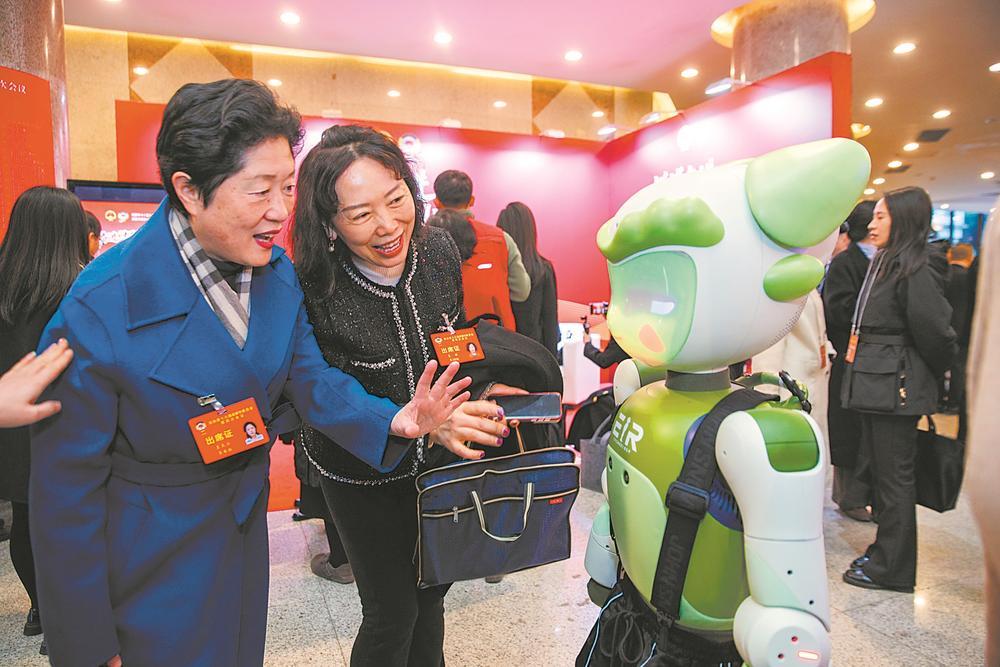
杭州科技“新年货”受青睐
Zhong Guo Xin Wen Wang· 2026-01-27 17:27
杭州全进科技有限公司展位前,一款名叫"跳舞小子"的桌面机器人正随着新年氛围音乐有节奏地舞动, 吸引许多孩子和家长驻足。 "它内部搭载了AI模型,能根据音乐变换舞姿,还支持语音对话、知识问答。"展位负责人陈珊珊表示, 产品功能融合娱乐与陪伴,能为用户带来"情绪价值",正成为许多家庭挑选新年礼物的新选项。 从能智能运镜的飞行相机,到和老字号跨界联名的智能眼镜,再到可随心更换显示内容的数字手机壳, 现场还有多款"新春数智年礼"亮相。 中新社杭州1月27日电 (蓝伊旎)2026浙江新春消费季主场活动27日在杭州举行。除了糕点、腊味等传统 年货,科技"新年货"走入更多人的视野。 在杭州程天科技发展有限公司展位前,接连有市民游客来咨询体验外骨骼机器人。据悉,该公司2025年 首次推出个人消费级外骨骼机器人,开始走向大众市场。 "很多人以前只在新闻里见过外骨骼机器人,想要穿上感受一下,考虑趁着活动买回家。"工作人员介 绍,通过搭载的AI技术,机器人能够"理解"用户的行动意图,并动态生成最适合的行动路径,既能成为 老年群体助行的好帮手,也能成为年轻人户外徒步的轻量装备。 (文章来源:中国新闻网) 不少科技企业的展位负责人观察 ...
德赛西威:目前公司已与多家知名机器人企业达成战略合作
Ge Long Hui A P P· 2026-01-27 04:25
格隆汇1月27日丨德赛西威(002920.SZ)在投资者互动平台表示,公司发布机器人智能基座AI Cube,沿用 了公司在辅助驾驶领域成熟的技术架构:控制器采用"即插即用"的核心板模块化设计,可灵活提供摄像 头、毫米波雷达、激光雷达等传感器套件,提供包括成熟的底层驱动、中间件、ISP调试等定制化服 务,从而帮助客户大幅缩短开发周期,提升研发效率,降低研发成本。目前,公司已与多家知名机器人 企业达成战略合作。 ...

该跨境上市大卖收到立案通知书,股价当天蒸发超3亿!
Sou Hu Cai Jing· 2026-01-27 02:14
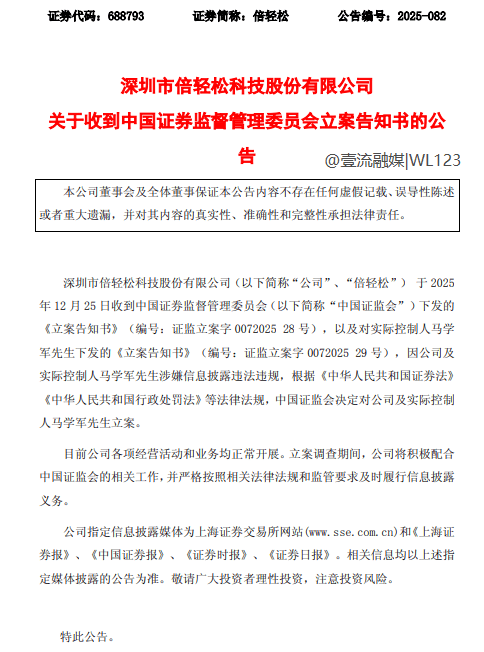
据讯,曾被称作"智能按摩设备第一股"的倍轻松,在上个月扔出了一颗惊雷。 根据倍轻松发布的《关于收到中国证券监督管理委员会立案告知书的公告》显示,深圳市倍轻松科技股份有限公司及实控人马学军双双收到中国 证监会下发的立案告知书。 原因为 "涉嫌信息披露违法违规"! 在公司管理上,公司创始人马学军自创立之初便担任董事长兼总经理,对公司拥有绝对控制权。 在公司近期业绩上,根据财报显示,倍轻松2025年上半年境外收入同比增速高达136.28%,2025年前三季,更是实现营业收入5.78亿元。 只是在这增收与应收的背后,净利润方面却出现了高达6562.80万元的亏损。 关于倍轻松 据了解,倍轻松成立于2000年,主营业务为智能便携按摩器的设计、研发与销售,公司于2021年7月登陆科创板,头顶"智能按摩设备第一股"光 环。 根据官方资料显示: 在产品上,倍轻松产品线涵盖头部、眼部、颈部等多个部位的智能便携按摩器,并以"融合中医理念与现代科技"为口号。 在渠道上,截至目前,倍轻松产品不但出口到全球数十个国家和地区,而且在国内外各大机场、高铁和shopping mall还已开设超180家直营店。 并且,近些年来,倍轻松还在不断 ...

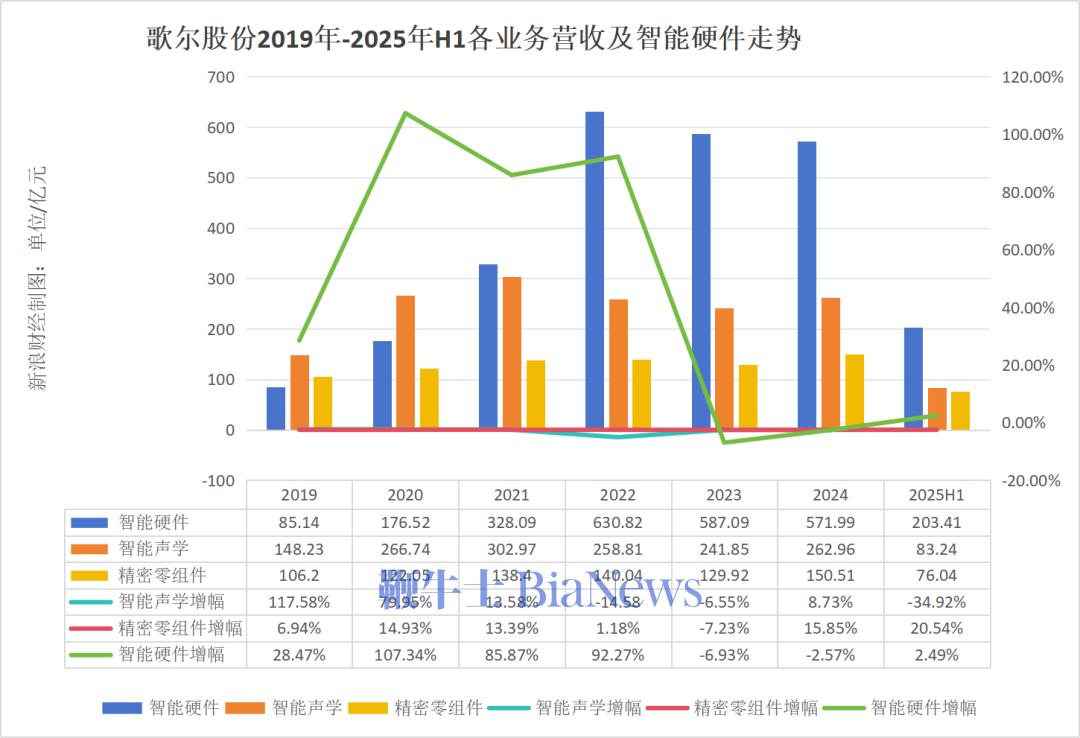
遭Meta「砍单」?歌尔股份启动裁员:研发中心成「重灾区」,称要「削到筋骨」
Xin Lang Ke Ji· 2026-01-27 01:38
Core Viewpoint - Meta's adjustment in its metaverse business has significantly impacted its Chinese partner, GoerTek, leading to substantial financial losses and workforce reductions [1][2][4]. Group 1: Impact of Meta's Decision - Meta's decision to cut resources in its metaverse division may result in GoerTek facing losses exceeding 10 billion yuan [1][4]. - GoerTek's Alpha Labs, a core R&D center, has seen budget cuts across all departments, with layoffs expected to be between 30% and 50% in various centers [2][4]. - Employees have confirmed that the layoffs are directly related to Meta's order reductions, with some departments experiencing varying levels of impact [2][4]. Group 2: Financial Performance and Business Segments - GoerTek's main business segments include precision components, smart acoustic products, and smart hardware, with the latter accounting for 60% of overall revenue [5][7]. - The smart hardware segment, which includes VR, MR, and AR products, experienced a significant revenue growth of 107.34% in 2020, but has since seen a decline, with a drop of 6.93% in 2023 [7][8]. - The company's overseas revenue growth has also slowed down, reflecting the overall decline in the smart hardware business [8]. Group 3: R&D Investments and Market Position - Over the past five years, GoerTek has invested 24.5 billion yuan in R&D, focusing on various innovative platforms, which has led to a significant market share in MR headsets and AI smart glasses [8]. - Despite substantial investments, the changing attitudes of major tech companies like Apple and Meta towards MR and the metaverse may hinder the expected returns on these investments [8].


统联精密:目前取得部分国内外知名客户确定的合作意向
Zheng Quan Ri Bao Wang· 2026-01-26 14:13
Group 1 - The company is optimistic about the long-term market development prospects of smart glasses [1] - The company is actively maintaining close communication with leading terminal enterprises in this field [1] - The company has secured cooperation intentions from several well-known domestic and international clients, including new innovation demands from existing customers and new clients [1] - The specific rhythm of mass production will be matched according to customer demand [1]

华勤技术(603296):2025归母净利润同比增长37%+,数据业务高速成长
Shenwan Hongyuan Securities· 2026-01-26 13:18
Investment Rating - The investment rating for the company is "Buy" (maintained) [2] Core Insights - The company is expected to achieve a year-on-year growth of over 37% in net profit attributable to shareholders for 2025, driven by rapid growth in its data business [1] - The revenue forecast for 2025 has been raised from 165.5 billion to 171.1 billion yuan, with net profit slightly adjusted from 4.04 billion to 4.05 billion yuan [8] - The company is focusing on a strategic upgrade to a "3+N+3" smart hardware platform, with core businesses in smartphones, personal computers, and data centers, while also expanding into automotive electronics, software, and robotics [8] Financial Data and Profit Forecast - Total revenue projections for 2025 are set at 171.1 billion yuan, reflecting a year-on-year growth rate of 55.7% [7] - Net profit attributable to shareholders is forecasted at 4.05 billion yuan for 2025, with a growth rate of 38.4% [7] - The company anticipates a total revenue of 196.9 billion yuan for 2026 and 236.0 billion yuan for 2027, with respective growth rates of 15.1% and 19.9% [7] - The gross profit margin is expected to stabilize around 8.6% for 2026 and 2027 [7] - The return on equity (ROE) is projected to be 16.5% for 2026 and 16.2% for 2027 [7]

浙江推广科技“新年货”,多地新春消费涌动
2 1 Shi Ji Jing Ji Bao Dao· 2026-01-26 12:03
Group 1 - The core theme of the articles revolves around the integration of artificial intelligence (AI) in consumer products and the launch of various initiatives to boost consumption during the Chinese New Year season, particularly in Zhejiang province [1][2][6] - Zhejiang province has introduced 23 measures focusing on six key areas: food, accommodation, transportation, tourism, shopping, and entertainment, with over 5 billion yuan allocated for consumption subsidies and coupons in the first quarter [1][3] - The launch of innovative consumer products, such as the Hafu flying camera X1 and the Meteer desktop robot, showcases the trend of "AI + consumption," making technology more accessible and appealing to a broader audience [1][6][7] Group 2 - Multiple regions across China are initiating new spring consumption seasons, utilizing strategies like issuing consumption vouchers and creating new consumption scenarios to stimulate retail, tourism, and automotive sectors [2][4] - The automotive sector is a significant focus, with various provinces implementing policies to encourage car purchases, including subsidies and trade-in programs, to lower costs for consumers [4][5] - The trend of issuing consumption vouchers is emphasized, with cities like Wuhan and Nanchang planning substantial distributions to cover various consumer scenarios, indicating a shift towards more targeted and effective consumption stimulation methods [5][6]
小度科技的攻守“价格战”:“场景+Al+硬件”是关键
Di Yi Cai Jing· 2026-01-26 07:21
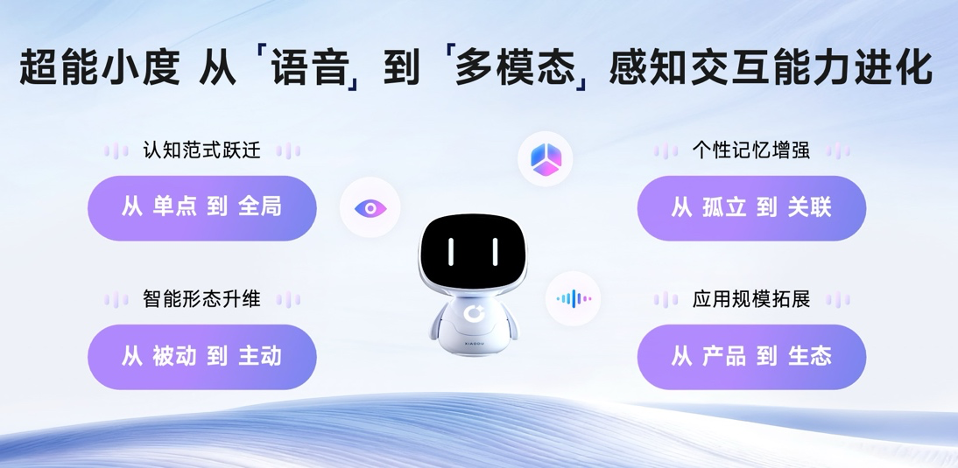
Core Viewpoint - The smart hardware industry is at a crossroads, facing unprecedented interaction changes due to AI large model technology while also grappling with price wars and challenges in ecosystem connectivity. In this context, Xiaodu Technology, valued at 35.5 billion yuan, serves as an important observation sample with its AI-centric, hardware-based, and integrated development path [1]. Group 1: Soft-Hard Integration and Competitive Strategy - The industry has reached a consensus on the "soft-hard integration" model, recognizing that neither hardware nor software alone can build a sustainable competitive advantage. Pure hardware manufacturers often fall into homogenization and must rely on price wars, leading to compressed profit margins, while pure software solutions struggle with implementation and user experience [2]. - Xiaodu Technology focuses on the deep integration of "scene + AI + hardware," using AI as the core driver of experience transformation and embedding AI technology into daily user scenarios through products like smart speakers and AI glasses. This creates a closed loop from hardware sales to software services [4]. - Xiaodu's differentiation lies in its multi-modal intelligent assistant, Super Xiaodu, which endows hardware with the ability to understand and learn from the environment, and in deeply embedding AI capabilities into hardware products for more natural interactions [4]. Group 2: Market Positioning and Innovation - In a fiercely competitive market, Xiaodu has opened new product categories like the "Girlfriend Machine" and fitness mirrors, achieving market leadership in corresponding segments, showcasing the company's innovation capabilities. This approach highlights that product definition ability has become a core competitive advantage as supply chain differences diminish [5]. - However, the sustainability of product innovation faces challenges, including high costs and long product cycles in the smart hardware industry, where users often adopt a "if it’s not broken, don’t replace it" mentality. This necessitates balancing innovation investment with market returns [5]. - Xiaodu's strategy involves deeply understanding user needs in specific scenarios, such as in the education sector, where it continues to invest despite fierce competition, leveraging AI capabilities to carve out market space [5]. Group 3: Open Ecosystem Strategy - Unlike giants like Xiaomi and Huawei that build closed ecosystems, Xiaodu adopts a more open ecosystem strategy, reflecting both pragmatic considerations and a judgment of industry development trends. The company collaborates with various hardware manufacturers across multiple scenarios, including hotels and smart home appliances [8]. - The open ecosystem strategy faces obstacles, such as inconsistent standards in the domestic smart home market, which leads to fragmented user experiences. Xiaodu aims to break down barriers by promoting software integration through hardware and hopes to establish industry standards to facilitate connectivity [8][9]. - The smart hardware sector is characterized by diverse participants and faces common challenges, including pressure on business models and the need for collaborative solutions, such as public computing pools to lower costs and enhance device interconnectivity in specific scenarios [9]. Group 4: Future Outlook - AI technology is rapidly integrating with various hardware, with the Chinese AI hardware market expected to exceed 1 trillion yuan by 2025. Xiaodu's case illustrates that merely pursuing hardware specifications or software functionalities is insufficient for sustained competitiveness [10]. - The future belongs to companies that can deeply integrate AI capabilities with hardware experiences while maintaining ecosystem openness. A healthy industry development requires collaborative infrastructure building, standard interoperability, and innovation protection to avoid chaotic price wars and ecosystem fragmentation [10].
家电行业双周报(26/1/12-26/1/23):AI+智能硬件快速落地,国货加速出海抢占全球份额-20260125
Hua Yuan Zheng Quan· 2026-01-25 11:47
Investment Rating - The investment rating for the home appliance industry is "Positive" (maintained) [1] Core Insights - The report emphasizes the rapid implementation of AI and smart hardware, highlighting the transition of domestic brands from followers to leaders in the global market. Companies like YingShi Innovation, Anker Innovation, and XGIMI are identified as key players [4][8] - AI technology is reshaping product definitions in the home appliance and smart hardware sectors, enhancing product performance and user experience while accelerating global expansion [8] Summary by Sections AI + Smart Hardware - The report focuses on the "redefining products" direction of AI + smart hardware, with domestic brands making significant strides in global markets. Companies such as YingShi Innovation, Anker Innovation, and XGIMI are highlighted as representatives of this trend [4][8] AI + Photography - YingShi's "YingLing" panoramic drone launched in December 2025 achieved over 30,000 units shipped in its first month, confirming its potential as a blockbuster product. AI technology is expected to lower creative barriers and optimize effects, driving growth in the smart imaging sector [9] AI + Office and Audio - Anker's collaboration with Feishu to launch the AI recording device aims to penetrate the business market by leveraging Feishu's enterprise customer resources. Additionally, Anker's Soundcore Sleep A30 headphones utilize AI to generate personalized sleep soundscapes, enhancing their practical performance [12] AI + Security and Energy Storage - Anker's Eufy Security system has achieved multi-dimensional recognition capabilities for humans, pets, and vehicles, enhancing home security management efficiency. The SOLIX V1 Smart EV Charger optimizes energy efficiency through AI-driven scheduling and gesture recognition [17] AI + Glasses - The report notes a surge in AI glasses products from companies like XGIMI and TCL, with a focus on lightweight and practical designs. The market is in a penetration acceleration phase, with diverse product definitions emerging [19] Market Performance - The home appliance sector saw a 2.0% increase in January 2026, outperforming the CSI 300 index by 0.4%. Sub-sectors such as black appliances and kitchen appliances showed notable monthly gains of 13.4% and 5.4%, respectively [21][22] Key Data Tracking - As of January 23, 2026, the Chinese yuan appreciated by 149 basis points against the US dollar, continuing its upward trend. The LME copper spot price was $12,921 per ton, reflecting a week-on-week decrease of 0.6% but remaining at a high level [24][28]