
Semiconductors

Search documents
三安光电,实控人被留置、立案调查!
DT新材料· 2026-03-22 16:04
Core Viewpoint - The article discusses the recent investigation of Lin Xiucheng, the actual controller of Sanan Optoelectronics, by the National Supervisory Commission, which may impact the company's operations and governance [2][3]. Group 1: Company Background - Sanan Optoelectronics is primarily engaged in the research, production, and sales of compound semiconductor materials and devices, focusing on materials such as sapphire, gallium arsenide, gallium nitride, silicon carbide, indium phosphide, and aluminum nitride [3]. - Lin Xiucheng, the founder of Sanan Group, has been the chairman and general manager since its establishment in 1992, transitioning the company into the LED optoelectronic industry in 2000 and successfully listing on the capital market in 2008 [2][3]. Group 2: Shareholding Structure - As of now, Sanan Group holds a direct stake of 5.14% in Sanan Optoelectronics and an indirect stake of 24.33% through its subsidiary, Sanan Electronics, making it the controlling shareholder [3]. - Lin Xiucheng directly owns 59.68% of Sanan Group, while he and his son Lin Zhiqiang collectively hold 71.83% of the group, maintaining control over Sanan Optoelectronics [3]. Group 3: Financial Performance and Future Outlook - The company forecasts a net loss of between 200 million to 300 million yuan for 2025, with a non-recurring net profit loss expected to be between 750 million to 850 million yuan [4]. - The losses are attributed to an increased proportion of high-end LED products, reduced government subsidies, rising R&D expenses, and adjustments in investment income due to price discrepancies in precious metal waste sales [4]. - Future business development will focus on increasing the proportion of high-end LED products and accelerating the expansion of the integrated circuit business, with current production capacity in the integrated circuit sector at 2,750 wafers per month [4].


Leaders and Experts from Amazon Web Services, Google, Microsoft, NVIDIA, Meta, Dell, Applied Materials and AMD Headline Technology and Innovation Programming at CERAWeek by S&P Global, March 23-27 in Houston
Prnewswire· 2026-03-22 16:00
Core Insights - The CERAWeek 2026 conference will focus on the convergence of energy and technology, featuring leaders from major tech companies discussing the impact of AI and innovation on the energy sector [2][3][4]. Group 1: Conference Overview - CERAWeek 2026 will take place from March 23-27 in Houston, featuring a diverse lineup of speakers from Amazon Web Services, Google, Microsoft, NVIDIA, Meta, Dell, Applied Materials, and AMD [1][10]. - The conference theme, "Convergence and Competition," highlights the interdependence of technological innovation and the demand for reliable energy [3]. Group 2: Key Topics and Themes - The program will explore how AI is transforming the energy landscape, particularly regarding data center development and energy-efficient chip designs [2][4]. - Key themes include electrification, decarbonization, low carbon fuels, cybersecurity, and automation, reflecting the integration of technology in energy solutions [4][6]. Group 3: Innovation Agora - The CERAWeek Innovation Agora will serve as a hub for technologists, venture capitalists, and corporate innovators, focusing on advancing solutions to energy challenges [4][6]. - The Agora will feature discussions on digitalization, AI, mobility, and decarbonization, emphasizing the overlap between energy and technology sectors [6][14]. Group 4: Notable Speakers - Notable speakers include executives from leading tech firms, such as Sundeep Bajikar from Applied Materials, Ruth Porat from Alphabet and Google, and David Holmes from Dell [5][7]. - The diverse lineup aims to foster discussions on innovative strategies and investment opportunities in the energy sector [5][6]. Group 5: Special Programs - The NextGen program will focus on bridging academia and industry to cultivate talent and ideas for energy transition pathways [14]. - The Energy Venture Day and Pitch Competition will showcase over 40 energy startups, promoting efficiency and innovation in the energy sector [14].






Is Micron a Buy as Revenue Explodes Higher?
The Motley Fool· 2026-03-22 15:36
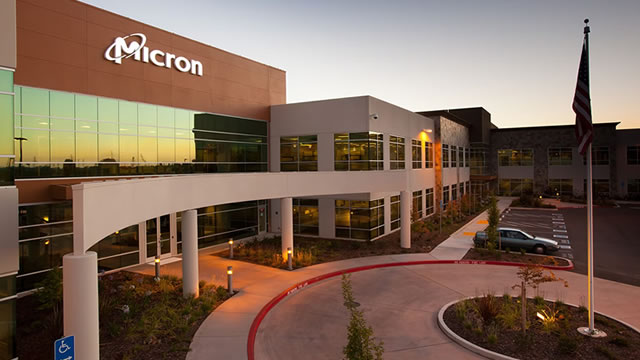
Micron Technology (MU 4.89%) just turned in one of the most impressive quarterly reports you'll ever see, although the stock was unable to gain any traction following its results. The stock was already up a whopping 350% over the past year going into the report, and it looked like a classic sell-the-news type of event.Let's take a closer look at the memory maker's results and prospects to see whether the stock can regain its momentum. Micron is hitting on all cylindersMicron is benefiting from a surge in me ...

The Federal Reserve Is Raising Red Flags, and the Stock Market Isn't Listening
Yahoo Finance· 2026-03-22 15:05
Economic Outlook - The Federal Reserve's Open Market Committee (FOMC) maintained the Fed Funds Rate at a target range of 3.5% to 3.75%, acknowledging solid economic expansion but noting elevated inflation levels [1] - The FOMC raised its personal consumption expenditures (PCE) inflation outlook for 2026 from 2.4% to 2.7%, with core PCE also increasing from 2.5% to 2.7% [3] - Producer input costs rose by 3.4% in February, the highest since the previous year, with core producer inflation at an annualized rate of 3.5%, both exceeding expectations [4] Interest Rate Projections - The Federal Reserve anticipates a potential interest rate cut of 0.25% later this year, although the margin for such a move has decreased [5] - Fed Chairman Jerome Powell indicated that future rate cuts depend on economic performance, highlighting uncertainty due to external factors such as geopolitical conflicts [6] Market Reactions - The market experienced a significant sell-off following the FOMC's interest rate decision and accompanying commentary, reflecting investor concerns [7]
全球半导体_高位建仓,更高位卖出;先进封装成核心,助力 AI 性能指数级提升-Global Semiconductor_ Stack ‘Em High, Sell ‘Em Higher; Advanced packaging takes center stage to deliver exponential AI performance gains
2026-03-22 14:35
Summary of Key Points from the Conference Call Industry Overview - The semiconductor industry is facing challenges due to explosive performance requirements for AI infrastructure, marking the end of Moore's Law. Chips are becoming more expensive to manufacture with diminishing returns [1][5]. Core Insights - **Advanced Packaging Growth**: Advanced packaging is becoming the primary driver of semiconductor performance as traditional scaling slows. The industry expects 2.5D and 3D advanced packaging to grow approximately 7x by 2030, with wafer consumption projected to reach around 3.5 million wafers per month (wpm) by 2030 [2][6]. - **Stacking Technologies**: Stacking technologies, including CoWoS, SoIC, and HBM, are crucial for enhancing chip performance by increasing bandwidth and are essential for AI chips. These technologies are also being extended to frontend processes to facilitate upcoming node migrations [3][5]. - **Testing Market Growth**: The testing market is expected to grow at an 8% compound annual growth rate (CAGR) through 2029, driven by increased complexity in packaging and higher yield requirements per layer [11]. Specific Technologies and Projections - **High-Bandwidth Memory (HBM)**: HBM capacity is anticipated to expand to approximately 758k wpm by 2027, with a shift from flux-based TCB to fluxless processes and hybrid bonding to achieve better performance metrics [7][27]. - **Chip on Wafer on Substrate (CoWoS)**: CoWoS capacity is projected to reach around 140k wpm by 2027, with increasing complexity in GPU and ASIC designs pushing packaging limits [8][35]. - **3D IC Adoption**: The adoption of 3D ICs is accelerating, with hybrid bonding providing significant improvements in I/O density and energy efficiency. Companies like AMD and Intel are leading this trend [9][32]. - **NAND and DRAM Innovations**: NAND manufacturers are expected to adopt CMOS bonded to array (CBA) stacking, which could enhance performance metrics significantly. The NAND bonding capacity is projected to reach 1,057k wpm by 2030 [54][57]. DRAM is also expected to transition to CBA architecture, enhancing performance and efficiency [66]. Key Beneficiaries - Companies such as DISCO, Advantest, Besi, and Ibiden are identified as key beneficiaries of the advanced packaging and testing market growth due to their roles in equipment and technology supply [11][12]. Additional Insights - **Yield Challenges**: The yield for stacked dies can degrade significantly, with complex packaging leading to lower overall yields compared to single die packages. Testing is critical to maintaining higher yield rates [76][78]. - **Longer Testing Times**: As chip complexity increases, testing times are expected to grow exponentially, with projections indicating a 50x increase in testing time for SoCs by 2031 compared to 2017 [79][80]. This summary encapsulates the critical insights and projections from the conference call, highlighting the evolving landscape of the semiconductor industry and the implications for various stakeholders.


半导体设备_ Rubin 与 Helios 测试验证、太空 AI 数据中心、全球金融稳定、DRAM 现货、霍尔木兹海峡US Semiconductors and Semi Equipment_ SemiBytes_ Rubin and Helios Testing_Validation, AI DC in Space, GFS, DRAM Spot, Strait of Hormuz
2026-03-22 14:35
Summary of Key Points from the Conference Call Industry Overview - **Industry**: US Semiconductors and Semiconductor Equipment - **Key Companies Mentioned**: NVIDIA (NVDA), AMD, Microsoft (MSFT), GlobalFoundries (GFS) Core Insights and Arguments 1. **NVIDIA's Vera Rubin NVL72 System**: - Microsoft is emerging as the first cloud vendor to validate NVIDIA's Vera Rubin NVL72 system, indicating progress in the validation process expected in the second half of 2026 [2] - Thermal issues are highlighted as a critical factor affecting the timing of initial shipments [2] 2. **AMD's Helios System**: - AMD plans to internally sample its Helios system initially, with broader validation expected later in the year [2] - The transition from Blackwell to Rubin NVL72 is expected to be less disruptive compared to previous platform shifts [2] 3. **Impact of Strait of Hormuz Situation**: - Concerns regarding potential disruptions in semiconductor production due to the Strait of Hormuz situation are addressed, with limited impacts expected on input costs for manufacturers [3] - The helium market is noted to be in oversupply, mitigating potential shortages for South Korea, which previously relied heavily on imports from Qatar [3] 4. **AI Data Centers in Space**: - Significant challenges are identified for deploying AI data centers in space, including solar power requirements and high launch costs [4][6] - The complexity of AI racks and the need for advanced robotics for self-assembly are emphasized [6] 5. **GlobalFoundries' Competitive Positioning**: - GFS highlighted its strong product portfolio and design ecosystem during a recent webinar, projecting a 40% CAGR for the optical networking wafer market from 2025 to 2030 [7] - GFS aims for a $1 billion annual revenue run rate in SiPho by 2028, with capacity expansions expected to meet increasing demand [7] 6. **DDR5 Spot Pricing Trends**: - Recent flattening and slight decline in DDR5 spot pricing (-1% week-over-week) could indicate a shift towards long-term contract pricing, which may positively impact the memory cycle [8] - The spot market represents only 10-20% of DRAM shipments, suggesting that short-term pricing movements may not reflect broader market dynamics [8] Additional Important Insights - **Secondary Offering by GFS**: - GFS announced a secondary offering of 20 million shares priced at $42 per share, with a share repurchase program of $300 million also in place [7] - This will reduce Mubadala's stake in GFS from approximately 81% to 76% [7] - **Market Dynamics**: - The report emphasizes the importance of understanding macroeconomic factors and potential risks, including disruptions in international trade and technological innovations that could impact future sales and revenues [14] This summary encapsulates the critical points discussed in the conference call, providing insights into the semiconductor industry, specific company strategies, and market dynamics.
英伟达_GTC- 主题演讲及亮点
2026-03-22 14:35
Summary of NVIDIA Corp Conference Call Company Overview - **Company**: NVIDIA Corp (NVDA) - **Industry**: Semiconductors - **Market Cap**: $4,453 billion - **12-month Rating**: Buy - **12-month Price Target**: $245.00 Key Themes and Insights - **Backlog Growth**: NVIDIA's backlog for C2025-2027 has been updated to over $1 trillion, significantly higher than the previous estimate of $500 billion, indicating strong demand and growth potential [1][9][10] - **Data Center Revenue Estimates**: For C2025, NVIDIA estimates data center revenue of approximately $170 billion, with projections of $370 billion for C2026 and $460 billion for C2027, which is below the previous estimate of $520 billion but still shows potential for growth [2][9][10] - **Product Announcements**: New products include the SRAM-based LPU/Groq solution, with design-in processes already underway with key ODMs for a launch later this year [2][9] - **Inference Market Expansion**: The ultra-fast inference market estimate has increased from 10% to 25%, indicating a growing opportunity for NVIDIA's system solutions [10] Financial Performance - **Revenue Growth**: Projected revenues are expected to grow from $60.9 billion in 2024 to $392.6 billion in 2027, reflecting an 81.8% increase [6][16] - **Earnings Per Share (EPS)**: Estimated EPS for 2027 is $8.89, with significant growth expected in subsequent years [4][16] - **Profitability Metrics**: The EBIT margin is projected to remain strong, with a forecast of 66.6% for 2027 [6][16] Strategic Developments - **System-Level Integration**: NVIDIA emphasizes the importance of co-design across compute, networking, memory, storage, and software, which enhances performance and cost efficiency [9][10] - **AI and Robotics**: The company is transitioning humanoid robotics from R&D to real deployments, with partnerships in logistics and manufacturing [12] - **Networking Innovations**: The introduction of Spectrum-X aims to improve performance and reduce latency in AI systems, addressing challenges in distributed AI clusters [14] Market Position and Competitive Landscape - **CPU and GPU Dynamics**: While GPUs remain the primary revenue driver, NVIDIA is positioning its CPUs and networking solutions as increasingly relevant to overall system monetization [9][10] - **Long-Term Growth Narrative**: The focus is shifting towards inference efficiency and infrastructure scaling, rather than just new chip launches, indicating a strategic pivot to sustain demand [9][10] Additional Insights - **Supply Chain Management**: NVIDIA is actively working with suppliers to ensure that supply constraints do not hinder growth, with a focus on optimizing powered shell availability at customer sites [10] - **Cybersecurity Solutions**: The introduction of NeMoClaw aims to address enterprise demand for secure open-source applications, enhancing NVIDIA's offerings in the AI space [10] This summary encapsulates the key points from NVIDIA's conference call, highlighting the company's growth trajectory, strategic initiatives, and market positioning within the semiconductor industry.
全球储能_技术未来_中国能否实现 AI 算力领先-Global Energy Storage_ Future of Tech_ Can China achieve AI supremacy_
2026-03-22 14:35
Summary of Key Points from the Conference Call Industry Overview - The conference call discusses the competition between the U.S. and China for AI supremacy, focusing on compute power as a critical measure of progress in this race [10][11]. Core Insights and Arguments 1. **Current Compute Power**: The U.S. leads with 35 ZFLOPs of AI compute, a significant increase from 2 ZFLOPs five years ago, representing an 86% CAGR. By 2035, it is projected to reach 511 ZFLOPs (+31% CAGR). In contrast, China currently has 5 ZFLOPs, only 15% of the U.S. total [10][11]. 2. **Power Generation Capacity**: China is rapidly becoming the world's largest electrostate, generating more than twice the power of the U.S. In 2025, China added over 500 GW of power capacity, which is approximately 10 times that of the U.S. [10][25][35]. 3. **Nuclear Power Growth**: China is expected to surpass the U.S. as the largest nuclear power producer by 2030, with a projected capacity of 110 GW [10][25]. 4. **Investment in AI Data Centers**: To match U.S. compute power by 2035, China needs to expand its AI-dedicated data center capacity to 214 GW, which is 1.6 times the U.S. projection of 130 GW. This requires an annual addition of 385 GW of power capacity over the next decade [2][19]. 5. **Capex Requirements**: China's AIDC capex needs to increase to approximately USD 974 billion by 2035, growing at a 32% CAGR, compared to the U.S. capex of USD 322 billion in 2025, which is expected to grow at 8% CAGR [7][22]. 6. **Semiconductor Technology**: While China lags in semiconductor technology, it is catching up. By 2035, Chinese AI chips are expected to achieve over 50% power efficiency compared to U.S. chips [4][10]. 7. **Energy Storage Market**: China dominates the Li-ion battery market with an 80% share and is expected to reach over 3,000 GWh of battery manufacturing capacity by 2025, significantly exceeding the rest of the world [58][62]. 8. **Cost Competitiveness**: The cost of renewable energy in China is about one-third that of the U.S., which is crucial for achieving long-term net-zero goals [67]. Additional Important Insights - **Strategic Implications**: The ability to scale power supply is seen as China's greatest advantage in the AI race. This could have widespread implications for China's economy as it aims to rival the U.S. as a leading AI-driven economy [10][11]. - **Market Opportunities**: Companies involved in power generation, energy storage, and semiconductor manufacturing are expected to benefit from China's investments in these sectors. Notable mentions include CATL, Sungrow, SMIC, Cambricon, and Hygon [8][10]. - **Future Projections**: By 2035, data centers in China are projected to account for about 10% of total electricity demand, compared to 16% in the U.S. [20][21]. This summary encapsulates the critical points discussed in the conference call, highlighting the competitive landscape between the U.S. and China in AI and energy sectors.
英伟达 GTC 主题演讲影响_1 万亿美元订单维持供应链紧张与繁忙
2026-03-22 14:35
Summary of Key Points from NVIDIA GTC Keynote Industry Overview - **Industry**: Technology, specifically focusing on AI and semiconductor sectors - **Event**: NVIDIA's GTC (GPU Technology Conference) featuring significant updates on AI technologies and hardware advancements Core Insights and Arguments 1. **Purchase Orders (POs) Increase**: NVIDIA raised its forecast for POs for Blackwell and Rubin from US$500 billion to US$1 trillion for 2025-2027, indicating strong demand from top hyperscalers and diversified users [3] 2. **Performance Improvements**: Transitioning from Hopper to Blackwell and Rubin shows a 50x increase in performance per watt, with a 35x reduction in costs when upgrading from H200 NVL8 to GB300 NVL72 [3] 3. **Vera Rubin Platform**: The new Vera Rubin Platform is expected to deliver 40 million times more compute power in 10 years, featuring advanced cooling and architecture improvements [3] 4. **Groq's Low Latency Inference**: Groq's technology allows for faster inference, enabling monetization opportunities for customers by improving productivity and revenue generation [4] 5. **Inference Demand Inflection**: The industry is experiencing a demand inflection driven by generative AI, reasoning AI, and agentic AI, with computing demand increasing by 1 million times in recent years [4] 6. **Physical AI Support**: NVIDIA is collaborating with multiple automotive partners to deploy robots and robotaxis, enhancing its presence in the robotics sector [4] Supply Chain Implications 1. **Tech Supply Chain Strength**: NVIDIA's US$1 trillion POs align with strong tech supply chain feedback, indicating a positive outlook for AI-related hardware and silicon demand [5] 2. **Hardware and ODM Insights**: ODMs are focusing on performance and efficiency, with reduced rack cycle times and increased automation [5] 3. **Logic Semiconductors Outlook**: Positive sentiment on semiconductors, particularly those leveraged for AI, with TSMC and other major players benefiting from strong demand [5] 4. **Memory Market Dynamics**: NVIDIA's platform approach is expected to increase memory content demand, positively impacting DRAM markets [5] 5. **PCB and Substrate Developments**: New architectures are utilizing PCBs for improved connectivity, which is expected to enhance rack assembly and signal integrity [5] Additional Important Content - **Future Roadmap**: NVIDIA's roadmap extends to 2028 with the introduction of the Feynman architecture, which will feature significant performance enhancements [4] - **OpenClaw Support**: NVIDIA's support for OpenClaw aims to create an open-source framework for agentic computing, enhancing security and operational efficiency [4] - **Valuation and Risk Considerations**: Investing in technology stocks carries high risks due to rapid changes and competition, making valuation challenging [6] This summary encapsulates the key points from the NVIDIA GTC keynote and its implications for the technology sector, particularly in AI and semiconductor industries.
全球 IO 存储半导体_哪些领先指标仍有效-Global I_O Memory Semis_ Which lead indicator could (still) work_
2026-03-22 14:35
Summary of Key Points from the Conference Call Industry Overview - The memory industry has undergone a fundamental transformation, particularly influenced by the rise of AI compute, leading to a significant increase in memory stock prices, with the top three memory makers' shares rising by an average of 699% since January 2023 [2][5] - A severe DRAM shortage has emerged as High Bandwidth Memory (HBM) consumes more DRAM wafer capacity, exacerbated by increasing HBM DRAM die sizes compared to DDR [2] Core Insights and Arguments - **Return on Equity (ROE) Forecast**: The ROE for major players like Samsung, SK Hynix, and Micron is projected to average 36% from 2026 to 2030, a significant increase from 15% in the previous decade, indicating a structural reset in the industry [2] - **Lead Indicators**: The report discusses the reliability of various lead indicators for memory stocks: - **Second Derivative**: Identifying quarters when memory contract pricing accelerates has proven unreliable, with only 50% correlation to stock price peaks over the past 20 years [3] - **Operating Profit (OP)**: Operating profit remains a more reliable lead indicator, with stock prices peaking in 90% of cases at or ahead of OP highs. The stock price has become more anticipatory, often peaking one to two quarters before OP [4] Market Outlook - The forecast indicates that memory operating profit is expected to peak in the third quarter of 2027, providing a runway for stock performance until the second quarter of 2027, assuming stable market conditions [5] - The report maintains a positive outlook on memory stocks, recommending a "Buy" rating for SK Hynix, Samsung, Micron, and Nanya Technology [5] Additional Considerations - **Cyclical Risks**: Despite a long-term decrease in cyclical risks for DRAM due to consolidation (from 15 players in 1998 to 3 currently), cyclical corrections are still anticipated [36] - **Technological Changes**: The industry faces challenges from rapid technological changes and the need for new memory technologies to replace current silicon-based structures [36] - **Valuation Methods**: The report emphasizes the complexity of valuing technology stocks, particularly in the memory sector, where traditional valuation measures may not provide clear insights [36] Company-Specific Insights - **Samsung Electronics**: Approximately one-third of Samsung's operating profit is derived from mobile phones, with revenue growth expected to decelerate as the smartphone market matures. The company faces risks related to currency strength and corporate governance [36] - **SK Hynix**: The company is positioned well within the DRAM market but must navigate the challenges of maintaining capacity and managing cash flows due to the capital-intensive nature of the industry [36] - **Micron Technology**: The memory industry is characterized by high volatility, and the valuation is based on price-to-tangible book value (P/TBV) metrics, with potential downside risks linked to economic conditions [36] - **Nanya Technology**: Focused on legacy DDR products, Nanya faces risks from potential demand slowdowns and its product portfolio's reliance on older technologies [36] This summary encapsulates the critical insights and forecasts regarding the memory semiconductor industry and specific companies within it, highlighting both opportunities and risks for investors.