
氢能

Search documents
液氢企业中科清能获得亿级A轮融资
势银能链· 2025-08-27 12:32
Group 1 - The core viewpoint of the article highlights the recent A-round financing of Zhongke Qingneng Technology Co., Ltd., which raised a significant amount in RMB from national-level industrial capital and strategic resource institutions [2] - Zhongke Qingneng was established on June 14, 2022, in Gongyi, Henan, and focuses on the research, development, and manufacturing of liquid hydrogen equipment, as well as the construction and operation of liquid hydrogen preparation demonstration projects [2][4] - The company has successfully developed a 1 ton/day hydrogen liquefaction equipment and secured the first domestic hydrogen liquefaction equipment procurement order in China's aerospace sector [4] Group 2 - Zhongke Qingneng's hydrogen liquefaction equipment provided fuel assurance for the "Long March 8" rocket on March 12, 2025, showcasing its capabilities in the aerospace industry [4] - By December 2024, the company plans to launch a 5-ton hydrogen liquefaction device, which aims to create an efficient and low-cost hydrogen storage and transportation system, addressing the challenges of large-scale and long-distance hydrogen transport [4] - In June 2024, Zhongke Qingneng completed a Pre-A+ round of financing, raising 158 million RMB with participation from various institutions including China General Nuclear Power Group Capital [4]


“领航中国”再亮相,引领合作新航程
Shang Wu Bu Wang Zhan· 2025-08-27 12:11
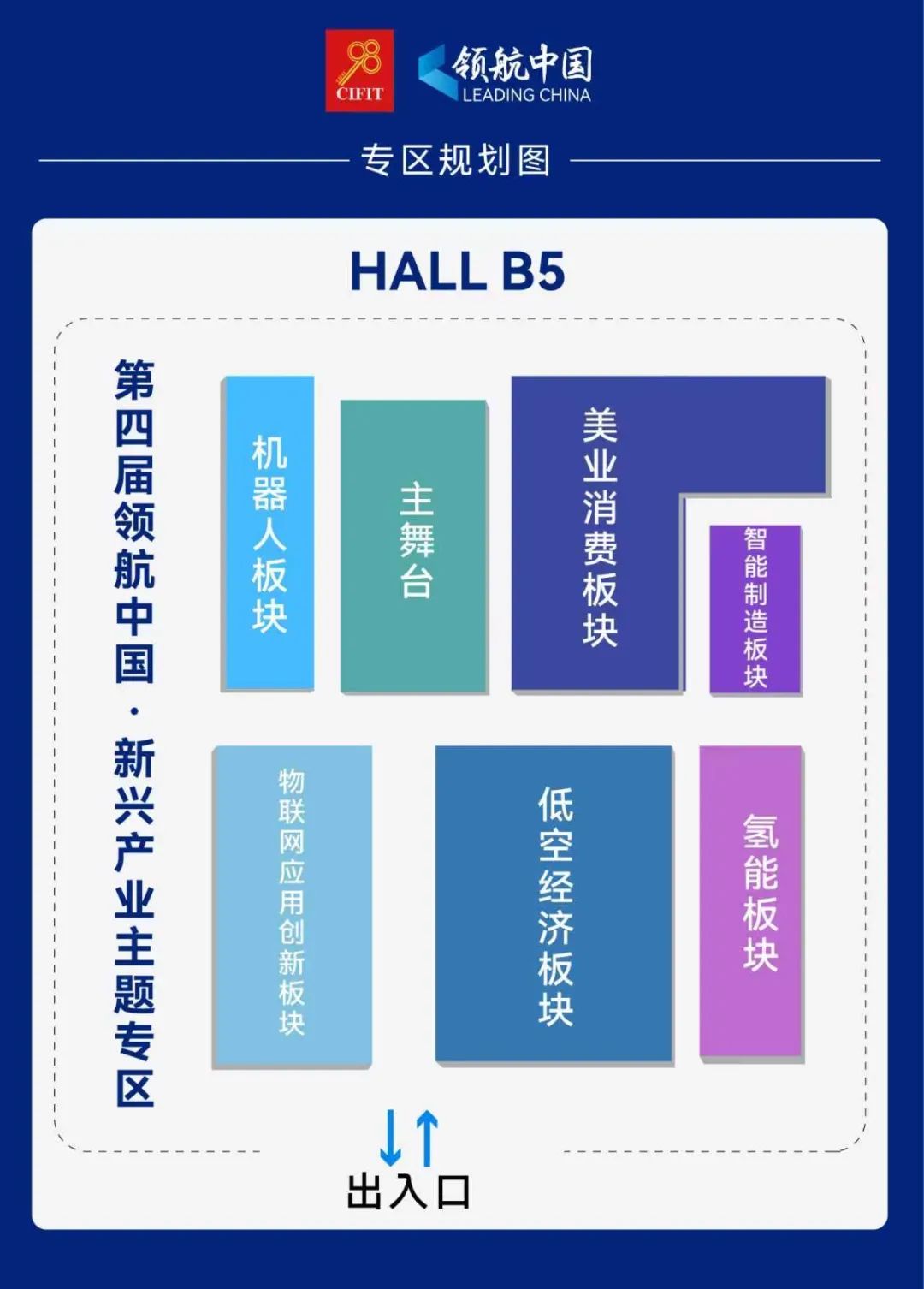
Core Insights - The 25th Investment Fair will be held from September 8-11, 2025, at the Xiamen International Convention and Exhibition Center, featuring a dedicated area for emerging industries to showcase cutting-edge projects and facilitate dialogue between global investors and innovative enterprises [1] Group 1 - The B5 hall will cover 5,600 square meters, focusing on six key areas: hydrogen energy innovation, low-altitude economy, intelligent manufacturing, Internet of Things application innovation, robotics, and new consumption in the beauty industry [2] - More than 10 professional matching activities will be organized, including overseas group enterprise roadshows to promote high-quality projects [3] - Over 50 associations and enterprises from countries such as Germany, the UK, and Austria will participate, covering fields like intelligent manufacturing, biomedicine, and green technology, providing rich overseas industrial resources [4] - A dedicated negotiation area will be set up adjacent to the "Park Matching Area" to interact with national-level economic development zones, enhancing the synergistic effects of the exhibition [5]
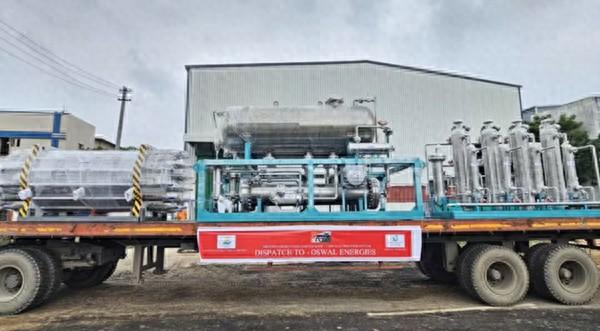
日媒:印度绿氢计划雄心勃勃,但对面是一个令人敬畏的中国
Guan Cha Zhe Wang· 2025-08-27 09:15
Core Viewpoint - India aims to capture nearly 10% of the global green hydrogen market by 2030, positioning itself as a global export hub for green hydrogen, but faces significant competition from China, which has already established a strong foothold in clean energy sectors like solar and wind [1][6]. Group 1: India's Green Hydrogen Ambitions - India's National Green Hydrogen Mission aims to produce 5 million tons of green hydrogen annually by 2030, requiring an investment of ₹80 billion (approximately 6.53 billion RMB) and expected to create over 600,000 jobs while reducing fossil fuel imports by over ₹10 billion and cutting carbon emissions by 50 million tons annually [1][2]. - The Indian government has approved 19 companies for a total annual production capacity of 862,000 tons and has awarded orders for 3,000 MW of electrolyzer manufacturing capacity [2]. - The cost of green hydrogen production in India is projected to decrease by about 40% by 2030, reaching between $3 and $3.75 per kilogram, driven by reductions in transmission fees, taxes, and electrolyzer costs [2]. Group 2: Competitive Landscape - India is actively seeking international partnerships to enhance its green hydrogen capabilities, as evidenced by agreements such as the $1.3 billion deal between Juno JouleGreen Energy and SET Select Energy for green hydrogen and ammonia export facilities [5]. - Despite India's ambitions, China remains the primary competitor, with significant advantages in manufacturing capabilities and cost competitiveness, as Chinese electrolyzer costs are nearly one-third of India's import prices [6]. - In the first half of this year, China added 212 GW of solar capacity, more than double India's total capacity from the previous year, raising concerns about India's ability to compete in the green hydrogen sector [6]. Group 3: Challenges and Opportunities - India's energy infrastructure faces challenges such as high energy storage costs, difficulties in land acquisition, and the need for breakthroughs in electrolyzer technology [7]. - The evolving policy and regulatory framework presents uncertainties for investors, which must be addressed for green hydrogen to become a viable and competitive energy carrier in India [7]. - Indian industry leaders believe that learning from China's solar success can help them establish a competitive green hydrogen ecosystem, emphasizing the importance of flexibility and diversification in their approach [6].
全球最大绿氢/绿氨项目,中国石化参建!
Zhong Guo Hua Gong Bao· 2025-08-27 09:15
Group 1 - China Petroleum & Chemical Corporation (Sinopec) signed a contract with ACWA Power for the design and engineering of the green hydrogen/ammonia project in Yanbu, Saudi Arabia, which will be the largest integrated green hydrogen/ammonia production facility globally [1] - The project will utilize wind and solar power to produce green ammonia, featuring 4.5 GW of electrolysis capacity and approximately 8,000 tons per day of synthetic ammonia production, with commercial operations expected to start in 2030 [1] - The facility is projected to produce 400,000 tons of green hydrogen and 2.8 million tons of green ammonia annually [1] Group 2 - Sinopec is actively promoting the high-quality development of the hydrogen energy industry chain, leading the establishment of a central enterprise green hydrogen production, storage, and transportation innovation consortium [2] - The company has built 11 hydrogen fuel cell supply centers and 144 hydrogen refueling stations, creating hydrogen corridors across several major highways in China [2] - Sinopec has invested in 13 enterprises across various segments of the hydrogen energy industry, including hydrogen production technology and hydrogen refueling station construction [2]

三季度新车密集落地,硅料延续涨价趋势 | 投研报告
Zhong Guo Neng Yuan Wang· 2025-08-27 03:03
Group 1 - The automotive market is stabilizing with a decrease in price reductions and promotions, and a steady production based on sales is expected to continue in August [1][9] - The investment focus for the automotive parts sector remains on "new" developments, with an increasing importance on "certainty" in the second half of the year [1][9] Group 2 - In the photovoltaic sector, silicon material prices continue to rise slightly, while downstream prices remain stable, indicating a weak balance in the market [2] - The offshore wind power projects are accelerating, with multiple projects like the 252MW and 500MW initiatives being launched [3] Group 3 - The independent energy storage sector is experiencing significant growth, with high demand in Europe and expectations for the US market to ramp up due to tariff exemptions [4] - The hydrogen energy industry is developing positively, with reduced financing difficulties and national support for new technologies [5] Group 4 - The national energy authority is pushing forward multiple power transmission projects, with a sustained focus on ultra-high voltage construction during the 14th Five-Year Plan [6] - Companies like CATL and others are focusing on opportunities in energy storage and solid-state batteries [7] Group 5 - The humanoid robot industry is seeing accelerated development, with key companies focusing on various segments such as reducers, body materials, and motors [8]
中国石化参建全球最大绿氢/绿氨综合体项目并网
Xin Hua Wang· 2025-08-27 01:16
Group 1 - China Petroleum & Chemical Corporation (Sinopec) signed a contract with ACWA Power for the front-end engineering design of the green hydrogen/ammonia project in Yanbu, Saudi Arabia, marking a significant milestone in global energy transition [1] - The project will utilize 4.5 GW of electrolytic water hydrogen production facilities and approximately 8,000 tons/day of synthetic ammonia facilities, with an expected annual production of 400,000 tons of green hydrogen and 2.8 million tons of green ammonia by 2030 [1] - The project is positioned to become the world's largest integrated green hydrogen/ammonia production complex, promoting the large-scale development and application of green hydrogen/ammonia technology [1] Group 2 - Sinopec is actively advancing the hydrogen energy industry chain, establishing a green hydrogen production, storage, and transportation innovation consortium, and developing multiple hydrogen fuel cell supply centers and refueling stations [2] - The company has built 11 hydrogen fuel cell supply centers and 144 hydrogen refueling stations, becoming the enterprise with the most operational refueling stations globally [2] - Sinopec has invested in 13 companies across various segments of the hydrogen energy industry chain, including hydrogen production technology, fuel cells, and refueling station construction [2]
“制储输用”全面开花 氢能全链条发展前景可期
Jing Ji Ri Bao· 2025-08-26 23:19
Group 1 - The global hydrogen energy industry is experiencing significant growth, with major projects launched in China, including the world's largest green hydrogen ammonia project and the first 30 MW pure hydrogen engine demonstration project [1][2] - Hydrogen energy is recognized as a crucial component of the future energy system, essential for achieving carbon peak and carbon neutrality goals, as well as sustainable economic development [1][2] - Over 60 countries have incorporated hydrogen energy into their energy strategies, with notable advancements in Japan, the EU, and the US in hydrogen production and application [2][3] Group 2 - China's hydrogen energy industry is developing positively across all segments of production, storage, transportation, and application, with over 50% of global renewable energy hydrogen production capacity located in the country [2][4] - The dual attributes of hydrogen as both an industrial raw material and an energy product position it as a viable solution for industrial decarbonization [6][7] - The demand for green hydrogen is projected to reach between 2.4 million tons and 4.3 million tons per year during the 14th Five-Year Plan period, driven by applications in green methanol fuel and fuel cell heavy trucks [7][8] Group 3 - Challenges facing the hydrogen energy industry include an incomplete policy framework, high production costs, and the need for breakthroughs in storage and transportation technologies [4][5] - The development of liquid organic hydrogen storage technology is seen as a key solution to safety and cost issues in hydrogen storage and transportation [5][6] - The integration of hydrogen energy into various sectors, including energy, chemicals, transportation, and metallurgy, is essential for promoting large-scale development of the hydrogen energy industry [7][8]
氢能全链条发展前景可期
Jing Ji Ri Bao· 2025-08-26 21:59
Core Viewpoint - The hydrogen energy industry is experiencing significant growth and development, with various major projects being launched in China, highlighting its importance in achieving carbon neutrality and sustainable economic development [1][2][3]. Group 1: Industry Development - Major hydrogen projects have been launched in China, including the world's largest green hydrogen ammonia project in Inner Mongolia and the first 30 MW pure hydrogen engine demonstration project [1]. - Over 60 countries have incorporated hydrogen energy into their energy strategies, with Japan, the EU, and the US leading in various hydrogen technologies [2]. - China's renewable energy hydrogen production capacity accounts for over 50% of the global total, positioning the country as a leader in this sector [2]. Group 2: Technological Innovations - The development of hydrogen energy can enhance renewable energy consumption and facilitate seasonal energy balance [3]. - Innovations in hydrogen production and storage technologies, such as off-grid hydrogen production and liquid organic hydrogen storage, are crucial for overcoming current challenges in the hydrogen industry [4][5]. Group 3: Market Demand and Applications - Hydrogen energy serves as both an industrial raw material and an energy product, with significant potential in sectors like chemical production and metallurgy [6]. - By 2050, the demand for hydrogen as an industrial raw material is projected to reach approximately 2,000 million tons per year, with additional substantial demand in energy applications [6]. Group 4: Future Outlook - The "14th Five-Year Plan" period is expected to see green hydrogen and ammonia achieving price competitiveness, with applications in green methanol fuel and fuel cell heavy trucks scaling up [7]. - The National Energy Administration plans to strengthen policy guidance and promote coordinated development across the hydrogen energy supply chain [7].
我国建成全球门类最全规模最大的能源体系(权威发布·高质量完成“十四五”规划)
Ren Min Ri Bao· 2025-08-26 21:45
Core Insights - The "14th Five-Year Plan" period has seen significant advancements in China's energy sector, with the country emerging as a key player in global energy transition [1][7] Group 1: Energy Supply and Demand - China's energy consumption increased by 9.8 million tons of standard coal in the first four years of the "14th Five-Year Plan," with projected new electricity consumption exceeding the annual consumption of the EU over five years [2] - Domestic energy production has met over 90% of the consumption increase, with total energy production equivalent to approximately 5 billion tons of standard coal, accounting for over 20% of global production [2] - The country has built the world's largest electric vehicle charging network, with 1.67 million charging points, and invested over 800 billion yuan in rural power grid improvements [2] Group 2: Green Transition - The share of renewable energy in total installed capacity has risen from 40% to around 60% during the "14th Five-Year Plan" [3] - Wind and solar power generation capacity increased from 530 million kilowatts in 2020 to 1.68 billion kilowatts by July 2023, with their share of total electricity consumption rising from 9.7% to 18.6% [3] - China's renewable energy projects have contributed to a 60% reduction in wind power costs and an 80% reduction in solar power costs globally over the past decade [3] Group 3: Technological Innovation and Investment - Significant breakthroughs in energy technology have been achieved, including advancements in oil and gas exploration and renewable energy efficiency [6] - The new energy storage capacity has grown nearly 30 times to approximately 95 million kilowatts during the "14th Five-Year Plan" [6] - Annual energy investment has consistently exceeded 4 trillion yuan, with private enterprises playing a crucial role, particularly in the power infrastructure sector where they account for over 85% of construction [6]
四川蜀道装备科技股份有限公司2025年半年度报告摘要
Shang Hai Zheng Quan Bao· 2025-08-26 21:13
Group 1 - The company will not distribute cash dividends, issue bonus shares, or increase capital from reserves during the reporting period [2] - The company has not experienced any changes in its controlling shareholder or actual controller during the reporting period [3] - The company has established a joint venture with Shudao Group and Toyota, with a registered capital of 236 million yuan, where the company holds 45% of the shares [3] Group 2 - The joint venture, Shudao Toyota Hydrogen Energy Technology (Sichuan) Co., Ltd., focuses on the production, sales, and after-sales service of hydrogen fuel cell systems and components [3] - The company is building a production line in Chengdu to localize the production of hydrogen fuel cell systems and related products, with the project expected to be completed and operational by Q4 2025 [3] - The joint venture has successfully passed domestic and international regulatory reviews and has completed business registration [3]
