
新材料

Search documents
马力全开!环翠企业奋战“开门红”
Qi Lu Wan Bao· 2026-02-24 06:47
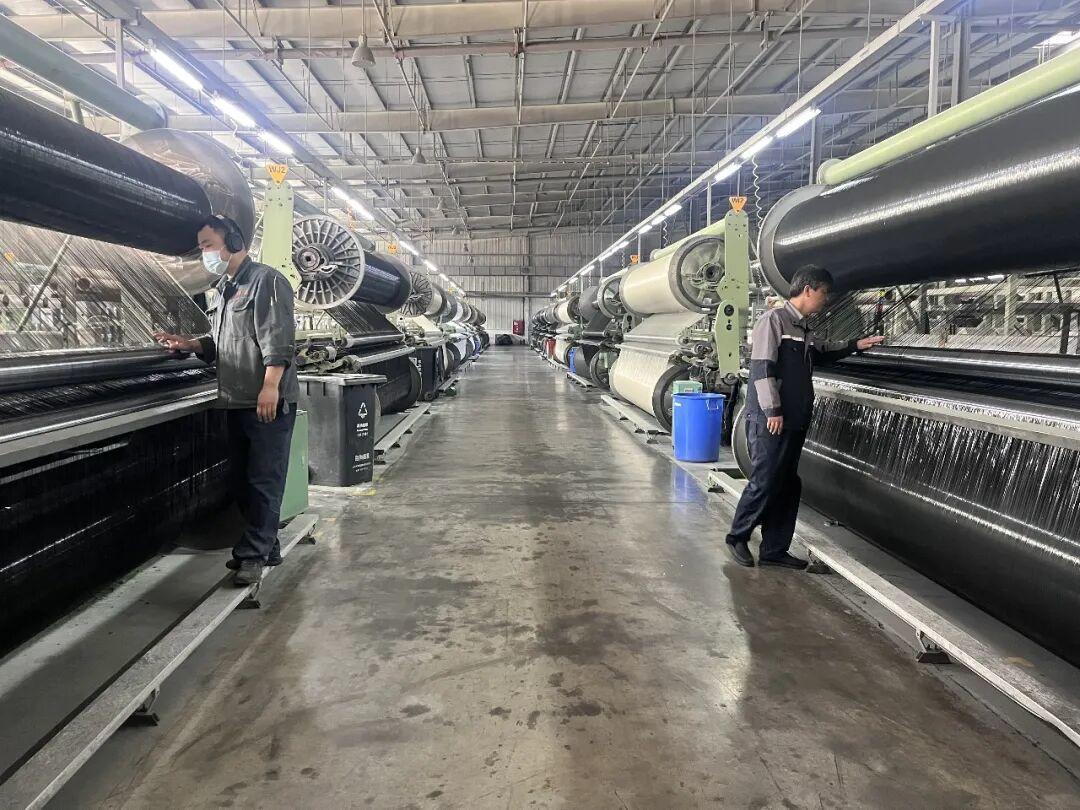
Group 1 - The companies in Huancui District are ramping up production to meet increasing orders and ensure a strong start to the new year [1][11] - Haizhong (Weihai) New Materials Co., Ltd. has resumed operations and is utilizing advanced automated production lines to maintain high product quality [1][3] - The company has secured orders until the end of 2026 and is committed to ensuring timely delivery to stabilize domestic and international market supply [3] Group 2 - Weihai Xingtai Packaging Products Co., Ltd. has also commenced operations early, with all production lines running at full capacity to meet tight production schedules [7][8] - The company specializes in medical device packaging products and adheres to the highest national standards, achieving a production capacity of 1.5 billion medical paper-plastic packaging bags annually [8] - The company's self-developed sterilization packaging and tube bag products have received dual certification from the FDA, allowing it to compete effectively in both domestic and international markets [10] Group 3 - Both companies are focused on technological investment and quality improvement to drive high-quality development in the new year [5][10] - The proactive approach of these companies during the Spring Festival reflects their commitment to economic growth and operational excellence in the region [11]

第九届中关村国际前沿科技大赛新材料领域TOP10名单揭晓
Sou Hu Cai Jing· 2026-02-24 03:24
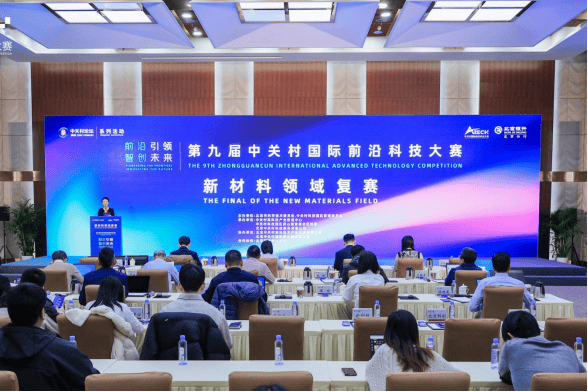
Group 1 - The 9th Zhongguancun International Frontier Technology Competition in the new materials sector was held in Fangshan District, showcasing innovative projects that advanced to the TOP 10 after expert evaluations [1][5] - The competition was organized by the Beijing Municipal Science and Technology Commission and other local authorities, highlighting the collaboration between government and industry in promoting technological innovation [3] - A panel of experts from academia, investment, and industry assessed the projects based on technological advancement and market potential, providing professional advice for innovation and long-term development in the new materials industry [5] Group 2 - The TOP 10 projects in the new materials field include technologies such as integrated optical frequency combs and high-end quantum dot display technology for vehicles, indicating a focus on cutting-edge applications [8] - The Zhongguancun International Frontier Technology Competition was established in 2017, aiming to create a high-level platform for international technological exchange and competition, with the theme "Leading the Frontier, Creating the Future" for the current edition [10] - The Zhongguancun Forum, founded in 2007, serves as a national platform for global technological innovation exchange, featuring various activities including forums, technology transactions, and competitions to promote the transformation of scientific achievements [12]

新材料撑起AI、机器人等智能赛道!新材料ETF华夏(516710)上涨1.22%,三环集团涨超13%
Mei Ri Jing Ji Xin Wen· 2026-02-24 02:25
Core Insights - The new materials sector has become a core support for intelligent fields such as AI and robotics, with significant advancements in materials like carbon fiber, PEEK, flexible sensors, and solid-state batteries driving the development of humanoid robots [1] - CITIC Securities forecasts that themes such as AI new materials, humanoid robots, satellite internet, nuclear fusion, hydrogen energy, and SAF are expected to perform actively in 2026, highlighting the importance of policy, events, and earnings releases as catalysts for trading opportunities [1] Group 1 - The New Materials ETF Huaxia (516710) rose by 1.22%, with component stocks such as Sanhuan Group increasing by over 13%, Guocer Materials by over 9%, and China Jushi by over 6% [1] - The index closely tracks the CSI New Materials Theme Index, which includes 50 listed companies involved in advanced steel, non-ferrous metals, chemicals, and inorganic non-metallic materials, reflecting the overall performance of new materials theme stocks [2] - The new materials content in the index reaches 79.85%, ranking first across all market dimensions [2]

激活民营经济一池春水
Chang Sha Wan Bao· 2026-02-24 01:26
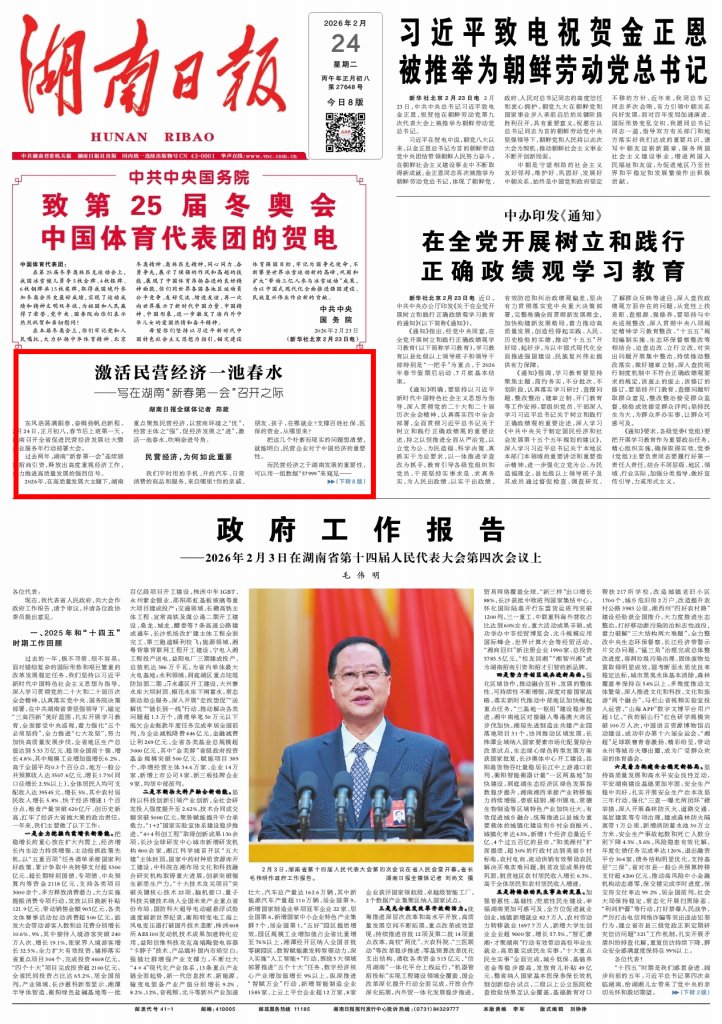
Core Viewpoint - The article emphasizes the importance of the private economy in Hunan's development, highlighting the government's commitment to fostering a favorable business environment and supporting private enterprises as a key strategy for high-quality economic growth [4][5][9]. Group 1: Importance of Private Economy - The private economy contributes approximately 50% of the province's tax revenue, 70% of regional GDP, over 90% of technological innovations, and 90% of urban employment [6]. - By 2025, the added value of Hunan's private economy is expected to reach 3.80 trillion yuan, with a year-on-year growth of 4.8% [7]. Group 2: Government Initiatives - Hunan has established a provincial-level Private Economy Development Bureau, the first of its kind in the country, to enhance the support for private enterprises [9]. - The province has implemented a comprehensive policy review, resulting in the elimination of outdated policies and the introduction of 28 new policies to better support private enterprises [11]. Group 3: Business Environment and Support - Hunan has created a strong atmosphere for business, with initiatives such as the "Entrepreneur Day" and direct engagement between provincial leaders and private entrepreneurs to foster relationships and address challenges [15]. - The province has seen a 3.26% increase in total revenue and assets among its top 100 private enterprises, indicating a growing business environment [15]. Group 4: Investment and Innovation - Hunan has hosted high-profile events like the Global Xiang Business Conference to promote private investment and innovation across various sectors [17]. - The introduction of a "machine-managed bidding" reform has increased the success rate of private enterprises in public procurement from 73.6% to 82.9% [19]. Group 5: Regulatory Framework - Hunan has implemented measures to create a fair market environment, including a negative list for market access and enhanced competition reviews to lower barriers for private enterprises [20]. - The province's new regulations aim to protect the rights of private enterprises and ensure equal access to production factors [20][22].
研之有理|以产业为牵引推进教育科技人才一体发展
Xin Lang Cai Jing· 2026-02-23 22:47
Core Viewpoint - The article emphasizes the importance of integrating education, technology, and talent development in Heilongjiang to drive high-quality economic revitalization through a collaborative approach involving various sectors and resources [1]. Group 1: Education and Industry Integration - The integration of education and industry serves as a crucial link between educational supply and industrial demand, facilitating resource complementarity and precise supply-demand matching [2]. - Higher education institutions are encouraged to develop new majors aligned with strategic emerging industries such as aerospace, electronic information, and high-end equipment, while also focusing on talent-scarce areas like cultural tourism and modern services [2][3]. Group 2: Technology and Project Collaboration - The article outlines a framework for technology-driven projects where enterprises identify key technological challenges, and the government selects relevant research topics, creating a dynamic project database [2]. - Collaborative teams formed through education-industry integration are tasked with addressing critical technological challenges, promoting innovation through partnerships among universities, research institutions, and enterprises [2]. Group 3: Talent Development Mechanisms - A "revolving door" mechanism is proposed to facilitate the exchange of personnel between enterprises and educational institutions, allowing experienced professionals to contribute as "industry professors" [3]. - The evaluation system for educators will be reformed to prioritize practical experience and problem-solving capabilities, aligning talent assessment with industry needs [3]. Group 4: Role of Major Projects - Major projects are identified as essential for integrating education, technology, and talent, necessitating systematic support and collaboration among these elements [4]. - Educational institutions are encouraged to align their curriculum and professional training with the talent needs of significant engineering projects, ensuring a comprehensive approach to talent development [4]. Group 5: Innovation through Large Scientific Facilities - Large scientific facilities are highlighted as foundational platforms for innovation, capable of attracting and nurturing top scientific talent while enhancing the synergy between education, technology, and talent [7]. - Collaborative innovation centers involving management entities, universities, research institutes, and enterprises are proposed to leverage shared resources for technological advancements [7]. Group 6: Talent Recruitment and Evaluation - A targeted talent recruitment strategy is suggested to attract top-tier scientists and young talents globally, with a focus on contributions to large scientific facilities [8]. - The evaluation criteria for researchers and engineers involved in these facilities will be revised to emphasize tangible results and contributions [8].
春节“不打烊” 成都工业企业奋战“开门红”
Xin Lang Cai Jing· 2026-02-23 20:39
Core Viewpoint - Chengdu's industrial enterprises are rapidly resuming production after the Spring Festival, aiming for a strong start to the year, with many companies operating at full capacity to meet domestic and international orders [4][5][6]. Group 1: Production Resumption - Key industrial enterprises in Chengdu are leading the recovery of production, with some maintaining 24-hour operations during the holiday to fulfill orders [5]. - For instance, BaMo Technology reported that all orders for the first quarter are fully booked, and employees are working diligently to ensure timely delivery [5]. - China National Beverage Corporation's Sichuan branch achieved full production capacity on the second day of the new year, producing 237,000 products in one day, matching regular output levels [5]. Group 2: Production Efficiency - Chengdu Tianma Precision Machinery Company has improved its production efficiency to 70% of normal capacity post-holiday, compared to only 50% in previous years [5]. - China National Heavy Duty Truck Group's Chengdu subsidiary expects to produce 10,000 vehicles in the first quarter, with a projected output value of 2.8 billion yuan [6]. Group 3: Regional Collaboration - Various districts and industrial parks in Chengdu are working in unison to boost production, with companies like Quan Yi Food ramping up operations to meet a quarterly output target of 260 million yuan [7]. - In Jin Tang County, Sichuan Natuo New Materials has maintained full production since December, achieving over 1 billion yuan in output [8]. Group 4: Technological Innovation - Chengdu's robotics industry is showcasing its capabilities, with local companies exporting products to over 40 countries, enhancing production efficiency [9]. - The "Chengdu-made" robots are not only improving industrial productivity but also providing innovative solutions in community services, such as elder care [9].
马力全开! 这些公司春节不停工、不停产
Shang Hai Zheng Quan Bao· 2026-02-23 18:37
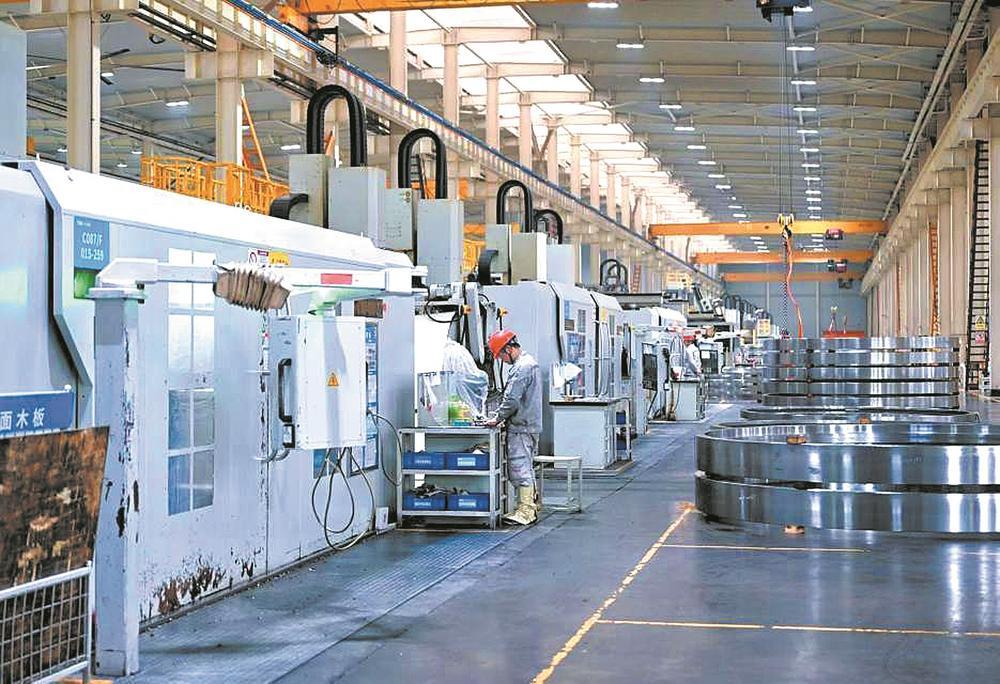
Group 1: Economic Resilience - The Chinese economy remains strong during the Spring Festival, with many listed companies continuing operations to meet market demand and fulfill orders [1][2][8] - Companies like LiuGong and TianNai Technology are maintaining production during the holiday to capitalize on increased demand, particularly from overseas markets [2][3] Group 2: Manufacturing Sector - Manufacturing companies are strategically scheduling production and reasonable breaks to ensure continuous delivery and meet customer needs [2][3] - LiuGong reported significant growth in industry demand, leading to a busy production schedule during the holiday [2] - TianNai Technology is also continuing production to better serve customers due to rapid market demand for its products [2] Group 3: Consumer Sector - The Spring Festival is a peak consumption period, with companies like Quanjude and Guangzhou Restaurant Group launching various marketing activities to attract customers [4][5] - Quanjude has prepared for a strong demand for New Year's Eve dinners and is implementing online and offline marketing strategies [4] - Guangzhou Restaurant Group is promoting themed activities and special menus to enhance customer engagement during the holiday [4][5] Group 4: Digital Technology Integration - Companies are leveraging digital technology to enhance traditional festive experiences, such as the fully digitalized lantern festival in Shanghai [7] - Cybersecurity firm Qihoo 360 is providing 24/7 technical support during the holiday to ensure smooth operations for clients [7] - AI service provider Zongheng Communication anticipates increased traffic and engagement on major platforms during the Spring Festival, which may positively impact its business [7] Group 5: Overseas Projects - Some companies are accelerating overseas projects during the Spring Festival, with Hongbang Biological confirming that construction is proceeding as planned in Australia and Indonesia [8]


1300+份新材料报告下载:做新材料领域的「攻坚者」
材料汇· 2026-02-23 15:28
Core Viewpoint - The article discusses the rapid growth and investment opportunities in the advanced packaging materials sector, highlighting the potential for domestic companies to replace foreign imports in critical areas of technology [7][8]. Market Overview - The global market for advanced packaging materials is projected to reach $2.032 billion by 2028, with the Chinese market expected to grow to 9.67 billion yuan by 2025 [8]. - Specific materials such as PSPI and Al-X photoresist are highlighted, with PSPI's market size in China estimated at 7.12 billion yuan in 2023 [8]. Investment Opportunities - The article identifies 14 key advanced packaging materials that are critical for the semiconductor industry, emphasizing the potential for domestic companies to capture market share from foreign competitors [7][8]. - Companies like 鼎龙股份, 国风新材, and 三月科 are mentioned as potential leaders in the domestic market for advanced packaging materials [8]. Growth Projections - The market for conductive adhesives is expected to reach 3 billion yuan by 2026, while the chip bonding materials market is projected to grow from approximately $4.85 billion in 2023 to $6.84 billion by 2029 [8]. - The epoxy encapsulation materials market is anticipated to grow to $9.9 billion by 2027, indicating strong demand in the sector [8]. Competitive Landscape - The article outlines the competitive landscape, noting that foreign companies such as Fujifilm, Toray, and Dow are currently dominant in the market, but domestic firms are rapidly advancing [8]. - The need for innovation and investment in R&D is emphasized for domestic companies to compete effectively against established foreign players [8].






深海新材料的隐形冠军:中国凭啥有下五洋捉鳖的自信与野心?
材料汇· 2026-02-23 15:28
Core Viewpoint - Japan's deep-sea rare earth mining initiative claims to have concentrations 20-30 times higher than China's land resources, with a total of over 16 million tons of rare earths, including dysprosium and yttrium, which could meet global demand for 730 and 780 years respectively. However, China views this as a routine operation, having already achieved deeper and more advanced deep-sea mining capabilities [6][8]. National Strategy Perspective: Why the 10,000-Meter Deep Sea is Crucial for China - The deep sea is a strategic area concerning resource security, technological competition, and geopolitical struggles, marking a core focus for China transitioning from a maritime power to a maritime strong power. In 2025, deep-sea technology was officially recognized as a strategic emerging industry in China's government work report, reflecting a culmination of over a decade of strategic development [11]. - The global demand for critical minerals like rare earths, cobalt, and nickel is projected to increase exponentially, with the International Energy Agency predicting a 3.5-fold increase by 2050 under net-zero scenarios. China, heavily reliant on imports for cobalt, faces vulnerabilities in its supply chain [12]. - The deep sea is a global mineral reserve, with the International Seabed Authority reporting approximately 50 trillion tons of polymetallic nodules, with the Pacific Ocean holding 80% of this. Control over deep-sea mining rights equates to control over future high-end industry resources [14]. Technological Competition: The Ultimate Test of National Strength - Deep-sea exploration is a complex system engineering challenge, comparable to space exploration. Achieving long-term controlled operations at 10,000 meters indicates a nation's advanced manufacturing and integration capabilities, serving as a testament to technological strength [15]. - The synergy between deep-sea and space technologies enhances capabilities, with satellite navigation and communication supporting deep-sea exploration, while mined resources feed into high-end manufacturing sectors like aerospace and semiconductors [16]. Geopolitical Struggles: The New Battlefield - Countries like the U.S., Germany, and India are increasingly investing in deep-sea exploration, with the market expected to reach $500 billion by 2030. The deep sea has become a new arena for geopolitical competition, where early technological and resource acquisition will dictate strategic advantages [17]. - Japan's mining activities in the disputed South Bird Island area raise legal questions regarding its exclusive economic zone status, while China is building its voice in deep-sea resource development through legitimate international cooperation and independent exploration [17]. Deep-Sea Challenges: Four Major "Death Challenges" and China's Solutions - The extreme environment at 10,000 meters poses significant challenges, including immense pressure, temperature fluctuations, corrosive conditions, and complex terrain, necessitating advanced materials and technologies [20][21][22]. - China is focusing on a dual breakthrough in materials and equipment, creating a comprehensive technology system that allows equipment to adapt proactively to deep-sea conditions, supported by breakthroughs in six key new materials [23]. Rise of Hidden Champions: Six Key New Materials Transitioning from Import Dependency to Global Leadership - Historically reliant on imports for deep-sea materials and core equipment, China has achieved self-sufficiency across the supply chain, with some technologies surpassing foreign capabilities, driven by hidden champion enterprises and research institutions [25]. - Key materials include pressure-resistant materials, corrosion-resistant alloys, buoyancy materials, sealing materials, and functional protective materials, all of which have seen significant advancements in domestic production and technology [35][46]. Comprehensive Industry Landscape: Core Matrix of China's Deep-Sea Materials Industry Chain - The deep-sea materials industry encompasses various categories, including pressure-resistant structures, corrosion-resistant materials, buoyancy materials, sealing materials, and functional protective coatings, with a focus on developing advanced materials tailored for extreme deep-sea environments [54].

开局就是奋斗 起步就要奋进丨河南民营企业家开年话信心
He Nan Ri Bao· 2026-02-22 23:09
Core Viewpoint - The meeting between provincial leaders and private entrepreneurs in Henan emphasizes the government's commitment to supporting the private economy and fostering a favorable business environment for sustainable development [1][6]. Group 1: Government Support and Business Environment - Henan has hosted high-profile gatherings for two consecutive years, signaling a strong commitment to respect, support, and enrich private enterprises [1]. - The provincial government has introduced a series of high-quality, targeted policies to create a market-oriented, law-based, and international business environment, which has boosted entrepreneurs' confidence [4][6]. Group 2: Entrepreneurial Perspectives - Entrepreneurs expressed that the face-to-face communication with provincial leaders has strengthened their confidence and provided a clearer direction for their businesses [3][9]. - The interaction is seen as a dual commitment, enhancing the relationship between the government and private enterprises, which is crucial for overcoming challenges and seizing opportunities [3][9]. Group 3: Sector-Specific Insights - Companies from various sectors, including traditional manufacturing, renewable energy, biomedicine, and artificial intelligence, participated in the discussions, showcasing the diverse strengths of Henan's private economy [1]. - Specific companies, such as Mingyang Group and Hualan Bioengineering, highlighted their commitment to high-quality development and innovation in their respective fields, aiming to contribute to Henan's economic transformation [4][5]. Group 4: Future Development Goals - Entrepreneurs outlined their strategic goals, focusing on high-quality development, technological innovation, and integration into national markets, which aligns with the provincial government's vision for economic modernization [4][10]. - Companies like Longbai Group and Sibo Electronics emphasized the importance of aligning their business objectives with national and local strategic frameworks to achieve sustainable growth [13][14].