饮料

Search documents
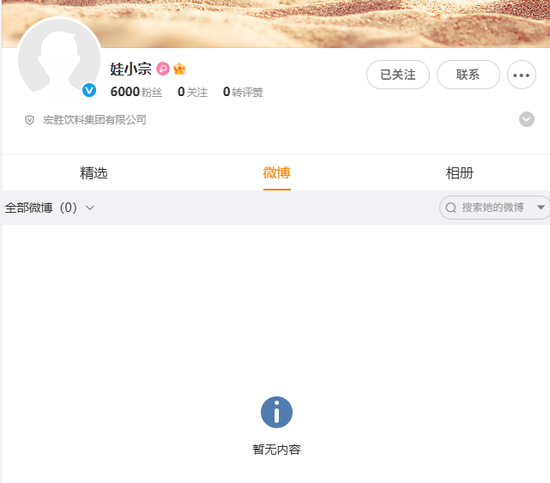
娃小宗官号0内容涨粉6000,宗馥莉大量申请新商标
2 1 Shi Ji Jing Ji Bao Dao· 2025-10-11 08:49
Core Points - A Weibo account named "娃小宗" has been verified and has gained 6,000 followers as of October 11, with numbers still increasing [2] - The account is associated with Hongsheng Beverage Group Co., Ltd., a wholly-owned subsidiary of Hengfeng Trading Co., Ltd., with Zhu Lidan as the legal representative and general manager, and Zong Fuli as a director [2] - Zong Fuli's resignation is reportedly due to non-compliance issues regarding the use of the Wahaha trademark, leading her to focus on her own brand "娃小宗" [2] - In May, Wahaha launched a sugar-free tea beverage under the "娃小宗" brand, priced at 4 yuan [2] - Zong Zehou, Zong Fuli's uncle, expressed his views on her resignation, indicating that previous criticisms from netizens have negatively impacted her decisions [2]
娃哈哈集团管理层再迎变动
Shang Hai Zheng Quan Bao· 2025-10-11 08:46
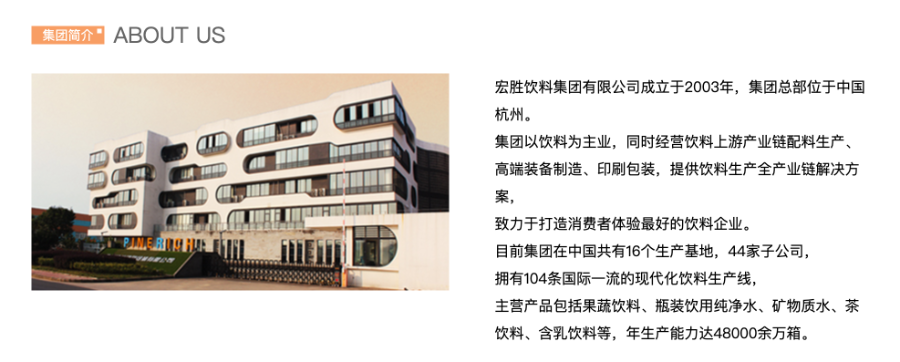
值得关注的是,10月11日,一个名为"娃小宗"的微博账号已完成平台认证,检索信息显示,该账号认证 主体为宏胜饮料集团有限公司,审核通过时间为9月30日,目前粉丝数422,但暂未发布任何内容。 "娃小宗"是宏胜集团旗下品牌。资料显示,宏胜集团有限公司成立于2003年,最初为娃哈哈的代工厂, 2007年宗馥莉接手管理后,公司以饮料为主业,同时经营饮料上游产业链配料生产、高端装备制造、印 刷包装,提供饮料生产全产业链解决方案。 专题:宗馥莉辞去娃哈哈集团董事长等职务 许思敏任总经理,董事长职务空缺!多方回应 炒股就看金麒麟分析师研报,权威,专业,及时,全面,助您挖掘潜力主题机会! 继确认宗馥莉辞职后,娃哈哈集团管理层变动有传新消息。 记者获悉,10月10日召开的娃哈哈集团董事会已正式任命许思敏为集团总经理,董事长职位目前处于空 缺状态。 企查查公开信息显示,许思敏自2024年8月宗馥莉全面接棒娃哈哈集团后,便担任杭州娃哈哈集团有限 公司监事,随后兼任集团法律办主任,这一职务在2024年11月末娃哈哈官方公众号"娃哈哈号角"的报道 中已明确提及。 工商登记信息显示,许思敏目前同时担任重庆市涪陵娃哈哈饮料有限公司法定代 ...
二度冲刺“A+H”两地上市:功能饮料龙头东鹏再启港股征程
Cai Jing Wang· 2025-10-11 08:41
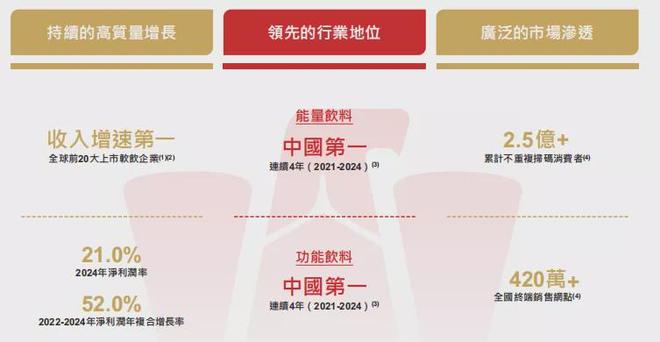
Core Viewpoint - Dongpeng Beverage Group Co., Ltd. has submitted its main board listing application to the Hong Kong Stock Exchange, aiming for a dual listing after its previous application expired [1][5] Company Overview - Founded in 1994, Dongpeng Beverage's core product, "Dongpeng Special Drink," has penetrated the functional beverage market with a high cost-performance ratio [1] - The company went public on the Shanghai Stock Exchange in May 2021 and has accelerated its national expansion, covering over 4.2 million sales points across nearly 100% of prefecture-level cities by mid-2025 [1] Market Position - According to Frost & Sullivan, Dongpeng Beverage has ranked first in China's functional beverage market by sales volume for four consecutive years since 2021, with market share increasing from 15% in 2021 to 26.3% in 2024 [3] - By retail value, Dongpeng Beverage is the second-largest functional beverage company in 2024, holding a market share of 23.0% [3] Financial Performance - Revenue figures for Dongpeng Beverage from 2022 to 2025 are projected as follows: RMB 8.5 billion in 2022, RMB 11.26 billion in 2023, RMB 15.83 billion in 2024, and RMB 10.73 billion in the first half of 2025 [5] - Profit figures for the same period are projected as RMB 1.44 billion in 2022, RMB 2.04 billion in 2023, RMB 3.33 billion in 2024, and RMB 2.37 billion in the first half of 2025 [5] IPO Fund Utilization - The net proceeds from the upcoming IPO are intended for enhancing production capacity and upgrading the supply chain, strengthening brand building and consumer interaction, advancing national expansion strategies, exploring overseas market opportunities, enhancing digital construction across business segments, and improving product development capabilities [5]


加多宝和王老吉,又“打起来了”
新浪财经· 2025-10-11 08:36
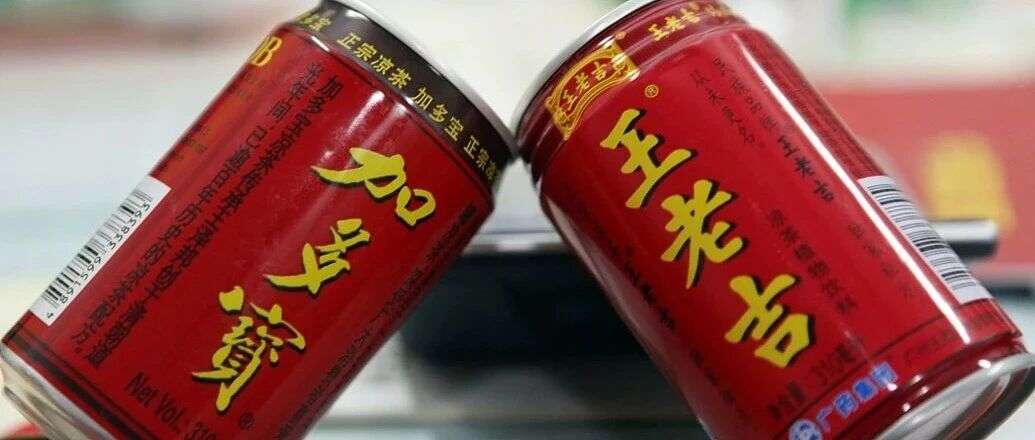
Core Viewpoint - The ongoing trademark dispute between Jia Duo Bao and Wang Lao Ji has escalated to include overseas trademark rights, highlighting the intensifying competition in international markets [2][11][15]. Trademark Dispute Overview - Wang Lao Ji accused Jia Duo Bao of maliciously registering the "Wang Lao Ji" trademark overseas through offshore companies [2][11]. - Jia Duo Bao claims to have legally acquired the overseas trademark rights in the 2000s and has registered the trademark in over 60 countries [6][11]. - Both companies cite different legal rulings to support their claims, with Jia Duo Bao referencing victories in Canadian and EU courts, while Wang Lao Ji has initiated challenges in 21 countries against Jia Duo Bao's registrations [12][11]. Historical Context - The trademark conflict began after a partnership between Hongdao Group (Jia Duo Bao's controlling entity) and Guangzhou Pharmaceutical Group ended in 2011, leading to numerous lawsuits over trademarks and branding [14]. - Significant legal battles have occurred, including a 2018 ruling that ordered Jia Duo Bao to pay 1.44 billion yuan in damages, which was later overturned by the Supreme People's Court [14]. Market Expansion and Growth - The competition has shifted from domestic to international markets, with both companies vying for dominance in the growing global plant-based beverage sector [15][17]. - The global plant beverage market is projected to grow at a compound annual growth rate of nearly 10% from 2019 to 2024, with Southeast Asia and the Middle East identified as key growth areas [17]. - Wang Lao Ji's international market has reportedly grown 6.5 times over the past decade, with a compound annual growth rate exceeding 25% [17]. - Wang Lao Ji's parent company reported a revenue of 6.499 billion yuan in the first half of 2025, reflecting an 8.38% year-on-year increase, while net profit rose by 15.87% [17].
娃小宗官号0内容涨粉6000,宗馥莉叔叔推出“娃小智”对打“娃小宗”
2 1 Shi Ji Jing Ji Bao Dao· 2025-10-11 08:32
Core Points - The Weibo account "娃小宗" has gained 6000 followers since its certification on October 11, with the account still growing [1] - The account is linked to Hongsheng Beverage Group, a wholly-owned subsidiary of Hengfeng Trading, with Zhulidan as the legal representative and Zongfuli as a director [1] - Zongfuli's resignation is reportedly due to non-compliance issues regarding the use of the Wahaha trademark, leading her to focus on her own brand "娃小宗" [1] - The "娃小宗" trademark covers various categories including beer beverages and convenience foods, with multiple registrations planned for 2025 [1] Company Developments - Zongfuli resigned from her positions at Wahaha Group on September 12, confirmed by the company [3] - Following her resignation, Xusi Min has been appointed as the new general manager of Wahaha Group, while the chairman position remains vacant [3] - Zongzehou, Zongfuli's uncle, has publicly commented on her resignation, indicating that external pressures have negatively impacted her career [3] New Brand Initiatives - Zongfuli has launched her brand "娃小宗," while her uncle has introduced a competing brand "娃小智," which recently held a national recruitment event in Hangzhou [3] - The "娃小智" brand offers exclusive distribution rights for purchases exceeding 100,000 yuan [3]
娃小宗官号0内容涨粉6000,宗馥莉大量申请新商标,宗泽后:水军害了她,已无法回头
2 1 Shi Ji Jing Ji Bao Dao· 2025-10-11 08:02
Core Viewpoint - The resignation of Zong Fuli from her positions at Wahaha Group and the appointment of Xu Simin as the new general manager highlight ongoing internal turmoil within the company, while Zong Fuli is shifting her focus to her new brand "Wawa Xiaozong" due to compliance issues with the Wahaha trademark [2][4][7]. Group 1: Resignation and Management Changes - Zong Fuli resigned from her roles as legal representative, director, and chairman of Wahaha Group on September 12, confirmed by company insiders [2]. - Xu Simin has been appointed as the new general manager of Wahaha Group, leaving the chairman position vacant [2]. - Zong Fuli's uncle expressed concerns about the impact of public opinion on her decisions, suggesting that external pressures have influenced her career path [2]. Group 2: New Brand Development - Zong Fuli plans to launch her new brand "Wawa Xiaozong" starting in 2026, with the first product being a sugar-free tea priced at 4 yuan [4][5]. - The "Wawa Xiaozong" brand has already applied for numerous trademarks across various categories, indicating a broad market strategy [8][9]. - The shift to "Wawa Xiaozong" is seen as a continuation of Zong Fuli's strategy to modernize and appeal to younger consumers, despite the competitive landscape in the sugar-free tea market [7][8]. Group 3: Market Competition and Challenges - The sugar-free tea market is highly competitive, with established brands like Nongfu Spring and Coca-Cola already present [7]. - Analysts suggest that Zong Fuli may underestimate the challenges of entering a saturated market, where brand recognition and consumer loyalty take time to build [8][11]. - The success of "Wawa Xiaozong" will depend on securing distributors and achieving sales turnover, which may be difficult given past tensions with distributors [11].
选择孙颖莎为代言人,转型关键期的香飘飘坚定“原叶现泡”
Bei Ke Cai Jing· 2025-10-11 08:00
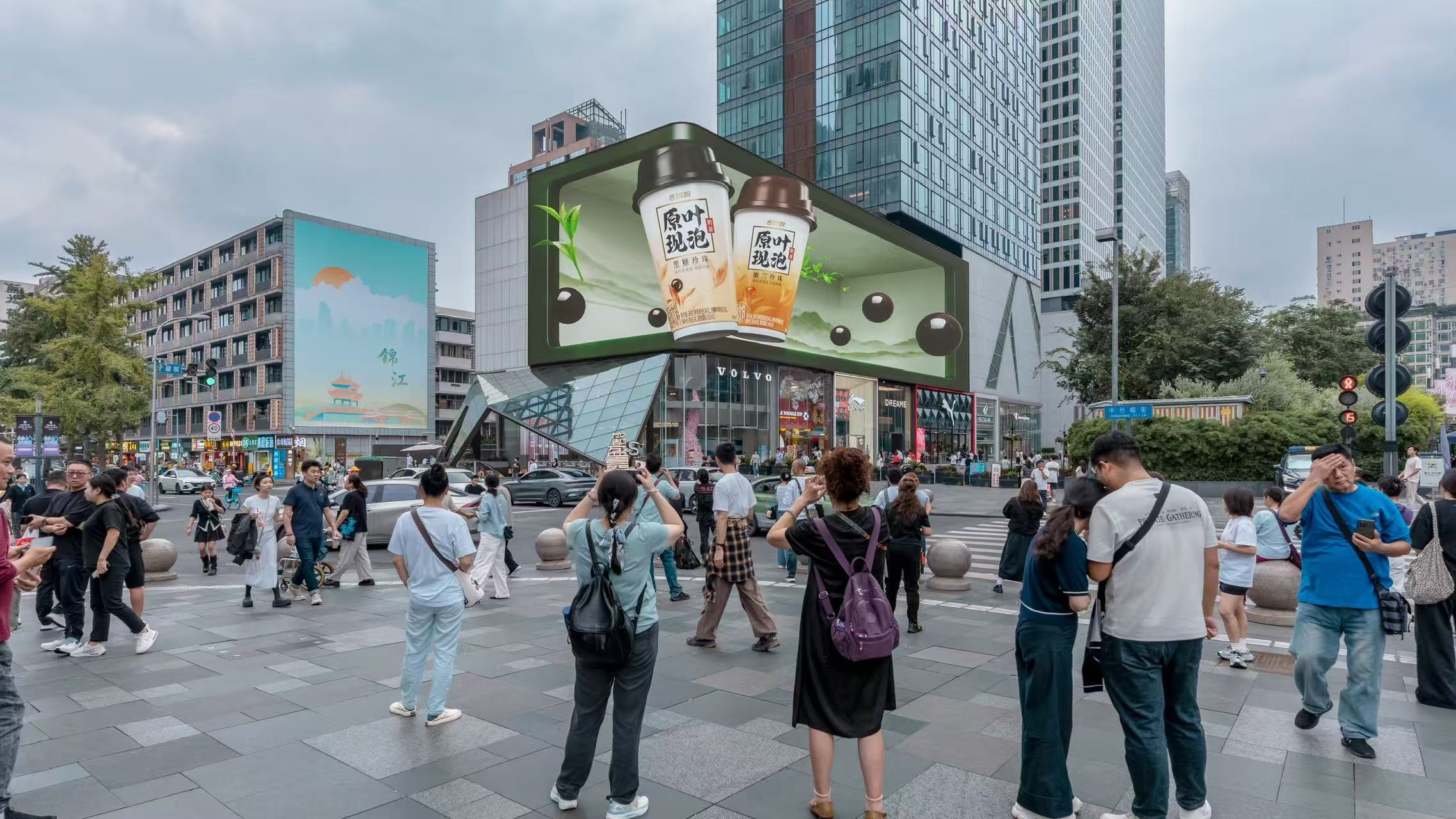
Core Insights - The article discusses the transformation of Xiangpiaopiao, a leading brand in the bubble tea industry, in response to changing consumer preferences towards healthier and more flavorful options [1][11] - Xiangpiaopiao is launching a new product line called "Original Leaf Fresh Brew" in 2024, which aims to re-establish its presence in the market by offering fresh, affordable tea options [1][12] - The brand has appointed Chinese table tennis player Sun Yingsha as its spokesperson, aligning her image with the brand's values of health and positivity, targeting a young consumer demographic [4][6] Company Strategy - Xiangpiaopiao's transformation is driven by a clear understanding of industry pain points and its own position, focusing on a strategy of "young branding + health upgrade" [1][11] - The introduction of the "Original Leaf Fresh Brew" series marks a significant milestone in Xiangpiaopiao's transition, aiming to address consumer demands for freshness and quality [1][10] - The company has implemented a "dual-wheel drive" strategy, with the ready-to-drink segment showing growth while the traditional brewing segment seeks new growth points [7][11] Product Development - The "Original Leaf Fresh Brew" series includes products like Original Leaf Milk Tea and Original Leaf Light Milk Tea, which have been well-received since their launch on August 17, 2024 [10][12] - The development of these products involved extensive research and testing, including over 90 formula iterations and more than 1500 taste evaluations [10][12] - Xiangpiaopiao aims to solve common consumer pain points associated with street drinks, such as long delivery times and high prices, by offering a fresher and more transparent product [9][12] Marketing and Consumer Engagement - The choice of Sun Yingsha as a brand ambassador is strategic, as her image resonates with the target demographic of 18 to 35-year-olds, enhancing brand visibility and appeal [6][11] - Xiangpiaopiao plans to conduct targeted marketing campaigns in key cities, focusing on campus promotions to engage young consumers directly [6][11] - The brand's marketing strategy includes leveraging social media influencers and campus ambassadors to create buzz around the new product line [6][11] Future Outlook - Xiangpiaopiao aims to continue expanding its product matrix and exploring new consumer segments, with plans to introduce various packaging options to meet diverse consumer needs [14] - The company is committed to enhancing its research and development capabilities, with a focus on health-oriented products and innovative packaging solutions [12][14] - The brand's proactive approach to market trends positions it well to capture new opportunities in the evolving beverage landscape [13][14]

娃哈哈任命许思敏为总经理,董事长职务空缺
Sou Hu Cai Jing· 2025-10-11 07:51
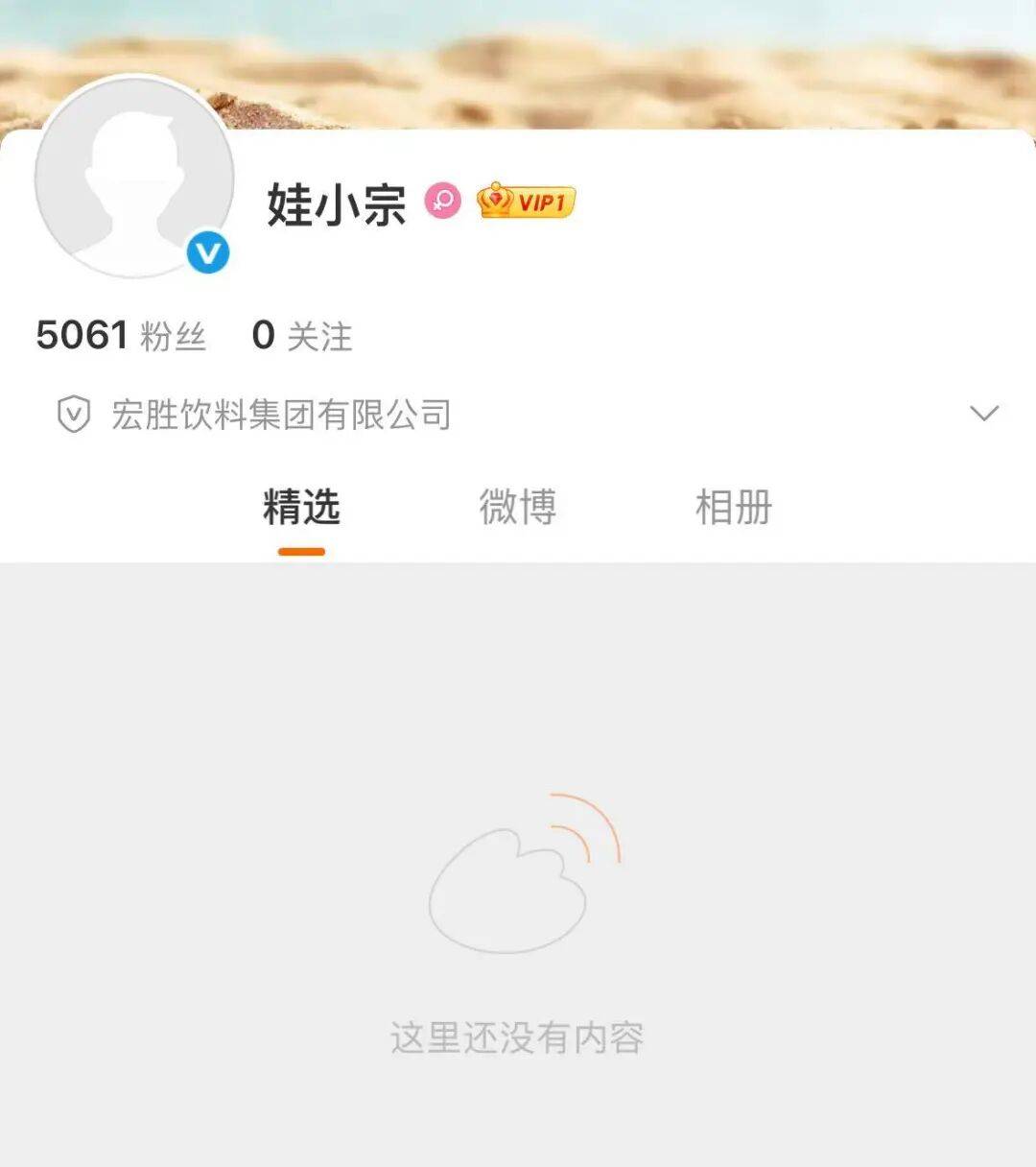
Core Insights - Wahaha Group's board meeting on October 10 resulted in the resignation of Zong Fuli and the appointment of Xu Simin as the new general manager, leaving the chairman position vacant [1] - Zong Fuli's resignation is linked to trademark compliance issues, leading her to focus on her new brand "Wawa Xiaozong" [1][5] - The ownership structure of Wahaha is complex, with the largest shareholder being a state-owned enterprise holding 46%, while Zong Fuli holds 29.40% [1] Brand Transition - The new brand "Wawa Xiaozong" was introduced to the public in mid-September, with plans to replace the Wahaha brand starting from the 2026 sales year [2] - Zong Fuli's leadership has seen significant reforms and expansions within her controlled entities, separate from Wahaha Group [2] Market Challenges - Analysts express skepticism about the success of "Wawa Xiaozong," citing the competitive beverage market and the challenges of attracting distributors [6][7] - The new brand's social media presence has grown rapidly, with over 5,000 followers on its Weibo account shortly after its launch [5]
宗馥莉“出走”娃哈哈后,还有哪些底牌?
2 1 Shi Ji Jing Ji Bao Dao· 2025-10-11 07:44
21世纪经济报道记者朱艺艺 易佳颖报道 宗馥莉辞去娃哈哈集团法定代表人、董事及董事长等相关职务,只是娃哈哈集团内部变局的新起点。 记者注意到,虽然宗馥莉出走娃哈哈,但她和这家巨头仍有着千丝万缕的联系。这家去年营收700亿元 的饮料巨头,究竟将何去何从? 仍为娃哈哈集团第二大股东 首先,从股权结构看,宗馥莉仍持有娃哈哈集团29.40%股权,是仅次于杭州上城区文商旅投资控股集 团有限公司(持股46.00%)的公司第二大股东。 与此同时,虽然卸下了娃哈哈集团董事长头衔,宗馥莉名下仍关联200多家存续状态的企业,不少为娃 哈哈集团关联企业。在包括娃哈哈商业股份有限公司、杭州娃哈哈食品有限公司等在内的娃哈哈集团关 联企业中,宗馥莉依旧担任董事长、总经理等要职,并间接持有不少企业股份。 另一方面,尽管宗馥莉不再担任娃哈哈集团要职,但至少在娃哈哈集团董事会层面,宗馥莉一手提拔 的"心腹"仍占据不少席位。 在公司董事会五位成员中,洪婵婵的对外身份是宗馥莉实控的宏胜饮料集团财务部部长,她曾在宗馥莉 关联方公司中担任监事;叶雅琼此前为娃哈哈集团营销业务相关负责人,此后升职为娃哈哈集团政务中 心总监。 而被视为宗馥莉"左膀右臂"的 ...
宗馥莉“出走”娃哈哈后 还有哪些底牌?
2 1 Shi Ji Jing Ji Bao Dao· 2025-10-11 07:40
宗馥莉辞去娃哈哈集团法定代表人、董事及董事长等相关职务,只是娃哈哈集团内部变局的新起点。 记者注意到,虽然宗馥莉出走娃哈哈,但她和这家巨头仍有着千丝万缕的联系。这家去年营收700亿元的饮料巨头,究竟将何去 何从? 仍为娃哈哈集团第二大股东 首先,从股权结构看,宗馥莉仍持有娃哈哈集团29.40%股权,是仅次于杭州上城区文商旅投资控股集团有限公司(持股 46.00%)的公司第二大股东。 与此同时,虽然卸下了娃哈哈集团董事长头衔,宗馥莉名下仍关联200多家存续状态的企业,不少为娃哈哈集团关联企业。在包 括娃哈哈商业股份有限公司、杭州娃哈哈食品有限公司等在内的娃哈哈集团关联企业中,宗馥莉依旧担任董事长、总经理等要 职,并间接持有不少企业股份。 另一方面,尽管宗馥莉不再担任娃哈哈集团要职,但至少在娃哈哈集团董事会层面,宗馥莉一手提拔的"心腹"仍占据不少席 位。 而被视为宗馥莉"左膀右臂"的严学峰,也在娃哈哈体系内担任180多家关联企业的监事等职务,掌握着供应链和生产大权。 日前,严学峰被曝因涉嫌违纪被杭州市上城区纪律检查委员会立案审查,但近期有媒体报道称,严学峰已于10月5日回到宏胜饮 料集团上班。 种种迹象表明,尽管 ...