高等教育

Search documents
陕西:服务“不断线” 护航毕业生就业
Shan Xi Ri Bao· 2025-08-03 00:23
7月初拿到毕业证,在家休整两天后,西安邮电大学通信与信息工程学院物联网专业的应届毕业生 马啸天乘车南下,开启了自己的职业生涯。 "当初找这份工作的时候,学校就业指导老师帮了许多忙。"7月29日,已在公司参加岗前培训的马 啸天告诉记者,为帮助毕业生顺利就业,学校就业指导老师不仅及时发送各类招聘信息,还为求职的学 生提供政策、岗位等信息咨询服务。 目前,高校应届毕业生已经离校。陕西各高校为离校未就业毕业生提供"不断线"的就业服务,为他 们建立工作台账,第一时间推送针对性强、适配度高的岗位。 西安邮电大学招生就业处处长李琳娜告诉记者,学校持续加力组织校园招聘活动,选派老师及学生 代表赴省外参加促就业行动,并通过行业协会、商会等各类社会组织资源,扩增就业岗位,助力离校毕 业生尽早实现就业。 西安邮电大学还围绕人工智能、低空经济等急需紧缺领域和陕西重点产业链建设需求,开展职业技 能培训,积极动员学生参与培训。 西安高校众多,是陕西稳就业工作的重要地区。7月11日,西安市高校毕业生就业服务攻坚行动启 动。西安市人社局副局长潘皓亮介绍,该行动通过组织实施专项行动和培训、针对困难毕业生"一对 一"结对机制、发布优质就业见习岗 ...
大学学费暴涨,什么信号?
36氪· 2025-08-02 13:35
Core Viewpoint - The article discusses the rising trend of university tuition fees in China, highlighting the shift from affordable education to a financial burden for families, as universities transition from being seen as a public good to a cost-driven entity [9][12][35]. Group 1: Tuition Fee Increases - By the summer of 2025, university tuition fees are expected to enter the "10,000 yuan era," with an average increase of about 10% across many institutions [5][18]. - Some provincial universities have raised fees by 500 to 2,000 yuan, while private institutions have seen even steeper increases, with annual fees reaching as high as 43,000 yuan [7][19]. - The increase in tuition fees is a response to the rising costs of education and the financial pressures faced by universities, particularly public institutions that are increasingly reliant on tuition to cover operational costs [15][24]. Group 2: Economic Context - The average annual tuition fee now represents a significant portion of a typical worker's salary, with one year of tuition potentially exhausting a family's annual income [8][22]. - The median disposable income for urban residents in 2024 is projected to be 49,302 yuan, while rural residents will see a median of 19,605 yuan, emphasizing the financial strain of rising tuition [20]. Group 3: Structural Changes in Higher Education - The article notes a dramatic increase in university enrollment since 1999, with the number of students rising from 1.5 million to an expected 12.22 million by 2025, leading to a shift from elite to mass education [13][37]. - As government funding decreases, universities are adopting business-like strategies, including outsourcing services and monetizing campus resources, to maintain financial viability [29][30]. - The financial model of universities is evolving, with institutions now viewing educational resources as products to be sold, leading to a commodification of education [32][44]. Group 4: Employment and Graduate Outcomes - Despite a stable employment rate of around 89%, many graduates are finding themselves in jobs unrelated to their degrees, with a significant percentage of graduates opting for further studies to avoid immediate employment pressures [37][41]. - The average monthly salary for recent graduates is reported to be 6,050 yuan, with a large portion earning below 6,000 yuan, indicating a disconnect between educational investment and job market returns [39][43]. Group 5: Societal Implications - The rising costs of education and the phenomenon of "degree inflation" are creating barriers for lower-income families, leading to a stratification in access to higher education [38][44]. - The article suggests that the perception of university education is shifting from a societal investment to a personal financial burden, with implications for social mobility and equity in education [34][46].


哥大与美政府超2亿美元和解协议
news flash· 2025-08-01 23:31
据央视新闻报道,哥伦比亚大学与白宫达成2.21亿美元和解协议,并同意协助联邦政府加强对国际学生 的监管。协议规定,校方将上报包括非法侵入等轻微违规行为,涉事学生或将面临联邦调查。该举措引 发对国际学生处境与学校收入来源的担忧。特朗普政府3月撤销对哥大的4亿美元联邦拨款。校方几周后 作出妥协,同意按照政府要求推行一些改革。受撤销联邦拨款影响,哥大5月宣布裁员近180人。 ...
香港修订大学资助要求,受养子女须居港满2年方可申请政府资助
Xin Jing Bao· 2025-08-01 05:40
在居港满两年的认证上,申请人须提供证明,显示自己在截至所修读课程开课当年的5月31日为止的两 年期内,以全日制学生身份于本港开办正规课程的学校就读。如未能提供上述证明,可向入境处付费申 领涵盖该段两年期的出入境记录证明,以显示申请人在该段两年期内,每年不多于90天不在香港。 以"本地学生"和"非本地学生"的定义作为基础的政府奖学金、研究生奖学金或政府资助计划的申请资格 准则及相关安排会作相应修订,以确保处理方法一致。 经"高才通"等人才引进计划进入香港人士的受养人,申请入读资助专上课程学额将需满足新的要求。7 月31日,香港特别行政区政府公布有关政府资助专上课程学额和资助申请资格的修订:设立两个学费类 别,并修订有关申请资格准则。(记者注:专上课程指在香港教育体系中最高层次的教育阶段,包括工 业学院、大专、大学教育。) 按照新修订的要求,受养人须居港满两年才能申请政府资助专上课程学额,有关修订适用于2027-2028 及以后学年(申请周期于2026年10月开始)。 受养子女须居港满两年才符合资格申请政府资助专上课程学额 政府发言人表示,根据现行收生安排,获入境事务处首次签发受养人签证/进入许可时未年满18岁的 ...
美三所常春藤盟校与联邦政府和解,哥大校友痛批:和解是校方的“懦夫协议”
Huan Qiu Shi Bao· 2025-07-31 22:49
然而,美国藤校这一连串的妥协退让,招致各界强烈不满。美国《华盛顿邮报》称这类举措与其说是"务实",还不如说是"绥靖"。纽约州国会议 员、哥大校友纳德勒痛批哥大的和解是一项"懦夫协议",认为其在高等教育与学术自由的战争中"举白旗投降"。美国《国会山报》更直言,哈佛5 亿美元的"投降赔款"将宣告"美国学术自由的终结","如果全球资源最雄厚的独立学府都不能、或不愿抵抗赤裸裸的威权主义,那么所谓'独立 性'还有什么意义可言?" 【环球时报特约记者 刘皓然】数日来,美国多所高校接连向特朗普政府"投降",或签订和解协议、或表达和解意向。这场以校园"反犹"运动为导 火索、持续数月的风波似乎已接近尾声。对此,有批评者认为,在这场"联邦政府VS高等院校"的斗争中,美国尊奉的教育独立与自由精神在强权 面前一败涂地。 美国有线电视新闻网(CNN)7月31日报道称,经白宫方面证实,特朗普政府于7月30日与布朗大学达成一项协议,同意恢复对该校的联邦拨款, 同时终止对布朗进行的一切调查。布朗大学在一份声明中说,根据协议,该校现有科研项目的资助和拨款将被恢复,其中包括5000多万美元未到 账的联邦科研经费,该校也重新获得申请联邦科研经费的 ...
文化中国行丨探秘中华第一“虫羽”宝库 来这上一堂最生动自然课
Yang Shi Wang· 2025-07-31 16:15
Core Viewpoint - The Northwest A&F University Expo Park in Yangling, Shaanxi, features the largest collection of agricultural-themed museums in China, attracting 200,000 visitors annually with its five museums dedicated to insects, animals, soil, plants, and Chinese agricultural history [1]. Insect Museum Highlights - The National Insect Museum, the first of its kind in China, houses over 1.5 million insect specimens, showcasing a history of 350 million years of insects [1]. - The museum features rare butterfly specimens, including over 40 species of the Brazilian Blue Butterfly, and highlights 12 national butterflies from various countries [3][5]. - The Golden Snouted Butterfly, China's national butterfly and a critically endangered species, is showcased, with conservation efforts leading to a gradual increase in its population [7]. Animal Museum Highlights - The Animal Museum, larger than the Insect Museum, contains over 8,000 animal specimens, including a nearly complete fossil of a woolly rhinoceros, which lived between 120,000 and 10,000 years ago [12][14]. - The museum also features fossils from the Jurassic period and various endangered species, including the giant panda and the Tibetan antelope, with educational programs on wildlife conservation [14][16]. Agricultural History Museum Highlights - The Agricultural History Museum presents artifacts that trace the origins of agriculture in China, including evidence of millet cultivation dating back 8,000 years and rice cultivation from 10,000 to 12,000 years ago [19][21]. - The museum showcases ancient seeds and agricultural texts, highlighting the historical significance of wheat and its introduction to China from the Middle East [21][23]. - The museum emphasizes the contributions of breeding teams, such as the development of high-yield wheat varieties that have significantly impacted food security in China [23]. Visitor Information - The Expo Park is open seven days a week from 9 AM to 6 PM, with ticket reservations available through their official WeChat account [24].

教育家精神万里行|邓武:以教育新动能育蓝天英才
Ren Min Wang· 2025-07-31 15:02
邓武,中国民航大学教授、博士生导师,中国人工智能协会教育工作委员会委员,2024年全国模范教师 获得者。 深耕教学科研一线20余载,邓武始终注重培育学生"以国家强盛为己任"的责任感。作为电子信息与自动 化学院物联网工程系的一名教师,他探索开发了"AI+"《数据库原理与应用》、"学术+"《智能优化算 法》等课程,采用"任务驱动""项目驱动""情景型"等教学方式,增强了课程的趣味性和互动性,有效提 升了学生的实践能力和创新能力。他紧扣国家需求,勇于创新,着眼于突破相关领域的科技创新瓶颈, 实现了某些关键技术的自主可控。在《2023年度全球前2%顶尖科学家榜单》中,邓武入选"终身科学影 响力排行榜(1960—2023)" 和"2023年度科学影响力排行榜"。 邓武教授将持续推动教育教学改革,探索更多创新的教学方法,培养更多未来交通领域的专业人才。 ...
丰富课程设置 创新教学模式——大学生生涯教育与就业指导课程取得积极成效
Xin Hua Wang· 2025-07-31 14:47
新华社北京7月31日电 题:丰富课程设置 创新教学模式——大学生生涯教育与就业指导课程取得积极成 效 新华社记者王鹏 强化生涯教育与就业指导,是做好高校毕业生就业服务工作的重要一环。中办、国办印发的《关于加快 构建普通高等学校毕业生高质量就业服务体系的意见》中,明确提出"完善生涯教育与就业指导课程标 准""打造一批国家规划教材、示范课程和教学成果"。 完善课程体系、丰富教学安排、创新教学模式……一段时间以来,各高校积极开设大学生生涯教育与就 业指导相关课程,助力大学生更好择业、更快就业,有效推动高校毕业生高质量充分就业。 此外,不少高校也注重校企协同和产教融合,为学生职业规划提供全方位支持和指导。 记者了解到,清华大学每学期邀请数十位企事业单位专业技术岗位人士走进课堂,围绕行业对拔尖创新 人才需求,面向学生开展实战教学,增强学生的职业使命感与专业认同度;华中科技大学有针对性地带 领学生走进相关企业,让学生参与模拟面试与真实项目实操,深度感知职场生态。 构建科学课程体系,夯实就业育人基础—— 丰富教学形式,推动生涯教育取得实效—— 如何通过技术赋能,让课程教学更富吸引力? 西安电子科技大学通过采用线上与线下、理 ...
象牙塔下的“金融帝国”:美国大学何以成为“一门生意”?
3 6 Ke· 2025-07-31 11:41
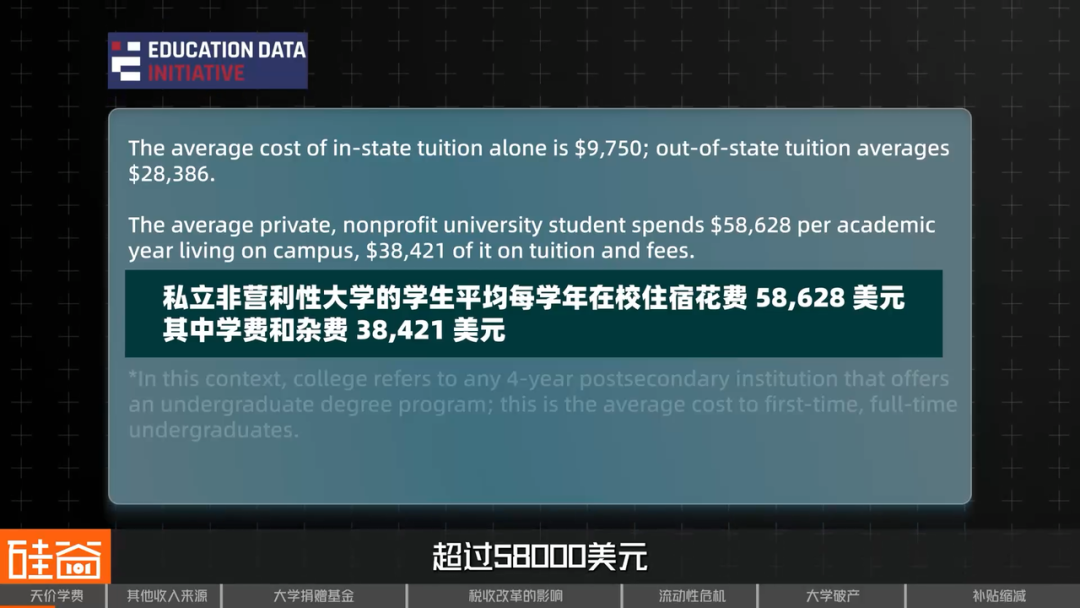
Group 1 - The article discusses the ongoing conflict between U.S. universities and the federal government, highlighting Harvard's potential $500 million settlement to end federal investigations and Columbia University's $200 million settlement [1][3] - The financial structure of U.S. universities is complex, with public universities relying on state funding and private universities depending heavily on tuition and endowment funds [3][9] - Tuition fees have significantly increased over the past two decades, with public university fees rising nearly 150% and private university fees increasing by 200% [5][6] Group 2 - The average annual cost for private nonprofit universities is approximately $58,628, while out-of-state public university tuition averages $28,386 [4][6] - Harvard's tuition fees reach $86,000 per year, while the University of California, Berkeley charges up to $52,000 [4][6] - The article emphasizes the importance of endowment funds for universities, with Harvard's total revenue for the 2024 fiscal year projected at $6.5 billion, of which 45% comes from endowment income [13][20] Group 3 - The article outlines the challenges faced by universities due to declining investment returns and increased government scrutiny, leading to potential financial crises [3][20] - The proposed tax reform on endowment funds could impose a tax rate of up to 21% on wealthy universities, significantly increasing their tax burden [51][53] - Yale University has begun selling off illiquid assets to improve liquidity, indicating a shift in investment strategy amid financial pressures [56][59] Group 4 - The financial crisis in higher education is not limited to elite institutions; many smaller colleges are facing closures due to budget deficits and declining enrollment [66][72] - The article highlights the disparity between wealthy universities and smaller institutions, with the latter often lacking substantial endowment funds [75][76] - The increasing reliance on student loans and the rising cost of education have transformed higher education into a private expense rather than a public good [80][81] Group 5 - The article raises questions about the fundamental purpose of universities, debating whether they serve as public institutions for knowledge and opportunity or as financial entities focused on endowment growth [88][89] - The ongoing financialization and marketization of education may have broader societal implications, affecting future generations and the overall perception of education's value [89][90]

美国高等教育,何以成为普通人不可及的奢侈品?
Hu Xiu· 2025-07-31 04:56
Core Points - The article discusses the ongoing conflict between the U.S. government and elite universities like Harvard, highlighting the financial pressures these institutions face due to potential federal funding cuts and increased taxation on endowments [1][2][3][34][79]. - It emphasizes the complex financial structure of American universities, particularly the reliance on tuition fees and endowment funds, and the challenges posed by rising costs and declining government support [5][16][22][24][108]. Group 1: Financial Structure of U.S. Universities - U.S. universities are divided into public and private institutions, with public universities typically receiving state funding, resulting in lower tuition for in-state students [5][16]. - Average tuition fees for private universities exceed $58,000, while public universities charge around $28,000 for out-of-state students and $10,000 for in-state students [6][8]. - Over the past 20 years, tuition fees have increased by nearly 150% for public universities and 200% for private universities [9]. Group 2: Revenue Sources - Harvard's total revenue for the 2024 fiscal year is projected at $6.5 billion, with 45% coming from endowment income, 29% from tuition, and 16% from federal and other research grants [23]. - Public universities, like the University of California, Berkeley, have seen a significant reduction in state funding, with only 14% of their budget coming from state allocations compared to 50% three decades ago [17]. - Private universities rely heavily on endowment funds, which are often restricted in their use, limiting financial flexibility [20][22]. Group 3: Challenges and Responses - The article highlights the increasing administrative costs in universities, with Yale employing 5,923 administrative staff compared to only 6,800 undergraduates, leading to concerns about administrative bloat [67]. - Many universities are facing budget deficits, with West Virginia University reporting a structural deficit of $45 million, prompting significant program cuts and layoffs [114][118]. - In response to financial pressures, elite universities are beginning to sell off illiquid assets and consider issuing bonds to improve liquidity [87][93]. Group 4: Taxation and Government Relations - The U.S. Congress is moving to increase the tax rate on endowment income for wealthy universities, potentially imposing rates as high as 21%, significantly higher than the current 1.4% [79][82]. - Harvard could face a reduction in available income by up to $1 billion if federal funding is cut and new taxes are imposed, leading to potential budget cuts and changes in operations [85][86]. - The article raises questions about the future of higher education in the U.S. as institutions grapple with financial sustainability amid changing government policies and economic conditions [140][144].