Semiconductor

Search documents
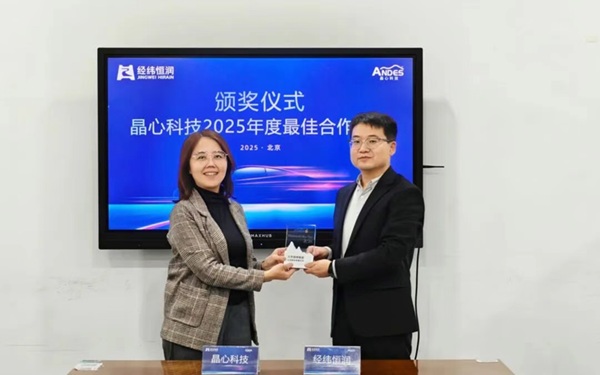
经纬恒润:与Andes晶心科技深化车载RISC-V生态合作 共推技术规模化落地
Zhong Guo Qi Che Bao Wang· 2025-12-22 09:05
Core Insights - The collaboration between Andes Technology and Jingwei Hengrun focuses on advancing the in-vehicle RISC-V ecosystem, aiming to transition the technology from "usable" to "deliverable" [1][3] - Key discussions included software stack maturity, engineering efficiency, verification processes, and ecosystem collaboration, laying a solid foundation for future technical implementation [1][3] Group 1 - Experts reached a consensus that in-vehicle scenarios demand stringent requirements for technology certainty, safety, and maintainability, with a stable software platform and toolchain being crucial for efficient technology deployment [3] - Jingwei Hengrun plans to enhance its engineering platform capabilities for the in-vehicle RISC-V architecture, developing a full-stack system that covers demand definition, underlying software, complex middleware, and self-developed toolchains [3] - The company aims to create reusable software modules and automated toolchains to help ecosystem partners build complete solutions from chips to applications, effectively lowering the technical entry barrier and project risks [3] Group 2 - Andes Technology recognizes Jingwei Hengrun's platform-oriented layout and practical achievements in the in-vehicle RISC-V field, committing to provide high-performance, highly configurable vehicle processor cores and a complete development environment [3] - Both companies will continue regular exchanges with partners to enhance engineering practices and toolchain development for in-vehicle RISC-V, improving ecosystem collaboration mechanisms and delivery systems [3] - The goal is to jointly advance towards a safer, more efficient, and open era of in-vehicle computing platforms [3]


算力硬件强势拉升,创50ETF(159681)涨超2.1%
Xin Lang Cai Jing· 2025-12-22 06:20
Group 1 - Alibaba's DingTalk has initiated a secret project called "D Plan," potentially entering the AI hardware sector [1] - Moore Threads announced a new GPU architecture "Huagang" at its first MUSA developer conference, featuring a 50% increase in computing density compared to the previous generation, supporting full precision calculations from FP4 to FP64, and capable of scaling to over 100,000 nodes in intelligent computing clusters [1] - Shanghai Jiao Tong University's research team has achieved a breakthrough in all-optical computing chips, enabling large-scale semantic media generation models [1] Group 2 - Guojin Securities remains optimistic about AI-PCB and core computing hardware, as well as the Apple supply chain and self-controlled beneficiary industries, predicting explosive growth in ASIC numbers from major companies like Google, Amazon, Meta, OpenAI, and Microsoft between 2026 and 2027 [2] - The demand for AI copper-clad laminates is strong, with leading manufacturers in mainland China expected to benefit due to slow overseas expansion [2] - The ChiNext 50 Index (399673) reflects the performance of 50 stocks with high liquidity and market capitalization in the ChiNext market, with the top ten weighted stocks accounting for 71.14% of the index [2]
三星发布全球首款2nm智能手机芯片
Zheng Quan Shi Bao Wang· 2025-12-22 00:53
Core Viewpoint - Samsung has officially launched the industry's first 2nm process smartphone application processor, the Exynos 2600, which is expected to enhance performance significantly [1] Group 1: Product Details - The Exynos 2600 is designed by Samsung's System LSI division and manufactured using its own wafer fabrication facilities with 2nm Gate-All-Around (GAA) technology [1] - The processor features a new 10-core CPU design based on the Arm v9.3 architecture, consisting of one high-performance core running at up to 3.8GHz, three performance cores, and six efficiency cores [1] - Samsung claims that the performance of the Exynos 2600 has improved by up to 39% compared to its predecessors [1] Group 2: Market Expectations - Although Samsung has not confirmed which smartphones will utilize the Exynos 2600, it is widely anticipated that the processor will power at least some versions of the Galaxy S26 series next year [1]
GPU公司壁仞科技香港IPO拟发行逾2.47亿股,最高定价19.6港元
Jin Rong Jie· 2025-12-22 00:23
Core Viewpoint - Birun Technology is set to issue 247,692,800 H shares on the Hong Kong Stock Exchange, with a pricing range of HKD 17 to HKD 19.6 per share, and trading is expected to commence on January 2 of the following year [1]. Company Overview - Birun Technology, established in 2019, focuses on developing high-performance general-purpose GPUs and aims to create a self-developed high-performance GPU hardware and software ecosystem [1]. - The company is part of the "Four Little Dragons of Domestic GPUs" alongside Moore Threads, Muxi Technology, and Suiruan Technology, with the latter two already listed [1]. Product Development - The first generation of Birun Technology's general-purpose GPU products, based on an original training and inference integrated chip architecture, has already been deployed in various intelligent computing centers [1].
Dow Jones Futures Rise; Palantir, GE Lead 12 Stocks In Buy Zones
Investors· 2025-12-21 23:05
Group 1 - The stock market experienced fluctuations, with the S&P 500 and Nasdaq initially breaking below their 50-day lines due to AI-related fears, but later rebounding above that key level [5] - Several stocks have shown buy signals as the market improved, indicating potential investment opportunities [6] - Oracle's stock surged following reports that TikTok signed a deal to create a U.S. joint venture, highlighting the impact of strategic partnerships on stock performance [7] Group 2 - Palantir's stock saw a significant increase of 134%, demonstrating resilience despite AI market jitters [10] - The S&P 500 and Nasdaq rallied following a favorable inflation report, suggesting a positive market sentiment towards AI leaders [10] - Lam Research, identified as IBD Stock of the Day, reached an all-time high, reflecting strong prospects for 2026 [8]


Jim Cramer Shows a Bullish Sentiment Toward Broadcom
Yahoo Finance· 2025-12-21 15:44
Core Viewpoint - Broadcom Inc. is viewed positively by market analysts, particularly in light of recent developments in the AI sector and its strong financial performance despite recent stock declines [1][2]. Company Overview - Broadcom Inc. (NASDAQ:AVGO) specializes in semiconductor devices and infrastructure software, providing solutions for networking, connectivity, and storage [2]. - The company's products are utilized across various applications, including data centers, telecommunications, broadband, smartphones, industrial systems, and AI networking [2]. Recent Performance - Broadcom experienced a significant stock decline of 11.4% following a disappointing earnings report, which also affected the broader AI data center stock group [2]. - Despite the recent downturn, Broadcom reported a healthy top and bottom-line beat, along with strong sales and EBITDA guidance for the current quarter [2]. Market Sentiment - Analysts express confidence in Broadcom's CEO, indicating a strong trust in the company's leadership and strategic direction [2]. - The potential for OpenAI to raise $100 billion at an increased valuation of $830 billion is seen as a positive indicator for companies like Broadcom and NVIDIA, suggesting a bullish outlook for the sector [1].

摩尔线程发布新一代GPU架构“花港” 支持十万卡集群
Zheng Quan Ri Bao Wang· 2025-12-21 12:45
Core Insights - The first MUSA Developer Conference (MDC2025) was held by Moore Threads in Beijing, emphasizing the advanced and leading technology of the MUSA architecture as the foundation for full-function GPUs [1] - The company aims to enhance its research and development investments to tackle core technological challenges from hardware to software, focusing on building a self-reliant domestic computing industry ecosystem [1] Group 1 - The MUSA architecture supports full precision computing from FP4 to FP64, with a 50% increase in density and a 10-fold improvement in efficiency, capable of supporting computing clusters exceeding 100,000 cards [1] - Moore Threads plans to launch two high-performance chips based on the MUSA architecture: the "Hua Shan" chip for AI training and inference, and the "Lu Shan" chip for high-performance graphics rendering, both set to be mass-produced next year [1] Group 2 - The company showcased the "Kua E Wan Ka" intelligent computing cluster, demonstrating its capability to support trillion-parameter model training with reliability and achieving international mainstream levels in several key precision metrics [2] - Moore Threads shared its planning for the MTT C256 super-node architecture aimed at the next generation of ultra-large-scale intelligent computing centers [2] - The company also released the MTTAIBOOK, an AI computing device equipped with the intelligent SoC chip "Chang Jiang" [2]
Prediction: These 3 Stocks Will Join the $3 Trillion Club in 2026
The Motley Fool· 2025-12-21 12:12
Core Viewpoint - Amazon, Meta Platforms, and Broadcom are positioned to potentially reach $3 trillion market caps by 2026, joining the ranks of Nvidia, Apple, Alphabet, and Microsoft, which currently exceed this threshold [1]. Amazon - Amazon has a current market cap of $2.4 trillion and requires a 25% gain to reach $3 trillion [3][4]. - The company's cloud computing unit, AWS, has shown a revenue acceleration of 20% last quarter, and Amazon is increasing investments in AI infrastructure [5]. - Amazon's e-commerce business is benefiting from investments in robotics and AI, and it trades at a forward P/E ratio of 28 times, indicating potential for growth [5][6]. Meta Platforms - Meta Platforms has a market cap of $1.7 trillion and needs over a 75% gain to reach $3 trillion [6][8]. - The company is currently the cheapest among megacap tech stocks, trading at a forward P/E of below 22 times, with a revenue growth of 26% last quarter [6][9]. - Meta is focusing on AI to enhance its recommendation algorithms and advertising effectiveness, leading to a 14% increase in ad impressions and a 10% rise in ad prices [9][10]. Broadcom - Broadcom's market cap stands at $1.6 trillion, and it has faced a nearly 20% stock value drop recently [11][13]. - The company is experiencing strong growth in its networking portfolio and has significant opportunities in designing custom AI application-specific integrated circuits (ASICs) [12]. - Broadcom has secured major deals, including one with OpenAI, and is collaborating with Apple on AI chip development, which could lead to substantial revenue growth [14][15].



IMG Sachsen-Anhalt: 2026 in Sicht - Sachsen-Anhalt gibt die Richtung für Zukunftsindustrien vor
Prnewswire· 2025-12-20 19:32
Group 1: Industry Developments - Wintipak is expanding its aseptic packaging solutions in Halle with the third construction phase in Star Park, enhancing its European production network's stability and committing to sustainable production processes [1] - Avnet is investing over 225 million euros to build a distribution center for electronic components in Bernburg, expected to create up to 700 new jobs and capable of shipping tens of thousands of packages daily starting in spring 2026 [2] - Mercury is establishing a development and production center in Schönebeck, set to open in spring 2026, which will employ around 200 skilled professionals to provide technical services for high-tech customers in Europe [3] Group 2: Major Projects and Employment - Daimler Truck has completed the largest spare parts center in Europe in Halberstadt within two years, creating over 650 jobs and implementing a CO-neutral energy concept for sustainable logistics [4] - Ramme Electric Machines, a manufacturer of electric ship motors, exemplifies successful medium-sized enterprises in Saxony-Anhalt, while Campo Amargo is expanding its specialty reagent production in the Bitterfeld-Wolfen chemical park [5] - Merz is investing 50 million euros in additional capacities for specialized active ingredients in the Biopharma Park Dessau-Roßlau, further enhancing the region's biotechnological expertise [5] Group 3: Regional Growth and Future Prospects - Saxony-Anhalt is building on its successes and aims for further milestones by 2026, positioning itself as an attractive location for companies seeking growth, innovation, and future viability [6]


Class Action Announcement for Bitdeer Technologies Group Investors: A Securities Fraud Class Action Lawsuit Was Filed Against Bitdeer Technologies Group - Contact Kessler Topaz Meltzer & Check, LLP
Prnewswire· 2025-12-20 15:17
Core Viewpoint - A securities class action lawsuit has been filed against Bitdeer Technologies Group for allegedly making false and misleading statements regarding its business operations and prospects during the class period from June 6, 2024, to November 10, 2025 [1][2]. Summary by Sections Allegations Against Defendants - The complaint claims that Bitdeer misrepresented its SEAL04 chip design progress, leading to production delays [2] - Bitdeer adopted a "dual-track approach" to create two independent designs to compensate for lost progress, while still assuring the public that production timelines were on track [2] - As a result, the statements made by the defendants regarding the company's business and operations were materially false and misleading [2] Lead Plaintiff Process - Investors in Bitdeer can seek to be appointed as lead plaintiff by February 2, 2026, or choose to remain absent from the class [3] - The lead plaintiff will represent all class members and select counsel to direct the litigation [3] - Participation as a lead plaintiff does not affect the ability to share in any recovery [3] About Kessler Topaz Meltzer & Check, LLP - Kessler Topaz Meltzer & Check, LLP is a prominent U.S. law firm specializing in securities-fraud class actions and investor protection [4] - The firm has a strong track record in securities litigation and has received numerous accolades for its work [4] - KTMC operates globally with offices in Pennsylvania and California [4]