跨境电商

Search documents
财经深一度|更便利!一揽子外汇新举措利好跨境贸易
Xin Hua She· 2025-10-29 11:04
Core Viewpoint - The State Administration of Foreign Exchange (SAFE) has introduced a series of nine policies aimed at facilitating foreign exchange settlement for foreign trade enterprises, enhancing the efficiency and convenience of cross-border trade [1] Group 1: Expansion of Pilot Programs - The SAFE has expanded the pilot program for cross-border trade to 11 regions, with a total of approximately $1.7 trillion in transactions processed under the pilot scheme [2] - Companies like Yangtze Optical Fibre and Cable Joint Stock Limited Company anticipate significant cost savings and operational efficiency improvements if included in the pilot, potentially releasing over 100 million yuan annually [2] Group 2: Support for New Trade Models - The rapid growth of cross-border e-commerce has become a crucial support for stabilizing and optimizing foreign trade, with imports and exports reaching approximately 2.06 trillion yuan in the first three quarters of the year, a 6.4% increase [3] - New policies encourage banks to leverage the credibility of cross-border e-commerce platforms to include more small and medium-sized enterprises in the category of quality enterprises [3][5] Group 3: Enhancements in Service Trade - China's service trade has seen rapid growth, ranking second globally, with a total import and export value of $509.1 billion in the first half of 2025, reflecting a 6% year-on-year increase [6] - New regulations allow engineering companies to manage overseas funds more flexibly across different projects and countries, addressing the uneven distribution of funds and reducing external financing needs [7][9] Group 4: Improved Financial Services - The new policies simplify the management of service trade advance payment businesses and clarify the procedures for domestic enterprises to handle payments for transportation, storage, and maintenance directly through banks [9] - The reforms in the foreign exchange sector are expected to create broader development opportunities for various entities to engage in global economic cooperation [9]


华凯易佰:股东超然迈伦质押1200万股
Mei Ri Jing Ji Xin Wen· 2025-10-29 09:52
Group 1 - The company, Huakai Yibai, announced that its shareholder, Chaoran Mailun, has pledged 12 million shares, with a total of 20.1 million shares pledged by Chaoran Mailun, representing 64.6% of its holdings [1][1][1] - As of the announcement date, the total number of shares pledged by the controlling shareholder, Zhuang Junchao, is 12.2 million, accounting for 41.56% of his holdings [1][1][1] - The company's market capitalization is currently 4.3 billion yuan [1][1][1] Group 2 - For the first half of 2025, the company's revenue composition is as follows: cross-border e-commerce accounts for 92.16%, cross-border e-commerce comprehensive services account for 7.71%, and other businesses account for 0.18% [1][1][1] - The segment of space environment art design has a negative contribution of -0.06% to the revenue [1][1][1]

牡丹江跨境电商贸易额创新高
Sou Hu Cai Jing· 2025-10-29 08:15
Core Insights - Mudanjiang is seizing opportunities to accelerate the development of cross-border e-commerce and new economic models, driving the transformation and upgrading of its foreign trade industry [1][2] Group 1: Cross-Border E-Commerce Growth - As of the end of August this year, the cross-border e-commerce trade volume in Mudanjiang reached 2.75 billion yuan, marking a year-on-year increase of 40.1% [1] - The city is leveraging its geographical, industrial, and policy advantages to optimize the structure of import and export goods, promoting local high-quality green agricultural products and certain industrial goods to international markets [1] Group 2: Strategic Collaborations - Mudanjiang is actively collaborating with enterprises from economically developed provinces such as Guangdong, focusing on cross-border e-commerce export trade [1] - The city has organized a significant number of domestic products, including home appliances, clothing, daily necessities, and food, for export through cross-border e-commerce channels [1] Group 3: Historical Growth in Neighboring Cities - The cross-border e-commerce export trade volumes in Suifenhe and Dongning cities have shown rapid growth, both reaching historical highs [1] Group 4: Infrastructure and Market Development - Mudanjiang has established over 3,000 types of retail and distribution rights for imported goods from countries like Russia, built 7 overseas warehouses, and developed 3 cross-border e-commerce industrial parks [2] - The city is continuously achieving new results in high-quality development and sustainable revitalization through the accelerated growth of the digital economy represented by cross-border e-commerce [2]
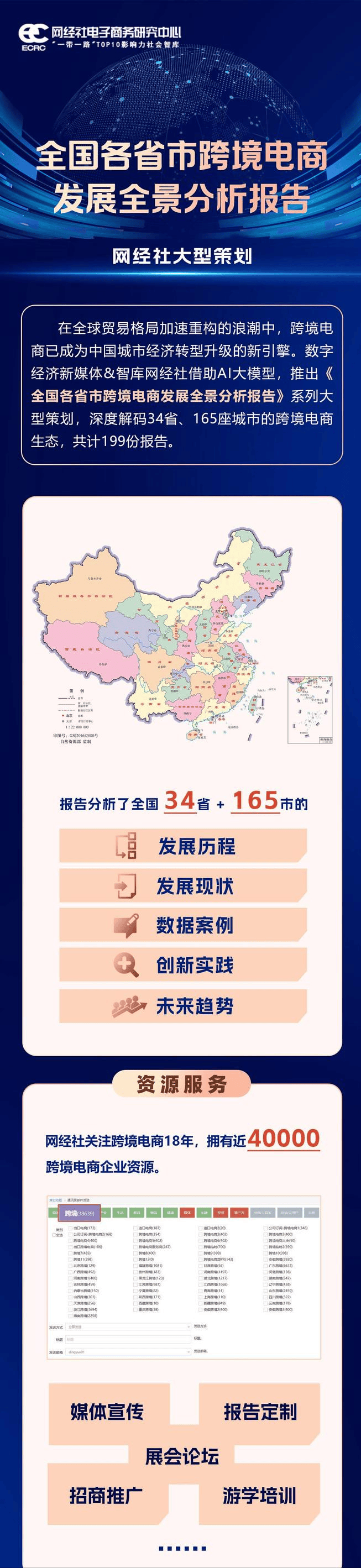
《海南省跨境电商发展全景分析报告(2025)》
Sou Hu Cai Jing· 2025-10-29 06:20
Core Insights - Hainan Province is experiencing rapid growth in cross-border e-commerce, with an estimated import and export volume of approximately 6 billion yuan in 2024, representing a significant year-on-year increase of 75% [5][8][41] - The growth is primarily driven by the advantages of the Free Trade Port policies and the establishment of a comprehensive cross-border e-commerce pilot zone across the island [8][41] - Hainan's cross-border e-commerce is characterized by a heavy reliance on imports, with over 90% of goods imported, and a significant portion sourced from the Pearl River Delta region [9][10] Development Background and Current Status - Hainan's cross-border e-commerce industry is witnessing explosive growth, with the 2024 import and export volume projected to reach around 60 billion yuan, significantly outpacing the national average growth rate [8][9] - The establishment of the comprehensive cross-border e-commerce pilot zone in April 2025 marks a new phase of coordinated development across the island [8][41] - The core driving force behind Hainan's cross-border e-commerce growth is the policy advantages provided by the Free Trade Port, including zero tariffs and streamlined customs processes [12][33] Policy Environment Analysis - Hainan's unique policy environment includes advantages from Free Trade Port policies, comprehensive pilot zone policies, and international openness [11] - The zero-tariff policy has expanded from 1,900 items to 6,600 items, covering 74% of tax categories, reducing import costs by 15% to 30% [12][33] - Regulatory innovations have been introduced to enhance trade facilitation, including reduced customs inspection times and the introduction of electronic payment for tax on cross-border e-commerce [15][16] Industry Ecosystem Analysis - The cross-border e-commerce market in Hainan is primarily composed of small and medium-sized enterprises, lacking leading companies [18] - The market is heavily reliant on external supply chains, with 70% of goods sourced from the Pearl River Delta, resulting in low added value and profitability [18][19] - The regional distribution of cross-border e-commerce is highly concentrated, with Haikou's comprehensive bonded zone contributing 75% of the province's transaction volume [10][19] Key Areas and Application Scenarios - Hainan is developing a cross-border e-commerce import consumption center, supporting the establishment of online and offline experience stores [24] - The focus on expanding exports to Southeast Asia includes building dedicated logistics channels and return warehouses to facilitate cross-border trade [25][26] - The integration of local特色产业 with cross-border e-commerce is being promoted, particularly in tropical agriculture and tourism [27] Challenges and Opportunities - High logistics costs pose a significant challenge, with costs 20% to 30% higher than other provinces [29][32] - The policy advantages of the Free Trade Port and the strategic location facing Southeast Asia present unique opportunities for growth [33] - The lack of professional talent in cross-border e-commerce is a critical issue that needs to be addressed for sustainable development [32] Future Trends and Outlook - The market scale of Hainan's cross-border e-commerce is expected to continue expanding, with a target of achieving an average annual growth rate of 20% by 2030 [36][41] - The focus on Southeast Asian markets will become a strategic priority, supported by the development of logistics channels and return mechanisms [36] - The integration of digital technologies and green development practices will be key trends in the evolution of Hainan's cross-border e-commerce [37]
赛维时代股价涨5.08%,中欧基金旗下1只基金位居十大流通股东,持有267.9万股浮盈赚取326.84万元
Xin Lang Cai Jing· 2025-10-29 05:58
Core Points - The stock price of Saiwei Times has increased by 5.08% on October 29, reaching 25.23 CNY per share, with a trading volume of 150 million CNY and a turnover rate of 3.16%, resulting in a total market capitalization of 10.179 billion CNY [1] - Saiwei Times has experienced a continuous rise in stock price for four consecutive days, with a cumulative increase of 6.47% during this period [1] Company Overview - Saiwei Times Technology Co., Ltd. is located in Longgang District, Shenzhen, Guangdong Province, and was established on May 31, 2012, with its listing date on July 12, 2023 [1] - The company's main business involves technology-driven cross-border e-commerce, with revenue composition as follows: 92.32% from cross-border e-commerce, 6.53% from logistics services, and 1.16% from other sources [1] Shareholder Information - Among the top ten circulating shareholders of Saiwei Times, a fund under China Europe Fund, specifically the China Europe Prosperity Selection Mixed A (020876), has newly entered the list in the third quarter, holding 2.679 million shares, accounting for 1.37% of circulating shares [2] - The estimated floating profit for this fund today is approximately 3.2684 million CNY, with a total floating profit of 3.9113 million CNY during the four-day increase [2] - The fund was established on April 23, 2024, with a latest scale of 1.052 billion CNY, and has achieved a year-to-date return of 53.48%, ranking 949 out of 8155 in its category [2]
赛维时代涨2.04%,成交额9020.13万元,主力资金净流入828.74万元
Xin Lang Cai Jing· 2025-10-29 05:44
Core Insights - The stock price of Saiwei Times increased by 2.04% on October 29, reaching 24.50 CNY per share, with a total market capitalization of 9.885 billion CNY [1] - The company has seen a year-to-date stock price increase of 8.84% and a 5-day increase of 8.65% [1] Financial Performance - For the period from January to September 2025, Saiwei Times reported a revenue of 8.188 billion CNY, representing a year-on-year growth of 20.39%, and a net profit attributable to shareholders of 210 million CNY, up 7.34% year-on-year [2] - The company has distributed a total of 421 million CNY in dividends since its A-share listing [2] Shareholder Information - As of October 20, 2025, the number of shareholders for Saiwei Times was 14,700, a decrease of 2.89% from the previous period, while the average circulating shares per person increased by 2.97% to 13,248 shares [2] - Notable institutional shareholders include China Europe Economic Growth Fund, which is the fifth largest shareholder with 2.679 million shares, and Hong Kong Central Clearing Limited, the eighth largest shareholder with 1.6313 million shares, both of which are new entrants [2] Business Overview - Saiwei Times, established on May 31, 2012, and listed on July 12, 2023, is primarily engaged in technology-driven cross-border e-commerce, with 92.32% of its revenue coming from this segment [1][2] - The company operates within the Shenyuan industry classification of retail trade, specifically in the internet e-commerce and cross-border e-commerce sectors [1]
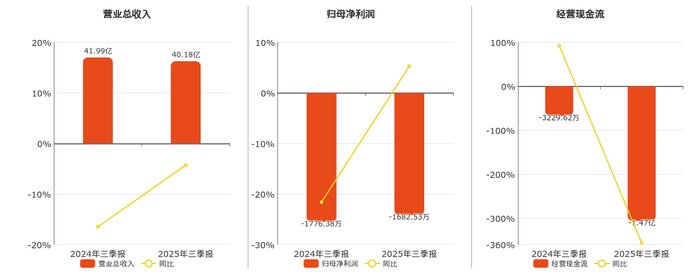
跨境通(002640.SZ):2025年三季报净利润为-1682.53万元
Xin Lang Cai Jing· 2025-10-29 04:09
Core Insights - Cross-border Communication (002640.SZ) reported a total operating revenue of 4.018 billion yuan for Q3 2025, a decrease of 181 million yuan compared to the same period last year, representing a year-on-year decline of 4.30% [1] - The net profit attributable to shareholders was -16.8253 million yuan, ranking 11th among disclosed peers [1] - The net cash inflow from operating activities was -147 million yuan, ranking 12th among disclosed peers, a decrease of 115 million yuan compared to the same period last year [1] Financial Ratios - The latest debt-to-asset ratio is 75.97%, ranking 11th among disclosed peers, an increase of 2.17 percentage points from the previous quarter and an increase of 10.53 percentage points from the same period last year [3] - The latest gross profit margin is 11.80%, ranking 12th among disclosed peers, a decrease of 0.11 percentage points from the previous quarter [3] - The latest return on equity (ROE) is -1.97%, ranking 11th among disclosed peers, a decrease of 0.64 percentage points from the same period last year [3] Earnings and Shareholder Information - The diluted earnings per share is -0.01 yuan, ranking 10th among disclosed peers [4] - The latest total asset turnover ratio is 1.21 times, and the latest inventory turnover ratio is 15.24 times [4] - The number of shareholders is 243,600, with the top ten shareholders holding 298 million shares, accounting for 19.12% of the total share capital [4]

出海老人,“搞丢了”自己的上市公司
3 6 Ke· 2025-10-29 02:04
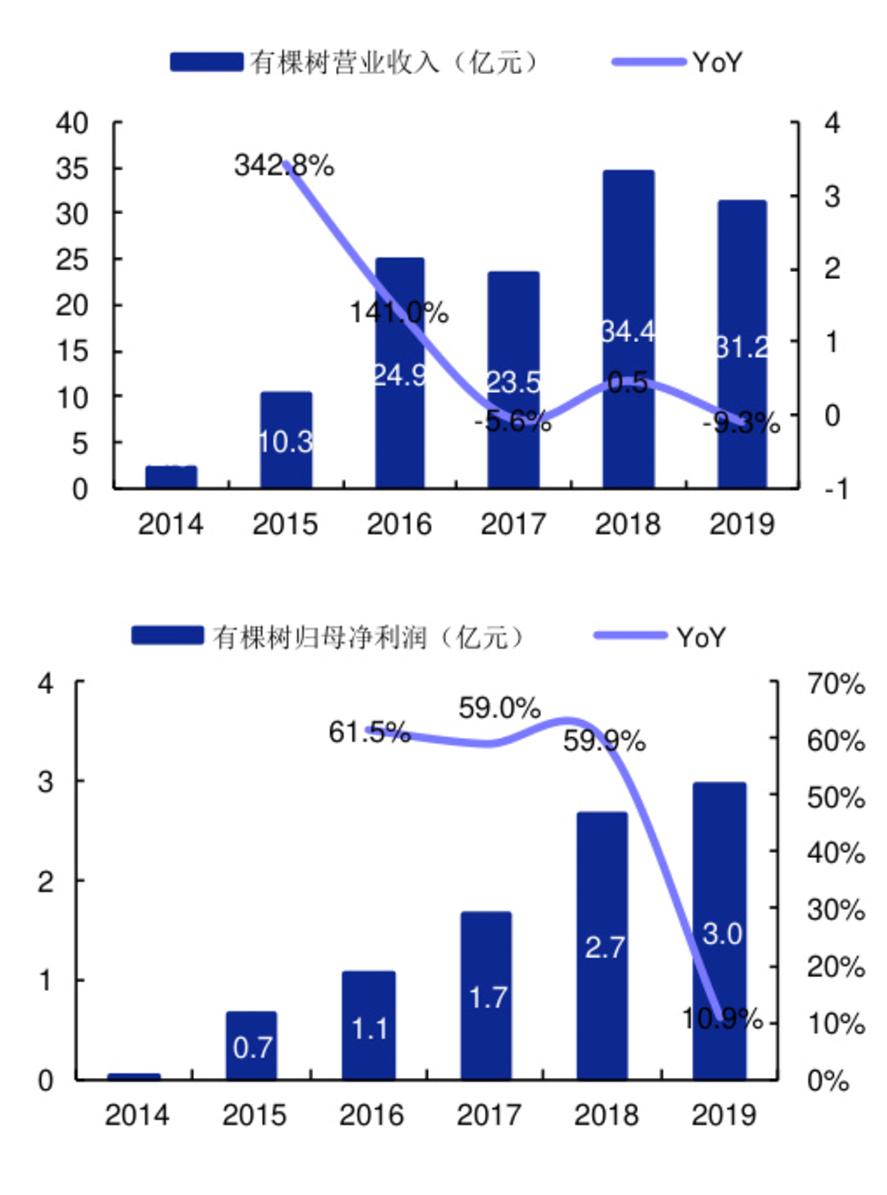
Core Viewpoint - The company "Youkeshu" has undergone significant leadership changes, with the entire core management team being replaced, reflecting a broader struggle within the cross-border e-commerce industry as it transitions from rapid growth to regulatory compliance and market competition [1][2][3] Company Overview - Youkeshu, once a leading player in the cross-border e-commerce sector, has seen its founder and original management team completely exit the company [2] - The company was established during the boom of cross-border e-commerce in China and quickly rose to prominence, being recognized as a benchmark in the industry [2][3] Financial Trajectory - Youkeshu experienced rapid growth, achieving a peak valuation of 30 billion yuan after multiple rounds of financing, with significant revenue growth reported in 2016 [4][11][12] - However, the company faced severe financial difficulties, reporting losses of 27.05 billion yuan in 2021, 3.61 billion yuan in 2022, and 4.91 billion yuan in 2023, leading to bankruptcy restructuring [19][21] Market Challenges - The company’s business model, heavily reliant on third-party platforms like Amazon, proved vulnerable to regulatory changes, particularly during the "account suspension wave" initiated by Amazon in 2021 [17][18] - The shift from a growth-driven to a compliance-driven market has exposed the weaknesses in Youkeshu's operational strategy, emphasizing the need for a strong brand and compliance with regulations [21][22] Leadership Changes - Following a tumultuous restructuring process, a new management team has taken over, with the founder and original team members being ousted [20][21] - The new leadership faces the challenge of reviving the company amidst a significant decline in revenue, with a reported 81.33% drop in revenue in the first half of the year [21] Industry Reflection - The story of Youkeshu serves as a cautionary tale for the cross-border e-commerce industry, highlighting the risks associated with over-reliance on platform traffic and the importance of establishing a sustainable business model [22]
赛维时代(301381):服饰品类持续增长,非服业务拖累有望收窄
Xinda Securities· 2025-10-29 01:32
Investment Rating - The investment rating for the company is not explicitly stated in the provided documents, but the overall sentiment appears positive based on the performance metrics and growth expectations. Core Insights - The company reported a revenue of 8.188 billion yuan for the first three quarters of 2025, representing a year-on-year increase of 20.4%. The net profit attributable to the parent company was 210 million yuan, up 7.3% year-on-year, while the net profit excluding non-recurring items was 221 million yuan, reflecting a significant increase of 35.4% [1][2]. - In Q3 2025, the company achieved a revenue of 2.843 billion yuan, which is an 8.3% increase year-on-year, and the net profit attributable to the parent company surged by 200.9% to 41 million yuan [1][2]. Summary by Sections Revenue and Profitability - The company has shown robust growth in its apparel and accessories segment, maintaining a continuous growth trend despite a large base. The revenue growth rate has slowed down due to factors such as expanding sales scale of various brands and trade friction impacting short-term shipments [2][3]. - The company has recorded a gross margin of 43.6% for the first three quarters of 2025, slightly down by 1.4 percentage points year-on-year. The gross margin for Q3 2025 was 41.8%, down 0.6 percentage points year-on-year [4]. Inventory and Non-Recurring Losses - The company has made a provision for inventory impairment of approximately 90.73 million yuan due to losses from financial products and equity investments, which have significantly impacted profits. However, the company is optimistic about future improvements in profitability through strategic adjustments [3][4]. Operational Efficiency - The company has effectively controlled its expense ratios, with sales, management, R&D, and financial expense ratios showing slight declines. The inventory turnover days have decreased to approximately 97.4 days, down by about 6.5 days year-on-year, indicating improved operational efficiency [4][6]. Future Projections - The company forecasts net profits attributable to the parent company of 340 million yuan, 560 million yuan, and 690 million yuan for 2025, 2026, and 2027, respectively, with corresponding P/E ratios of 28.3X, 17.4X, and 14.1X [4][6].
商流带动物流:全球电商渗透率攀升,海外仓成为跨境电商必选项
Sou Hu Cai Jing· 2025-10-29 00:23
Group 1 - The global e-commerce market is experiencing stable growth in penetration rates following a rapid increase during the pandemic, with significant growth observed in emerging markets such as Asia and Latin America, driving the expansion of overseas warehouse operations [1] - The demand for improved logistics experiences from buyers is rising, with 75% of buyers expecting orders to be delivered within 5 days, highlighting the advantages of the proximity delivery model offered by overseas warehouses [3] - The rise of the semi-managed model is becoming a new engine for the growth of overseas warehouse businesses, providing sellers with new sales channels and achieving dual goals of traffic capture and operational autonomy [3] Group 2 - In response to increasing uncertainty in global tariff policies, sellers are adopting regional risk-hedging inventory strategies, with a shift towards overseas warehouse models to mitigate policy risks and enhance overall logistics efficiency [3] - The expected shift towards semi-managed models by major platforms by 2025, influenced by tariff policies, will further solidify the core position of overseas warehouses in the cross-border e-commerce logistics system [3]