
脑机接口

Search documents
再造一个中国高技术产业 谁是未来十年引领之城?
Mei Ri Jing Ji Xin Wen· 2025-10-24 15:58
Core Insights - The upcoming "15th Five-Year Plan" emphasizes the construction of a modern industrial system and the strengthening of the real economy as a strategic priority, focusing on the cultivation of emerging and future industries [1][3] - The plan aims to develop strategic emerging industry clusters in areas such as new energy, new materials, aerospace, and low-altitude economy, potentially creating several trillion-yuan markets [1][4] - The integration of technological and industrial innovation is crucial for cities to seize future development opportunities [1][2] Emerging Industries - Quantum Technology: Hefei is establishing a complete ecosystem for quantum technology, with nearly one-third of national quantum enterprises located there. The city is also creating a quantum technology future industry pilot zone with significant funding [4][5] - Biomanufacturing: The biomanufacturing industry in China is nearing a total scale of 1 trillion yuan, with cities like Shenzhen leading in synthetic biology and Guangzhou leveraging academic resources for innovation [7][8] - Hydrogen and Nuclear Fusion Energy: Over 20 provinces have outlined long-term plans for hydrogen energy, while Hefei and Chengdu are leading in nuclear fusion research, with significant experimental breakthroughs [10][11] - Brain-Computer Interfaces: Major cities like Beijing, Shanghai, and Shenzhen are actively developing policies to support the brain-computer interface industry, aiming to cultivate globally influential enterprises by 2030 [12][13] - Embodied Intelligence: The market for embodied intelligence is projected to grow significantly, with cities like Beijing and Shenzhen leading the charge in developing a robust industrial cluster [14][15] - Sixth-Generation Mobile Communication: Nanjing is emerging as a key player in 6G technology, with significant advancements in experimental networks and applications, while traditional strongholds like Beijing and Shanghai maintain their advantages [17][18]
市场规模将超55亿元!我国脑机接口产业发展迅速,人才需求攀升
Sou Hu Cai Jing· 2025-10-24 15:08
脑机接口软件设计工程师 郝玉银:(我)现在主要是做脑机产品的上位机软件开发,就是将采到的脑 电信号,用波形的形式展示出来。我们公司是从本科开始到博士都有,学历只是一方面,其实真正还是 看个人能力。 企业负责人程龙龙告诉记者,目前,公司的技术人才有100多人,随着今年增资扩产,人才需求正快速 增长。 (央视财经《天下财经》)眼下正值秋招季。脑机接口作为国家重点发展的未来产业,如今,正加速从 实验室向产业化迈进。其技术链条覆盖生物医学、神经科学、计算机、电子工程等多个学科,因此也带 动了多专业背景的毕业生就业。 在天津一家脑机接口的研发企业,工程师们正在做产品测试。刚刚入职不久的郝玉银告诉记者,由于脑 机接口涉及的产业链很长,企业对不同专业、不同学历的人才需求都不小。 数据显示,预计到2027年,我国脑机接口市场规模将达到55.8亿元,增长率为20%。目前,我国已有高 校、科研院所、企业、医院等数百家单位开展了脑机接口业务,专业人才缺口巨大。 转载请注明央视财经 编辑:令文芳 不仅成熟企业在加大引才力度,众多科创公司也在积极扩充团队。运动人体科学专业的毕业生夏雪莲, 近期就入职到了一家主攻脑机接口医疗康复设备的创 ...
未来十多年中等收入群体将超8亿
21世纪经济报道· 2025-10-24 14:32
Core Viewpoint - The article discusses the key objectives and strategies outlined in the "15th Five-Year Plan" (2021-2025) as approved by the Chinese Communist Party, emphasizing the importance of high-quality development, technological self-reliance, and expanding domestic demand to achieve modernization by 2035 [1][2]. Economic Growth and Development Goals - The main goals for the "15th Five-Year Plan" include achieving significant results in high-quality development, maintaining economic growth within a reasonable range, and significantly improving the resident consumption rate [4]. - The plan aims for a substantial increase in the level of technological self-reliance, with rapid breakthroughs in key core technologies and deep integration of technological and industrial innovation [4]. - It emphasizes the need for comprehensive reforms to enhance the socialist market economy and improve the high-level opening-up system [4]. Domestic Demand and Consumption - The strategy focuses on expanding domestic demand as a key foundation for modernization, with a projected retail sales total of 48.3 trillion yuan in 2024, expected to exceed 50 trillion yuan in 2025 [7]. - The plan includes initiatives to boost consumption, such as implementing special actions to stimulate consumption and enhancing the quality of public services to improve living standards [10][8]. - The government aims to optimize investment structures and increase the proportion of government investment in public welfare [8]. Modern Industrial System - The plan prioritizes building a modern industrial system, with a focus on optimizing traditional industries and fostering emerging sectors such as new energy and advanced manufacturing [12]. - It anticipates a market space of approximately 10 trillion yuan over the next five years, driven by the development of strategic emerging industries [12]. - The plan also includes forward-looking initiatives in future industries like quantum technology and artificial intelligence, which are expected to contribute significantly to economic growth [12][13]. Technological Innovation - The "15th Five-Year Plan" emphasizes the importance of technological modernization, aiming to enhance the national innovation system and boost self-innovation capabilities [13]. - Specific measures include supporting enterprises in leading innovation efforts and increasing R&D investment, particularly in artificial intelligence and other digital technologies [14]. - The government plans to strengthen the ecosystem for artificial intelligence development, focusing on foundational research and governance [14]. High-Level Opening-Up - The plan outlines strategies for expanding high-level opening-up, including promoting trade innovation and enhancing bilateral investment cooperation [17]. - It aims to leverage China's large market to attract foreign investment and create a favorable business environment [18]. - The emphasis is on balancing GDP growth with national income (GNI) considerations, reflecting a shift towards recognizing the importance of income generated from overseas investments [19][20].


再造一个中国高技术产业,谁是未来十年引领之城?
Mei Ri Jing Ji Xin Wen· 2025-10-24 13:30
Core Insights - The upcoming "15th Five-Year Plan" emphasizes the construction of a modern industrial system and the strengthening of the real economy as a strategic priority, focusing on the development of emerging and future industries [1][2] Emerging Industries - The plan aims to cultivate new pillar industries, accelerating the development of strategic emerging industry clusters such as new energy, new materials, aerospace, and low-altitude economy, potentially creating several trillion-yuan markets [2] - Future industries like quantum technology, biomanufacturing, hydrogen energy, nuclear fusion, brain-computer interfaces, and sixth-generation mobile communication are highlighted as new economic growth points [2][4] City-Level Developments - Cities like Beijing, Shanghai, and Shenzhen continue to lead in emerging industries, while newer cities like Hangzhou and Hefei are also making significant strides [3] - Hefei is recognized as a hub for quantum technology, housing nearly one-third of the country's quantum enterprises and establishing a complete ecosystem from research to industrialization [7] Quantum Technology - Hefei's quantum technology sector is experiencing a financing boom, with companies like Benyuan Quantum and Guo'an Quantum preparing for IPOs, indicating strong market interest [7] - The city is implementing a "technology innovation + scenario application" initiative, allocating at least 30 million yuan to develop urban and industrial scenarios [7] Biomanufacturing - The biomanufacturing industry in China is nearing a total scale of 1 trillion yuan, with competitive clusters emerging in cities like Shanghai, Beijing, and Shenzhen [9][10] - Shenzhen is becoming a highland for synthetic biology, with 40% of new synthetic biology enterprises established there in the past three years [10] Hydrogen and Nuclear Fusion - Hydrogen energy and nuclear fusion are identified as key future industries, with over 20 provinces outlining long-term plans for hydrogen energy development [14] - Chengdu and Hefei are leading in nuclear fusion research, with significant advancements in experimental conditions for fusion energy [15] Brain-Computer Interfaces - The brain-computer interface market is projected to reach approximately $2.62 billion by 2024, with cities like Beijing, Shanghai, Shenzhen, and Hangzhou taking the lead in developing this technology [16][20] - Policies are being implemented to foster a competitive ecosystem in brain-computer interfaces, aiming to cultivate globally influential enterprises by 2030 [19] Embodied Intelligence - The embodied intelligence market in China reached 418.6 billion yuan in 2023, with expectations for growth driven by advancements in AI technology [21][22] - Cities are competing to establish themselves as leaders in this sector, with Beijing and Shenzhen targeting the development of a trillion-yuan industry cluster by 2027 [22][23] Sixth-Generation Mobile Communication - Nanjing is emerging as a key player in the 6G sector, having established a comprehensive experimental platform and hosting significant industry events [26][27] - Traditional communication strongholds like Beijing and Shanghai continue to maintain their advantages while developing supportive policies for 6G applications [26][27]
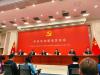
在新时代新征程续写经济快速发展和社会长期稳定两大奇迹新篇章——中共中央举行新闻发布会解读党的二十届四中全会精神
Xin Hua Wang· 2025-10-24 10:20
Core Points - The key outcome of the 20th Central Committee's Fourth Plenary Session is the approval of the "Suggestions on Formulating the 15th Five-Year Plan for National Economic and Social Development" [3][4] - The "15th Five-Year Plan" is crucial for advancing China's modernization and addressing complex external challenges [3][5] Summary by Sections General Overview - The "Suggestions" document consists of 15 parts and 61 articles, divided into three main sections: general overview, specific strategies, and tasks for strengthening centralized leadership [4] - The document is considered a significant programmatic document in the party's history, with clear development goals and practical measures [4] Economic and Social Development Goals - The main goals for the "15th Five-Year Plan" include achieving high-quality development, enhancing technological self-reliance, deepening reforms, improving social civilization, and ensuring national security [7][8] - Emphasis is placed on addressing agricultural modernization as a priority for achieving overall modernization [7] Modern Industrial System - The plan prioritizes building a modern industrial system and strengthening the foundation of the real economy, with a focus on upgrading traditional industries and fostering emerging sectors [8] - It is estimated that the market space will increase by approximately 10 trillion yuan over the next five years [8] Technological Innovation - The plan outlines strategies for enhancing technological self-reliance, including original innovation, integration of technology and industry, and fostering a talent development system [10][11] - It aims to leverage new technologies such as artificial intelligence and quantum technology to drive economic growth [10] Open Economy - The plan emphasizes expanding foreign trade and investment, enhancing cooperation in the Belt and Road Initiative, and creating a favorable environment for foreign investment [12][13] - It aims to make the Chinese market a global innovation application platform [13] Health and Population Development - The plan includes strategies for improving public health, enhancing healthcare services, and promoting a supportive environment for childbirth and aging populations [14] - It aims to ensure equitable access to healthcare and improve the overall health of the population [14] Political Leadership - The plan stresses the importance of centralized leadership and a clean political environment to ensure the successful implementation of modernization efforts [15][16] - It calls for a robust mechanism for decision-making and accountability within the party [15]
中等收入群体倍增!中央这场“十五五”发布会释放八大政策信号
2 1 Shi Ji Jing Ji Bao Dao· 2025-10-24 10:09
Core Viewpoint - The article discusses the key signals and goals outlined in the "15th Five-Year Plan" (2021-2025) of China, emphasizing the importance of high-quality development, technological self-reliance, and the expansion of domestic demand as part of China's modernization strategy. Economic Growth and Quality - Economic growth is expected to remain within a reasonable range, with a noticeable increase in the resident consumption rate [3] - The focus is on achieving significant results in high-quality development, with an emphasis on optimizing economic structure, technological advancement, and efficiency improvement [4] Industry Development - The plan aims to create a modern industrial system, prioritizing the enhancement of traditional industries and the cultivation of emerging industries [5][6] - The traditional industries, which account for approximately 80% of manufacturing value-added, will be optimized, while new strategic industries like renewable energy and aerospace will be developed [5][6] Domestic Demand Expansion - The strategy emphasizes the importance of expanding domestic demand, with a goal to double the middle-income group over the next decade [7][8] - The retail sales of consumer goods are projected to exceed 50 trillion yuan by 2025, indicating a robust consumer market [7] Technological Innovation - The plan highlights the need for significant breakthroughs in key technologies, particularly in artificial intelligence and semiconductor industries [9][10] - A comprehensive approach to enhance the national innovation system and support high-tech enterprises is outlined [9] High-Level Opening Up - The strategy includes expanding high-level opening up, focusing on trade innovation and enhancing the investment environment [11][12] - The emphasis is on balancing GDP and GNI, recognizing the importance of national income in assessing economic health [13] Population and Health Development - The plan advocates for policies to support population quality development, including improved maternity support and healthcare services [14][15] - The goal is to increase the average life expectancy from 79 to around 80 years by 2024 through enhanced health services [15] Macroeconomic Governance - The strategy aims to improve macroeconomic governance efficiency, addressing issues like low-price competition and overdue payments to businesses [16][17] - A focus on coordinated economic policies and effective communication with market participants is emphasized [17] Green Transition - The plan aims for a comprehensive green transition, with expectations for the green low-carbon industry to potentially double in size over the next five years [18][19][20] - Specific measures include the establishment of carbon emission control systems and the promotion of clean energy sources [19][20]
“未来10年将再造一个中国高技术产业”
FOFWEEKLY· 2025-10-24 10:01
Group 1 - The core viewpoint of the article emphasizes the importance of fostering new and emerging industries as part of China's economic strategy, with a target for the "three new" economy's contribution to GDP exceeding 18% by 2024 [1] - The article outlines the strategic focus on developing new pillar industries, including new energy, new materials, aerospace, and low-altitude economy, which are expected to create several trillion-yuan markets [1] - It highlights the forward-looking layout of future industries such as quantum technology, biomanufacturing, hydrogen energy, nuclear fusion, brain-computer interfaces, embodied intelligence, and sixth-generation mobile communication, which are anticipated to become new economic growth points over the next decade [1]

“十五五”规划的高技术产业如何刷新生活?AI模拟游戏抢先看
2 1 Shi Ji Jing Ji Bao Dao· 2025-10-24 08:14
Core Insights - The 20th Central Committee's Fourth Plenary Session approved the "Suggestions on Formulating the 15th Five-Year Plan for National Economic and Social Development," emphasizing the development of emerging pillar industries [1] - The plan aims to accelerate the growth of strategic emerging industry clusters such as new energy, new materials, aerospace, and low-altitude economy, potentially creating several trillion-yuan markets [1] - The suggestions also highlight the need for forward-looking layouts in future industries, promoting quantum technology, biomanufacturing, hydrogen energy, nuclear fusion energy, brain-computer interfaces, embodied intelligence, and sixth-generation mobile communication as new economic growth points [1] - These industries are expected to gain momentum, potentially recreating a high-tech industry landscape in China over the next decade [1] Industry Development - The focus on strategic emerging industries indicates a significant shift towards high-tech sectors, which are anticipated to drive economic growth [1] - The emphasis on innovation and technology suggests a transformative impact on future lifestyles, with AI simulations being used to envision these changes [1]
“脑机接口,中国有望领跑”,有上游芯片企业今年预计量产2万片
2 1 Shi Ji Jing Ji Bao Dao· 2025-10-24 08:09
10月23日,中国共产党第二十届中央委员会第四次全体会议公报发布,其中明确提出培育壮大新兴产业 和未来产业。 此前9月,在第25届中国国际工业博览会上,工业和信息化部党组书记、部长李乐成在展望"十五五"重 点任务时也提到,要建立未来产业投入增长机制,开辟脑机接口等新赛道。 实际上,近年来,随着人工智能和神经科学不断突破,脑机接口技术正加速从实验室走向临床和商业化 应用。 据Precedence Research,2024年全球脑机接口市场规模约为26.2亿美元,预计2025年将达到29.4亿美元, 到2034年有望进一步增长至124亿美元。 据了解,脑机接口行业已经形成了完整的产业链,涵盖上游(材料、芯片、电极等)、中游(信号采集 感知处理等)、下游(医疗健康、生活消费、工业生产等)等多个环节。 脑机接口应用场景范围巨大,从医疗健康、消费娱乐、工业安全到载人航天,都有潜在应用空间。比 如,根据赛迪顾问报告,在医疗健康场景中,中国已完成了意念合成汉语、意念控制光标移动、意念控 制手套外骨骼等临床试验。截至2024年底,中国共开展168项脑机接口相关的临床试验,其中2024年新 增50项 ,较上年有较大增长。 华 ...
郑栅洁:优化提升传统产业 未来5年可增约10万亿元市场空间
Zhong Guo Xin Wen Wang· 2025-10-24 07:22
Core Insights - The Chinese government aims to optimize and enhance traditional industries, estimating an additional market space of approximately 10 trillion RMB over the next five years [1][2] Group 1: Traditional Industry Enhancement - The strategy emphasizes the importance of building a modern industrial system, with a focus on solidifying and expanding the foundation of the real economy [1] - Key tasks include upgrading traditional industries such as chemicals, machinery, and shipbuilding to improve their global competitiveness [1] - The initiative is expected to accelerate qualitative improvements and reasonable quantitative growth in traditional industries, releasing significant development momentum and benefits for people's livelihoods [1] Group 2: Emerging and Future Industries - The plan includes fostering new pillar industries and accelerating the development of strategic emerging industry clusters such as new energy, new materials, aerospace, and low-altitude economy [2] - It aims to lay the groundwork for future industries, promoting advancements in quantum technology, biomanufacturing, hydrogen energy, nuclear fusion, brain-computer interfaces, embodied intelligence, and sixth-generation mobile communications [2] - These emerging sectors are projected to generate a market scale equivalent to recreating China's high-tech industry over the next decade, injecting continuous new momentum into the economy [2] Group 3: Service Industry and Infrastructure Development - The strategy promotes high-quality and efficient development of the service industry, aiming to enhance the integration of modern services with advanced manufacturing and modern agriculture [2] - It includes actions to expand and improve service capabilities, which will help reshape the economic ecosystem and better meet the needs of the population [2] - The plan also focuses on constructing a modern infrastructure system, emphasizing coordinated planning and the construction of new-type infrastructure to enhance connectivity and safety [2]