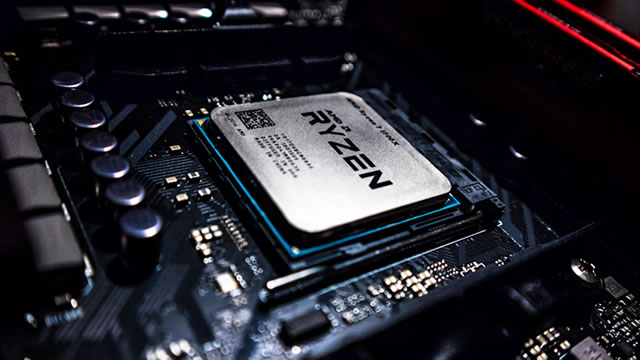
MI450芯片

Search documents
重磅!Meta豪掷超600亿美元牵手AMD,斥巨资采购AI芯片并换取10%股份
Sou Hu Cai Jing· 2026-02-25 17:28
Core Insights - Meta has entered into a multi-year strategic partnership with AMD, with a deal valued between $60 billion and over $100 billion, marking one of the largest orders in the AI computing sector to date [3] - The agreement includes the procurement of up to 6GW of AMD Instinct GPUs to support Meta's global AI infrastructure, with power requirements equivalent to the annual electricity consumption of 5 million U.S. households [3] - AMD will also customize the MI450 chip specifically for AI model inference for Meta [3] Group 1 - The innovative aspect of the deal is the performance-based equity warrant granted by AMD to Meta, allowing Meta to purchase up to 160 million shares of AMD stock at a nominal price of $0.01 per share, potentially acquiring up to 10% of AMD [3] - The first tranche of stock options will be exercisable in the second half of 2026 when chip shipments commence, with the entire plan extending until February 2031 [3] Group 2 - Meta's CEO Mark Zuckerberg stated that this collaboration is a crucial step towards diversifying the company's computing supply chain, aimed at establishing a robust foundation for "personal superintelligence" [4] - The partnership is seen as a significant move to reduce Meta's reliance on current AI chip leader NVIDIA [4] - Meta's spending on AI infrastructure is expected to nearly double by 2026, reaching $135 billion [4] Group 3 - AMD's CEO Lisa Su highlighted that the collaboration will encompass a multi-generational product range, including GPUs, CPUs, and rack-level systems, with a focus on creating a highly efficient infrastructure tailored for Meta's workloads [4] - The initial hardware deployment will be based on the Helios rack-level architecture co-developed by Meta and AMD, integrating software and hardware to build a vertically integrated AI infrastructure [4]


每卖50万块,提升每股收益3%!大摩点评谷歌外销TPU:对英伟达影响有限
Zhi Tong Cai Jing· 2025-11-26 13:47
Core Insights - Google is emerging as a strong competitor to Nvidia in the GPU market with its TPU offerings, as highlighted in a Morgan Stanley report discussing the implications for the semiconductor industry [1] Google TPU Sales Strategy - Google has developed a software called "TPU Command Center" to lower the barrier for customers to use TPUs, allowing interaction through the PyTorch framework [2] - Google has entered an agreement with Anthropic for approximately 1 million TPUs, indicating a significant demand for its TPU products [2] - Morgan Stanley estimates that Google could sell between 500,000 to 1 million TPUs annually, which could increase its cloud revenue by about 10% and boost earnings per share by $0.03 by 2027 [2] Performance Impact of Google TPU Sales - Google has about 12 years of innovation in the TPU field, and its move to sell TPUs externally marks a significant business expansion [3] - Each sale of approximately 500,000 TPUs could contribute an additional $13 billion to Google's cloud revenue by 2027, exceeding market expectations by about 11% [3] - If Google resolves production capacity issues and improves TPU familiarity among developers, annual sales of 500,000 to 1 million TPUs appear feasible [3] Key Unknowns in Google's TPU Strategy - Google is willing to offer flexible TPU acquisition methods, including cloud leasing and chip sales, which will affect revenue recognition and profit margins [4] - The pricing model for TPUs remains uncertain, especially if Google sells rack-level products to clients like META [6] - The extent to which META will rely on TPUs for training its Llama model is still unclear, which could impact the significance of TPUs in large language model training [7] Impact on Related Companies - META is focusing on enhancing computational efficiency and may deploy TPUs to offset capital expenditure pressures, depending on its procurement scale [8] - Broadcom stands to benefit directly from increased TPU usage by Google, with speculation that several major clients, including META and OpenAI, may adopt TPUs [9] - Nvidia is not expected to face immediate adverse effects from META's adoption of TPUs, although it may delay the rollout of its self-developed ASIC chips [10] - AMD's market position remains largely unchanged, but the rise of TPUs as a commercial alternative may challenge its competitive edge [11]



Raymond:投资主题从周期转向AI,这些美股芯片股仍有大幅上涨空间
智通财经网· 2025-11-24 03:52
Core Viewpoint - The investment bank Raymond believes that semiconductor stocks, including Nvidia (NVDA.US), AMD (AMD), and Intel (INTC.US), have significant upside potential, with a focus on the dominance of artificial intelligence in the market [1][2] Semiconductor Industry Ratings - Raymond has reinstated its ratings for the semiconductor industry, giving "Outperform" ratings to AMD and Broadcom (AVGO.US), "Market Perform" ratings to ARM (ARM.US), Astera Labs (ALAB.US), and Intel, and "Strong Buy" ratings to Marvell Technology (MRVL.US) and Nvidia [1] - The analysts emphasize that the AI theme has become dominant, overshadowing trading strategies based on semiconductor market cycles [1] Nvidia's Position - Nvidia is highlighted as a leader in the AI sector and is considered a "core holding" for investors due to its strong competitive advantages and mature software stack developed over a decade [1] - The company benefits from robust community support and a full-stack system approach [1] Marvell Technology Insights - Marvell Technology faces skepticism as a custom chip supplier, but analysts believe it has the necessary advantages through its dedicated integrated circuit business and optical division [1] - Currently, data center products account for approximately 75% of sales, with expectations for continued growth in the custom integrated circuit and data center optical digital signal processor markets [1] - Management aims to capture about 20% of the market share in the data center custom integrated circuit sector by 2028, valued at over $8 billion [1] Broadcom's Market Potential - Broadcom is expected to expand its market share in the AI sector as large enterprises seek customized alternatives to general-purpose processors [1] AMD's Competitive Edge - AMD is seen as a strong competitor to Nvidia in the graphics processing market, with expectations for growth in accelerators and AI rack systems [2] - The company is projected to produce 1.9 million MI350 chips and 9.15 million MI450 chips by fiscal year 2027, indicating potential market share expansion in servers and personal computers [2] ARM's Strategic Focus - ARM is concentrating on expanding into the data center sector and exploring AI-related opportunities, including in-house chip development [2] - Data center sales have approached 20% of total sales over the past two years, increasing the company's engagement with hyperscale operators [2] Astera Labs' Market Position - Astera Labs is recognized as a leading supplier in the retimer market, focusing on high-speed connectivity services with its PCIe5 and PCIe6 products [2] - The significant increase in computational intensity has driven demand for the company's core high-speed interconnect technology [2] Intel's Stock Recovery - Intel's stock has seen a notable recovery due to various events, including investments from the U.S. government, Nvidia, and SoftBank, although its fundamentals still require improvement [2] - The stock is trading significantly above historical averages, with overall assessments indicating its fair value is close to the current price [2]
超威半导体:与OpenAI签订6GW协定,明年推出首款数据中心机架型产品
First Shanghai Securities· 2025-11-07 08:06
Investment Rating - The report assigns a "Buy" rating with a target price of $300.00, indicating a potential upside of 17.04% from the current stock price of $256.33 [2][6][7]. Core Insights - The company has signed a 6GW agreement with OpenAI and plans to launch its first rack-mounted data center product next year, which is expected to enhance its market position in AI GPU sales [3][4]. - For Q3 2025, the company reported revenues of $9.25 billion, a year-over-year increase of 35.6%, slightly above Bloomberg consensus estimates [3]. - The company anticipates strong growth in AI GPU sales, with projected revenues of $7 billion for the year, driven by increased orders from major clients [4]. - The client product market share continues to grow, with record sales in the Ryzen series, and the gaming segment has exceeded expectations [5][6]. Financial Summary - For the fiscal year 2025, total revenue is projected to reach $34.146 billion, reflecting a year-over-year growth of 32.4% [8]. - Non-GAAP net profit is expected to be $7.362 billion in 2025, with a significant increase in earnings per share [8]. - The company forecasts a compound annual growth rate (CAGR) of 52.4% for revenue and 75.2% for Non-GAAP net profit from 2025 to 2027 [6][8]. Market Position and Growth Potential - The data center segment is expected to see a CAGR of 80.1% from 2025 to 2027, with significant contributions from AI GPU sales [10][11]. - The company is projected to capture an increasing share of the data center market, with AMD's share expected to rise from 18% to 24% over the next few years [11]. - The collaboration with OpenAI is anticipated to generate over $100 billion in revenue, enhancing the company's software adaptability for data centers [4][6].
新力量NewForce总第4898期
First Shanghai Securities· 2025-11-07 07:19
Group 1: Coinbase Global (COIN) - Q3 2025 total revenue reached $1.869 billion, up 55% year-over-year and 25% quarter-over-quarter[5] - Adjusted EPS was $1.44, exceeding expectations by 40%[5] - Subscription and service revenue increased to $747 million, contributing to a more balanced revenue structure[6] - Target price adjusted to $370.00, representing a 15.88% upside from the previous closing price[8] Group 2: Advanced Micro Devices (AMD) - Q3 2025 revenue was $9.25 billion, a 35.6% increase year-over-year, slightly above Bloomberg consensus of $8.74 billion[14] - Non-GAAP net income reached $1.97 billion, a 30.7% increase year-over-year[14] - Target price set at $300.00, indicating a 17.04% potential upside from the current price[18] Group 3: China National Offshore Oil Corporation (CNOOC) - Revenue for the first three quarters of 2025 was CNY 339.47 billion, a 0.81% increase year-over-year[21] - Net profit for the same period was CNY 28.53 billion, up 6.11% year-over-year[21] - Target price set at HKD 25.98, suggesting a 25.0% upside from the current price[26]

硅谷「芯片四杰」,一个月涨了5.5个拼多多
36氪· 2025-10-31 13:36
Core Insights - The article discusses the competitive landscape among AI chip giants, highlighting the blurred lines between competition and collaboration in the industry [4][44] - NVIDIA has expanded its reach beyond data centers into sectors like 6G, quantum computing, and biomedicine, indicating a strategic shift [4][6] - The market capitalization of major AI chip companies surged significantly in October, with NVIDIA's market cap reaching $5 trillion in just 113 days [7][14] Company Developments - NVIDIA's recent investment of $100 billion in OpenAI aims to establish a partnership that ensures a minimum of 10GW data center capacity using NVIDIA's new Vera Rubin platform [17][20] - AMD's strategic move to acquire a 10% stake in OpenAI and secure a significant computing order has positioned it as a strong competitor, with its stock price rising by approximately 60% [8][34] - Broadcom announced a collaboration with OpenAI to develop GPUs, further intensifying the competition in the AI chip market [12][14] Market Dynamics - The combined market capitalization of NVIDIA, AMD, Broadcom, and Qualcomm increased by $1 trillion in October, reflecting the intense competition in the AI chip sector [14][40] - NVIDIA's capital strategy has created a symbiotic ecosystem where downstream model developers and upstream computing infrastructure players are interconnected [27][43] - OpenAI's long-term plan includes building 250GW of computing power by 2033, with 10% already planned in a short timeframe [41][42] Competitive Strategies - AMD's approach involves offering "expectations" rather than direct financial investments, allowing it to secure significant orders while maintaining a competitive stance against NVIDIA [28][30] - OpenAI's strategy includes diversifying its computing sources, balancing costs, and mitigating risks associated with reliance on a single supplier [39][42] - The evolving relationships among these companies suggest a complex future where competition and collaboration will continue to shape the AI chip landscape [44]


AI“万亿闭环”内幕:黄仁勋的“激进”、孙正义的野心、微软的“隐忍”
华尔街见闻· 2025-10-22 10:48
Core Insights - OpenAI's CEO Sam Altman is strategically binding major tech giants to its AI initiatives, creating a robust ecosystem that ties the industry's fate to a startup that has yet to turn a profit [1][2] - Recent high-profile deals led by Altman have resulted in significant market reactions, with a combined market value increase of $630 billion for involved companies following announcements [2][3] Group 1: Strategic Partnerships - Altman has orchestrated a series of high-stakes deals, including a $500 billion "Stargate" project with SoftBank and a $1 trillion collaboration with Nvidia [2][9][22] - Oracle signed a $300 billion contract with OpenAI, leading to a nearly 40% surge in its stock price [16] - AMD and Broadcom have also entered into significant agreements with OpenAI, further solidifying the competitive landscape [28][34] Group 2: Market Dynamics - The competitive landscape is characterized by a "fear of missing out" (FOMO) among tech giants, driving them to invest heavily in AI capabilities [3][9] - Microsoft's cautious approach to its partnership with OpenAI reflects concerns over financial risks associated with Altman's ambitious plans [10][13][15] - Nvidia's willingness to provide financial support and chip rentals to OpenAI indicates a shift from product sales to service and financial backing [26] Group 3: Financial Implications - OpenAI's projected power consumption goal of 250 gigawatts by 2033 raises questions about the sustainability of its financial model, given its current revenue of $13 billion [4][14] - The interdependencies created by these partnerships could lead to significant financial risks for companies involved, particularly if OpenAI struggles to meet its obligations [27]



AI“万亿闭环”内幕:Altman、黄仁勋、纳德拉、孙正义等当代科技巨头的“攻守道”
Hua Er Jie Jian Wen· 2025-10-21 06:48
Core Insights - OpenAI's CEO Sam Altman is strategically binding major tech giants to its AI initiatives, creating a robust ecosystem that ties the industry's fate to the startup's future [1][2] - Recent deals led by Altman have resulted in significant financial commitments from companies like SoftBank, Nvidia, Oracle, AMD, and Broadcom, collectively amounting to hundreds of billions of dollars [1][2][10] - The market's reaction to these collaborations has been overwhelmingly positive, with a combined market value increase of $630 billion for the involved companies shortly after the announcements [1] Group 1: Strategic Partnerships - Altman has secured a $500 billion "Stargate" project with SoftBank, which aims to finance and build data centers for OpenAI [3][4] - Nvidia proposed a similar project worth $100 billion, emphasizing its role as a key supplier of chips for OpenAI [8] - Oracle signed a $300 billion contract with OpenAI, leading to a nearly 40% surge in its stock price [6][7] Group 2: Market Dynamics - The competitive landscape has intensified, with companies experiencing "fear of missing out" (FOMO) driving them to invest heavily in AI capabilities [2][10] - Microsoft's cautious approach has led it to reconsider its exclusive partnership with OpenAI, allowing other companies to step in [6][7] - AMD and Broadcom have also joined the fray, with AMD's stock soaring 24% following its announcement of a partnership with OpenAI [10][12] Group 3: Financial Implications - OpenAI's revenue is significantly lower than its financial commitments, with annual income at $13 billion against potential multi-hundred billion dollar expenses [2] - Nvidia's agreement includes provisions for financing OpenAI's chip purchases, indicating a deep financial entanglement between the two [9] - The overall financial leverage being employed raises questions about the sustainability of such massive investments in a single company's vision [2]
ASIC服务器调研_ OpenAI自研服务器量产时间线与价值量, 与AMD合作解读及代工方式, Minerva项目进展 - 聚焦Meta_英伟达_Arm_广达_TTM
2025-10-20 14:51
Summary of Key Points from the Conference Call Industry and Company Involved - The discussion primarily revolves around OpenAI and its collaborations with major companies such as AMD, Arm, and Broadcom, focusing on the development of ASIC servers and data centers in the semiconductor and manufacturing industry [1][2][24]. Core Insights and Arguments - OpenAI has multiple ecosystem partnerships, including a significant project with Broadcom for self-developed ASIC chips, expected to complete NPI by June 30, 2026, and enter mass production (MP) in the second half of 2026, with an annual planned output of approximately 2,000 cabinets [2][4]. - The project with AMD involves the construction of a 6GW data center, with the company aiming to participate in the design and manufacturing of the exchange components, similar to its collaboration with AMD on the Meta project [2]. - OpenAI's collaboration with NVIDIA involves a substantial investment of $100 billion over three years, with at least $30 billion allocated annually [2]. - The total project cycle for OpenAI's ASIC project is four years, with a total budget of $10 billion, starting from 2026 and expected to consume the budget by 2029 [8]. Financial and Production Details - Each cabinet of servers is valued at approximately $3 million, with the company's share being around $1.5 million [6]. - The expected gross margin for the project is not anticipated to exceed that of Google's projects due to competitive pressures [7]. - The procurement of switches is separate from the $10 billion project budget, with initial procurement of 1.6T switches expected to begin in December 2026 [9][10]. Project Timelines and Adjustments - The production of 2,000 cabinets is expected to commence in April 2027 and conclude by March 2028, with trial production starting in late 2025 [5]. - Meta's Minerva project faced quality control issues, potentially affecting the delivery schedule, with a total of 18,000 units planned for 2025 and 2026 [14][15]. - The MTIA2 project has been delayed to Q1 2027 due to Meta's multi-ecosystem strategy, which includes self-developed solutions and partnerships with AMD and NVIDIA [16]. Additional Important Insights - The company is expanding its manufacturing capabilities in the U.S. to mitigate supply chain risks and enhance customer communication, aiming to upgrade its Richardson facility to become a leading global super factory [12][13]. - The integration of the Spectrum X Ethernet switches into Meta's network infrastructure is expected to generate approximately $5-6 billion in annual revenue over the next three years [18]. - The primary PCB supplier for OpenAI's ASIC servers is TTM [19]. This summary encapsulates the critical aspects of the conference call, highlighting the strategic partnerships, financial implications, project timelines, and operational adjustments relevant to OpenAI and its collaborators in the semiconductor industry.

DAL Earnings, AMD's Massive Week & "Climbing the Wall of Worry"
Youtube· 2025-10-09 12:47
Market Overview - The equity markets are showing resilience despite various headwinds such as tariff discussions and a prolonged government shutdown, with the NASDAQ 100 and S&P 500 reaching record highs [3][4][6] - The stabilization in the Treasury market, with 10-year yields around 4.1%, is contributing to a smoother environment for equity markets, even though valuations are considered stretched [5][6][11] - There is a notable reach for risk among investors, driven by the ongoing AI boom [6][7] Federal Reserve Insights - Recent minutes from the Federal Reserve indicate a balancing act between concerns over the labor market and inflation management, with expectations for potential rate cuts this year [8][9] - Market predictions suggest two more rate cuts by December, although there are dissenting opinions within the Fed [9][10] Delta Airlines Performance - Delta Airlines reported better-than-expected quarterly results, with premium seating up 9% year-over-year and a 4% growth in domestic travel, surprising analysts [15][16][17] - The company raised its full-year guidance, reflecting positive market conditions, although plans to increase capacity by 4% may cap short-term gains [18][19] AMD Developments - AMD has experienced a significant 43% gain this week, driven by investments from OpenAI and competitive advancements in AI chip technology [20][21] - The new MI450 chip is expected to compete effectively with Nvidia's offerings, indicating a positive outlook for AMD in the AI space [22][23] - However, competitive pressures may eventually impact margins and lead to a reevaluation of capital expenditures by major tech companies [23][24]