
航空航天与国防

Search documents
图南股份(300855.SZ):并未参与国家可重复使用火箭领域的配套研制工作
Ge Long Hui· 2026-01-14 08:12
Group 1 - The company, Tunan Co., Ltd. (300855.SZ), has stated that it is not currently involved in the development of supporting technologies for reusable rockets in the national sector [1] - The company's products are primarily used in the fields of aviation engines, gas turbines, and petrochemicals, with a significant focus on aviation applications [1]

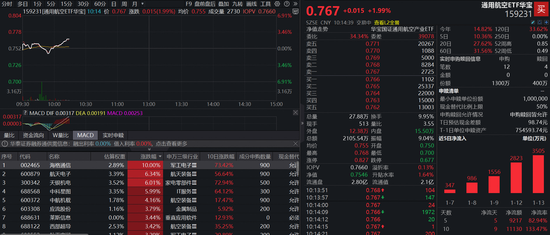
再传捷报!长八甲火箭成功发射,通用航空ETF(159231)V型反转劲涨2%
Xin Lang Cai Jing· 2026-01-14 02:39
Group 1 - Aerospace and satellite navigation sectors experienced a strong rebound, with HaiGe Communication achieving a consecutive limit-up, and both Aerospace Electronics and TianYin Mechanical & Electrical rising over 6% [1][4] - The General Aviation ETF HuaBao (159231) initially turned negative but then reversed to rise by 2%, with a net subscription of 9 million units during the session, following a net inflow of 92.17 million yuan over the previous five days [1][4] - The successful launch of the Long March 8 rocket on January 13, which deployed 18 low-orbit satellites for satellite internet, marks a significant achievement for the rocket institute as it begins 2026 with a successful mission [1][6] Group 2 - CITIC Securities' latest report indicates that by 2025, China will complete the maiden flights of two reusable rockets, Zhuque-3 and Long March 12A, with successful launches, although further technical iterations are needed for stage recovery [3][6] - Looking ahead to 2026, approximately 10 reusable rockets are expected to be ready for their first or repeated flights, with some models anticipated to achieve successful recovery [3][6] - The gradual construction and utilization of domestic commercial rocket launch sites, along with improved supporting infrastructure, is expected to shorten rocket test flight cycles, potentially increasing the total number of launches from 92 in 2025 to over 100 in 2026 [3][6]


波音去年交付600架商用飞机,净订单规模1173架超空客
Xin Lang Cai Jing· 2026-01-14 01:02
Core Insights - Boeing announced the delivery of 600 commercial aircraft for the full year of 2025, including 447 units of the 737 model [1] - The net order volume for Boeing in 2025 reached 1,173 aircraft, marking the first time since 2018 that it surpassed Airbus [1] - Airbus reported a 4% increase in commercial aircraft deliveries last year, totaling 793 units, with a net order volume of 889 aircraft after cancellations [1]

ETF复盘资讯|沪指止步17连阳!商业航天巨震,通用航空ETF跌7.27%!港股逆袭,港股通医疗ETF(159137)一度涨停
Sou Hu Cai Jing· 2026-01-13 13:54
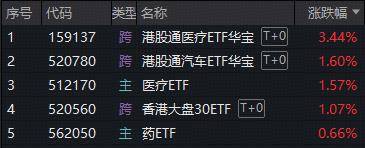
Group 1: Market Overview - The A-share market experienced a collective pullback on January 13, with the Shanghai Composite Index down 0.64%, ending a 17-day winning streak, while the Shenzhen Component Index fell 1.37% and the ChiNext Index dropped 1.96% [1] - The trading volume in the Shanghai, Shenzhen, and Beijing markets exceeded 3.6 trillion yuan, marking a slight increase from the previous day and setting a new historical high [1] Group 2: AI Medical Sector - The AI medical sector continues to thrive, with significant gains; the Hong Kong medical ETF (159137) surged by 3.44% and reached a near-limit-up level, while the largest A-share medical ETF (512170) hit a three-month high with a peak increase of 3.67% [4][6] - AI medical concept stocks saw substantial increases, with Ark Health rising over 76% after announcing a collaboration with Tencent Health on an "AI + chronic disease management" plan [4][8] Group 3: Banking Sector - The banking sector showed resilience, with several banks like Ningbo Bank and Hangzhou Bank seeing gains of over 4% and 3% respectively, while the top banking ETF (512800) rose by 0.37% [11][13] - The first bank executive buyback announcement of 2026 was made by Chongqing Rural Commercial Bank, indicating confidence in the company's fundamentals [13] - Historical data suggests that the banking sector tends to perform well before the Spring Festival, with an average absolute return of 4.4% [16] Group 4: Commercial Aerospace Sector - The commercial aerospace sector faced volatility, with the general aviation ETF (159231) experiencing a significant drop of 7.27%, despite a net inflow of 46 million yuan on the same day [18][19] - The sector's performance has been mixed, with 44 out of 50 component stocks declining, while some stocks like Tianyin Electromechanical and Haige Communication saw gains [18] Group 5: Future Outlook - Analysts suggest that the current market liquidity is ample, and thematic trading is expected to continue, with a focus on the "Musk Chain" and non-bank financial investment opportunities [3] - The market is anticipated to exhibit structural opportunities, with a theme-driven approach and rapid capital rotation among different industry lines [3]

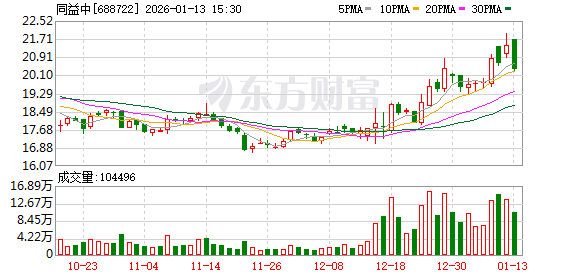
同益中:超美斯产品芳纶纸供给中航公司,主要用于航空领域
Zheng Quan Ri Bao· 2026-01-13 12:12
Group 1 - The core viewpoint of the article is that Tongyi Zhong has confirmed its supply of aramid paper products to AVIC, primarily for use in the aviation sector [2] Group 2 - Tongyi Zhong responded to investor inquiries on an interactive platform regarding its product supply [2]

花旗:将波音(BA.N)目标价从265美元上调至270美元。
Jin Rong Jie· 2026-01-13 11:37
花旗:将波音(BA.N)目标价从265美元上调至270美元。 本文源自:金融界AI电报 ...
沙特40亿军购,美国军工、中东战略、美元霸权三重危机
Sou Hu Cai Jing· 2026-01-13 06:58
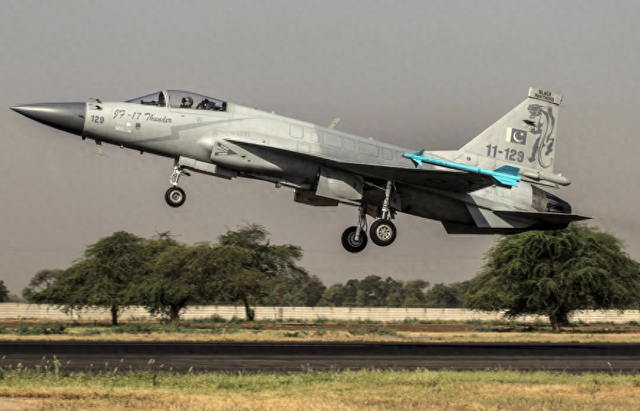
Core Viewpoint - The recent $4 billion military purchase by Saudi Arabia from Pakistan for the JF-17 Thunder fighter jets signifies a shift in military procurement dynamics, challenging the traditional dominance of the U.S. in the arms market and indicating a potential decline in U.S. dollar hegemony [2][25][44]. Military Procurement Dynamics - Saudi Arabia has historically relied on U.S. F-15 jets, often facing limitations in performance and upgrade options due to U.S. restrictions [4][10]. - The JF-17 Block 3, equipped with advanced radar and missile systems, offers comparable performance to U.S. jets at a better price point, making it an attractive alternative for Saudi Arabia [6][9][12]. Financial Transactions and Currency Implications - The transaction involves a novel financing method where $2 billion in loans is converted into advance payments for the aircraft, circumventing the U.S. dollar and SWIFT system [18][20]. - The payment structure includes using local currencies and Saudi oil as collateral, further undermining dollar dominance in international trade [20][22]. Geopolitical Implications - This military deal is not just a procurement but a strategic move for Saudi Arabia to regain defense autonomy and reduce reliance on U.S. security guarantees [31][33]. - The collaboration between Saudi Arabia and Pakistan reflects a broader trend where countries are seeking alternatives to U.S. military supplies, potentially reshaping global military alliances and trade practices [36][41]. Future Outlook - The success of the JF-17 in this deal may lead to increased sales and recognition for Pakistan in the international arms market, enhancing its geopolitical standing [39][46]. - The evolving landscape suggests that more countries may follow Saudi Arabia's lead, further eroding U.S. influence in global military procurement [36][46][49].
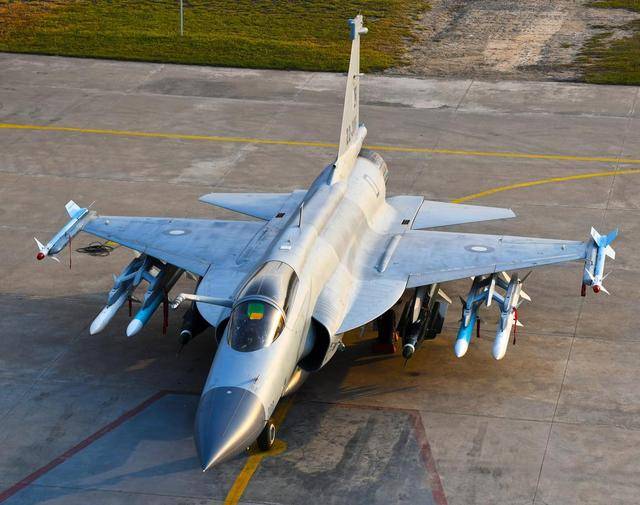
爆料:印尼求购超40架“枭龙”战机
Xin Lang Cai Jing· 2026-01-13 06:22
Core Insights - Indonesia's Defense Minister, Prabowo Subianto, held talks with Pakistan's Air Chief Marshal, Zaheer Ahmad Baber, to discuss a potential agreement for the sale of over 40 JF-17 fighter jets and drones [1][3][4] Group 1: Meeting Details - The discussions focused on the sale of JF-17 "Thunder" fighter jets, also known as "Xiaolong" in China, and reconnaissance and strike drones [3] - The talks are reported to be in the advanced stages, with Indonesia expressing interest in Pakistan's "Shahpar" drones as well [3] - Both Indonesia's Ministry of Defense and Pakistan's military confirmed the meeting, emphasizing defense cooperation and strategic dialogue [3] Group 2: Context and Implications - The meeting coincides with Pakistan's defense industry pursuing various arms sales negotiations, including a recent discussion with Bangladesh regarding the sale of JF-17 jets [4] - Pakistan aims to expand its arms export ambitions following a successful air conflict with India last May, strengthening ties with Bangladesh [4] - The JF-17 fighter jet is considered Pakistan's flagship model for foreign military sales, with previous agreements already established with Azerbaijan [4]
坚定看好军工整体机会
2026-01-13 05:39
Summary of Key Points from the Conference Call Industry Overview - The conference call focuses on the **military industry** and its investment opportunities, emphasizing a bottom-up stock selection approach despite high market attention and significant event catalysts [1][2][3]. Core Insights and Arguments - **High Demand for Military Trade**: The high-end military trade is expected to break through, with advanced fighter jet exports to sovereign nations likely to change the business models and profitability of aviation manufacturers like AVIC Shenyang and AVIC Xifei [1][12]. - **Domestic Aircraft Development**: The domestically produced C919 aircraft has surpassed 4 million passenger trips and has delivered several units, although delivery progress is affected by domestic and international factors. The domestic engine, Changjiang 1000, is anticipated to be a significant catalyst for growth [1][13][14]. - **Commercial Space Initiatives**: China is actively pursuing the C919 and C929 series improvements, aiming to establish a competitive position in the global civil aviation market, which will benefit the entire supply chain, including key subsystem manufacturers and component suppliers [1][16]. - **Satellite Spectrum Resources**: China has applied for over 200,000 satellite frequency resources, indicating a strong national commitment to commercial space initiatives. The development of reusable rocket technology is expected to be a key catalyst, with successful implementation anticipated by 2026 [1][18]. Market Trends and Investment Opportunities - **High Market Attention**: The military sector is currently experiencing high market attention and clear trading trends, driven by commercial space advancements and specific military events, leading to a strong beta opportunity in the sector [2][3]. - **Investment Focus Areas**: Three key areas of focus within the military sector include: 1. Military trade migration, particularly the high-end military trade breakthrough. 2. Domestic aircraft and engine projects, including C919 and Changjiang 1000. 3. Commercial space, which has shown significant growth since November due to various events [5][20]. Global Defense Spending Trends - **Increased Global Defense Budgets**: The global political landscape is significantly impacting the military industry, with countries like the U.S. and Japan increasing their defense budgets and pursuing advanced military capabilities, indicating a new cycle of defense capital expenditure [4][7]. - **Dynamic Military Strength Expansion**: Countries are expanding their military capabilities to maximize survival probabilities, leading to a rapid increase in global demand for military equipment [8]. China's Military Equipment Export Potential - **Shift to High-End Exports**: China is transitioning from being the fourth-largest military equipment exporter, primarily of low-end equipment, to focusing on high-end exports such as advanced fighter jets and missile systems, which is crucial for enhancing international market recognition [9][11]. - **Impact of Real-World Conflicts**: The success of Chinese military equipment in real-world conflicts, such as the recent India-Pakistan air conflict, has bolstered international confidence in Chinese military exports [11]. Future Outlook - **Long-Term Investment Value**: The military industry is expected to have long-term investment value due to changing underlying logic driven by national security needs, with companies like AVIC Shenyang and AVIC Xifei being key players to watch [20].
“天马-1000”无人运输机首飞 载重1吨 航程1800km
Zhong Guo Min Hang Wang· 2026-01-13 01:59
Core Viewpoint - The "Tianma-1000" unmanned transport aircraft, developed by Xi'an Aisheng Technology Group, successfully completed its first flight test, showcasing its capabilities in complex terrain and emergency logistics [1][3]. Group 1: Aircraft Features - The "Tianma-1000" is the first domestic unmanned transport platform capable of adapting to high-altitude complex terrains, featuring ultra-short takeoff and landing capabilities, and dual-mode rapid switching for cargo transport and airdrop [1]. - It has a maximum altitude of 8000 meters and requires a takeoff distance of less than 200 meters, allowing it to operate safely on unpaved surfaces [1]. - The aircraft has a maximum range of 1800 kilometers and can carry a payload of 1 ton, equivalent to the weight of a standard sedan, meeting large-scale logistics needs [1]. Group 2: Technological Innovations - The "Tianma-1000" incorporates several core autonomous technologies, including intelligent route planning and obstacle avoidance systems, enabling it to navigate complex terrains and adverse weather conditions [2]. - It features a modular cargo bay design that allows for quick switching between functions such as cargo transport, airdrop, and communication relay, with an automated loading system that can handle ton-level materials in just 5 minutes [2]. Group 3: Market Potential and Applications - The introduction of the "Tianma-1000" addresses logistical challenges in remote areas, enabling rapid delivery of essential supplies to locations inaccessible by road or rail [3]. - It is expected to play a crucial role in disaster response and public health emergencies, providing a "green channel" for life-saving supplies [3]. - The drone transport industry in China has reached a scale of 505.95 billion yuan in 2023, with projections to grow to 1.5 trillion yuan by 2025, indicating significant market potential for the "Tianma-1000" in various applications [4].
