Mobile Phones

Search documents
豆包AI手机登录微信“被动下线” 端侧AI与头部应用仍存在生态兼容问题
Xin Hua Cai Jing· 2025-12-03 06:47
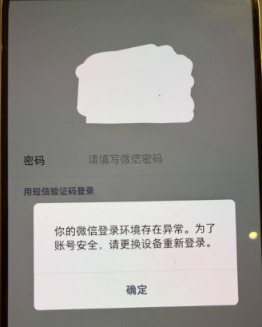
同为国内头部互联网公司的腾讯与字节跳动,近年来在多个领域存在商业竞争,因此豆包AI手机登录 微信"被动下线"引发关注,在社交平台上有用户用"二选一"等字眼描述此事。 对此,新华财经从相关人士处获悉,微信未有特别动作,和商业竞争也没有关系,不排除是由于微信的 安全风控措施导致。 2日晚间开始,陆续有用户反馈称,使用"豆包AI手机"登录微信后被动下线,并提示"微信登录环境存在 异常"。 据悉,豆包AI手机即为近日少量发售的搭载豆包手机助手技术预览版的工程样机努比亚M153,其在操 作系统层面搭载了字节跳动旗下豆包团队的手机助手。 据悉,微信在官方协议中明确规定有用户不得利用微信进行任何形式的自动化操作,不得使用任何未经 腾讯授权的插件、外挂、系统或第三方工具。 有头部互联网产品人士向新华财经表示,目前市面上的AI助手提供的AI Agent服务就属于自动化操作的 范畴。 据了解,豆包AI手机在今日限制部分功能对微信的调用后,手机已经可以正常使用微信。 新华财经尝试使用其他品牌手机内置的AI助手通过语音指令调用微信给好友发送消息,亦被提示目前 不支持该功能。 据悉,今年手机厂商纷纷在产品中内置AI Agent服务,即 ...


中兴通讯再跌超4% 豆包AI手机样机售罄 公司称非大众消费级产品
Zhi Tong Cai Jing· 2025-12-03 06:09
Core Viewpoint - ZTE Corporation (00763) experienced a decline of over 4%, trading at HKD 32.4 with a transaction volume of HKD 995 million, indicating market concerns regarding its product offerings and execution challenges in AI technology integration [1] Group 1: Product Development - The nubia M153 smartphone, priced at CNY 3499, has sold out on ZTE's official store, indicating initial consumer interest [1] - The nubia M153 is an engineering prototype led by Doubao for AI assistant product definition and experience, with ZTE focusing on hardware engineering and technology development [1] - The product is targeted at industry professionals for experiencing Doubao's AI technology, rather than being a consumer-grade product [1] Group 2: Market Analysis - Morgan Stanley's latest report highlights that despite the rich functionality of the Doubao demonstration version, significant challenges exist in its execution [1] - The report emphasizes that deep system-level integration requires modifications to the operating system, which could conflict with the core interests of mobile manufacturers (OEMs) [1] - Major mobile manufacturers and super applications are more inclined to develop their own AI assistants, posing a competitive threat to ZTE's strategy [1]

X @Bloomberg
Bloomberg· 2025-12-03 02:02
India's government sought to address concerns that its mandate to pre-install a cybersecurity app on mobile phones could invade privacy or enable surveillance, saying individuals can remove the software from devices https://t.co/eD0cq0ObzL ...
网传前小米高管王腾加入魅族?知情人士否认
Xin Lang Cai Jing· 2025-12-03 02:00
Core Viewpoint - Recent rumors about Wang Teng, former General Manager of Xiaomi's China Marketing Department and General Manager of the Redmi brand, joining Meizu have been denied by sources close to Meizu [1][2]. Group 1: Wang Teng's Background and Recent Developments - In September, Xiaomi announced Wang Teng's dismissal due to serious violations, including leaking company confidential information and conflicts of interest [1][2]. - There were speculations that Wang Teng would join Meizu as a Vice President to oversee the development of the Meizu flagship model, Meizu X90 [1][2]. - A clarification from the involved parties confirmed that the rumors of Wang Teng joining Meizu as Vice President are false [1][2]. Group 2: Wang Teng's Future Plans - In November, Wang Teng announced on Weibo that he would be leaving the mobile industry due to non-compete restrictions and personal interests [1][2]. - He indicated plans to explore new opportunities in the technology and health sectors, with specific projects still in preparation [1][2].

“豆包AI助手”手机售罄
3 6 Ke· 2025-12-03 00:51
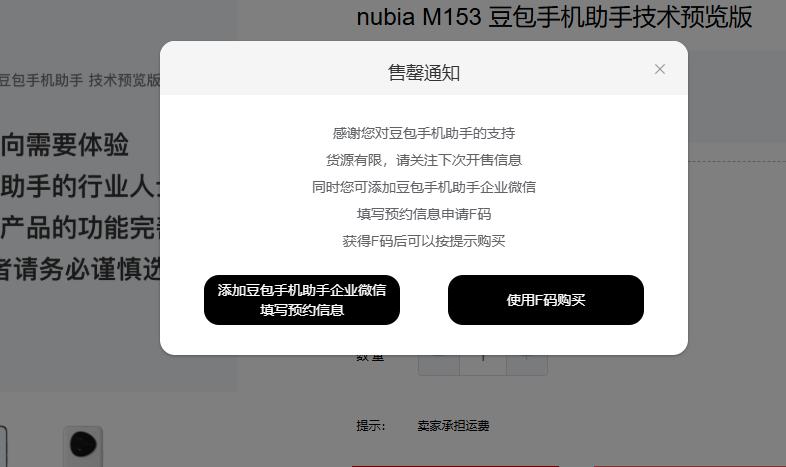
Core Insights - The nubia M153 smartphone, featuring the "Doubao AI Assistant," has gained significant attention, with prices ranging from 3999 to 4599 yuan on second-hand platforms, and the official preview version sold out at 3499 yuan [1][3][4] Group 1: Product Overview - The nubia M153 is described as an engineering sample primarily aimed at industry professionals for experiencing the Doubao AI Assistant, rather than a consumer product [4] - The official website indicates that the F-code for purchasing the phone is available for those interested in testing the AI assistant, with a caution for ordinary consumers regarding the product's functionality [3] Group 2: Industry Collaboration and Competition - Doubao is in discussions with multiple smartphone manufacturers for potential collaborations but has no plans for self-developed smartphones [5] - Major smartphone manufacturers like Huawei, Xiaomi, and OPPO have already been exploring AI assistants, indicating a competitive landscape [5] Group 3: Challenges and Industry Standards - The integration of AI assistants into smartphones faces significant challenges, including the need for ecosystem cooperation and authorization from major internet application providers [5][6] - Morgan Stanley's report highlights that deep system-level integration may require modifications to operating systems, which could conflict with the interests of smartphone manufacturers [7]
传音控股递表港交所 中信证券担任独家保荐人
Zheng Quan Shi Bao Wang· 2025-12-03 00:37
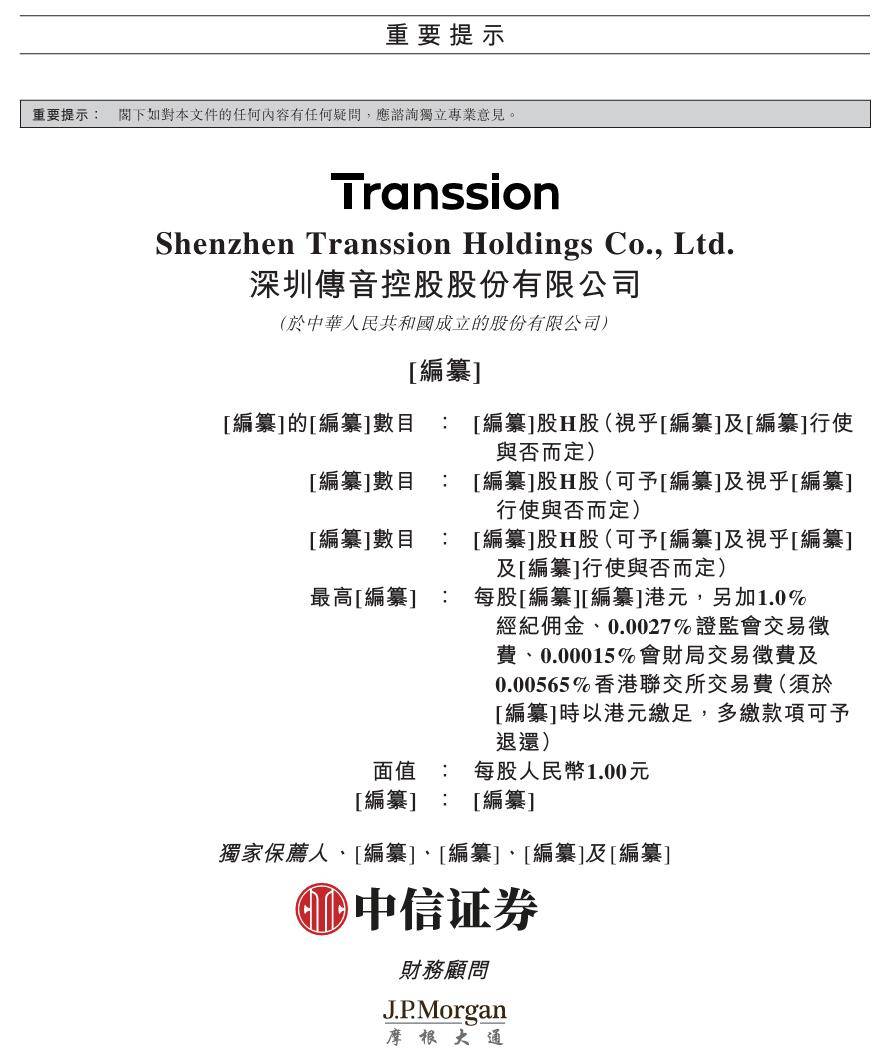
Core Viewpoint - Transsion Holdings has submitted an application for a mainboard listing on the Hong Kong Stock Exchange, with CITIC Securities acting as the sole sponsor [1] Group 1: Company Overview - Transsion Holdings is primarily engaged in the design, research and development, production, sales, and brand operation of smart terminal products centered around mobile phones [1] - The company has expanded its business into mobile internet services, IoT products, and other offerings, creating a complete ecosystem [1] - Transsion's smartphone brands include TECNO, targeting mid-to-high-end consumers, Infinix, aimed at younger consumers, and itel, which emphasizes cost-effectiveness and reliability for the mass market [1] Group 2: Market Position and Growth - According to a Frost & Sullivan report, Transsion's mobile products rank first in global emerging markets by sales volume, with a market share of 24.1% in 2024 [1] - In Africa, emerging Asia-Pacific markets, and the Middle East, Transsion also holds the top sales volume market share [1] Group 3: Market Trends - The mobile internet penetration rate in emerging markets is projected to reach 46% in 2024, increasing to 53% by 2029 [1] - The revenue of the emerging market mobile phone market is expected to grow from $134.4 billion in 2020 to $171.1 billion in 2024, and is projected to reach $236.7 billion by 2029 [1] - The smartphone segment is anticipated to grow from $168.3 billion in 2024 to $234.9 billion in 2029, with a compound annual growth rate (CAGR) of 6.9% [1] - The emerging market smartphone market by sales volume is expected to increase from 624.6 million units in 2020 to 648.5 million units in 2024, and is projected to reach 725.3 million units by 2029, with Africa being the fastest-growing region [1]


【e公司观察】“豆包助手”手机未发先火!移动终端新一轮卡位战打响
Zheng Quan Shi Bao Wang· 2025-12-02 16:07
Core Viewpoint - The launch of the "Doubao Phone Assistant" by ByteDance marks a new phase in the competition for control over the mobile terminal ecosystem in the AI era, as it collaborates with ZTE to create an AI-powered smartphone assistant [1][3]. Group 1: Product Launch and Market Reaction - On December 1, ByteDance's Doubao team released the technical preview of the "Doubao Phone Assistant," showcasing its capabilities on the ZTE Nubia M153 prototype, including cross-application task execution [1]. - Following the announcement, stocks of ZTE, Tianyin Holdings, Furong Technology, and Daoming Optics hit the daily limit, indicating strong market interest [1]. - The first batch of "Doubao Assistant" phones sold out quickly, with prices on second-hand platforms reaching a premium of up to 3,500 yuan [1]. Group 2: Industry Context and Competitors - The development of AI assistants in smartphones is not new, with major brands like Huawei, Apple, OPPO, Xiaomi, and Vivo already having established AI voice assistants [2]. - Huawei's HarmonyOS 6 has launched over 80 AI agents across various sectors, while Honor has integrated over 4,000 ecological MCPs and supports 3,000 automated scenarios [2]. Group 3: Future Trends and Strategic Implications - The industry anticipates that AI smartphones will evolve into personal assistants, with AI voice assistants serving as the primary interface for human-computer interaction [3]. - The collaboration between ByteDance and ZTE is seen as a strategic move to gain a competitive edge in traffic distribution, highlighting the ongoing battle for influence in the mobile terminal ecosystem [3]. - The current lack of a unified standard for collaboration among participants in the AI agent era suggests that various companies will seek to carve out their share of the market [3].
e公司观察“豆包助手”手机未发先火!移动终端新一轮卡位战打响
Zheng Quan Shi Bao Wang· 2025-12-02 15:47
Core Viewpoint - The launch of the "Doubao Phone Assistant" by ByteDance marks a significant step in the competition for control over the mobile terminal ecosystem in the AI era, with partnerships between internet companies and smartphone manufacturers becoming increasingly important [1][3]. Group 1: Product Launch and Market Reaction - On December 1, ByteDance's Doubao team released the technical preview of the "Doubao Phone Assistant," showcasing its capabilities on the ZTE Nubia M153 prototype, including the ability to execute tasks across applications automatically [1]. - Following the announcement, stocks of ZTE, Tianyin Holdings, Furong Technology, and Daoming Optics hit the daily limit, indicating strong market interest [1]. - The first "Doubao Assistant" phone sold out quickly, with prices on second-hand platforms reaching a premium of up to 3,500 yuan [1]. Group 2: Competitive Landscape - Major smartphone manufacturers like Huawei, Apple, OPPO, Xiaomi, and Vivo have been developing AI capabilities for years, with each having their own AI voice assistants [2]. - Huawei's HarmonyOS 6 has launched over 80 intelligent agents covering various fields, while Honor has integrated over 4,000 ecological MCPs and intelligent agents [2]. - The industry anticipates that AI phones will evolve into personal assistants, with AI voice assistants serving as the primary interface for human-computer interaction, potentially transforming the mobile ecosystem [3]. Group 3: Future Trends and Collaborations - The collaboration between ByteDance and ZTE is seen as a strategic move to seize control over traffic distribution in the evolving AI landscape, indicating a new wave of competition for influence in the mobile terminal market [3]. - The likelihood of replicating the Doubao and ZTE partnership with mainstream smartphone brands is low, but opportunities may exist with smaller brands or other consumer electronics like glasses, headphones, and smartwatches [3]. - The industry has yet to establish a unified standard for collaboration in the intelligent agent era, with various participants vying for a share of the emerging market [3].
“豆包AI助手”手机售罄
财联社· 2025-12-02 14:34
Core Viewpoint - The nubia M153 phone, featuring the "Doubao AI Assistant," has gained significant attention, with its technical preview version selling out at a price of 3499 yuan, indicating strong market interest in AI-integrated mobile devices [4][6]. Group 1: Product Overview - The nubia M153 is marketed primarily to industry professionals for experiencing the Doubao AI Assistant, with a caution that it is not a fully mature product for general consumers [6]. - The phone is an engineering sample developed in collaboration with Doubao, which leads the product definition and experience, while nubia focuses on hardware engineering and technology development [8]. Group 2: Market Dynamics - On second-hand platforms, the nubia M153 is being resold for prices ranging from 3999 to 4599 yuan, with F codes being sold for around 100 yuan [8]. - Doubao is in discussions with multiple smartphone manufacturers for potential collaborations, but there are currently no confirmed partnerships [9]. Group 3: Competitive Landscape - Major smartphone manufacturers like Huawei, Xiaomi, and OPPO have already developed their own AI assistants, indicating a competitive landscape in the AI mobile assistant space [9]. - The integration of AI into mobile operating systems is being explored by various manufacturers, with a focus on creating platform-level AI capabilities [9]. Group 4: Challenges and Considerations - The successful implementation of mobile AI assistants requires overcoming ecological challenges, including obtaining permissions from major internet application providers like Alibaba and Tencent [11]. - The integration of AI and mobile technology necessitates modifications to operating systems, which could conflict with the core interests of smartphone manufacturers [12].

“非洲手机之王”传音控股向香港联交所递交H股发行上市申请
Sou Hu Cai Jing· 2025-12-02 14:24
Core Viewpoint - Transsion Holdings has officially submitted an application for H-share listing on the Hong Kong Stock Exchange, with CITIC Securities as the sole sponsor and JPMorgan as the financial advisor [1]. Group 1: Company Overview - Transsion Holdings is a provider of smart terminal products and internet services, primarily engaged in the design, research and development, production, sales, and brand operation of mobile phones and other smart terminal products [4]. - Since its establishment in 2013, the company has focused on emerging markets, particularly Africa, earning the title "King of Africa" in the mobile phone industry, with a projected sales volume of 201.4 million mobile phones in 2024 [4]. Group 2: Product and Market Position - The company owns three mobile phone brands: Tecno, Infinix, and itel. Tecno targets the mid-to-high-end market with a focus on high-end design; Infinix appeals to young consumers with fashionable designs; and itel emphasizes cost-effectiveness and reliability for the mass market [7]. - Transsion also offers a range of products including true wireless (TWS) earbuds, power banks, smart TVs, kitchen appliances, and two-wheeled electric vehicles [7]. Group 3: Software and User Engagement - The company has developed the Transsion OS, which is fully compatible with Android and supports a wide range of third-party apps. As of June 30, 2025, the average monthly active user count exceeds 270 million, with pre-installed software such as Palm Store and AHA Games [7]. Group 4: Listing Conditions - The company's listing is subject to multiple conditions, including obtaining approvals from the China Securities Regulatory Commission, the Hong Kong Securities and Futures Commission, and the Hong Kong Stock Exchange, as well as considering market factors, indicating uncertainty in the listing process [9].