
住宿

Search documents
新华时评:消费活力何以在“体验”中生发
Xin Hua She· 2026-01-22 08:09
新华社成都1月21日电 车窗外,是零下20摄氏度的林海雪原,银装素裹;车窗内,是暖意融融的茶香与 欢歌,乘务员带着学剪窗花……近日,满载400多名旅客、串联起南北多地的"熊猫专列·什邡号",结束 了为期13天的"冰雪之旅"。这趟融观景、社交、文化感知为一体的沉浸式旅行,顺应人们从"观光 式"到"体验式"的需求变化,催生消费新活力。 当前,以"体验"为核心的消费新业态正快速兴起。在城市,脱口秀、手作店、密室逃脱、沉浸式剧场等 业态持续升温,"猫咖""鸟咖"等主打放松的萌宠咖啡馆备受青睐,定制旅游、私厨上门等个性化服务成 为越来越多家庭的新选择;在乡野田间,采茶、割稻谷、挖野菜等农事体验吸引游客纷至沓来,特色民 宿节假日一房难求。越来越多消费者不再满足于单纯购买商品,而是追求消费过程中的情感共鸣、个性 表达与记忆留存。 也要看到,消费并非无源之水、无本之木,体验消费也并非建立在虚无缥缈的感觉之上,其基础和载体 仍然是商品与服务。所不同的是,这些商品与服务除了实用价值,还必须包含文化底蕴、审美情趣、精 神满足等体验价值,这实际上对消费供给的内容和品质提出了更高要求。 "要加快培育服务消费新增长点,支持新业态新模式新 ...
关于企业所得税弥补亏损,这些热点知识请收藏!
蓝色柳林财税室· 2026-01-22 02:15
Group 1 - From January 1, 2018, companies qualifying as high-tech enterprises or technology-based small and medium-sized enterprises can carry forward their unabsorbed losses from the previous five years to offset future profits, with the carryforward period extended from five years to ten years [2] - Integrated circuit production companies that meet national encouragement criteria can also carry forward unabsorbed losses from the previous five tax years for a maximum of ten years [3] - For industries significantly affected by the pandemic, such as transportation, catering, accommodation, and tourism, the carryforward period for losses incurred in 2020 is extended from five years to eight years [4][5] Group 2 - Companies in the affected industries must ensure that their main business income accounts for more than 50% of total income (excluding non-taxable income and investment income) to qualify for the extended loss carryforward policy [5] - Affected companies must submit a declaration through the electronic tax bureau during the 2020 corporate income tax settlement to apply for the extended loss carryforward policy [7] - The film industry, specifically companies involved in film production, distribution, and screening, can also carry forward losses from 2020 for up to eight years [9][11]


日本观光局:去年12月赴日中国游客同比下降45.3%
Ren Min Ri Bao· 2026-01-22 00:31
Core Viewpoint - The report from the Japan National Tourism Organization indicates a significant decline in the number of visitors from mainland China to Japan, attributed to rising tensions in Sino-Japanese relations following controversial remarks by Japanese Prime Minister Suga Yoshihide [1] Group 1: Visitor Statistics - In December of last year, the number of visitors from mainland China to Japan was 330,400, representing a substantial decrease of 45.3% compared to the same period the previous year [1] - The number of visitors from mainland China dropped from 562,600 in November to 715,700 in October of the same year, indicating a clear downward trend [1] Group 2: Economic Impact - Japanese media and experts have noted that the remarks made by Prime Minister Suga have led to ongoing tensions in Sino-Japanese relations, negatively affecting various sectors in Japan, including retail, accommodation, and dining [1] - Japan's largest travel agency, JTB Corporation, forecasts that due to the uncertain outlook for visitors from mainland China, the number of tourists entering Japan in 2026 may decrease by 3% [1]
日本企业陷入破产“寒潮”(环球热点)
Ren Min Ri Bao· 2026-01-21 20:22
据日本《读卖新闻》报道,东京商工调查公司近日发布的统计数据显示,2025年日本企业破产数量达到 10261家,同比增长2.9%,自2022年起连续4年增加。这也是日本企业破产数量连续第二年超过1万家, 达到自2013年以来最高水平。 日本企业为何陷入破产"寒潮"?本报对话外交学院国际关系研究所教授周永生、中国社会科学院日本研 究所研究员李清如,进行评析。 企业面临内外压力 【观察】 据日媒报道,东京商工调查公司统计的是负债1000万日元以上的破产案例。2025年,日本破产企业的负 债总额为1.5921万亿日元,其中负债额低于1亿日元的7892家小规模破产企业占总数的约八成,为过去 30年最高。 从破产原因看,劳动力短缺导致的企业破产案例比上一年增长36%至397起,创历史新高;物价高企导 致的破产案例达767起,连续3年增加。按行业划分,"服务业及相关行业"破产企业数量最多,达3478 家,同比增长4.4%,创下历史新高;建筑业、制造业排第二、三。 【点评】 李清如:日本企业生存困境加剧是内外部因素叠加的结果,其中抗风险能力薄弱的中小企业成为受冲击 最严重的群体。一方面,外部环境不确定性持续攀升。美国关税政策 ...
日本观光局:2025年12月中国内地访日游客数量同比大降
Xin Lang Cai Jing· 2026-01-21 15:24
Group 1 - The report from the Japan National Tourism Organization indicates that the number of visitors from mainland China to Japan in December last year was 330,400, representing a significant decline of 45.3% compared to the same period the previous year [1] - The decline in visitors began after Japanese Prime Minister Fumio Kishida made controversial remarks regarding Taiwan in November last year, with visitor numbers dropping from 562,600 in November to 715,700 in October [1] - Japanese media and experts have noted that the strained Sino-Japanese relations, influenced by Kishida's remarks, have negatively impacted various sectors in Japan, including retail, accommodation, and dining [1] Group 2 - The largest travel agency in Japan, JTB Corporation, has projected that due to the uncertain outlook for visitors from mainland China, the number of tourists entering Japan in 2026 may decrease by 3% [1]
拓展内需新空间 释放消费新动能
Qi Lu Wan Bao· 2026-01-21 12:41
Core Viewpoint - Qingdao's Laoshan District is implementing a comprehensive strategy to boost consumption and expand domestic demand, focusing on creating a robust consumption system that integrates policy guidance, scenario-driven initiatives, and innovation empowerment [1] Group 1: Consumption Enhancement Strategies - The district has established a dedicated task force to coordinate efforts across various sectors, including culture, tourism, construction, and education, to break down barriers and enhance policy collaboration [1] - Initiatives include the promotion of high-quality cultural and tourism events, such as the Qingdao International Beer Festival and various sports competitions, to stimulate consumption and enhance regional economic development [2][3] - The district aims to create a unique consumption ecosystem by integrating dining, accommodation, and cultural activities, while also enhancing the quality of life through improved services in childcare and elderly care [2] Group 2: Seasonal and Thematic Consumption Activities - The "乐购崂山·悦享生活" theme has led to over 100 promotional events in collaboration with major supermarkets, establishing a benchmark for consumption upgrades in Qingdao [4] - Seasonal activities are designed to attract consumers year-round, with events like the "2025 Warm Winter Laoshans Food Festival" and "Laoshan Craft Beer Summer" drawing significant crowds and media attention [4] - The district is focusing on creating a vibrant shopping environment by developing unique commercial streets and enhancing the overall consumer experience [5][6] Group 3: Rural and Agricultural Consumption Development - Laoshan District is cultivating rural consumption scenarios by establishing demonstration points and hosting events like the Laoshan Tea Festival to promote local agricultural products [3] - The integration of agriculture with culture and tourism is aimed at increasing the visibility and impact of local products, thereby enhancing the overall consumer experience [3] Group 4: Internationalization and Digital Empowerment - The district is working towards international standards in consumer environments, including multilingual signage and international payment options, to attract a global audience [6] - Digital initiatives are being implemented to enhance the visibility of local brands and improve the overall shopping experience, aligning with international best practices [6][7]
人文经济激活消费新动能丨成都:流量变“留量” 文旅融合激发新活力
Xin Hua Wang· 2026-01-21 09:35
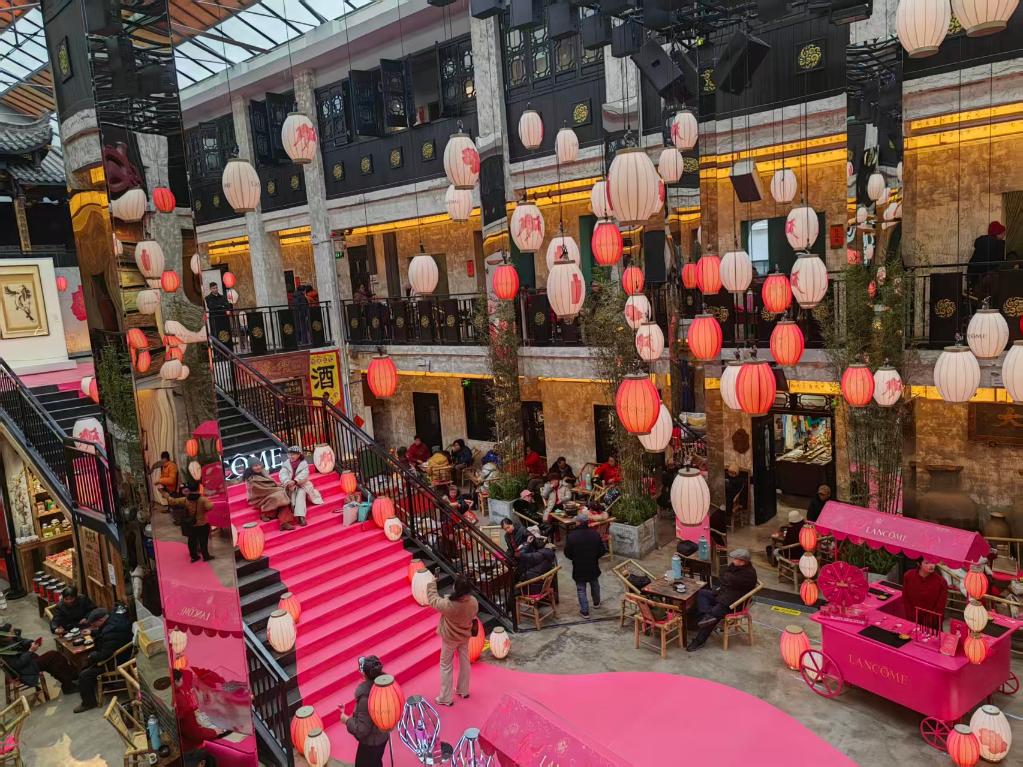
Core Insights - Chengdu is transforming its tourism and cultural landscape by integrating traditional culture with modern experiences, creating vibrant new consumption spaces that attract both locals and tourists [1][4][5] Group 1: Cultural and Tourism Integration - The Daqi Teahouse in Chengdu has been transformed from a traditional lacquer factory into a cultural space that combines tea culture, intangible heritage displays, and artistic exchanges [4] - The teahouse features regular performances of tea art and Sichuan opera, along with workshops for traditional crafts, catering to a diverse audience [5] - Chengdu is witnessing a surge in cultural tourism practices centered around "scenes," with various innovative projects enhancing the visitor experience [5] Group 2: Economic Impact - The "Digital Cultural and Creative Golden Week" in Chengdu generated 1.832 billion yuan in ticket sales, merchandise, and surrounding consumption [9] - The city hosted the 2025 League of Legends World Championship, attracting over 11,000 spectators, with 85% from outside Sichuan, contributing over 270 million yuan to local consumption [9] - From January to November 2025, Chengdu's cultural tourism industry saw the establishment of 105 new enterprises, a 7.3% year-on-year increase, and welcomed 302 million visitors, a 5.3% increase [9]
184名“雪山向导”带动两千人就业
Xin Lang Cai Jing· 2026-01-18 18:29
Group 1 - The core viewpoint is that Qinghai Province is successfully developing specialized labor brands, exemplified by the "Snow Mountain Guide" brand, which has created significant employment opportunities and economic growth in the region [1][2] - By 2025, the "Snow Mountain Guide" initiative has trained 184 specialized guides and has become a provincial labor brand, directly benefiting over 2,000 individuals in related industries such as accommodation, catering, and local product sales [1] - The initiative has led to the establishment of over 60 business entities around the Gangshika Snow Peak scenic area, promoting a model of employment and income generation that connects multiple sectors [1] Group 2 - The development of labor brands in Qinghai is part of a broader strategy by the provincial human resources department to enhance employment quality and scale, with a focus on integrating employment with industry [2] - The province has cultivated 49 labor brands with regional and industrial characteristics, achieving an average annual employment boost of over 400,000 individuals, which accounts for more than 40% of the total labor transfer in the province [2] - This initiative supports high-quality employment and contributes to rural revitalization efforts, aligning with the goal of achieving "one county, one product" [2]
理响中国·聚焦2026中国经济丨吃、穿、用、行……开局之年,绿色消费增长点如何培育?
Yang Guang Wang· 2026-01-14 12:57
Group 1 - The core viewpoint of the article emphasizes the importance of domestic demand and green consumption as key drivers for economic growth during the "14th Five-Year Plan" period, highlighting the need for a strong domestic market and comprehensive green transformation [1][33] - The article outlines the achievements in promoting green consumption, including the implementation of policies such as the old-for-new program, which aims to replace 18.3 million vehicles and 192 million home appliances by 2025, with nearly 60% being new energy vehicles and 90% being energy-efficient appliances [3][9] - The green supply chain construction is highlighted, with a standardized pallet rate of 37.8% and an estimated saving of 250 million disposable pallets, which contributes to the protection of 50 million trees and a reduction of over 2 million tons of carbon emissions [3][4] Group 2 - The article discusses the establishment of a comprehensive recycling system to promote resource recycling, with an expected total recovery of approximately 380 million tons of renewable resources by 2025 [5] - It mentions the cultivation of green circulation enterprises, with 1,161 green shopping malls and 3,500 green hotels established to promote a green lifestyle and create a favorable social atmosphere [6][9] - The article outlines various initiatives to encourage green consumption, including the promotion of green food, organic products, and environmentally friendly household items, as well as the implementation of regulations to reduce single-use plastics [11][15][25]

别忘了要发票!发票藏“红包”,你抽到了吗?
Xin Lang Cai Jing· 2026-01-14 09:22
Core Viewpoint - The Chinese government is launching a pilot program for prize-linked invoices in approximately 50 cities to stimulate consumer demand and enhance consumption vitality, with a policy implementation period of six months [1][5]. Group 1: Policy Implementation - The pilot program allows cities to determine the minimum invoice amount for winning (not less than 100 yuan) and the prize settings, with individual invoice prizes capped at 800 yuan [1]. - The initiative is a national-level promotion of previously localized efforts, aiming to create a broader impact on consumer behavior and spending [5][9]. Group 2: Historical Context - Prize-linked invoices are not a new concept in China, having been part of tax administration efforts since before the 2016 tax reform [3]. - Various regions, including Guangdong and Jiangsu, have previously conducted similar activities to encourage consumer spending, with notable success in increasing invoice issuance [4][6]. Group 3: Economic Impact - The program is expected to enhance consumer engagement by providing an element of chance in everyday purchases, thereby converting potential demand into actual spending [5][9]. - The initiative aims to improve the issuance rate of value-added tax invoices, which is crucial for tax compliance and revenue generation [6][8]. Group 4: Funding and Support - Central government funding will support the pilot cities, with allocations based on city size, ensuring that financial resources are effectively utilized to maximize consumer engagement [10][11]. - The funding structure is designed to encourage targeted spending in sectors closely related to consumer welfare, such as retail and dining [11]. Group 5: Future Outlook - Experts believe that the program will not only provide immediate financial incentives but also foster a long-term habit of requesting invoices among consumers, contributing to a healthier economic environment [9][10]. - The initiative is seen as a strategic move to transition from traditional tax management to a more data-driven approach, enhancing overall tax compliance and economic monitoring [9].