
水电

Search documents
主攻五大产业 做强特色经济
Xin Lang Cai Jing· 2026-01-18 18:29
Group 1 - The Huangnan Tibetan Autonomous Prefecture is focusing on developing the livestock trading center, aiming to establish itself as the China (Qinghai) Yak Trading Center during the 14th Five-Year Plan period [1] - The region's development strategy includes five key sectors: animal husbandry, cultural tourism, clean energy, ethnic industries, and modern services [1] - The initiative aims to enhance ecological civilization and high-quality development through coordinated efforts across various industries [1] Group 2 - The construction of the third largest clean energy base in the province is underway, focusing on hydropower and green energy [2] - Projects include the Ningmute Hydropower Station and the development of 3.6 million kilowatts of wind power, along with new energy storage systems [2] - The region is also promoting the development of ethnic specialty industries, including water product farming and traditional Tibetan medicine cultivation [2]
三峡电站“体检”用上高科技
Xin Lang Cai Jing· 2026-01-17 20:47
Modernization Overview - The annual maintenance of the Three Gorges Dam, referred to as "yearly inspection," is a significant engineering task that involves checking everything from core components to the dam structure and navigation locks [1] - The maintenance process has evolved from relying on experienced technicians to utilizing advanced technologies, including 3D scanners and intelligent equipment for precise repairs [1] - New technologies enable the maintenance team to ensure that repairs are necessary and executed effectively, keeping the dam in optimal condition [1] Technological Advancements - The use of 3D scanning technology allows for the detection of millimeter-level differences in equipment wear [1] - Intelligent equipment can perform precise repairs on large turbine components without the need for disassembly [1] - Robots capable of automatic path planning are now employed for labor-intensive tasks such as cleaning generator rotors [1] Inspection and Maintenance Equipment - Mobile "aerial work platforms" are utilized for inspecting the dam's flood discharge deep hole channels [3] - Detection robots equipped with laser ranging and ultrasonic flaw detection are deployed inside pressure pipes for maintenance tasks [4] - Remote-controlled tracked inspection robots are prepared to operate in the dam's drainage tunnels [4]


羊曲水电站输出绿电42亿千瓦时
Xin Lang Cai Jing· 2026-01-17 17:41
Core Insights - The Yangqu Hydropower Station is projected to generate 4.211 billion kilowatt-hours of electricity in 2025, contributing significantly to the economic development of Qinghai and Henan provinces while supporting the construction of a national clean energy industry hub in Qinghai [1][2] Group 1: Investment and Infrastructure - The total investment for the Yangqu Hydropower Station is 17 billion yuan, making it a key hydropower project in national planning [1] - The station serves as an important hub for clean energy regulation in the upper reaches of the Yellow River and supports the ±800 kV "Qingyu DC" ultra-high voltage transmission channel [1] Group 2: Technological Advancements - The construction of the smart power station has reached 90% completion, with a data center operational and various subsystems fully integrated [2] - The deployment of AI-based systems and four intelligent inspection robots has enabled unmanned inspections in key areas [2] Group 3: Environmental Initiatives - The station will officially launch a fish-lifting system in 2025, having already facilitated 432 fish lifts and the passage of 6,637 fish, ensuring the safety of aquatic life migration [2] - Measures such as ecological flow release and environmental monitoring have been implemented to achieve harmony between power generation and ecological preservation [2]
我国在西藏下的一盘大棋
虎嗅APP· 2026-01-17 03:06
Economic Growth and Investment - Tibet's economic growth rate reached 7.2% year-on-year in the first half of 2025, ranking first in the country, continuing a trend since 2023 [2] - Fixed asset investment in Tibet grew by 24.8% year-on-year in the first half of 2025, 19.6% in 2024, and 35.1% in 2023, indicating strong investment-driven growth [2] Infrastructure Development - Major infrastructure projects such as the Sichuan-Tibet Railway, Yarlung Tsangpo River downstream hydropower project, and New Tibet Railway have drawn significant attention to Tibet [2] - These projects are expected to create nearly one million jobs, significantly increasing local income and stimulating various sectors [8] Economic Structure - Tibet exhibits a "non-typical dual economic structure," where traditional industries coexist with modern industries built through external aid, leading to a weak connection between agriculture and industrial development [3][4] - The industrial sector in Tibet has historically been underdeveloped, with industrial added value lower than that of the construction sector, indicating a reliance on construction for economic growth [6][7] Strategic Importance - Tibet's strategic position has gained importance as China shifts focus to developing the Chengdu-Chongqing economic circle, making Tibet a key area for national development [2][8] - The region's potential for clean energy, particularly hydropower, positions it as a crucial player in China's future energy landscape, with a significant portion of its hydropower resources yet to be developed [11][12] Future Prospects - The "East Data West Computing" strategy emphasizes the need for large-scale data centers in western regions, with Tibet being central to providing clean and stable electricity for digital economy support [12] - The development of hydropower resources in Tibet could transform it into a regional energy hub, reducing dependence on traditional energy sources and enhancing its geopolitical significance [17]
广西能源:预计2025年净利润亏损1.7亿元—2.2亿元
Zheng Quan Shi Bao Wang· 2026-01-16 09:52
Core Viewpoint - Guangxi Energy (600310) is expected to report a net loss attributable to shareholders of the parent company ranging from 170 million to 220 million yuan for the fiscal year 2025, marking a shift from profit to loss year-on-year [1] Group 1: Financial Performance - The company anticipates a net profit loss of 170 million to 220 million yuan for 2025, indicating a significant decline compared to previous years [1] - The reduction in water inflow in the Hejiang and Guijiang river basins is over 40% year-on-year, leading to decreased electricity generation from the company's hydropower plants in Hezhou and Wuzhou [1] Group 2: Market Conditions - The electricity price in the Guangxi power trading market has decreased, contributing to a decline in the company's grid electricity selling price [1]

广西能源:预计2025年年度净利润亏损1.7亿元到2.2亿元
Xin Lang Cai Jing· 2026-01-16 09:32
Core Viewpoint - The company expects to report a net loss attributable to shareholders of the parent company ranging from 170 million to 220 million yuan for the year 2025, a significant decline from a net profit of 62.98 million yuan in the same period last year [1] Group 1: Performance Factors - The primary reason for the expected loss is a more than 40% year-on-year decrease in water inflow in the Hejiang and Guijiang river basins, leading to reduced electricity generation from the company's hydropower plants in Hezhou and Wuzhou [1] - The company's hydropower segment's net profit attributable to shareholders is expected to decrease year-on-year due to reduced electricity generation and lower revenue from electricity sales [1] Group 2: Market Conditions - The decline in electricity prices in the Guangxi power trading market has resulted in a decrease in the selling price of electricity from the grid, contributing to reduced profit margins [1] - Increased costs from purchasing electricity from outside the grid due to lower hydropower generation have further impacted the company's profitability [1] Group 3: Impairment Provisions - The company anticipates an increase in impairment provisions year-on-year, which will further affect the overall financial performance [1]
原国家能源集团总经理助理出大事!当了十几年也没提拔为副总!这样的人当年还被吹成“劳模”?丢人!
Xin Lang Cai Jing· 2026-01-16 09:12
Core Viewpoint - The article discusses the recent downfall of Liu Jinhwan, the former assistant general manager of the State Energy Investment Group, who was investigated for serious violations of discipline and law after his retirement, raising questions about his long tenure without promotion [1][9]. Group 1: Background of Liu Jinhwan - Liu Jinhwan was born in April 1962 and served as the assistant general manager of the State Energy Investment Group from 2017 until his retirement in 2022 [3][12]. - He was involved in significant projects such as the construction of the Gezhouba, Geheyan, and Three Gorges dams, starting his career as a construction worker and rising through various positions [8][16]. - Liu was recognized as a "national labor model" for his contributions to the hydropower sector, particularly during his time at the China Guodian Corporation [8][16]. Group 2: Recent Developments - Liu Jinhwan was investigated in March 2025 for allegedly using his position to benefit others in project bidding and coal operations, despite being retired for nearly three years [3][12]. - His lack of promotion during his extensive career, particularly in the role of assistant general manager, has been highlighted as unusual given his qualifications and experience [17]. Group 3: Educational Background - Liu graduated from the original Gezhouba Hydropower Engineering College in 1984, which later became part of the ordinary undergraduate institution, Three Gorges University, indicating a decline in the institution's status from a "211" project university [5][14]. - The Gezhouba Hydropower Engineering College was established to support national hydropower construction, particularly the Three Gorges Project, and has produced notable alumni in the energy sector [5][14].

能源早新闻丨1月15日,正式启动!
中国能源报· 2026-01-15 22:33
Regulatory Developments - The National Development and Reform Commission is seeking public opinions on the "Regulations on the Supervision and Management of Hydroelectric Dam Operation Safety," applicable to medium and large hydropower stations with a total installed capacity of 50,000 kilowatts and above [2] - The National Energy Administration has published a compilation of typical cases for electric power quality management, aimed at sharing successful experiences in managing electric power quality issues [2] Industry News - Three departments, including the Ministry of Industry and Information Technology, are taking steps to resist disorderly price wars in the new energy vehicle industry, emphasizing innovation and quality [2] - The Ministry of Natural Resources reported that China has exceeded its "14th Five-Year Plan" target for ecological restoration of historical mining sites, completing restoration of 3.35 million acres, which is 19.6% above the target [2] Energy Sector Updates - The People's Bank of China is expanding its carbon reduction support tool to include projects with direct carbon reduction effects, with an annual operation volume not exceeding 800 billion yuan [3] - The offshore wind power grid connection capacity in the Yangtze River Delta region is expected to exceed 19 million kilowatts by the end of 2025, with Jiangsu contributing the largest share [3] Water Resource Management - The South-to-North Water Diversion Project's eastern route has officially started its water diversion work for the 2025-2026 period, planning to increase water supply by 1.638 billion cubic meters [4] Power Load Records - The Heilongjiang power grid reached a maximum load of 18.728 million kilowatts, marking a historical high and a 25.1 thousand kilowatt increase compared to the previous winter peak [4] International Energy Market - The U.S. has officially begun selling Venezuelan oil, with the first transaction valued at $500 million, and more sales expected in the coming weeks [5] - OPEC forecasts that global daily oil demand will increase by 1.38 million barrels in 2026 compared to 2025, reaching 106.52 million barrels [5]

美国工程师:看不懂中国,大力发展水力发电,却不知其中的危害
Sou Hu Cai Jing· 2026-01-15 08:44
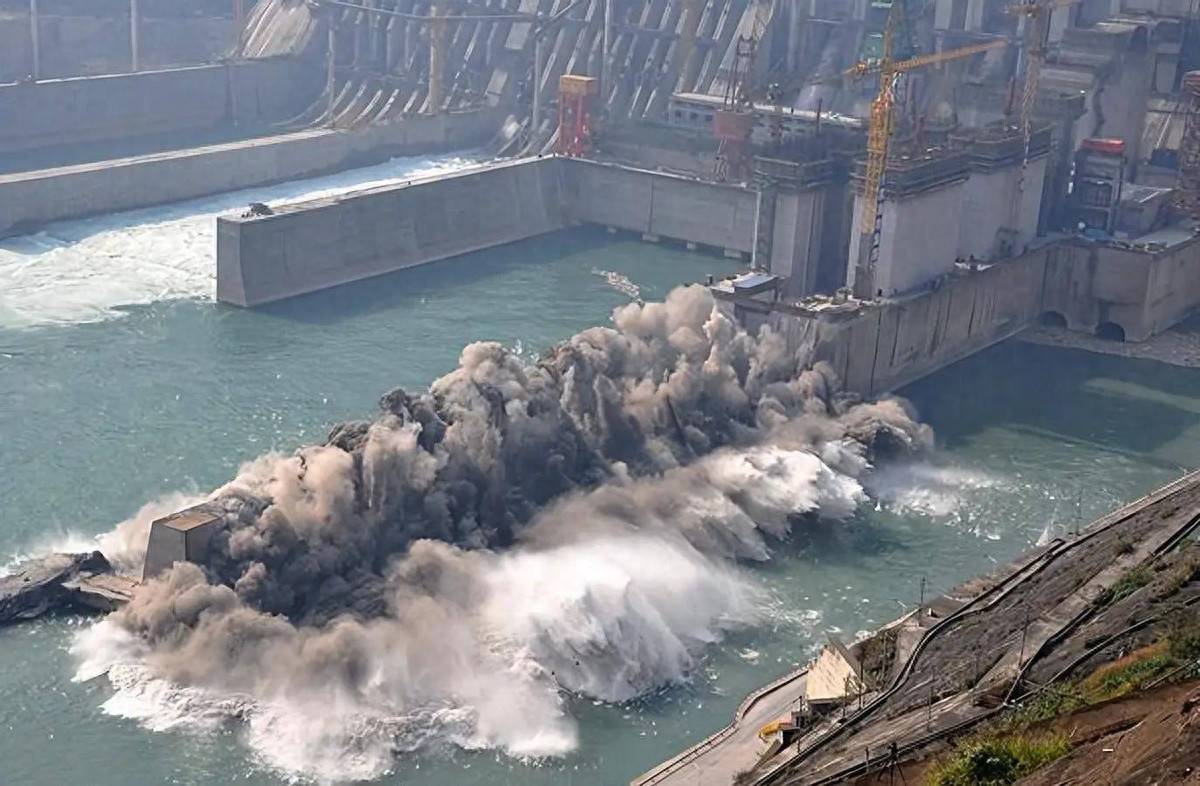
Core Viewpoint - China has become the world's leading country in hydropower generation capacity, achieving a balance between ecological protection and power generation, contrasting with the aging and inefficient dams in the United States [1][17]. Group 1: Historical Development - The story of China's hydropower began in 1912 with the Shilong Dam, which was built under challenging conditions to provide electricity to Kunming, symbolizing hope and national self-reliance [3][7]. - The construction of the Xin'anjiang Hydropower Station in 1957 marked the first large-scale hydropower project in New China, focusing on solving local energy shortages rather than competing globally [5][7]. Group 2: Technological Innovation and Ecological Protection - Modern Chinese hydropower development integrates technology and ecological protection, with innovations such as sediment control techniques and ecological scheduling that enhance fish spawning [15][13]. - The Three Gorges Dam features fish passages and elevators, demonstrating a commitment to ecological design while maintaining high energy output [11][15]. Group 3: International Influence and Comparison with the U.S. - China's hydropower projects abroad, such as in Cambodia and Nigeria, emphasize capacity building and sustainable development, contrasting with the U.S. approach of dam removal due to aging infrastructure [19][21]. - The U.S. faces challenges with its aging dams, with a significant portion deemed high-risk, while China continues to expand its hydropower capabilities and influence globally [17][21]. Group 4: Modern Achievements and Future Outlook - The completion of the Baihetan Hydropower Station signifies China's leading position in both scale and technology, with over 400 million kilowatts of installed capacity, accounting for 30% of global hydropower [9][24]. - China's hydropower narrative reflects a unique model of modernization and green development, showcasing a commitment to balancing energy needs with ecological sustainability [22][24].
中航京能光伏REIT扩募成功上市
Cai Jing Wang· 2026-01-15 08:13
Core Viewpoint - The successful expansion of the China Aviation Jingneng Photovoltaic REIT marks a significant step in the securitization of clean energy assets and capital operations, showcasing a model for future public REITs development in the renewable energy sector [1][3]. Group 1: Listing and Fundraising - The China Aviation Jingneng Photovoltaic REIT officially listed its expanded shares on the Shanghai Stock Exchange, with a total fundraising amount of 2.92215 billion yuan, issuing 300.88 million fund shares at a price of 9.712 yuan per share [1][2]. - The listing was attended by key officials from the Beijing State-owned Assets Supervision and Administration Commission and the Jingneng Group, highlighting the importance of REITs in supporting capital market efficiency and state-owned capital optimization [1]. Group 2: Asset Details and Impact - The underlying assets for this expansion include the Sujiakou and Songshanhekou hydropower station projects, with a total installed capacity of 483 megawatts, located in Tengchong City, Baoshan, Yunnan Province [2]. - This project is recognized as the first public hydropower REIT in Yunnan Province, serving as a model for integrating green finance with the energy industry and injecting new momentum into the "14th Five-Year Plan" energy investment [2]. Group 3: Strategic Significance - The expansion introduces a "photovoltaic + hydropower" complementary model, enhancing the fund's risk resistance and providing a replicable path for future REIT expansions in the renewable energy infrastructure sector [3]. - The initiative not only revitalizes existing green energy assets and optimizes the company's asset-liability structure but also smooths cash flow and diversifies regional climate risks, significantly improving the overall risk resistance of the fund [3].