
Robotics

Search documents
“擎天租”亮相标志人形机器人进入“租时代”,人工智能AIETF(515070)北京君正大涨5.69%
Mei Ri Jing Ji Xin Wen· 2025-12-23 02:37
Group 1 - The A-share market saw a collective rise in the three major indices on December 23, with sectors such as lithography machines, Hainan, insurance, and precious metals leading the gains, while sectors like horse racing, retail, Tianjin Free Trade Zone, and education experienced declines [1] - The largest AI ETF in the Shanghai market, AI ETF (515070), rose by 0.47% during the session, with holdings like Beijing Junzheng surging by 5.69%, and other notable gainers including Deep Sanda A, Cambricon Technologies, Amlogic, and Lexin Technology [1] - The "Qingtian Rental" platform, the first open robot rental platform in China, was launched at the National Robot Rental Ecological Summit on December 22, covering 50 core cities and linking over 600 service providers, with rental prices ranging from 200 yuan to over 10,000 yuan [1] Group 2 - According to Guotai Junan Securities, the humanoid robot industry is entering a critical mass production phase, with hardware companies becoming the core driving force. The period from 2022 to 2025 is seen as the first phase, transitioning products from laboratories to industrialization, while the second phase starting in 2025 will focus on large-scale production [1] - The number of registered humanoid robot companies in China is expected to reach 104 by 2024, marking a year-on-year increase of 104%. From January to July 2025, there have been over 101 financing events totaling more than 26 billion yuan, indicating a high level of enthusiasm in the capital market [1] - The AI ETF (515070) tracks the CS AI Theme Index (930713), selecting component stocks that provide technology, basic resources, and application end stocks for artificial intelligence, focusing on the midstream and upstream of the AI industry chain, often referred to as the "brain" creators of robots [2]

AI与机器人盘前速递丨优必选子公司优奇与字节旗下火山引擎达成具身智能合作;全国首个开放式机器人租赁平台发布
Mei Ri Jing Ji Xin Wen· 2025-12-23 01:20
Market Review - The Huaxia AI ETF (589010) experienced a slight dip before stabilizing and closing up 0.68% at 1.323 yuan, indicating strong support levels despite intense market fluctuations [1] - Key holdings showed positive performance, with leading machine vision company OptoTech rising over 4%, and both Hongsoft Technology and Chipone Technology increasing by over 3%, boosting overall sector sentiment [1] - The Robot ETF (562500) surged by 1.28%, maintaining above multiple moving averages, with notable gains from companies like Sifang Intelligent, which soared nearly 9%, and over 50 other holdings also performing well [1] - Significant inflow of external capital was noted, with a net inflow of 134 million yuan in a single day, and total trading volume exceeding 1.045 billion yuan [1] Hot News - UQI, a subsidiary of UBTECH, signed a cooperation agreement with ByteDance's Volcano Engine at the FORCE conference to explore applications of large model technologies in humanoid robots and logistics vehicles [2] - The launch of "Qingtian Rental," China's first open robot rental platform, was announced in Shanghai, covering over 50 core cities and more than 600 service providers, with rental prices ranging from 200 yuan to over 10,000 yuan [2] - The platform aims to expand its services to over 200 cities by 2026, transforming high-barrier robot usage scenarios into a convenient rental model similar to shared power banks [2] Institutional Viewpoints - Huajin Securities highlighted that the slowdown in the new energy vehicle market and intensified price wars have pressured automotive parts companies, leading them to seek new growth avenues [3] - The robotics industry, particularly humanoid robots, is seen as a critical sector for companies to navigate these challenges due to its vast market potential and deep technological synergies [3]
【点金互动易】人形机器人+类脑芯片,公司开发情感识别机器人和存算一体ReRAM,构建巡检运输等机器人矩阵
财联社· 2025-12-23 01:09
《电报解读》是一款主打时效性和专业性的即时资讯解读产品。侧重于挖掘重要事件的投资价值、分析 产业链公司以及解读重磅政策的要点。即时为用户提供快讯信息对市场影响的投资参考,将信息的价值 用专业的视角、朴素的语言、图文并茂的方式呈现给用户。 ①人形机器人+类脑芯片,开发情感识别机器人和存算一体ReRAM,构建巡检运输等机器人矩阵,这家公 司布局教育康复医疗全生命周期应用; ②存储芯片+先进封装,TGV AOI设备用于2.5D/3D封装检测,这 家公司与ADI合作推出高性能ATE解决方案,提升存储测试效率。 前言 ...


优必选子公司优奇与字节旗下火山引擎达成具身智能合作
Ge Long Hui A P P· 2025-12-23 00:46
Core Viewpoint - UQI, a subsidiary of UBTECH, has signed a cooperation agreement with ByteDance's Volcano Engine to explore the application of large model technologies in humanoid robots, unmanned logistics vehicles, and industrial mobile robots [1] Group 1 - The partnership was formalized at the FORCE Original Power Conference on December 18 [1] - UQI's technical partner Yang Jifeng and Volcano Engine's Vice President Yang Liwei represented both parties in the signing [1] - The collaboration aims to investigate the industrial and logistics applications of technologies such as VLA and world models [1]
马斯克看呆!宇树机器人炸场王力宏演唱会,大秀空翻热舞,4000万海外网友围观
36氪· 2025-12-23 00:16
Core Viewpoint - The article highlights the emergence of humanoid robots in the entertainment industry, showcasing their capabilities and the growing market for robot rentals, particularly in commercial performances and events [5][30]. Group 1: Humanoid Robots in Entertainment - On December 18, humanoid robots performed alongside singer Wang Lihong at his concert in Chengdu, demonstrating advanced dance moves, including a difficult flip [7][10]. - The G1 robot, produced by Yushun, is set to launch in May 2024 with a starting price of 99,000 yuan, standing 132 cm tall and weighing approximately 35 kg [14][19]. - The G1 robot has impressive specifications, including a maximum joint torque of 120 N·m and the ability to run at speeds exceeding 2 m/s, showcasing its agility and versatility [16][17]. Group 2: Market Growth and Opportunities - The rental market for humanoid robots is expected to experience explosive growth after the 2025 Spring Festival, with many rental companies emerging across the country [30]. - According to YHResearch, the global revenue from smart robot rentals is projected to reach approximately 11.22 billion yuan in 2024, with an expected increase to nearly 17.12 billion yuan by 2031, reflecting a compound annual growth rate of 6.1% from 2025 to 2031 [31]. - The majority of rental services will focus on commercial applications, such as performances and event hosting, making humanoid robots a valuable marketing tool for companies [31]. Group 3: Technical Challenges and Future Prospects - Current performances by humanoid robots often rely on pre-programmed routines, indicating a gap between their physical capabilities and practical applications [33]. - The operation of these robots typically requires 1-2 technical personnel on-site to ensure smooth performance, highlighting the need for ongoing technical support [34]. - The industry is evolving rapidly, with expectations for humanoid robots to develop more sophisticated capabilities in the future, as evidenced by the interest from notable figures like Elon Musk [35].
机器人学习现状!PI团队内部员工分享(从数采到VLA再到RL)
具身智能之心· 2025-12-23 00:03
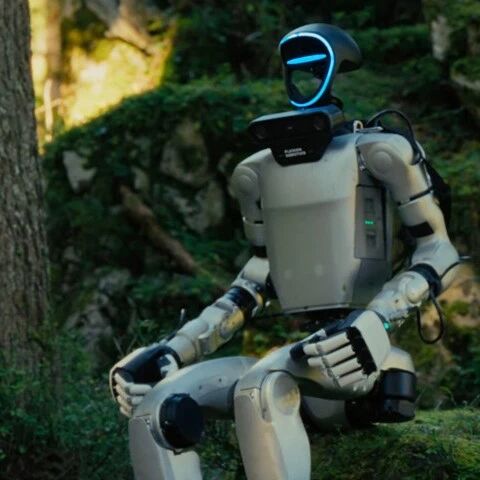
Core Insights - The article discusses the current state of robot learning as of December 2025, emphasizing that most systems rely on behavior cloning (BC) and the challenges associated with it [5][40][39] - It highlights the importance of human demonstrations in training robot learning systems and the need for innovative approaches to improve performance and robustness [72][73] Group 1: Behavior Cloning and Its Challenges - As of December 2025, all robot learning systems primarily utilize behavior cloning, where human demonstrations are used to train models to mimic actions [5][6] - The challenges of behavior cloning include the inability to generalize beyond the training data, leading to performance issues in real-world applications [16][21][23] - The article outlines the difficulties in collecting high-quality demonstration data and the need for diverse and representative datasets to improve model training [7][12][19] Group 2: Future Directions and Innovations - The article predicts that within two years, video models will replace current visual-language architectures in robot learning [72] - It suggests that world models will effectively simulate general open-world interactions within ten years, enhancing the capabilities of robot learning systems [72] - The need for a robust human demonstration system that can effectively address the challenges of data collection and model training is emphasized as a key area for future development [73][76]

这款机械臂丝滑跑出了pi0与pi0.5,支持Lerobot框架~
具身智能之心· 2025-12-23 00:03
Core Viewpoint - The article highlights the successful adaptation of the Imeta-Y1 lightweight robotic arm to Lerobot, emphasizing its ease of use for beginners and its capabilities in practical applications, including precise block manipulation and open-source code availability [2][4]. Group 1: Product Features - Imeta-Y1 is designed as a cost-effective, lightweight robotic arm tailored for beginners and researchers, enabling efficient algorithm validation and project development [5]. - The robotic arm supports a full-process open-source toolchain and code examples, facilitating seamless transitions from data collection to model deployment [6][20]. - It is compatible with both Python and C++ programming languages, allowing users to quickly get started regardless of their preferred coding language [6][21]. Group 2: Technical Specifications - The robotic arm has a weight of 4.2 KG, a rated load of 3 KG, and features six degrees of freedom with a working radius of 612.5 mm and a repeat positioning accuracy of ±0.1 mm [11][22]. - It operates on a 24V power supply and utilizes CAN communication, with a compact structure suitable for embedded AI and robotic learning platform development [9][10]. Group 3: User Support and Integration - The product offers 24-hour rapid after-sales support, ensuring users receive timely assistance during their learning process [7][22]. - It provides URDF models compatible with ROS1 and ROS2, enabling seamless switching between simulation and real machine operations [7][25]. Group 4: Development and Testing - The robotic arm integrates high-precision motion control, low power consumption design, and an open software and hardware architecture, supporting end-to-end algorithm deployment [9][39]. - Comprehensive hardware testing processes, including accuracy calibration and stability verification, ensure reliability and safety across various application scenarios [42][46].
X @CoinMarketCap
CoinMarketCap· 2025-12-22 23:33
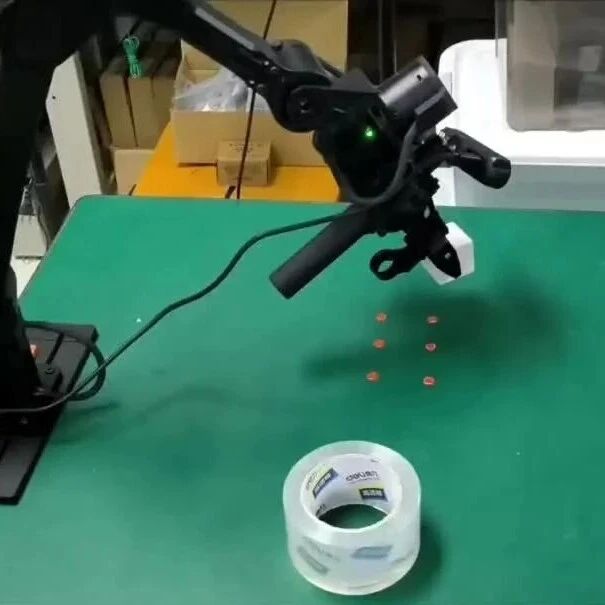
🌐 Prediction #4: Humanoid Robots Enter HomesRobots shift from factories → domestic pilots. Early units will be pricey and imperfect, but 2026 is about real usage: chores, organization, assisted living.Crypto overlaps via DePIN-style funding/training experiments.6/7 https://t.co/zOXREuJ5V2 ...
RR's Operating Expenses Rising: Can It Manage While Scaling?
ZACKS· 2025-12-22 18:21
Core Insights - Richtech Robotics Inc. (RR) is facing significant challenges with rising operating expenses that are outpacing revenue growth, with total operating expenses increasing by 150.8% year over year while revenues decreased by 3.1% as of the nine months ended June 30, 2025 [1][8] Financial Performance - The surge in operating expenses is largely attributed to a 268.7% increase in general and administrative costs, driven by higher personnel costs and professional fees [1][8] - Despite a reduction in research and development expenses by 18.1% year over year, the transition to a Robotics-as-a-Service (RaaS) model requires substantial upfront capital [2] - The company has a strong liquidity position with cash and equivalents totaling $86 million, along with an additional $21.8 million from an at-the-market offering, bringing total cash to $107.8 million [3] - Net cash utilized in operating activities amounted to $11.2 million, indicating that the company can potentially fund its innovation gap using its cash reserves [3] Strategic Outlook - The shift to multi-year service agreements (MSAs) is seen as a promising avenue for generating high-margin recurring revenues, although successful execution is critical [4] - There is an urgent need to optimize personnel costs and scale development quickly to ensure sustainable profitability before competition intensifies [4] Market Performance - Over the past six months, RR's stock has increased by 98.8%, underperforming compared to Coherent Corp. (130.4%) and GigaCloud Technology Inc. (119.1%), while outperforming the overall industry, which has rallied by 22.7% [5] Valuation Metrics - RR trades at a 12-month forward price-to-sales ratio of 38.45, which is significantly higher than Coherent's 4.08 and GigaCloud Technology's 1.06, indicating a premium valuation [9] - The company has a Value Score of F, while its peers Coherent and GigaCloud Technology have scores of D and A, respectively [12]

‘It’s a cage match’: Beleaguered iRobot founder says the biggest reason why the Roomba-maker failed was because of growing Chinese competition
Yahoo Finance· 2025-12-22 16:59
Core Insights - iRobot, the maker of Roomba, filed for Chapter 11 bankruptcy due to increasing competition from Chinese companies, particularly in the robotic vacuum market [1][2] - The company reached its peak revenue of nearly $1.6 billion in 2021 but has since lost market share to rivals like Roborock, which has become the world's largest robot vacuum brand [2][3] - iRobot's cofounder Colin Angle highlighted that the Chinese market was not a level playing field, with local companies receiving government support and incentives that disadvantaged foreign competitors [2][3] Company Overview - iRobot was co-founded in 1990 and became a pioneer in household robotics with the launch of Roomba in 2002 [1][2] - The company introduced advanced models like the self-emptying Roomba i7+ in 2018, which utilized mapping technology [2] - Following its bankruptcy, iRobot will be acquired by Picea Robotics, a China-based company that has been a significant player in the robotic vacuum market [2][4] Market Dynamics - The competitive landscape has shifted significantly, with Chinese companies like Roborock benefiting from a protected market and government incentives, including discounts for consumers on domestic products [3] - The Chinese government has renewed its focus on boosting domestic consumption, further supporting local businesses in the tech sector [3] - Picea Robotics has established partnerships with other brands like Shark and Anker, indicating a consolidation trend in the robotic vacuum space [4]