畜牧业

Search documents
多渠道增收、可持续增收(专家点评)
Ren Min Ri Bao· 2025-11-11 22:41
Core Viewpoint - The article emphasizes the importance of diversifying income sources for rural households in the Inner Mongolia region, particularly through the development of traditional agricultural and livestock products, as well as other sustainable projects to enhance income and ensure long-term poverty alleviation [1] Group 1: Industry Development - The local consensus is to improve the marketing of traditional agricultural and livestock products while exploring additional projects to create multiple income streams [1] - The development of suitable industries tailored to local conditions is crucial for solidifying the achievements of poverty alleviation efforts [1] Group 2: Economic Initiatives - The article highlights the potential for courtyard economies, as most households have suitable conditions for developing such initiatives, supported by innovative policies and subsidies [1] - The establishment of policies to encourage courtyard economic activities can significantly boost local economic development [1] Group 3: Environmental Considerations - A good ecological environment is essential for stabilizing the results of poverty alleviation industries, with a focus on breaking the cycle of poverty and environmental degradation [1] - Investments in environmental restoration, such as the cultivation of seabuckthorn forests for sand control, have proven to increase collective income for villages [1] Group 4: Future Outlook - The article anticipates that during the "14th Five-Year Plan" period, there will be continued efforts to consolidate and expand poverty alleviation results, leading to improved living conditions for those who have been lifted out of poverty [1]
“民营企业发展要与国家需求结合”
Ren Min Ri Bao· 2025-11-11 22:40
Core Viewpoint - The support from the central government for the private economy is clear and firm, boosting confidence and motivation for development in the industry [1]. Group 1: Company Development - The company, founded in 1992, has grown from 22 piglets to the world's largest pig farming enterprise, with an annual output of 70 million pigs [1]. - The company emphasizes the integration of private enterprise development with national needs, particularly in supporting food security strategies [1]. - The company has adopted innovative breeding techniques, reducing reliance on imported breeding stock and enhancing production efficiency [1]. Group 2: Technological Innovations - The company has implemented smart pig houses with advanced air filtration systems to improve health and reduce environmental impact [2]. - A digital farming model has been established, allowing for the recycling of waste into organic fertilizers and biogas, promoting sustainable agriculture [2]. - The company has developed a team of 300 agronomists to facilitate resource utilization across various crops, enhancing soil fertility and agricultural productivity [2]. Group 3: Industry Collaboration - The company is working to professionalize pig farming by providing affordable piglets and comprehensive support to small farmers, fostering a collaborative industry environment [3]. - The implementation of the Private Economy Promotion Law is seen as a positive step for creating a better business environment, encouraging legal and responsible business practices [3].

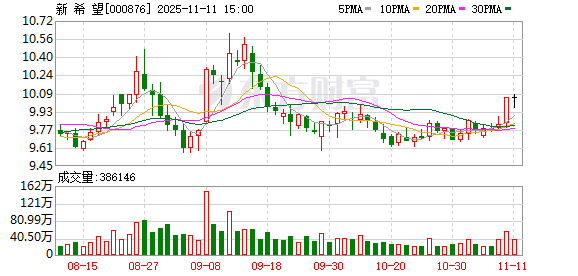
“11元/公斤猪价已使行业全面亏损”新希望连开策略会应对:养猪业务减量控费 饲料出海寻求增量
Mei Ri Jing Ji Xin Wen· 2025-11-11 16:00
Core Viewpoint - The recent decline in pig prices and the adjustment of breeding capacity have become hot topics in the industry, with New Hope facing significant losses in its pig farming business due to low market prices [2][6]. Group 1: Financial Performance - In the first three quarters of the year, New Hope reported a net profit attributable to shareholders of 7.6 billion yuan, a year-on-year increase of nearly 400%, with a net profit of 513 million yuan in the third quarter [3]. - The company's feed business generated a net profit of 10.3 billion yuan in the first three quarters, up 23% year-on-year, maintaining a monthly profit level of over 1 billion yuan [3]. - However, the pig farming segment incurred a cumulative loss of 1.8 billion yuan in the first three quarters, with a loss of 2.3 billion yuan in the third quarter alone due to rapidly falling pig prices [6]. Group 2: Market Conditions - The current pig price of around 11 yuan per kilogram has led the entire industry into losses, with many leading enterprises also experiencing significant losses [6]. - The decline in pig prices is attributed to high levels of breeding sows last November, leading to a peak in market supply, coupled with increased efficiency in the industry [6]. Group 3: Strategic Adjustments - New Hope plans to gradually reduce the number of breeding sows by the end of January next year, which will also lead to a decrease in the number of pigs marketed [2][7]. - The company is shifting its breeding strategy to increase the proportion of self-breeding and self-fattening pigs, moving from a previous ratio of 30:70 to 35:65 [8]. - New Hope is not in a hurry to expand its pig farming capacity overseas, focusing instead on optimizing domestic production under favorable policy conditions [8]. Group 4: International Expansion - New Hope has seen significant growth in its overseas feed business, with a sales growth rate of 21% in the first three quarters, supported by new production capacities [9]. - The company aims to reach an overseas feed production capacity of 10 million tons by 2028, aligning with a sales target of 9 million tons [9].


金新农(002548) - 2025年11月11日投资者关系活动记录表
2025-11-11 13:34
Cost Management - The sales cost of the company's commercial pigs in October is approximately 13.26 CNY/kg, with a target to reduce it to 12.5 CNY/kg next year [2] - The cost of raising weaned piglets (7 kg) is around 300 CNY/head, with a goal to lower it to below 270 CNY/head next year [2] - The sales cost for the company's cooperative breeding business in October is 12.91 CNY/kg, with a current inventory of 25,000 heads [2] Business Strategy - The company aims to reduce costs through improved capacity utilization, lowering disease incidence, adjusting assessment methods, and trialing a contracting responsibility system [2] - The cooperative breeding business is primarily distributed in Guangdong, Fujian, and Anhui provinces [3] - The company is transitioning from a heavy asset model to a light asset model, focusing on cooperative breeding and exploring new product lines such as pet food and new feed types [4] Feed Business Performance - The feed business is profitable, with a target sales volume of 1.1 million tons for the year, which the company is striving to exceed [3] - The feed production capacity utilization rate is approximately 50% [3] - A new subsidiary has been established in Xinjiang to expand the ruminant feed market, expected to increase feed revenue next year [3] Future Developments - The company established Shenzhen Xingwei Intelligent Robot Co., Ltd. in October 2025, focusing on robot research, production, and sales [4] - The company is exploring new production capabilities and has implemented a stock incentive plan to align employee interests with company goals [4] - Future plans and performance forecasts are not commitments to investors, and caution is advised regarding investment risks [4]

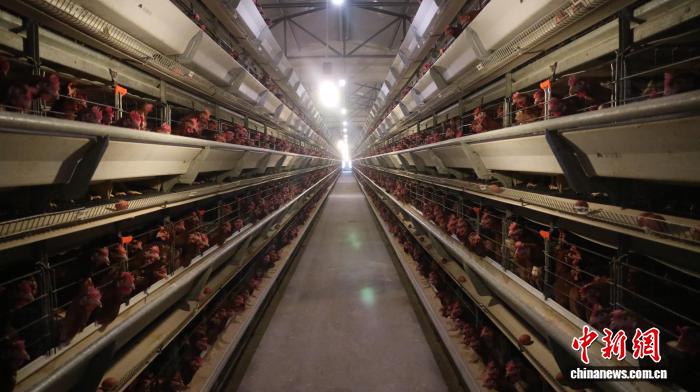
(乡村行·看振兴)山西阳曲:自动化养鸡“链”起产业共富“加速键”
Zhong Guo Xin Wen Wang· 2025-11-11 13:19
Core Viewpoint - The automated chicken farming model in Yangqu County, Shanxi, is creating a shared prosperity chain that benefits the surrounding community through improved efficiency and job creation [1][3]. Summary by Sections Automation in Chicken Farming - The chicken farm utilizes an automated management system for feeding, waste cleaning, water management, and egg collection, significantly enhancing operational efficiency [1][3]. - The automated environment control systems maintain optimal temperature and humidity levels, improving the living conditions for the chickens and the working environment for staff [3][4]. Efficiency and Productivity - The farm has reduced egg collection labor from five workers to one, with a daily egg production of 5,600 pounds and a reduction in egg loss from 1% to less than 1%, saving approximately 50 pounds of eggs daily [3][4]. - The separation of the chickens' living and waste areas through advanced cage technology ensures cleanliness and efficiency in waste management [4]. Employment and Community Impact - The farm provides stable employment opportunities for local villagers, with workers earning over 4,000 yuan per month through mechanized operations [4][6]. - The farm's demand for feed creates a strong link with local agriculture, allowing farmers to sell over 30 tons of corn daily to the farm, ensuring a reliable market for their produce [4][6]. Sustainable Practices - The farm converts chicken waste into organic fertilizer through a high-temperature aerobic fermentation process, benefiting crop production and soil improvement [4][6]. - The integrated farming model promotes a circular economy, benefiting both the farm and the local community [6][7]. Future Plans - The farm plans to expand its production scale and upgrade its products, aiming to increase local agricultural self-sufficiency and involve more villagers in the chicken farming industry [6][7].
以创新为笔,招商银行青岛分行“背贴通”商票业务书写服务国家战略新篇章
Xin Lang Cai Jing· 2025-11-11 11:01
Core Viewpoint - The successful launch of the "Back贴通" commercial bill business by China Merchants Bank Qingdao Branch marks a significant advancement in the online transaction platform for bills, driven by process innovation and technology empowerment, aimed at transforming bill business online and serving the real economy [1] Group 1: Business Development - The collaboration with Shandong New Hope Liuhe Group, the largest private enterprise in Qingdao, highlights the bank's focus on meeting the needs of major local businesses [1] - The "Back贴通" business streamlines the bill process from "hour-level" to "minute-level" efficiency, addressing traditional bottlenecks in bill circulation [1] Group 2: Product Innovation - The new product is designed around customer needs, effectively integrating payment channels between parent and subsidiary companies and external suppliers [1] - The service model is tailored to the characteristics of the industry chain, enhancing the overall customer experience [1] Group 3: Strategic Empowerment - Innovation-driven development is emphasized as a core strategy for high-quality growth in the bank's bill business [1] - The product not only provides efficient services to meet corporate financing needs but also aligns with national strategic goals, showcasing the bank's financial responsibility [1]

罗牛山:公司依法依规制定和修订各种规章制度
Zheng Quan Ri Bao Wang· 2025-11-11 09:39
Core Viewpoint - The company is committed to sustainable development of its main business and aims to enhance operational capabilities and governance standards to create long-term value for investors and promote stable growth [1] Group 1 - The company has established and revised various rules and regulations in accordance with laws and regulations [1] - The management prioritizes enhancing corporate value and shareholder returns [1] - The company actively rewards shareholders through cash dividends while maintaining stable business operations [1]

华统股份(002840.SZ):10月生猪销售收入3.38亿元
Ge Long Hui A P P· 2025-11-11 08:36
Group 1 - The core point of the article is that Huatong Co., Ltd. (002840.SZ) reported its pig and chicken sales performance for October 2025, showing significant changes in sales volume and revenue compared to previous periods [1] Group 2 - In October 2025, the company sold 242,496 pigs, with a month-on-month increase of 19.85% and a year-on-year increase of 20.80%. No piglets were sold during this period [1] - The sales revenue from pig sales reached 338.28 million yuan, reflecting a month-on-month increase of 6.15% but a year-on-year decrease of 0.65% [1] - The average selling price of commercial pigs was 11.40 yuan per kilogram, which represents a decrease of 12.17% compared to September 2025 [1] - The company sold 793,900 chickens in October 2025, showing a month-on-month decrease of 5.91% and a year-on-year decrease of 65.56% [1] - Chicken sales revenue amounted to 11.75 million yuan, with a month-on-month decrease of 23.85% and a year-on-year decrease of 28.12% [1] - The year-on-year decline in chicken sales volume is primarily attributed to a reduction in the number of chickens being marketed [1]
华统股份:10月生猪销售收入3.38亿元,同比下降0.65%
Xin Lang Cai Jing· 2025-11-11 08:36
Core Viewpoint - The company reported a significant increase in pig sales volume for October 2025, indicating a positive trend in sales despite a slight decline in revenue and average selling price [1] Sales Performance - In October 2025, the company sold 242,496 pigs, with a month-on-month increase of 19.85% and a year-on-year increase of 20.80% [1] - The sales revenue for October 2025 reached 338.28 million yuan, reflecting a month-on-month increase of 6.15% but a year-on-year decrease of 0.65% [1] Pricing Trends - The average selling price of commercial pigs in October 2025 was 11.40 yuan per kilogram, which represents a decrease of 12.17% compared to September 2025 [1]
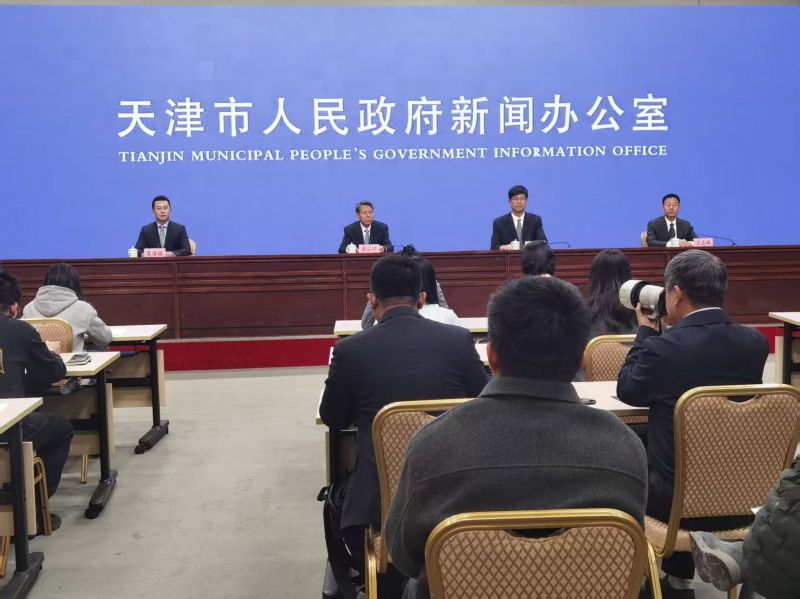
天津:“十四五”时期,农业农村现代化成效显著
Zhong Guo Fa Zhan Wang· 2025-11-11 08:35
Core Insights - The "14th Five-Year Plan" period is crucial for Tianjin to advance towards a modern socialist metropolis and enhance rural revitalization and agricultural modernization [3] - Tianjin ranks 5th nationally in the comprehensive rural revitalization development index, indicating significant progress in agricultural quality and efficiency, rural livability, and stable income growth for farmers [3][4] Agricultural Production - A total of 1.45 million acres of high-standard farmland have been newly built or upgraded, with 82% of permanent basic farmland meeting high standards, a 20 percentage point increase from the end of the "13th Five-Year Plan" [4] - Grain production is expected to achieve a "22-year continuous harvest," with total output surpassing historical highs and increasing by over 1 billion pounds compared to the end of the "13th Five-Year Plan" [4] - The proportion of facility vegetable production in total vegetable output has risen to 55%, and the scale of livestock and poultry farming has reached over 90% [4] Rural Industry Development - The integration of rural industries has been emphasized, with the establishment of 4 national-level advantageous characteristic industrial clusters and 22 agricultural industry integration development carriers [5] - The "Tianjin Agricultural Boutique" brand has seen sales exceed 10 billion yuan for three consecutive years, enhancing brand recognition and influence [5] Agricultural Innovation and Technology - The implementation of seed industry revitalization actions has led to the cultivation of several nationally leading varieties, with a mechanization rate of 90.5% in crop farming [6] - The establishment of the Tianjin Intelligent Agriculture Research Institute and advancements in agricultural technology have increased the contribution rate of agricultural science and technology to 75% [6] Rural Living Environment - A total of 300 rural living environment demonstration villages have been established, with a sanitation toilet coverage rate of 97.9% and rural sewage treatment exceeding 90% [6] - The integration of public services and infrastructure in rural areas has significantly improved, enhancing the quality of life for residents [6] Urban-Rural Integration - Tianjin has established a comprehensive rural property rights trading market system, with annual transaction volume exceeding 16 billion yuan, ranking first nationally [7] - The per capita disposable income of rural residents is projected to reach 32,715 yuan, ranking 4th nationally, with a reduced urban-rural income ratio of 1.76:1 [7]