半导体制造

Search documents
芯片制造的“隐形功臣”,颇尔如何助力良率提升
半导体行业观察· 2025-03-27 04:15
Core Viewpoint - The semiconductor industry is entering the sub-nanometer era, making filtration and purification processes critical for chip manufacturing, as cleanliness significantly impacts efficiency, performance, and production costs [1][4]. Group 1: Company Strategy and Investments - Pall Corporation has made significant investments in the Asia-Pacific region, including $11 million to expand its Beijing factory and $150 million for a new advanced manufacturing facility in Singapore [5][8]. - The company's strategy emphasizes local development and service, aiming to meet the unique demands of the Asia-Pacific market through local R&D teams and production facilities [5][8]. Group 2: Product Innovations - Pall Corporation introduced four key products at SEMICON China, designed to enhance yield in semiconductor manufacturing [9][10]. - The Xpress® 1nm filter utilizes 1nm PTFE membrane technology to efficiently remove organic contaminants and surface particles, significantly improving production cycles [14]. - The Gaskleen® TM 1.5nm gas filter employs composite technology to achieve 1.5nm filtration precision, enhancing process stability by ensuring gas cleanliness [16]. - The UCA 50nm filter is specifically designed for CMP applications, effectively removing 50nm-sized particles from slurry, thus reducing defect rates [18]. - The Photokleen® sub 1nm filter, made from HDPE, targets residual particles in photoresists, ensuring high purity and reducing secondary contamination risks [21]. Group 3: Customer Service and Support - Pall Corporation's local production in Beijing allows for a responsive supply chain, enhancing its commitment to the Chinese semiconductor industry [23]. - The company offers a customized CIP (Customer Improvement Project) solution, addressing specific contamination challenges faced by clients, thereby improving yield and reducing costs [25][26]. - Pall's SLS (Sales, Laboratory, Service) team provides comprehensive technical support throughout the product lifecycle, ensuring effective solutions for clients [26]. Group 4: Industry Impact - As the semiconductor industry advances towards more sophisticated nodes, the pursuit of extreme cleanliness has become essential for enhancing product competitiveness, with filtration technology playing a pivotal role [28]. - Pall Corporation's innovations and localized services are crucial in supporting the development of the domestic semiconductor industry, aligning with its mission to solve complex challenges in the field [28].

台积电美国制芯片成本,仅比台湾高10%?
半导体行业观察· 2025-03-26 01:09
Core Viewpoint - TSMC's wafer production costs in Arizona are only about 10% higher than those in Taiwan, contrary to the belief that U.S. production is prohibitively expensive [1][2]. Cost Factors - Equipment costs account for over two-thirds of semiconductor production costs, and prices for tools from leading manufacturers are similar in both Taiwan and the U.S., mitigating location-based cost differences [2]. - Labor costs in the U.S. are approximately three times higher than in Taiwan; however, due to advanced automation, labor constitutes less than 2% of total costs in wafer manufacturing [2]. TSMC's Production and Logistics - TSMC's wafers produced in Arizona are sent back to Taiwan for cutting, testing, and packaging, complicating logistics but not significantly increasing costs. TSMC plans to build packaging capacity in the U.S. [2]. - TSMC reportedly charges a 30% premium for chips produced in the U.S. [2]. Revenue Distribution by Node - In 2024, nearly 50% of TSMC's revenue will come from nodes that are five years old or older, such as 7nm and above, contrasting with Intel's strategy of shutting down older nodes [3][4]. - Advanced nodes (3nm and 5nm combined) contribute 52% of revenue but only 27% of profit, indicating that profitability is still developing for these newer technologies [6][9]. Profitability Insights - The 3nm and 5nm nodes were reported to be operating at a loss in 2023, but profitability is expected to improve as production ramps up [9]. - TSMC's financial health is bolstered by older nodes that have fully depreciated, while newer nodes still carry depreciation costs [11]. Methodology - The analysis of TSMC's profitability by node involves estimating costs based on revenue shares and accounting for depreciation, R&D, and operational expenses [12].

华灿光电: 独立董事2024年度述职报告(沈波)
Zheng Quan Zhi Xing· 2025-03-25 13:33
本人沈波,1963年生,中国国籍,无境外永久居留权,博士学历。曾任东京大 学先端科技研究中心(RCAST)客座教授、日本千叶大学电子学与光子学研究中心客 座教授、日本产业技术综合研究所(AIST)访问教授,国家973计划项目首席科学家, 国家863计划"半导体照明"重点专项总体专家组成员,国家863计划"第三代半导 体"重点专项总体专家组组长,现任国家"战略性先进电子材料"重点专项第三代 半导体方向专家组组长,享受国务院政府特殊津贴,是国内多个国家重点实验室、 科学院重点实验室和国防重点实验室学术委员会委员。 现任公司第六届董事会独立董事,北京大学理学部副主任,宽禁带半导体研究 中心主任,物理学院长江特聘教授,国家杰出青年基金获得者,基金委创新研究群 体带头人。 各位股东及股东代表: 本人作为京东方华灿光电股份有限公司(以下简称"公司")的独立董事,在 任职期间严格按照《中华人民共和国公司法》(以下简称《公司法》)《中华人民 共和国证券法》(以下简称《证券法》)《上市公司独立董事管理办法》《深圳证 券交易所创业板股票上市规则》《深圳证券交易所上市公司自律监管指引第2号— —创业板上市公司规范运作》等法律法规、 ...

韦尔股份: 监事会关于股权激励计划激励对象人员名单的核查意见及公示情况的说明
Zheng Quan Zhi Xing· 2025-03-25 11:35
韦尔股份: 监事会关于股权激励计划激励对象人员名单的核查意见及公示 情况的说明 证券代码:603501 证券简称:韦尔股份 公告编号:2025-016 转债代码:113616 转债简称:韦尔转债 上海韦尔半导体股份有限公司监事会 关于股权激励计划激励对象人员名单 的核查意见及公示情况的说明 本公司监事会及全体监事保证本公告内容不存在任何虚假记载、误导性陈述 或者重大遗漏,并对其内容的真实性、准确性和完整性承担法律责任。 上海韦尔半导体股份有限公司(以下简称"公司")于 2025 年 3 月 14 日召开 第六届董事会第四十一次会议、第六届监事会第三十次会议,审议通过了《2025 年股票期权激励计划(草案)》(以下简称"《激励计划》")等相关议案。公司根 据《上市公司股权激励管理办法》 (以下简称"《管理办法》")的相关规定,对本 次激励计划拟授予的激励对象姓名和职务在公司内部进行了公示,公司监事会结 合公示情况对激励对象名单进行了核查,相关公示情况及核查情况如下: 一、公示情况 公司于 2025 年 3 月 15 日在上海证券交易所网站(www.sse.com.cn)和指定 披露媒体上发布了《2025 年股票 ...

英伟达 2025 年 GPU 技术大会(GTC)的影响_英伟达的 “Rubin Ultra” 将搭载 1TB HBM4e 内存
2025-03-23 15:39
Summary of Key Points from the Conference Call Industry Overview - **Industry**: Global Semiconductors - **Key Company**: Nvidia Core Insights and Arguments 1. **Nvidia's Rubin Ultra Announcement**: Nvidia revealed that its upcoming Rubin Ultra platform will utilize 1TB HBM4e, which exceeds market expectations significantly, being 3.5 times larger than the previous Blackwell Ultra's 288GB [2][3] 2. **Market Demand Projections**: Anticipated demand for 1TB HBM4e is expected to start gaining momentum from mid-2026, which will positively influence the HBM market demand for 2026 [2][3] 3. **Data Center Capital Expenditure**: Nvidia projects data center capital expenditures to reach US$1 trillion by 2028, indicating strong growth in the sector [2][3] 4. **Blackwell Orders**: Nvidia expects to fulfill 3.6 million units of Blackwell orders in 2025 from the top four US hyperscalers, compared to 1.3 million units of the previous Hopper model [2][3] Implications for HBM Suppliers 1. **Sustained HBM Supply/Demand Dynamics**: The tight supply/demand dynamics for HBM are expected to persist beyond 2025, driven by the growth in HBM content due to Nvidia's next-gen platforms [3] 2. **Investment Recommendations**: Analysts recommend a "Buy" rating for SK Hynix and Samsung Electronics, citing robust HBM demand growth and favorable market conditions for these suppliers [3] Valuation Insights 1. **Samsung Electronics Target Price**: The 12-month target price for Samsung is set at W83,000, based on a sum-of-the-parts (SOTP) methodology referencing global peers [7] 2. **SK Hynix Target Price**: The target price for SK Hynix is set at W350,000, reflecting a 30% premium to the stock's historical average price-to-book ratio during a structural demand growth phase [9] Risks Highlighted 1. **Samsung Electronics Risks**: Potential risks include delays in HBM shipment approvals, weaker-than-expected PC sales, aggressive competition in memory semiconductors, and currency fluctuations impacting earnings [8] 2. **SK Hynix Risks**: Risks include downturns in DRAM demand, weaker NAND demand, and a collapse in global consumption [10] Additional Important Information - **Analyst Contact Information**: Analysts involved in the report include Peter Lee, Josh Yang, and Jayden Oh, with contact details provided for further inquiries [4] - **Research Disclosures**: Citigroup Global Markets Inc. has disclosed potential conflicts of interest due to its business relationships with the companies covered in the report [4][17][19]

突然,集体跳水!
证券时报· 2025-03-21 09:34
Market Overview - A-shares experienced a significant decline today, with the Shanghai Composite Index dropping over 1% and falling below 3400 points, while the ChiNext and STAR Market indices fell more than 2% [1][2] - The Hong Kong market also saw a downturn, with the Hang Seng Index decreasing nearly 2% and falling below 24000 points, and the Hang Seng Tech Index dropping over 3% [1][2] Automotive Industry - The automotive supply chain stocks faced substantial declines, with companies like Taide Co. falling over 16%, and BYD, which has a market capitalization exceeding 1 trillion, dropping 7% after reaching a historical high of 400 yuan [4][5] - Longyuan Automotive's stock fell over 4% amid reports of multiple app failures affecting vehicle access for owners, leading to a temporary inability to unlock vehicles [5] Ocean Economy Concept - The ocean economy sector saw a strong rally, with companies like Haimer Technology and Shaoyang Hydraulic hitting the daily limit up of 20%, and ShenKai Co. achieving a seven-day consecutive limit up [6][7] - The government has prioritized "deep-sea technology" as a key emerging industry, indicating a strategic shift towards industrial application from research exploration, which is expected to drive growth in deep-sea resource extraction and related technologies [7][8]



台积电CoWoS扩产,恐放缓
半导体行业观察· 2025-03-19 00:54
Core Viewpoint - The semiconductor industry is facing dual challenges of technological upgrades and supply chain adjustments, with TSMC's CoWoS advanced packaging capacity expansion potentially slowing down. NVIDIA's Blackwell 300 (B300) mass production may reshape the supply chain landscape [1][2]. Group 1: TSMC's CoWoS Capacity Adjustments - UBS maintains a "Buy" rating on TSMC, noting that the slowdown in CoWoS capacity expansion is due to improved yield rates of CoWoS-L technology and mismatches in downstream assembly and packaging capacity [2]. - TSMC's CoWoS capacity is expected to increase from 35-40 thousand pieces per month at the end of 2024 to 70 thousand pieces per month by the end of 2025, down from a previous estimate of 80 thousand pieces per month. By the end of 2026, capacity is projected to reach 110 thousand pieces per month, revised from 120 thousand pieces per month [2]. Group 2: Market Reactions and Speculations - There are various speculations regarding TSMC's recent downward adjustment of the 2025 CoWoS capacity target, with some attributing it to NVIDIA's AI GPU demand reduction. However, supply chain analysts indicate that TSMC is continuously adjusting its capacity based on client chip shipment expectations and blueprint corrections [4][5]. - Despite the slight downward adjustment for 2025, TSMC's CoWoS capacity is expected to continue growing, with new capacity from the Southern Taiwan Science Park anticipated to come online in 2026, allowing for visibility of orders through 2029 [4][6]. Group 3: NVIDIA's Role and Future Outlook - NVIDIA remains TSMC's largest customer, accounting for over 60% of CoWoS capacity, despite some other clients reducing orders. The AI development is still in its early stages, and NVIDIA's performance continues to exceed market expectations [7][8]. - The upcoming release of the GB200 and the B300 in the second half of the year, along with the anticipated 3nm Rubin platform in 2026, suggests that the operational outlook for TSMC and its supply chain partners remains positive for 2025 and 2026 [7][8].
现代:汽车半导体量产在即,三星代工
半导体芯闻· 2025-03-18 10:32
Group 1 - The core viewpoint of the article is that Hyundai Mobis has completed the internal design of automotive semiconductors for software-defined vehicles (SDV) and plans to start mass production, marking a significant step in the automotive semiconductor market [1][2]. - Hyundai Mobis aims to establish a research base in Silicon Valley by the end of this year to enhance its technological capabilities and secure automotive semiconductor technology [1][3]. - The company has developed semiconductors for key components such as electrification, electronics, and lighting, with plans to outsource production to Samsung Electronics [1][2]. Group 2 - The demand for automotive semiconductors is rapidly increasing due to advancements in autonomous driving technology and the shift towards electrification, with the number of semiconductors in mass-produced vehicles reaching up to 3,000 [2]. - Market research firm IDC predicts that the global automotive semiconductor market will grow from $41.182 billion in 2020 to $88.275 billion by 2027, with an average annual growth rate of approximately 12% [2]. - Hyundai Mobis is focusing on two areas: power semiconductors to improve electric vehicle range and performance, and system semiconductors for various vehicle functions [2].

Wolfspeed,前景堪忧
半导体行业观察· 2025-03-17 01:24
Core Viewpoint - Wolfspeed is facing significant financial pressure due to high capital expenditures and operational losses associated with its transition to silicon carbide (SiC) technology, despite positive trends in the AI market and supportive legislation like the CHIPS Act [1]. Company Overview - Wolfspeed, formerly known as Cree Inc., is a leading American company established in 1987, focusing on wide bandgap semiconductors, particularly SiC and gallium nitride (GaN) [2][4]. - The company has a strong historical presence in SiC production, being the first to launch SiC wafers in 1991, establishing itself as a market leader [2]. Financial Performance - For the fiscal year 2023, Wolfspeed reported revenues of $758 million, with a significant operating loss of $311 million [9]. - The company's total revenue for the trailing twelve months (TTM) was $776.6 million, reflecting a 3.06% decline compared to the previous year [9]. - TTM gross margin was 2.21%, down over 7% from the previous year, indicating severe cost pressures [10]. Market Dynamics - The global SiC market is projected to reach $4.2 billion in 2024, with a compound annual growth rate (CAGR) of approximately 26% from 2026 to 2030, although current demand from electric vehicles is underwhelming [6][14]. - Wolfspeed's market share has been approximately 18.5%, but it is expected to decline to around 10% by 2034 due to increasing competition and market dynamics [15][16]. Competitive Landscape - The semiconductor industry is highly competitive, with major competitors including ON Semiconductor, STMicroelectronics, and Infineon Technologies, all of which have more stable financial conditions [8]. - Wolfspeed's financial instability hampers its ability to effectively compete in a market where technology is easily replicable and competitors may have lower costs [8]. Future Outlook - The company is expected to face continued operational challenges, with projected revenues for the upcoming quarters remaining flat, and significant debt levels raising concerns about its financial health [20][21]. - Despite the potential for growth in the SiC market, Wolfspeed's high debt burden and ongoing losses create a cautious outlook for its future performance [22].
一台24亿!ASML光刻机入厂!
国芯网· 2025-03-14 04:33
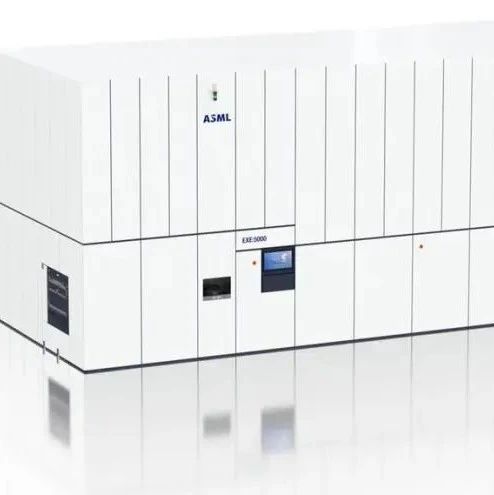
Core Viewpoint - The article emphasizes the acceleration of the adoption of High-NA EUV lithography equipment in the semiconductor industry, highlighting its significance for advanced semiconductor manufacturing processes, particularly for 2nm technology [2][3]. Group 1: High-NA EUV Equipment Adoption - Samsung Electronics has introduced the first High-NA EUV lithography machine, EXE:5000, valued at approximately 24.88 billion RMB, to enhance its semiconductor manufacturing capabilities [2]. - The High-NA EUV equipment increases the numerical aperture from 0.33 to 0.55, significantly improving lithography precision and enabling narrower line widths, which reduces power consumption and enhances data processing speed [2]. - Intel has also accelerated its procurement of High-NA EUV equipment, having purchased a total of 6 units, with the first two already in production, capable of processing 30,000 wafers per quarter [3]. Group 2: Market Position and Performance - Despite being ranked second in the global foundry market in Q4 2023, Samsung's revenue decreased by 1.4% to 3.26 billion USD, resulting in a market share of only 8.1% [4]. - TSMC maintains a dominant position with a market share of 67%, highlighting the competitive landscape in the semiconductor foundry sector [4].