CoWoS先进封装

Search documents
20亿美元!英伟达向半导体企业投资!华宝基金电子ETF(515260)大涨3%,机构:电子行业拐点已现!
Xin Lang Cai Jing· 2026-04-01 06:23
Core Viewpoint - The A-share market experienced a strong start in April, with major indices rising and significant inflows into the electronic sector, particularly in semiconductor and consumer electronics stocks [1][6]. Group 1: Market Performance - On April 1, the electronic ETF Huabao (515260) saw an intraday increase of 3.1%, currently up by 2.45%, recovering above the 5-day moving average [1][6]. - Key stocks in the electronic sector included Huajin Technology, which hit the daily limit, and Chipone Technology, which surged over 10% [1][6]. - The electronic sector attracted a net inflow of 12.9 billion yuan, ranking second among 31 primary industries in terms of capital absorption [1][6]. Group 2: Industry Trends - Nvidia announced a $2 billion investment in US semiconductor company Mellanox Technologies, integrating it into Nvidia's AI ecosystem and collaborating on silicon photonics technology [7]. - CITIC Securities highlighted three major trends in the Chinese semiconductor industry: breakthroughs across the entire industry chain, advancements from mature to advanced processes, and expansion from domestic to global markets [7]. - The domestic semiconductor industry is becoming a core growth driver as reliance on overseas products decreases [7]. Group 3: Future Projections - China International Capital Corporation (CICC) predicts that the electronic industry will enter an AI-driven structural upgrade phase by 2026, with storage, advanced packaging, and AI chips as key growth points [2][7]. - The demand for AI servers, smart vehicles, and IoT devices is expected to trigger a new upward cycle in the semiconductor industry, with a projected global market growth of 18%-20% year-on-year by 2026 [2][7]. Group 4: ETF Insights - The electronic ETF Huabao (515260) passively tracks the electronic 50 index, heavily investing in semiconductor and consumer electronics sectors, including AI chips, automotive electronics, and PCB [3][8]. - As of the end of February, the ETF's index weights for Apple, Nvidia, and Google were 46.56%, 29.30%, and 23.27% respectively, indicating a strong alignment with global tech giants [3][8].


2纳米,被抢光了
半导体芯闻· 2026-03-02 10:50
Group 1 - TSMC's 2nm process capacity has been fully booked by clients until 2027, driven by strong demand from AI and high-performance computing (HPC) sectors [1][2] - TSMC plans to expand advanced process and packaging capacity in Taiwan, with major production bases in Kaohsiung and Hsinchu, aiming for mass production of N2P and A16 process technologies in the second half of this year [1] - The global capacity for advanced processes below 5nm is expected to remain centered in Taiwan, accounting for over 80% by 2030 [1] Group 2 - Advanced packaging leader ASE has significantly increased its capital expenditure to $4.9 billion, with total capital spending projected to reach $7 billion, focusing on advanced packaging and wafer testing services [2] - Other companies like Powertech Technology and King Yuan Electronics are also planning record capital expenditures to expand their capabilities in advanced packaging and high-power testing lines [2] - The semiconductor industry is transitioning into a new growth phase as clients secure capacity ahead of time, indicating a shift in the semiconductor market cycle [2]


美银:台积电(TSM.US)资本开支转向“向前端倾斜”,为2026年2纳米量产与AI芯片需求备战
Zhi Tong Cai Jing· 2026-02-11 06:25
Group 1 - The core point of the article is that TSMC's board has approved a capital budget of up to $45 billion, focusing on advanced front-end manufacturing processes and large-scale wafer fabrication infrastructure [1][2] - TSMC's board announced two major decisions: a quarterly dividend of NT$6.0 per share and a budget allocation of $45 billion for wafer fabrication, capacity installation, and technology upgrades across the entire technology chain [1][2] - The budget structure shift aligns with TSMC's aggressive capital expenditure plan for 2026, with total capital expenditures expected to rise to between $52 billion and $56 billion, representing a significant increase of approximately 27% to 37% compared to 2025 [1][2] Group 2 - The report emphasizes that the resource allocation towards advanced front-end manufacturing is preparing for the upcoming mass production of 2nm and A16 angstrom-level processes, ensuring sufficient cleanroom space and capacity supply at critical technological junctures [2] - The expansion of capital expenditure is primarily driven by the "endless" demand for high-performance chips in the artificial intelligence sector, prompting TSMC to accelerate the construction of large-scale fabs globally, including in Arizona [2] - TSMC aims to create high capital and technological barriers in front-end manufacturing to widen the gap with competitors like Samsung and Intel, securing long-term partnerships with core clients such as Nvidia and Apple [3] Group 3 - Bank of America maintains a "buy" rating on TSMC, noting that the clear budget structure reflects the company's strategic determination in addressing semiconductor cyclical fluctuations [3] - As the 2nm technology roadmap progresses steadily, TSMC is converting its technological advantages into absolute market share through saturated resource investment, which is expected to support profit growth beyond 2026 [3] - TSMC reported a 37% year-on-year revenue increase in January to NT$401.3 billion (approximately $12.7 billion), exceeding its annual revenue growth forecast of 30% [3]
台积电将扩大投资美国 设备、机电厂也有好处
Jing Ji Ri Bao· 2026-01-18 23:28
Group 1 - TSMC (2330) is set to expand its investment in the U.S. by acquiring a second piece of land in Arizona, allowing for the construction of four to six additional factories [1] - The expansion of TSMC's wafer fabrication facilities in the U.S. is expected to stimulate a new wave of demand for factory construction, benefiting companies like Hantang (2404), Fanshuan (6196), and Yangki Engineering (6691) [1] - Hantang is deeply involved in the construction of international clients' 2nm new factories and is increasing its investment in advanced CoWoS packaging facilities to enhance its technological advantages and market competitiveness [1] Group 2 - Fanshuan completed its U.S. factory relocation in 2021 to prepare for large client factory orders, becoming an essential part of the supply chain [2] - Fanshuan has benefited from the increase in shipments of advanced packaging equipment from Taiwan, leading to a record high in its order backlog [2]
台积电(TSM):FY25Q4 业绩点评:AI需求真实且强劲,全面上修业绩指引及资本开支
GUOTAI HAITONG SECURITIES· 2026-01-16 15:15
Investment Rating - The investment rating for TSMC is "Buy" [7] Core Insights - TSMC confirms the strength and sustainability of AI demand, leading to an upward revision of long-term guidance and boosting the AI narrative [3] - Capital expenditures have been raised beyond expectations, with wafer manufacturing remaining a bottleneck, indicating a positive outlook for computing power [3] Financial Summary - Total revenue projections for TSMC are adjusted to NT$ 4,880,557 million for FY2026, NT$ 6,151,836 million for FY2027, and NT$ 7,532,792 million for FY2028, reflecting growth rates of 28%, 26%, and 22% respectively [5] - GAAP net profit is projected to be NT$ 2,362,106 million for FY2026, NT$ 2,976,546 million for FY2027, and NT$ 3,650,595 million for FY2028, with growth rates of 38%, 26%, and 23% respectively [5] - The gross profit margin is expected to increase to 63.5% in FY2026 and 64.0% in FY2028 [5] Earnings Forecast and Investment Recommendations - The earnings forecast for TSMC has been adjusted to NT$ 4,880.6 billion for FY2026, NT$ 6,151.8 billion for FY2027, and NT$ 7,532.8 billion for FY2028, with GAAP net profit projected at NT$ 23,621 million, NT$ 29,765 million, and NT$ 36,506 million respectively [11] - The target price for TSMC's stock is set at $407 for FY2027, based on a PE ratio of 22x [11]
台积3纳米爆单 先冲刺台湾地区产能
Jing Ji Ri Bao· 2026-01-13 23:42
Core Viewpoint - TSMC is set to expand its investment in the U.S. by committing to build five additional wafer fabs, driven by pressure from the Trump administration and increasing demand for its 3nm process technology [1][2] Group 1: Investment and Expansion Plans - TSMC's commitment to build five new fabs in the U.S. aligns with the Trump administration's push for greater domestic chip production [2] - The investment in these five fabs is estimated to exceed $100 billion, with each fab costing around $22 billion [2] - TSMC plans to prioritize expanding its 3nm production capacity in Taiwan before proceeding with U.S. expansions, indicating a strategic focus on maintaining production advantages in Taiwan [1][2] Group 2: Market Demand and Pricing Strategy - TSMC has seen unexpectedly high demand for its 3nm process orders, prompting a revision of its production plans to increase capacity from 160,000 to over 200,000 wafers per month [1] - The company has notified customers of a price increase for wafer foundry services, ranging from 5% to 20%, which will be implemented over the next four years [2] - The expansion of 3nm capacity is crucial for TSMC to meet customer demands, especially in light of the growing AI and high-performance computing markets [1]
台积电的真正瓶颈
3 6 Ke· 2026-01-06 05:13
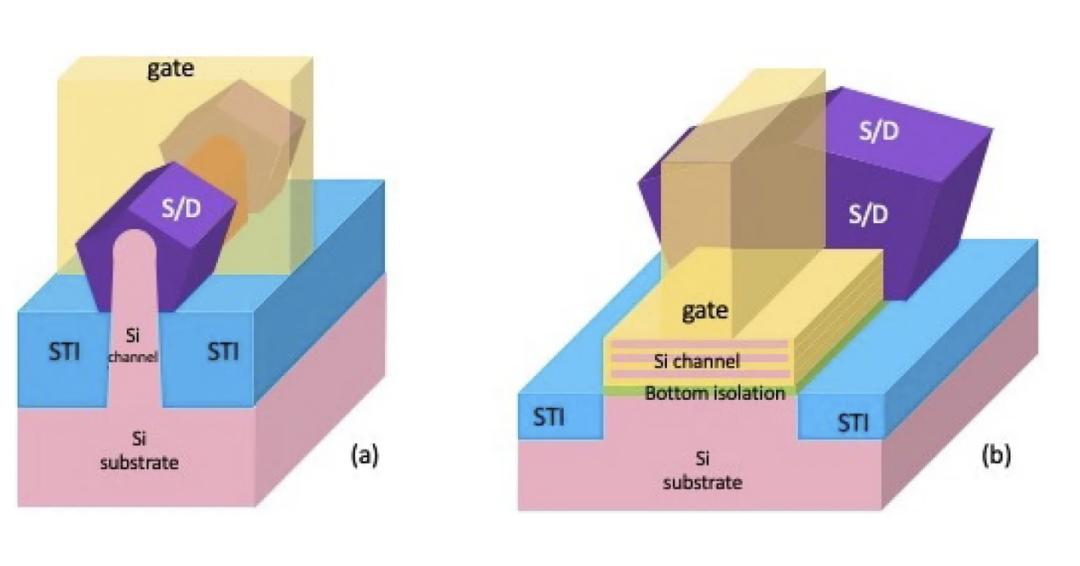
Group 1: TSMC's 2nm Technology - TSMC is set to begin mass production of its 2nm technology in Q4 2025, marking a significant advancement in transistor architecture with the introduction of GAA (Gate-All-Around) transistors, which is the most substantial change since the FinFET technology was introduced in 2011 [1][2] - The 2nm process will enhance wafer production density by 30% to 50%, leading to a prolonged capital expenditure cycle, with SEMI predicting it will reach $156 billion by 2027 [1] - TSMC's N2 technology will provide performance and power efficiency improvements across all process nodes, addressing the growing demand for energy-efficient computing [1][2] Group 2: Performance Metrics - Compared to the 3nm N3E process, TSMC's 2nm technology will increase speed by 10% to 15% at the same power level, while reducing power consumption by 25% to 30% and increasing chip density by over 15% [2] - TSMC plans to launch the N2P process as an extension of the 2nm family, targeting mass production in H2 2026 for applications in smartphones and high-performance computing [2] Group 3: Advanced Packaging Challenges - The real bottleneck in the semiconductor industry is shifting from transistor density to advanced packaging technologies, particularly CoWoS (Chip-on-Wafer-on-Substrate) [3][17] - TSMC's CEO confirmed that supply remains tight and is expected to continue until 2025, with advanced packaging prices increasing by 10-20% annually, while logic wafer prices only rise by 5% [23] Group 4: CoWoS Capacity and Market Dynamics - TSMC is accelerating the expansion of its CoWoS capacity to meet the surging demand for AI chips, with projections for capacity to reach 125K wafers per month by the end of 2026 and further increase to 170K wafers per month by the end of 2027 [24] - NVIDIA is expected to secure over 70% of the CoWoS-L allocation, creating a structural advantage, while other major players like Broadcom and AMD are also vying for the remaining capacity [23][36] Group 5: Future Roadmap and Innovations - TSMC's roadmap includes the introduction of new technologies such as CoPoS (Chip-on-Package-on-Substrate) expected to be implemented post-2027, aimed at improving packaging area utilization and production efficiency [24] - The transition from FinFET to GAA technology signifies a generational shift in semiconductor manufacturing complexity, with a structural demand increase of 30-50% per wafer startup [36]
台积电 CoWoS 产能不足肥到英特尔?程正桦分析两原因不会100%满足
Jing Ji Ri Bao· 2025-12-16 23:49
Core Viewpoint - TSMC is facing capacity constraints in its CoWoS advanced packaging, leading to order overflow to other packaging companies, including Intel's EMIB technology, raising concerns about TSMC's market share loss. However, TSMC is actively investing in the CoPoS technology for future growth [1] Group 1: TSMC's Capacity and Market Dynamics - TSMC's CoWoS advanced packaging capacity is expected to reach 70,000 to 80,000 units this year, doubling from last year's 30,000 units, with projections of 110,000 to 120,000 units by 2026 [1] - Despite TSMC's capacity expansion, there is a growing gap in demand, leading to orders being diverted to OSAT manufacturers and even Intel's EMIB process, which is attracting clients like Google and Meta due to its lower costs and higher yields [1] - Concerns about TSMC's CoWoS capacity expansion are overshadowed by a more significant shortage in N3 advanced process capacity, which is critical for upcoming chips from NVIDIA, AMD, and Google [1] Group 2: Capital Expenditure and Technology Transition - Discussions are ongoing regarding TSMC potentially increasing its capital expenditure for next year, primarily focused on N3 capacity expansion, which is expected to rise from around 120,000 units to 150,000 to 160,000 units [2] - TSMC's cautious approach to expanding CoWoS capacity is attributed to the increasing size of Blackwell chips, which leads to more waste when using round wafers. The company is developing CoPoS technology to optimize future production [2] - Intel's EMIB packaging business is positioned advantageously due to its smaller embedded bridging chips, which reduce material costs and offer a price advantage of 50% compared to TSMC's CoWoS [2] Group 3: Revenue Growth and Market Trends - TSMC's AI revenue has surpassed that of Apple this year, with AI chips for clients like Microsoft and NVIDIA commanding higher average selling prices (ASP), leading to a projected revenue growth of 26% by 2026, exceeding market consensus of 15-20% [3] - The market for ASICs (custom chips) is expected to surpass that of GPUs by 2027, driven by the increasing usage of AI models, as ASICs offer lower operational costs compared to general-purpose GPUs [3] - Companies like Google and AWS are promoting their self-developed chips (TPUs) alongside cloud services, enhancing customer willingness to rent computing power, with Google offering competitive pricing at $0.5 per MW of computing power [3]
英伟达狂扫台积电80万片晶圆!2026年AI芯片大战一触即发
Sou Hu Cai Jing· 2025-12-11 08:38
Core Insights - TSMC's advanced packaging capacity is fully booked, with NVIDIA accounting for over half of the orders, indicating strong demand for semiconductor manufacturing [1] - NVIDIA has reserved 800,000 to 850,000 wafers for 2026, significantly outpacing competitors like Broadcom and AMD [1][3] Group 1: NVIDIA's Capacity Reservation - NVIDIA's large-scale capacity reservation is primarily to meet the growing production demands for the Blackwell Ultra chip and to prepare for the next-generation Rubin architecture [3] - Current orders do not include potential demand from the Chinese market for the H200 AI chip, suggesting that NVIDIA's capacity needs may increase further [3] Group 2: TSMC's Response to Demand - TSMC is actively expanding its advanced packaging facilities, planning to build eight wafer fabs at the AP7 plant and introducing two new packaging factories in Arizona, expected to start mass production in 2028 [3] - Due to limited capacity, TSMC has decided to outsource some processes of its CoWoS advanced packaging to companies like ASE and SPIL in Taiwan [3] Group 3: Industry Alternatives and Technology - The outsourcing decision has prompted some companies to consider alternative solutions, with Intel's EMIB technology gaining attention as a viable option [3] - EMIB offers advantages in area and cost, allowing for highly customized packaging layouts, but for GPU suppliers like NVIDIA and AMD, TSMC's CoWoS remains the preferred solution due to its bandwidth, transmission speed, and low latency requirements [3]
台积电11月营收同比增24.5%,产能爆单引资本看多!
Ge Long Hui· 2025-12-10 07:28
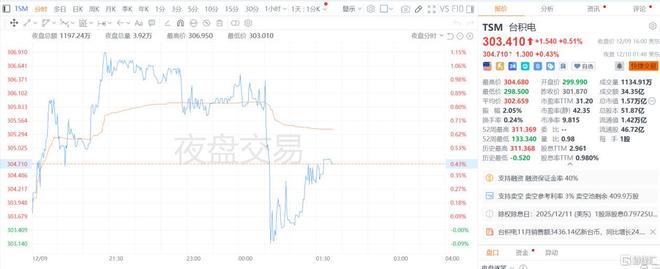
Core Viewpoint - TSMC's November revenue report for 2025 shows continued growth driven by strong demand for advanced processes, although there was a month-over-month decline in revenue [1][4]. Revenue Summary - TSMC's November sales reached NT$343.61 billion, representing a year-over-year increase of 24.5%, marking a record high for the same period, but a month-over-month decline of 6.5% from NT$367.47 billion in October [4][5]. - Cumulative sales from January to November totaled NT$3.47 trillion, reflecting a year-over-year growth of 32.8%, the first time surpassing NT$3.4 trillion in this period, representing the best performance in history [4][5]. Capacity Expansion - TSMC is experiencing significant demand for advanced packaging, particularly for its CoWoS (Chip on Wafer on Substrate) technology, driven by orders from major clients like NVIDIA, Google, and Amazon [6][7]. - The company is actively expanding its CoWoS-L and CoWoS-S production capacities to meet the increasing demand, with plans to reach a monthly capacity of 100,000 wafers by the end of 2026 [7]. Market Performance - In the secondary market, TSMC's American Depositary Receipts (ADRs) saw a slight increase of 0.51%, with the stock price rising over 55% year-to-date [2]. Analyst Upgrades - Bernstein has raised its target price for TSMC, citing accelerated growth in advanced packaging demand driven by artificial intelligence [8]. - The new target price is set at NT$1,800 per share, up from the previous NT$1,444, with an equivalent ADR price of $330 [9].