
券商

Search documents
手里有500w,现在应该怎么投?
雪球· 2025-09-16 08:28
Core Viewpoint - The article discusses investment strategies for a personal investor with 5 million yuan in idle funds, emphasizing the importance of safety and realistic return expectations in the current market environment [2][4]. Investment Strategy - The investor has a time horizon of at least 3-5 years and seeks to maintain capital safety while accepting a 10-15% volatility with an expected annual return of 5-6% [6][10]. - Achieving a 5-6% annual return while ensuring capital safety is possible but not guaranteed, as it may involve accepting potential capital losses [6][7]. Asset Allocation Recommendations - Certain products should be avoided, such as insurance products due to their complex terms and low returns, and short-term debt or cash products which do not meet the return expectations [12][13]. - Recommended investment options include: - Bank wealth management products, particularly those with multi-asset strategies, which can provide better risk-return profiles [13]. - Securities firm asset management products that offer fixed income plus strategies, requiring careful selection and professional advice [13]. - Public and private equity products, as well as broad-based indices, which can be suitable for long-term investment but require professional guidance for selection [14]. Specific Investment Suggestions - The investor is advised to allocate funds into a diversified portfolio, with a suggested allocation of 25% in global assets, 25% in quantitative strategies, and 50% in fixed income [19][20]. - The investment should be executed in phases, with an initial investment of 30-50% of the total amount, followed by gradual investments based on market conditions and advice from the investment manager [23][24]. Conclusion - The article emphasizes the importance of understanding the risks involved in investment and the need for a well-thought-out strategy that aligns with the investor's financial goals and risk tolerance [9][22].


策略专题:牛市中的ETF资金变聪明了吗?
Tianfeng Securities· 2025-09-16 07:45
Group 1: Core Conclusions - The overall fund inflow of equity ETFs is inversely related to the market trend, influenced by broad-based ETFs [1][2] - After excluding broad-based ETFs, the turning point of ETF fund inflows lags behind the market trend by one month, reflecting the "dullness" of retail investors and the "muscle memory" formed in the later stages of a main upward trend [1][9] - Since the beginning of the year, net inflows have been relatively leading in technology growth, non-bank financials, and certain core assets [2][14] Group 2: ETF Fund Inflow Observations - Since the beginning of the year, equity ETFs have only achieved net inflows in January and April, with the Shanghai Composite Index returns in those months being negative [8] - During the rapid market rise from June to August, industry and thematic ETFs saw net inflows of 70 billion, 274 billion, and 484 billion respectively, while in September, despite market volatility, net inflows still reached 358 billion [2][9] - The net inflow of ETFs linked to indices exceeding 20 billion since the beginning of the year can be categorized into three types: technology growth, non-bank financials, and certain core assets [14] Group 3: Marginal Changes in ETF Pricing Power - Overall, there is no significant advantage in the stock price increase of individual stocks with high ETF fund inflows, and there is even a slight negative correlation [3][16] - The phenomenon of chasing gains by ETF funds is evident, with inflow patterns skewed towards the right side during confirmed upward trends [3][17] - From May to September, the marginal increase in ETF pricing power indicates that ETF funds are becoming "smarter" in this bull market [3][19]
A股收评 | 三大指数小幅收涨 多重利好催化!机器人涨停潮
智通财经网· 2025-09-16 07:11
Market Overview - The market showed a slight recovery with the three major indices closing up, and a total trading volume of 2.3 trillion yuan, slightly higher than the previous trading day [1] - Over 3,600 stocks rose, with notable gains in the robotics industry chain, driven by government support for AI integration in toys [1] - The brokerage sector saw significant movement, with leading stocks like Chuangxin Securities nearing a limit-up [1][2] Sector Performance - The computer equipment, general equipment, and internet e-commerce sectors attracted significant capital inflow, with stocks like Huasheng Tiancai and Zhongke Shuguang leading the net inflow [3] - The logistics and unified market concepts led the gains, with multiple stocks hitting the limit-up [1] - The real estate, consumer electronics, and various financial sectors also showed positive performance [1] Notable Events - The successful launch of a satellite internet technology test satellite marks a significant achievement in China's space endeavors [4] - Policies to promote the construction of a "15-minute convenient living circle" in cities are set to be introduced, focusing on enhancing community services [5] - A framework cooperation agreement was signed between Yushutech and State Grid Hangzhou Power Supply, aiming to deepen collaboration in AI applications within the power sector [6] Future Outlook - Guojin Securities suggests that A-shares are approaching a third round of revaluation, recommending investors to focus on high-dividend assets, technology sectors, and unique structural opportunities in China's transformation [7][8] - Galaxy Securities highlights the ongoing advancement of AI applications, particularly in the gaming industry, which is expected to maintain high prosperity [9] - CITIC Securities anticipates rapid growth in the domestic energy storage sector, driven by new pricing mechanisms and the potential for enhanced profitability [10]

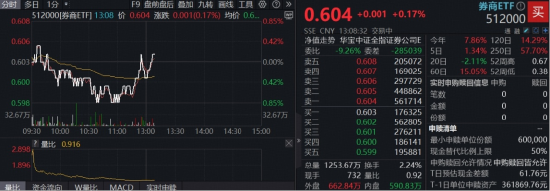
“旗手”率先转涨,资金加速涌入,顶流券商ETF(512000)连续吸金超44亿元,机构:A股第三轮重估渐行渐近
Xin Lang Ji Jin· 2025-09-16 06:36
Market Overview - The market experienced a brief surge followed by a pullback, with the leading broker ETF (512000) initially declining by 0.83% before recovering to close up by 0.17% [1] - The trading volume for the broker ETF exceeded 700 million yuan, indicating active trading [1] Broker Sector Performance - Broker stocks showed mixed performance, with Pacific Securities rising over 3%, and several others like First Capital Securities and Great Wall Securities increasing by more than 2% [1] - The broker sector's performance in the first half of the year showed significant improvement year-on-year, highlighting a mismatch between high profitability and low valuation, which enhances the sector's investment appeal [3] ETF Insights - The broker ETF (512000) has surpassed 33 billion yuan in size, setting a new historical high, with an average daily trading volume of 957 million yuan this year [5] - The ETF passively tracks the CSI All Share Securities Companies Index, encompassing 49 listed broker stocks, with nearly 60% of its holdings concentrated in the top ten leading brokers [5] Market Sentiment and Future Outlook - Analysts suggest that the A-share market is in a "slow bull" phase, with high-growth sectors remaining a priority [3] - The continuous inflow of funds into the broker ETF, totaling 4.426 billion yuan over 13 consecutive trading days, reflects strong market sentiment [3]
招商证券:流动性驱动港股新一轮上涨 聚焦三进攻+两底仓
智通财经网· 2025-09-16 01:41
Group 1: Market Overview - The Hong Kong stock market is expected to experience a new round of increases driven by liquidity, with several factors alleviating liquidity constraints in September [1] - The easing of liquidity constraints is attributed to the Federal Reserve's interest rate cuts, improved funding conditions in Hong Kong, continuous inflow of southbound funds, and the resolution of profit concerns following interim reports [1][2] Group 2: Economic and Policy Context - The current economic recovery is weak, with a notable divergence between old and new economic structures, while the Chinese government continues to implement proactive fiscal policies and moderately loose monetary policies [2] - The focus of industrial policy is on "Artificial Intelligence+", with the State Council issuing relevant action plans to accelerate the cultivation of new productive forces [2] Group 3: Liquidity and Valuation - The disappointing U.S. non-farm payroll data in August, which fell significantly below expectations, has led to a projected interest rate cut in September, with a cumulative reduction of 75 basis points expected this year [3] - Southbound funds have seen a net inflow exceeding 1 trillion HKD this year, accounting for approximately 30% of market transactions, providing significant support to the market [3] Group 4: Investment Strategy - The investment strategy includes three aggressive sectors (technology, non-ferrous metals, and non-bank financials) and two defensive positions (turnaround stocks and high-dividend stocks) [4] - Technology stocks are expected to see growth due to the resolution of interim report concerns and sustained capital expenditure, while the valuation of the Hang Seng Technology Index is only half that of the Nasdaq, indicating potential for recovery [4] - Non-ferrous metals are driven by a combination of U.S. dollar depreciation, low interest rates, and liquidity, while high-dividend stocks are in demand due to stable dividend capabilities and the growing interest in "fixed income plus" products among southbound investors [4]

英大证券晨会纪要-20250916
British Securities· 2025-09-16 01:38
Core Views - The A-share market is expected to continue a volatile upward trend, with no clear mainline driving the market, leading to rapid rotation of hotspots and dispersed profit effects [1][11] - Short-term factors do not indicate a significant upward push for the index, nor are there elements suggesting a deep adjustment [1][11] - The medium to long-term outlook remains positive due to China's strong economic resilience, clear industrial upgrading trends, and ongoing capital market reforms [1][11] Market Overview - On Monday, the three major indices opened higher but showed divergence, with the Shanghai Composite Index struggling due to declines in bank stocks, while the ChiNext and Shenzhen Composite indices performed strongly, continuing their upward trend [4][11] - The overall market sentiment was moderate, with a total trading volume of 22,774 billion, and the Shanghai Composite Index closing at 3,860.50 points, down 0.26% [5][11] Sector Analysis - **Gaming Sector**: The gaming sector saw significant gains, supported by the approval of new game licenses, indicating a positive outlook for the industry [6][11] - **Battery Sector**: The battery and energy metals sectors were active, with government initiatives aimed at optimizing the industry and promoting advanced technologies like solid-state batteries [7][11] - **Semiconductor Sector**: The semiconductor sector remains promising, driven by national policy support and increasing global demand for AI and high-performance computing [8][11] - **Robotics Sector**: The robotics industry is expected to grow, supported by strong internal growth momentum and favorable government policies [9][11] - **Agriculture Sector**: The agricultural sector, particularly in livestock, is poised for opportunities due to government policies and increasing demand for smart agriculture solutions [10][11] Investment Strategy - The report suggests adopting different strategies to align with sector rotations, including holding quality companies with clear industry prospects, reducing exposure to overvalued sectors, and focusing on sectors with strong earnings certainty during pullbacks [2][12]
起拍价超3亿元!这家公司股份又被摆上“货架”
券商中国· 2025-09-16 01:23
锦龙股份的股权年内再度"上架"拍卖。 近日,锦龙股份公告称,东莞市新世纪科教拓展有限公司(以下简称"新世纪公司")持有公司的3000万股将在10月12日进行司法拍卖,起拍价合计3.14亿元, 这是 锦龙股份股权年内第三次被司法拍卖。 前两次分别涉及6230万股、3500万股,且均因一拍不顺进入二拍。 锦龙股份表示,若本次拍卖股份最终全部成交并完成过户,新世纪公司仍将持有公司16.29%股权,控股股东不会产生变化。 新世纪公司的债务问题仍需关注。就在9月12日,天眼查显示,该公司被东莞市中级人民法院立案执行,执行标的金额高达6.56亿元。这是新世纪公司今年以来标的 金额最大的执行案件。 年内第三次拍卖 京东司法拍卖网站显示,锦龙股份共有3000万股"上架",该竞拍将于10月12日开始,为期1天。上述股份被拆成10个标的,每个标的为300万股。此前有市场人士分 析,此举更容易促成竞拍。 这是锦龙股份年内第三次被司法拍卖。据悉,第一次拍卖在今年2月—4月进行,彼时实际控制人杨志茂和新世纪公司所持有的锦龙股份合计6230万股被同时拍卖, 最终新世纪公司持有的200万股被成功竞拍;杨志茂有3030万股被成功竞拍,但有3 ...

券商基金代销最新排名出炉,马太效应再加强;8月以来港股主题ETF吸金超千亿元 | 券商基金早参
Mei Ri Jing Ji Xin Wen· 2025-09-16 01:15
Group 1 - The latest ranking of fund distribution by securities firms shows a significant concentration effect, with 57 firms entering the top 100, indicating a strong trend of dominance among leading firms [1][2] - The top three firms in fund distribution are CITIC Securities, Huatai Securities, and Guotai Junan, reflecting the consolidation effect in the industry [1][2] - The top ten institutions account for nearly 59% of the total equity fund holdings among the top 100, highlighting the increasing concentration in the fund distribution market [1][2] Group 2 - Since August, Hong Kong-themed ETFs have attracted over 100 billion yuan in net subscriptions, indicating increased investor confidence in the Hong Kong market [3][4] - The technology and innovative pharmaceutical sectors are particularly favored, with significant net inflows into related ETFs, which may enhance the valuation levels of associated companies [3][4] - The large-scale inflow into Hong Kong ETFs is expected to boost market sentiment and inject new vitality into the Hong Kong stock market [3][4] Group 3 - Huatai-PB's Hong Kong subsidiary has received regulatory approval for multiple licenses, marking a significant step in its international expansion [4] - This approval is expected to enhance the company's global asset allocation capabilities and strengthen its competitiveness in international markets [4] - The development may encourage other public funds to accelerate their internationalization efforts, positively impacting the financial sector's openness [4] Group 4 - Southwest Securities announced that its subsidiary, Xizheng International Securities, will lose its listing status due to failure to meet resumption guidelines [5][6] - Although this subsidiary's scale is small and has a low impact on the overall operations of the company, it reflects challenges faced by smaller securities firms in overseas operations [5][6] - The company is proactively planning a transformation of its overseas business, indicating a strategic adjustment in response to market conditions [5][6]



中金:股市配置的空间
中金点睛· 2025-09-15 23:31
Core Viewpoint - Financial cycle adjustments lead to significant changes in asset allocation, with a systematic increase in the proportion of safe assets and a decrease in real estate allocation, while stock assets may see a systematic increase [2][3][4]. Group 1: Financial Cycle Adjustments - Financial cycle adjustments indicate a shift in economic growth models, emphasizing efficiency improvements from technological innovation and population quality [3][4]. - The analysis shows that after a peak in real estate prices, the proportion of safe assets increases by over 5 percentage points in the fifth year, while real estate allocation decreases by about 8 percentage points, and stock allocation increases by approximately 3 percentage points [2][3]. - In the sixth to tenth years post-peak, safe asset allocation rises by around 5 percentage points, real estate allocation declines by about 10 percentage points, and stock allocation increases by approximately 5 percentage points [2][3]. Group 2: Asset Allocation Changes - The adjustment in the financial cycle leads to a significant change in investor risk preferences, with a tendency for safe assets to increase in allocation [5][6]. - International experiences show that after a financial cycle peak, the proportion of real estate in household asset allocation decreases systematically, while stock-related assets increase [7][10]. - For example, in the U.S., even after real estate prices recovered to previous highs, the allocation to real estate decreased from 45.0% to 36.0%, while stock-related assets increased from 36.9% to 44.4% [8][10]. Group 3: Impact on Chinese Market - In China, the proportion of safe assets in urban households is estimated to rise from about 16% in 2021 to approximately 27% by Q3 2025, while real estate allocation is expected to decrease from 74% to 58%, and stock-related assets to increase from 9% to 15% [16][17]. - The shift in monetary policy, particularly the increase in fiscal contributions to money supply, is expected to support the rise of stock allocations while reducing the appeal of real estate investments [17][20]. - The analysis indicates that the stock market's elasticity to monetary supply has increased, while the elasticity of the real estate market has decreased, suggesting a shift in investor focus towards equities [22][24]. Group 4: Sector Performance and Valuation - The differentiation in return on equity (ROE) and return on assets (ROA) between traditional and new economy sectors has become more pronounced, with new economy sectors showing improvement while traditional sectors lag [51][52]. - The valuation of new economy sectors has increased significantly, while traditional sectors have seen little change, indicating a potential need for traditional sectors to improve their valuations to sustain market growth [56][57]. - The analysis of A-share market performance shows that the new economy sectors have outperformed traditional sectors, aligning with the broader trend of efficiency-driven growth [59].

招商策略:流动性驱动港股新一轮上涨 聚焦三进攻+两底仓
智通财经网· 2025-09-15 23:12
Core Viewpoint - The Hong Kong stock market is expected to experience a new round of increases driven by liquidity, with both internal and external liquidity remaining abundant [1][2]. Liquidity and Valuation - Factors constraining liquidity have eased, including the Federal Reserve's interest rate cuts, improved funding conditions in Hong Kong, continuous inflow of southbound funds, and the resolution of profit concerns following the interim reports [2][3]. - Southbound funds have seen a net inflow exceeding 1 trillion HKD this year, accounting for about 30% of market transactions, becoming a significant market support [3]. Fundamental and Policy Analysis - The earnings growth of Hong Kong companies is at a historically low level, with a clear division between old and new economic structures [2]. - China is maintaining a more proactive fiscal policy and moderately loose monetary policy, emphasizing the effectiveness of policy implementation [2]. Investment Strategy - The recommended investment strategy includes three offensive sectors (technology, non-ferrous metals, and non-bank financials) and two defensive positions (turnaround stocks and high-dividend stocks) [4]. - Technology stocks are expected to see sustainable growth potential, with the Hang Seng Technology Index valued at only half of the Nasdaq [4]. - Non-bank financials are benefiting from record trading volumes and improved investment returns [4]. - High-dividend strategies are supported by a stable dividend yield of 6.12% from the Hang Seng High Dividend Yield Index, with increasing demand for dividend stocks [4].