天然气

Search documents
欧洲天然气价格谁主沉浮
Jing Ji Ri Bao· 2025-10-05 22:00
Core Viewpoint - The article discusses the implications of energy independence and security for the European Union (EU), emphasizing the challenges posed by geopolitical conflicts and internal disparities among member states in achieving a sustainable energy policy [1][4]. Group 1: Energy Policy and Strategic Autonomy - The EU's strategic autonomy relies heavily on an independent and sustainable energy policy, which is crucial for economic development and international cooperation [1][4]. - The EU plans to purchase $750 billion worth of U.S. natural gas, oil, and nuclear products by 2028, highlighting the importance of natural gas in the energy structure and its role in the EU's re-industrialization efforts [1]. Group 2: Energy Transition Challenges - The EU has accelerated its energy transition policies due to the Ukraine crisis and the need for green industrial development, recognizing the importance of energy security for policy independence [2]. - There are significant internal disparities among EU member states regarding energy transition, with Eastern European countries like Poland being resistant due to their reliance on coal and traditional oil and gas resources [3]. Group 3: Market Dynamics and Price Influences - Geopolitical conflicts, particularly the ongoing Ukraine crisis, have significantly impacted European natural gas prices, with recent expectations of Russian gas returning to Europe leading to price drops [1][3]. - The EU's energy supply diversification efforts have been challenged by the recent winter's gas supply tightness, with storage utilization dropping below 35%, necessitating high levels of gas imports despite elevated global prices [3].
不给美国面子!土耳其将继续购入俄天然气,能源安全才是硬指标
Sou Hu Cai Jing· 2025-10-05 18:12
Group 1 - Turkey's Energy Minister Arpaçlan Bayraktar stated that Ankara will continue to procure natural gas from all available suppliers, including Russia, without plans to comply with U.S. demands to cut off Russian gas [1][3][10] - The backdrop of this situation is complex, as Trump had previously signaled that Turkey might agree to stop purchasing Russian oil and gas in exchange for new sanctions against Moscow [2][6] - Turkey's stance prioritizes energy security and supply stability over political considerations, emphasizing the need to ensure uninterrupted gas supply for its citizens [3][5][10] Group 2 - Turkey's energy consumption is high, and the country aims to diversify its energy sources while still relying heavily on Russian gas, indicating a pragmatic approach rather than a simple alignment with one side [5][9] - The U.S. is dissatisfied with Turkey's decision, as Trump's plan would allow the U.S. to increase its energy exports to replace Russian supplies, but Turkey finds the U.S. alternatives costly and less reliable [6][9] - The geopolitical dynamics within NATO are complicated, with Turkey maintaining energy ties with Russia while being a key NATO member, creating a delicate balance between the two [8][10] Group 3 - The Kremlin views Trump's intentions as a way to force global markets to pay more for U.S. oil and gas, highlighting the economic motivations behind U.S. energy policies [7][9] - Turkey's geographical position as a critical energy transit hub complicates its ability to follow U.S. directives, as cutting off Russian supplies could harm its energy security and regional influence [8][10] - The ongoing energy strategies of Turkey, Russia, and the U.S. reflect a broader geopolitical struggle, with Turkey seeking to maintain its energy partnerships while navigating pressures from both the U.S. and the EU [9][10]


俄高层在中国拍胸脯保证,3个月后的年底,俄罗斯要出全力了
Sou Hu Cai Jing· 2025-10-04 03:13
Core Insights - Russia's commitment to increase gas exports to China through the "Power of Siberia" pipeline to 38 billion cubic meters by the end of 2025 reflects a significant shift in the global energy landscape [3] - The urgency for Russia to find new export channels, particularly to China, stems from the loss of European markets due to the ongoing Russia-Ukraine conflict [2][7] Energy Export Dynamics - Russia's energy exports to China are projected to exceed $80 billion this year, with natural gas accounting for over 40% of this figure [4] - In July, Russian natural gas supply to China increased by 11% year-on-year, reaching 4.25 billion cubic meters, with the "Power of Siberia 1" pipeline achieving a record monthly delivery of over 3.5 billion cubic meters [4] Infrastructure and Technological Enhancements - Significant technical improvements have been made to ensure the efficient operation of the pipeline, including the addition of four ultra-high-pressure compressors and the expansion of certain pipeline sections, increasing daily gas delivery capacity from 10 million cubic meters to 12 million cubic meters [6] - A centralized control center in Moscow utilizes advanced digital management systems to monitor pipeline conditions in real-time, allowing for rapid responses to emergencies [6] Strategic Importance and Future Plans - The urgency to convert underground resources into cash to alleviate fiscal pressure is driving the accelerated use of energy pipelines, making them critical strategic assets for Russia [7] - Plans are underway to enhance the existing "Power of Siberia 1" pipeline's capacity from 38 billion cubic meters to 44 billion cubic meters, alongside the development of a new "China-Russia Far East Gas Pipeline" expected to supply an additional 12 billion cubic meters annually [13] Regional Energy Cooperation - The successful operation of the "Power of Siberia 1" pipeline has deepened Sino-Russian cooperation, but it has also highlighted the need for additional cross-border pipelines to meet growing demand [14] - Long-term goals include the "Power of Siberia 2" pipeline, which aims to deliver 50 billion cubic meters annually, potentially transforming energy cooperation between China and Russia into a multi-line network with a total capacity exceeding 100 billion cubic meters [15] Geopolitical Implications - These cross-border energy projects are poised to influence not only the energy dynamics between China and Russia but also the broader regional energy landscape [18] - The partnership symbolizes a strategic bond between the two nations amidst complex international circumstances, with both countries enhancing risk management in energy trade, including a significant increase in local currency settlements [20]
“阿里云端一号”在高高原无人装备测试基地首飞;禾赛科技成为全球首个年产过百万的激光雷达企业丨智能制造日报
创业邦· 2025-10-04 03:10
Group 1 - Uzbekistan's Buka solar project successfully achieved full-capacity grid connection, setting a new record for similar large-scale solar projects in the country. The project is expected to generate over 500 million kilowatt-hours annually, saving more than 160,000 tons of standard coal and reducing carbon dioxide emissions by approximately 440,000 tons each year [2] - Hesai Technology announced that it has become the world's first lidar company to produce over one million units annually, with the 1,000,000th lidar unit officially rolling off the production line at the end of September 2023 [2] - GCL Group's LNG plant in the Ogaden Basin of Ethiopia officially commenced production, with the opening of a 200,000 cubic meter modular LNG facility. This event coincided with the groundbreaking of additional large-scale projects, including LNG liquefaction and natural gas power generation [2] Group 2 - The "Ali Cloud No. 1," China's first heavy-load fixed-wing drone designed for high-altitude operations, successfully completed its maiden flight at an altitude of over 4,300 meters in Tibet. The drone has a maximum cruising speed of 150 km/h, a maximum takeoff weight of 100 kg, a wind resistance capability of up to level 6, and a maximum endurance of 4.5 hours [2]


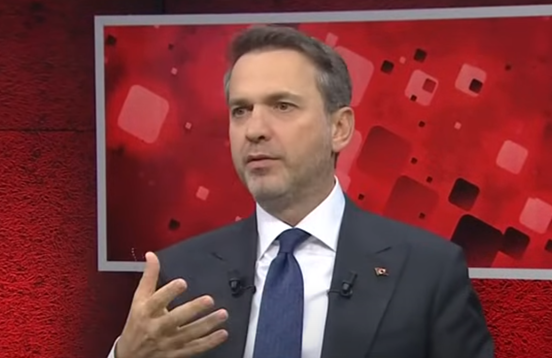
美媒:土耳其能源部长称采购俄油是企业“商业决策”,暗示土方不愿切断与俄能源联系
Huan Qiu Wang· 2025-10-03 11:09
Core Viewpoint - Turkey's Energy Minister Alparslan Bayraktar stated that purchasing Russian oil is a commercial decision made by refining companies, indicating Turkey's reluctance to comply with U.S. President Trump's calls to sever energy ties with Russia [1][3]. Group 1: Turkey's Energy Strategy - The decision to import Russian oil is described as both a technical necessity and a commercial choice, given that Turkish refineries were originally built to process crude oil from neighboring regions [3]. - As winter approaches, Turkey aims to ensure gas supply from various sources without discrimination, including Russia, Azerbaijan, Iran, and Turkmenistan [3]. Group 2: U.S. Pressure and Responses - The U.S. is intensifying pressure on allies to reduce energy trade with Russia, with Trump urging Turkey to stop purchasing Russian oil during a meeting with President Erdogan [3][4]. - Hungary's Prime Minister Orban expressed concerns that abandoning Russian oil and gas would lead to economic disaster for landlocked countries like Hungary, reflecting a broader resistance among certain nations to U.S. demands [3]. Group 3: Trade Relations - Turkey is the fourth-largest trading partner of Russia, with bilateral trade reaching $52 billion last year, highlighting the economic ties that complicate the energy trade situation [4].
朱共山见证协鑫埃塞俄比亚LNG工厂投产 开启中非能源合作新篇章
Jing Ji Guan Cha Bao· 2025-10-03 08:05
Core Viewpoint - The inauguration of the GCL-Poly Energy Holdings Limited's LNG plant in Ethiopia marks a significant milestone in Sino-African energy cooperation and represents Ethiopia's first step towards energy independence through domestic oil and gas production [1][2] Group 1: Project Details - The GCL-Poly LNG plant in Ethiopia has a capacity of 200,000 cubic meters per day and is expected to produce 50,000 tons of LNG annually, supplying local industrial parks and end-users [2] - The project utilizes modular skid-mounted technology for efficient low-temperature liquefaction of the abundant natural gas resources in the Ogaden Basin [2] - The inauguration coincides with the groundbreaking of the second phase of the LNG plant and other major projects, including natural gas power generation and refining [1] Group 2: Strategic Importance - The project is seen as a flagship initiative under the Belt and Road Initiative in Africa, facilitating Ethiopia's transition from energy import reliance to self-sufficiency [2] - GCL-Poly aims to develop a complete oil and gas industry chain in Ethiopia, enhancing local economic development and improving living standards [2] - The project is a key step for GCL-Poly in expanding its overseas market presence and is a significant achievement in deepening Sino-African energy industry cooperation [2]
欧盟45亿欧元, 砸向俄液化天然气,“脱俄”成了国际社会的笑柄?
Sou Hu Cai Jing· 2025-10-03 05:30
Core Viewpoint - The European Union's (EU) proclaimed goal of reducing energy dependence on Russia is contradicted by the reality of increasing energy imports from Russia, particularly in liquefied natural gas (LNG) [1][3][10] Group 1: Energy Imports and Dependency - In the first half of this year, the EU imported natural gas and LNG from Russia amounting to €7.4 billion, an increase from €6.4 billion in the same period last year [3] - The EU's reliance on Russian LNG has grown, with purchases reaching €4.5 billion in the first half of the year [10] - Despite efforts to diversify energy sources, the EU's energy system remains deeply dependent on Russian gas due to its stability, low cost, and ample supply [3][5] Group 2: Political and Operational Discrepancies - There is a stark contrast between the EU's political declarations of "de-Russification" and the actual increase in energy procurement from Russia, leading to confusion among the public and energy companies [7] - The EU's energy transition plans are ongoing, but the immediate elimination of dependence on Russian gas is nearly impossible due to energy security, cost pressures, and public demand [8][12] Group 3: Challenges in Energy Transition - The ongoing import of LNG from Russia presents a significant challenge for the EU in its energy transition process, complicating the balance between energy security and political stance [12] - The flexibility of LNG transport allows the EU to continue energy transactions with Russia despite surface-level bans on pipeline supplies [5]
俄罗斯低估了我国对能源的需求,一旦开始供应,欧洲国家要慌了
Sou Hu Cai Jing· 2025-10-03 05:08
Core Viewpoint - The global energy landscape has been significantly altered due to the Russia-Ukraine conflict, leading Russia to pivot towards China as a major market for its energy exports [1][5][14] Group 1: Changes in Energy Exports - Prior to the conflict, Europe accounted for over 70% of Gazprom's natural gas exports, but this reliance has drastically decreased due to sanctions, with exports to Europe nearly halving in 2022 [3][5] - In 2022, Russian natural gas exports to Europe fell by over 40%, while China's natural gas consumption surged, exceeding 3600 billion cubic meters, marking a growth of over 10% from the previous year [5][6] - By 2024, the East Route pipeline's capacity is expected to reach 380 billion cubic meters, with China importing 227 billion cubic meters from Russia, representing nearly 30% of its total pipeline gas imports [7][12] Group 2: Strategic Shifts and Market Dynamics - Russia's shift towards the Asian market, particularly China, has become crucial for its energy strategy, compensating for the loss of European market share [9][11] - Despite the increased exports to China, Russia has had to lower prices to meet Chinese market demands, resulting in reduced revenue [11] - The geopolitical implications of this energy trade are significant, as China's energy security becomes more diversified and stable, reducing reliance on Middle Eastern and Australian supplies [9][14] Group 3: Future Projections - By 2025, it is anticipated that Russian natural gas supplies to China could exceed 1000 billion cubic meters, while Europe's energy gap will continue to widen due to reduced Russian supply [12][14] - The strategic miscalculation by Russia in underestimating China's energy demand has provided insights into the reconfiguration of the global energy market [14]

协鑫欧加登盆地LNG投产
Zheng Quan Shi Bao Wang· 2025-10-03 02:26
Core Viewpoint - The official launch of the 200,000 cubic meter liquefied natural gas (LNG) plant by GCL-Poly Energy Holdings Limited in the Calub camp of Ethiopia's Somali region marks a significant development in the region's energy sector, alongside the groundbreaking of additional large-scale projects including LNG liquefaction and power generation [1] Group 1 - The GCL-Poly's LNG plant has a capacity of 200,000 cubic meters, indicating a substantial investment in the energy infrastructure of Ethiopia [1] - The simultaneous groundbreaking of the second phase of the GCL-Poly LNG liquefaction project and other related industries such as natural gas power generation and refining highlights the company's commitment to expanding its operations in the region [1]
俄罗斯的尴尬:想在华发行“熊猫债”,但中国人不太敢买
Sou Hu Cai Jing· 2025-10-02 14:11
Core Viewpoint - Russian companies are facing significant challenges in raising cheap capital in China's bond market due to concerns from Chinese banks and investors about Western sanctions [1][5][7]. Group 1: Russian Companies' Urgency - The ongoing Russia-Ukraine war has severely impacted Russia's economy, limiting access to international financial markets and creating a pressing need for new financing channels [3][13]. - Major Russian energy companies are particularly affected and are looking to the Chinese bond market as a potential solution [3][5]. Group 2: Challenges in the Chinese Market - Despite the urgency from Russian companies, progress in issuing "Panda bonds" in China has been slow, with preparations taking nearly a year without significant advancement [5][9]. - Chinese regulatory changes aimed at facilitating foreign bond issuance have not translated into action, as investors remain hesitant [5][11]. Group 3: Concerns Over Sanctions - The primary concern for Chinese investors is the risk of Western sanctions, which have been extensive against Russia, leading to caution in engaging with Russian enterprises [7][9]. - The potential for sanctions has already affected Chinese companies, with past instances of sanctions imposed on them for dealings with Russia [7][9]. Group 4: Creditworthiness of Russian Bonds - The creditworthiness of Russian bonds is under scrutiny due to the deteriorating economic conditions in Russia, particularly in energy exports [9][11]. - Forecasts for oil and gas revenue have been significantly downgraded, raising doubts about the ability of Russian companies to meet debt obligations [9][11]. Group 5: Political vs. Market Dynamics - While there have been high-level political efforts to promote cooperation between China and Russia, market realities and investor caution prevail [11][15]. - The reluctance of Chinese investors to engage with Russian bonds reflects a prioritization of their own economic interests over political motivations [15][16].