无人机

Search documents
累计3379项国际标准,国际市场“含深度”何以飙升
2 1 Shi Ji Jing Ji Bao Dao· 2025-08-08 11:34
Core Insights - Shenzhen is set to release a record 202 local leading standards in 2024, with 245 international standards being developed, totaling 3,379 international standards, placing it among the top in the country [1] - The city has established four municipal standardization technical committees focusing on low-altitude economy, health care, elderly services, and virtual power plants, indicating a robust standard system [1] - Shenzhen's participation in international standard formulation reflects its maturity in global cooperation and competition, with an 82.2% participation rate in international standard development [1] Group 1 - The IETF's 125th meeting will be held in Shenzhen in March 2026, highlighting the city's growing role in international standard-setting [2] - Shenzhen's leading companies, such as Tencent and Huawei, are increasingly contributing to international standards due to their market share and technological advancements [2] - The city's export-oriented economy necessitates integration into global standard systems, with international standards serving as market access credentials [2] Group 2 - Shenzhen enterprises are transitioning from passive acceptance of international standards to active participation and leadership in standard formulation [3] - The competition among nations is shifting towards standard-setting and discourse power, making participation in international standards crucial for Shenzhen's international enterprises [4] - Key industries for Shenzhen's international standard participation include photovoltaics, drones, gene testing, and graphene, with over 20 international standards in energy storage being developed [4] Group 3 - The International Low Altitude Economy Cooperation Alliance was established in Shenzhen in May 2025 to promote industry standardization and develop unified global standards [5] - Since 2022, several international industry and standard organizations have settled in the He Tao Science and Technology Innovation Cooperation Zone, enhancing Shenzhen's standardization efforts [5] - The first international industry and standard organization cluster in China was inaugurated in He Tao, with 137 standards produced by the end of 2024 [5] Group 4 - The newly established European Standard Research Center in Shenzhen aims to leverage technological innovation and European standardization experience to create leading international standards [6] - Active participation in the "rules-making power competition" can yield significant economic benefits and enhance a country's discourse power in international affairs [6] Group 5 - Other cities like Beijing and Shanghai are also taking steps to enhance their international standard-setting capabilities, with specific targets for standard formulation by 2025 [7]
“服务+科技” 保险护航低空经济“飞起来”“飞得稳”
Jin Rong Shi Bao· 2025-08-08 08:01
Core Insights - The development of low-altitude economy is becoming a significant part of China's new productive forces, integrating general aviation and drone services, and is seen as a key area for fostering new productive forces in the country [1][2][8] - Ping An Property & Casualty Insurance is actively providing customized insurance products and services for the low-altitude economy, covering various scenarios from large aviation fleets to drones, with total risk coverage exceeding 90 billion yuan [1][2] Group 1: Low-altitude Economy Applications - In Henan Province, a drone successfully delivered packages to remote villages, solving the "last mile" delivery issue for residents [1] - In Hunan Province, a drone equipped with a smart temperature-controlled box is used to transport blood products quickly to hospitals, establishing a vital medical supply route [1] Group 2: Insurance Services and Innovations - Ping An Property & Casualty has developed a multi-layered, comprehensive insurance and service system for the low-altitude economy, addressing various risks including professional liability and cybersecurity [2][3] - The company has partnered with drone manufacturers to create a rapid claims process, allowing for quick repairs and direct payments to service providers, enhancing customer experience [4][5] Group 3: Industry Collaboration and Development - The insurance sector is collaborating with technology firms to innovate and adapt to the evolving low-altitude economy, focusing on smart risk control and new opportunities [6][7] - Ping An Property & Casualty announced the establishment of a research institute for emerging risks in the low-altitude economy, aiming to develop tailored insurance products and services [6][7] Group 4: Impact on Daily Life - The integration of low-altitude economy services into daily life is transforming how people access goods and services, with insurance playing a crucial role in ensuring stability and safety [8]


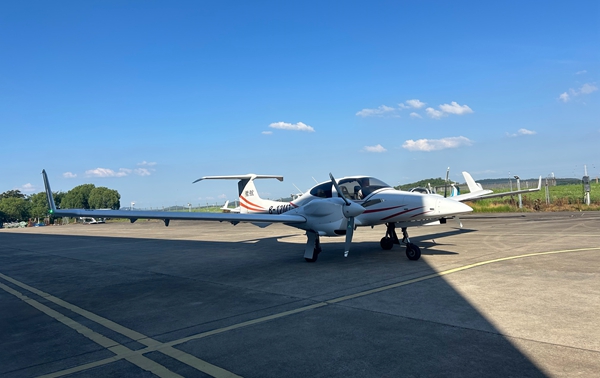
麦迪科技(603990.SH):为客户提供低空救援整体解决方案而非生产无人机本体硬件
Ge Long Hui· 2025-08-08 07:40
Core Viewpoint - The company has developed an autonomous AED drone equipped with its proprietary flight control system, offering a comprehensive low-altitude rescue solution rather than just manufacturing drone hardware [1] Group 1 - The AED drone features capabilities such as flight control, autonomous navigation, and AI emergency guidance [1] - The company has launched its first fully autonomous intelligent AED drone rescue solution and successfully conducted test flights, achieving a 4-minute emergency response circle [1]

【掘金行业龙头】卫星导航+无人机+低空,该公司星载荷产品完成组批生产,无人机领域多个项目完成新进展
财联社· 2025-08-08 04:44
Core Viewpoint - The article emphasizes the investment value of significant events, industry chain companies, and key policy interpretations, highlighting advancements in satellite navigation, drones, and low-altitude logistics applications [1] Group 1 - The company has completed batch production of satellite payload products, with over a hundred satellites operating smoothly in orbit [1] - Multiple projects in the drone sector have made new progress, indicating a strong focus on innovation and development [1] - The company is proactively developing products related to low-altitude logistics applications, positioning itself for future market opportunities [1]

打卡大熊猫繁育研究基地、考察高新技术企业 多国驻华使节深度感受蓉城魅力活力
Si Chuan Ri Bao· 2025-08-08 00:35
Core Insights - A diplomatic delegation from 30 countries visited Chengdu during the World University Games, exploring the city's cultural and technological advancements [5][6][7] Group 1: Panda Conservation and Cultural Exchange - The Chengdu Research Base of Giant Panda Breeding is recognized globally for its conservation efforts and serves as a cultural tourism site [6] - Delegates expressed admiration for the giant pandas and acknowledged China's efforts in panda conservation, enhancing their understanding of the species [6][7] Group 2: Urban Development and Technological Innovation - The Chengdu Planning Exhibition Hall showcased the city's historical evolution and future development plans through interactive multimedia displays [7] - Delegates noted Chengdu's commitment to sustainable development and its potential for international collaboration in urban planning [7] - At Sichuan WoFei ChangKong Technology Development Co., the delegation observed advancements in drone technology, highlighting Chengdu's role in the emerging low-altitude economy [7]

消费级硬件厂商忙跨界,大疆“两面”出击
Di Yi Cai Jing· 2025-08-08 00:33
Group 1: Market Overview - The market for robotic vacuum cleaners has many players, but the penetration rate remains low, with only 5.5% in China last year [2] - The global market for panoramic cameras is relatively niche, with only a few players, and the market size is estimated at 5.03 billion yuan in 2023 [6] - The competitive landscape for robotic vacuum cleaners is intense, with the top five brands holding a market share of 93.6% in China [2] Group 2: DJI's Product Launches - DJI launched its first robotic vacuum cleaner, DJI ROMO, on August 6, following the release of its first panoramic camera, Osmo 360, on July 31 [1] - The robotic vacuum cleaner is priced starting at 4,699 yuan, targeting the high-end market segment [2] - DJI's entry into these markets is seen as a potential disruptor, although the impact on market dynamics remains to be observed [1] Group 3: Technical Challenges and Innovations - The design of DJI's robotic vacuum has undergone three significant changes, including the transition from mechanical to solid-state LiDAR technology [4] - The production of robotic vacuums is more complex than that of drones due to challenges such as moisture and dirt, requiring extensive testing for dust and insect resistance [4] - The company aims to enhance the self-cleaning capabilities of its robotic vacuum to reduce the need for human intervention [5] Group 4: Supply Chain and Competitive Advantages - DJI benefits from a robust supply chain that allows for cost advantages and the reuse of technologies across different product lines [7] - The company has customized its sensor technology to improve power efficiency and reduce the overall size of its products [7] - The panoramic camera market is seeing a shift towards custom square sensors to balance high image quality and compact size, which may become a trend in the industry [7]

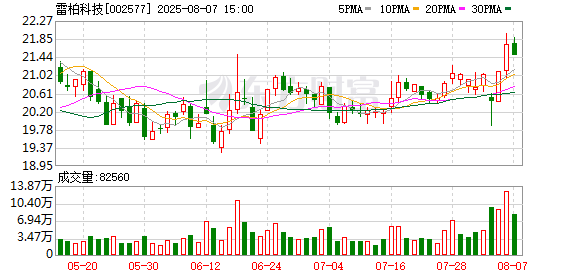
雷柏科技:已终止无人机相关业务
Zheng Quan Ri Bao· 2025-08-07 09:40
Group 1 - The company has terminated its drone-related business and will no longer engage in the research and sales of drones [2] - Shenzhen Zero Degree Intelligent Aircraft Co., Ltd. remains a subsidiary of the company, but it currently has no actual business operations [2]

众安保险:为低空经济赛道插上“隐形翅膀”
Bei Jing Shang Bao· 2025-08-07 08:11
Core Viewpoint - Insurance plays a crucial role as the "invisible wing" of the low-altitude economy, providing essential risk management and economic compensation to support the industry's growth [1][8]. Group 1: Role of Insurance in Low-Altitude Economy - The low-altitude economy is igniting consumer enthusiasm with activities like drone deliveries and aerial shows, but it also faces risks such as accidents and privacy breaches [1][3]. - Insurance is essential for managing these risks, offering a safety net and acting as a key driver for the industry's development [1][4]. - Since 2015, the company has partnered with DJI to provide comprehensive insurance solutions tailored to the unique needs of drone users, becoming the leading provider in the domestic low-altitude drone insurance market [4][6]. Group 2: Challenges and Innovations in Insurance - The rapid expansion of low-altitude applications introduces new risks, necessitating that insurance terms evolve alongside technological advancements [1][3]. - The company has developed innovative products, such as the "Zhong An · Anxin Fei Drone Liability Insurance," which offers coverage starting at 50 yuan per year, addressing the needs of various users [6][7]. - The rise of "black flying" incidents, where drones operate outside legal parameters, poses significant public safety risks, highlighting the need for effective management and precise liability determination [7][8]. Group 3: Data and Regulatory Needs - The low-altitude economy requires a robust insurance framework, but the lack of foundational data complicates risk assessment and pricing [9][10]. - Experts suggest that the insurance industry should collaborate with aviation, transportation, and meteorological sectors to establish a comprehensive regulatory framework for low-altitude insurance [10][11]. - The company is committed to investing over 20 million yuan and assembling a dedicated team to develop a complete insurance service platform for the low-altitude economy, aiming to enhance service quality and standardize solutions across the industry [12].

创新消费力| 众安保险:为低空经济赛道插上“隐形翅膀”
Bei Jing Shang Bao· 2025-08-07 07:53
Core Viewpoint - Insurance plays a crucial role as an "invisible wing" in the low-altitude economy, providing essential risk management and economic compensation to support the industry's growth [1][8]. Group 1: Role of Insurance in Low-Altitude Economy - The low-altitude economy is a burgeoning sector with a market potential in the trillions, encompassing various applications such as logistics, agriculture, and emergency rescue [4]. - Insurance is essential for managing risks associated with the low-altitude economy, including accidents, privacy breaches, and liability disputes [1][4]. - Since 2015, the company has partnered with DJI to offer comprehensive insurance solutions tailored to the unique needs of drone users, becoming the leading provider in the domestic low-altitude drone insurance market [1][5]. Group 2: Challenges and Innovations in Insurance - The rapid evolution of technology and the expansion of application scenarios in the low-altitude economy necessitate continuous updates to insurance policies to keep pace with emerging risks [1][5]. - The company has developed innovative products, such as the "Zhong An Anxin Fei Drone Liability Insurance," which offers coverage starting at 50 yuan per year, catering to a wide range of drone users [6][11]. - The insurance industry must address the increasing demand for coverage as the low-altitude economy grows, with the company reporting over 100,000 enterprise clients across various sectors [5][12]. Group 3: Data and Regulatory Challenges - The lack of sufficient historical data in the low-altitude economy complicates risk assessment and pricing for insurance products, making it difficult for companies to establish accurate premium rates [9][10]. - Collaboration with government and regulatory bodies is essential to develop a robust regulatory framework and data-sharing mechanisms to support the growth of low-altitude insurance [10][12]. - The company is actively exploring partnerships with various stakeholders in the low-altitude economy to enhance data collection and risk management capabilities [10][12].
两家深圳企业,打响一场“世界级商战”
3 6 Ke· 2025-08-07 07:23
Core Viewpoint - DJI and Insta360 are entering each other's markets, marking the beginning of a significant competitive landscape in the drone and panoramic camera sectors, both companies are based in Shenzhen, China [1][24]. Group 1: Market Dynamics - DJI launched its first panoramic camera, Osmo 360, on July 31, following Insta360's announcement of entering the drone market with its brand "影翎Antigravity" [1][3]. - DJI holds over 70% of the consumer drone market share globally, with an estimated revenue exceeding 80 billion yuan in 2024, while Insta360 commands an 81% share in the panoramic camera market [3][5]. - The global consumer drone market is projected to reach approximately $5.2 billion in 2024, with a potential growth to $13.9 billion by 2033, indicating a compound annual growth rate of over 10.32% [8]. Group 2: Competitive Strategies - Insta360's strategy focuses on leveraging its existing technology in panoramic photography to develop its drone, emphasizing lightweight design under 250g to comply with international regulations [11][15]. - DJI's approach involves integrating advanced optical components and algorithms, utilizing its extensive experience in drone technology to enhance the Osmo 360's capabilities, including 8K resolution and stabilization features [16][18]. - Both companies are pursuing diversification as a means to capture new market opportunities, with Insta360 aiming to expand beyond panoramic cameras and DJI exploring new product lines like the ROMO series of robotic vacuums [8][10]. Group 3: Regional Influence - The competition between DJI and Insta360 is characterized as a "Shenzhen Derby," highlighting the advantages both companies have gained from Shenzhen's robust industrial ecosystem, which supports innovation and talent acquisition [24][26]. - Shenzhen's electronic information industry is projected to exceed 2.7 trillion yuan in output value by 2024, providing a strong supply chain and talent pool for both companies [33]. - The local government initiatives, such as tax incentives and infrastructure development, have significantly contributed to the growth and visibility of both DJI and Insta360 [26][28].