母婴零售

Search documents
申万宏源证券晨会报告-20250820
Shenwan Hongyuan Securities· 2025-08-20 01:13
Group 1: Company Insights - The report initiates coverage on Mai Fushi (2556.HK) with a "Buy" rating, projecting a target market value of 18.65 billion RMB, indicating a 50% upside potential from current levels [2] - Mai Fushi's revenue is expected to grow significantly, with forecasts of 2.31 billion, 2.97 billion, and 3.82 billion RMB for 2025-2027, reflecting year-on-year growth rates of 48%, 29%, and 29% respectively [13] - The company has a strong execution capability, with an average revenue per employee of 997,000 RMB in 2024, indicating effective operational management [13] Group 2: Industry Trends - The report discusses the ongoing trend of "residential deposit migration," which is expected to accelerate as the equity market's fundamentals improve, with A-shares currently positioned favorably [12] - The report highlights that the equity market is likely to become the next destination for residential asset allocation, as the previous "stock-property seesaw" effect is no longer a constraint [15] - The report notes that by Q4 2025, the real risk-free interest rate for residents is expected to decline significantly, which will further drive the migration of deposits into the equity market [15] Group 3: Competitive Landscape - The competitive landscape for Mai Fushi is characterized by a focus on mid-to-large enterprises, which enhances customer retention and bargaining power [13] - The report emphasizes the differentiation of Mai Fushi's products compared to competitors like Weimeng and Youzan, particularly in terms of comprehensive service offerings and a full-link marketing approach [13] - The report indicates that the AI commercialization acceleration is a key catalyst for growth, with a notable increase in KA customer numbers and order sizes [13] Group 4: Market Performance - The report notes that the A-share market has shown signs of recovery, with a significant increase in the Shanghai Composite Index by 5.46% over the past month [1] - The report identifies sectors such as black home appliances and animal health as having strong recent performance, with respective increases of 12.36% and 47.87% over the past month [4] - Conversely, sectors like medical services and aviation equipment have underperformed, with declines of 10.77% and 21.91% over the same period [4]




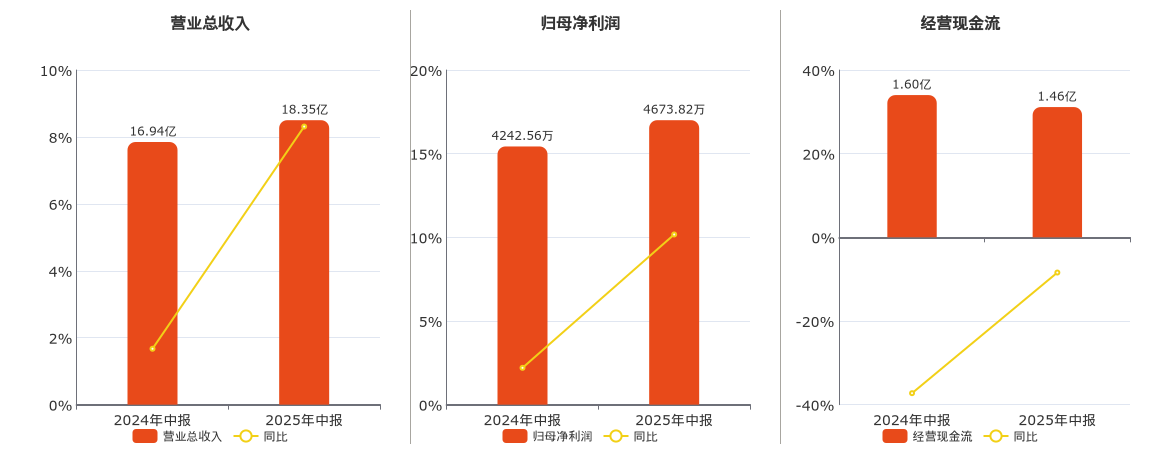
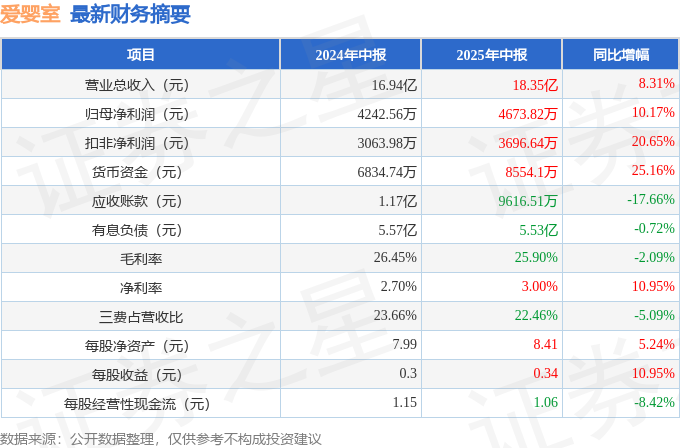
爱婴室2025年中报简析:营收净利润同比双双增长,公司应收账款体量较大
Zheng Quan Zhi Xing· 2025-08-19 22:59
财务报表中对有大幅变动的财务项目的原因说明如下:货币资金变动幅度为-80.48%,原因:公司提高闲置 资金使用效率,增加稳健型理财产品的购买。交易性金融资产的变动原因:公司提高闲置资金使用效 率,增加稳健型理财产品的购买。短期借款变动幅度为105.51%,原因:进一步巩固与银行的合作关系, 同时补充运营资金周转,保证日常运营的稳健进行。营业收入变动幅度为8.31%,原因:双渠道协同发 力。线下加速开设新店,并通过精细化运营提升单店贡献,线上依托新媒体平台拓展公域流量,实现线 上线下同步增长。营业成本变动幅度为9.12%,原因:伴随营业收入增加,成本相应增加。销售费用变动 幅度为2.65%,原因:销售业绩增长带来绩效激励支出增加。管理费用变动幅度为11.9%,原因:管理效能提 升带动业绩增长,相应激励性人力成本同步增加。财务费用变动幅度为-24.2%,原因:通过积极优化资金 管控,精准调配资金,主动缩减融资规模,带动利息支出下降;同时,在新租赁准则实施下,门店租赁 合同履约期内的相关融资费用随着租赁期的稳步推进逐渐减少。经营活动产生的现金流量净额变动幅度 为-8.42%,原因:线下加速开设新店带来的营运资金占用 ...


爱婴室20250819
2025-08-19 14:44
Summary of Conference Call for 爱婴室 (Aiyingshi) Company Overview - 爱婴室 is a leading company in the maternal and infant products industry, established in 1997, and listed on the Shanghai Stock Exchange in 2018. The company operates a business model based on membership, products, channels, and services, providing a range of maternal and infant goods and services [4][15]. Industry Insights - The maternal and infant industry market size exceeds 4 trillion RMB, with the retail market size around 1 trillion RMB. Recent policies promoting childbirth have shown positive effects, with some regions reporting a 17% increase in birth rates in 2024 [15][16]. Financial Performance - In Q2 2024, 爱婴室 achieved a revenue growth of 22%, marking its best performance in recent quarters. The gross margin remains stable at 26%-27%, while net profit margin has improved from a peak of 6.27% in 2019 to 3% in recent times [2][8]. - Revenue projections for 2025 to 2027 are 4 billion RMB, 4.47 billion RMB, and 4.88 billion RMB, with growth rates of 16%, 12%, and 9% respectively. Profit estimates for the same period are 137 million RMB, 167 million RMB, and 190 million RMB, with growth rates of 29%, 22%, and 15% [3]. Store Expansion and Operations - The number of stores has rapidly increased from 292 in 2020 to 471 currently, with expectations to reach 500 by the end of the year. Single-store revenue is projected to reach 7.3 million RMB in 2024, a 3% increase year-on-year, and is expected to exceed 8 million RMB this year [2][6]. Strategic Partnerships and Diversification - 爱婴室 is actively expanding its business by collaborating with 万代南梦宫 (Bandai Namco) to open 高达基地 (Gundam Base) stores, entering the IP retail sector. The company’s own brand products now account for approximately 13% of total sales, with a gross margin 20 percentage points higher than general brands [2][5][15]. Risks and Challenges - The company faces several risks, including: 1. The effectiveness of childbirth policies may fall short of expectations. 2. Increased competition within the industry, although leading companies may gain market share as smaller firms exit the market. 3. Uncertainty surrounding the expansion of IP retail, particularly with projects like 高达基地 [16][17]. Key Takeaways - 爱婴室 is positioned well within a growing industry, with strong financial performance and strategic partnerships enhancing its market presence. However, it must navigate potential risks related to policy effectiveness and competitive pressures while continuing to innovate and expand its product offerings [4][15].
孩子王(301078):净利润同增79%,多引擎驱动增长新范式
Shenwan Hongyuan Securities· 2025-08-19 13:08
Investment Rating - The report maintains an "Outperform" rating for the company, indicating a positive outlook compared to the market [6]. Core Insights - The company reported a significant increase in net profit by 79.4% year-on-year for the first half of 2025, driven by effective operational strategies and a diversified revenue model [6][8]. - The revenue for the first half of 2025 reached 4.911 billion yuan, reflecting an 8.6% increase compared to the previous year [6][8]. - The company is focusing on a "three expansion" strategy, emphasizing repurchase, franchise, and digitalization to enhance growth [6]. Financial Data and Profit Forecast - Total revenue projections for 2025 are estimated at 11.608 billion yuan, with a year-on-year growth rate of 24.3% [5]. - The forecasted net profit for 2025 is 402 million yuan, representing a 121.8% increase compared to the previous year [5]. - The gross margin for the first half of 2025 was reported at 27.7%, while the net margin improved to 2.9% [6][12]. Business Performance - The company's core business in maternal and infant products generated 4.327 billion yuan in revenue, with a year-on-year growth of 9.31% [6]. - The online sales of maternal and infant products accounted for 13% of total revenue, while offline sales dominated at 87% [6]. - The company has successfully implemented AI and acquisition strategies to enhance its growth potential, including the launch of AI-driven marketing tools and the acquisition of a leading hair care brand [6].
爱婴室:2025年上半年营收净利双增 渠道扩张与自有品牌成效显现
Zhong Zheng Wang· 2025-08-19 06:49
Group 1 - The company reported a revenue of approximately 1.835 billion yuan for the first half of 2025, representing a year-on-year growth of 8.31% [1] - The net profit attributable to shareholders was around 46.74 million yuan, with a year-on-year increase of 10.17% [1] - The non-recurring net profit attributable to shareholders was approximately 36.97 million yuan, showing a year-on-year growth of 20.65%, indicating improved profitability [1] Group 2 - The company focused on channel expansion and refined operations, accelerating the opening of new stores, with 34 new stores launched in 22 cities during the first half of the year [1] - The company upgraded its sixth-generation standardized store model, enhancing space design and product structure, which led to nearly a 20% increase in customer traffic and sales [1] - The company accelerated the launch of new products and category expansion under its own brands, with sales of proprietary brands exceeding 30% in multiple categories [1] Group 3 - The company plans to continue focusing on channel deepening and brand upgrading, while promoting digital transformation and supply chain optimization to strengthen its market position in the maternal and infant retail sector [2] - Industry insiders believe that the gradual implementation of national childcare subsidy policies and the recovery of consumer demand will support the company's steady growth through multi-channel expansion and the development of its proprietary brands [2]
爱婴室2025年上半年扣非后净利增长20.65% 自有品牌蓬勃发展
Zheng Quan Shi Bao Wang· 2025-08-19 03:57
Core Insights - The company reported a revenue of 1.835 billion yuan in the first half of 2025, representing a year-on-year growth of 8.31% [1] - The net profit attributable to shareholders was 46.738 million yuan, up 10.17% year-on-year, while the net profit after deducting non-recurring items was 36.966 million yuan, reflecting a growth of 20.65% [1] - The company plans to distribute a cash dividend of 1.30 yuan per 10 shares to all shareholders as part of its profit distribution plan for the 2025 interim period [1] Expansion and Operations - The company operates nearly 500 offline stores, leading the domestic market in the mother and baby specialty retail sector, particularly in cities like Shanghai, Ningbo, and Wuhan [2] - In the first half of 2025, the company accelerated its store expansion, opening 34 new quality mother and baby stores across 22 cities, enhancing its regional brand influence [2] - A new store model was launched in Shanghai, focusing on space optimization, product enhancement, and customer satisfaction, which has improved customer acquisition and operational efficiency [2][3] Product Development and Brand Strategy - The company has enhanced its private label products, achieving over 30% sales contribution from its own brands, including nutritional and health food series [4] - The company has introduced a "one-price" strategy for children's clothing to address consumer pain points related to price complexity and homogeneity [5] - The company announced a new corporate culture brand strategy aimed at becoming a leading mother and baby health brand in China, emphasizing responsibility, quality, professionalism, and innovation [5] Market Trends and Government Policies - The implementation of a national childcare subsidy policy starting January 1, 2025, will provide families with 3,600 yuan per year for each child until the age of three, which is expected to support sustainable growth in the mother and baby industry [5]
首创一系列消费新模式,提供基于商品的“一站式”育儿、成长和社交互动服务
Nan Jing Ri Bao· 2025-08-19 02:14
2021年,孩子王在深交所上市,中国母婴品牌诞生A股市值"新王",与乐友融合后,成为母婴童行 业首家交易额破百亿的企业。公司自2016年首次将母婴行业带进连锁百强排行榜以来,连续3年成为连 锁百强企业中增速前十的企业,并连续8年成为母婴童行业唯一入选企业,在母婴零售行业具有较为明 显的领先优势。成立以来,先后被商务部、江苏省商务厅评选为"电子商务示范企业";被商务部、工信 部等八部委评为"全国供应链创新与应用试点企业"。 昨天,记者从市发展改革委获悉,国家发展改革委近日发布《2024年度全国消费新场景典型案 例》,共收录91个消费新场景典型案例,我市"孩子王母婴童全渠道体验式消费"作为全省3例之一成功 入选。 据了解,孩子王品牌成立于2009年,是一家数据驱动的以用户为中心、基于用户关系经营的创新 型亲子家庭全渠道服务商。在我国零售商业内首创大店模式、首创行业育儿顾问式服务、首创"商品+服 务+社交"运营模式、首创重度会员制下的单客经济模式,为准妈妈及0—14岁儿童提供了基于商品的"一 站式"育儿、成长和社交互动服务,获得了业界与消费者良好口碑。 目前,公司在21个省份、200多座城市拥有孩子王&乐友全国门店 ...

孩子王(301078):全渠道稳健增长,利润率持续改善
HTSC· 2025-08-19 02:04
Investment Rating - The report maintains a "Buy" rating for the company [5][6]. Core Views - The company has demonstrated steady growth in both online and offline channels, with a significant improvement in profit margins [1][2]. - The company is expected to strengthen its competitive advantage in the mother and baby retail industry through both organic growth and acquisitions [1][4]. Revenue and Profitability - For the first half of 2025, the company reported revenue of 4.91 billion yuan, a year-on-year increase of 8.6%, and a net profit attributable to shareholders of 143 million yuan, up 79.4% year-on-year [1][2]. - The second quarter of 2025 saw revenue of 2.51 billion yuan, a 7.8% increase year-on-year, with a net profit of 112 million yuan, reflecting a 64.6% year-on-year growth [1][2]. Product and Channel Performance - In the first half of 2025, the company's milk powder revenue reached 2.73 billion yuan, growing by 12.2% year-on-year, while the baby products category generated 668 million yuan, up 3.8% year-on-year [2]. - Online sales of mother and baby products accounted for 43.9% of total revenue, with online sales increasing by 4.2% year-on-year to 1.898 billion yuan [2]. Operational Efficiency - The company's overall gross margin decreased by 2.0 percentage points to 27.7% due to a slight decline in milk powder sales margins, but operational efficiency improvements are expected to enhance margins in the future [3]. - The operating expense ratio decreased by 2.7 percentage points to 24.6%, with sales expense ratio down by 2.0 percentage points to 18.4% [3]. Future Earnings Forecast - The report raises the company's net profit forecasts for 2025-2027 by 20%, 26%, and 15% respectively, projecting net profits of 404 million yuan, 599 million yuan, and 790 million yuan [4]. - The target price is set at 19 yuan, corresponding to a 40 times price-to-earnings ratio for 2026 [4].
孩子王(301078):25H1业绩落于中枢偏上,看好新业务爬坡
NORTHEAST SECURITIES· 2025-08-19 01:37
Investment Rating - The report assigns a "Buy" rating for the company, indicating a strong expectation for stock price appreciation over the next six months [5]. Core Insights - The company's revenue for the first half of 2025 reached 4.911 billion yuan, representing an 8.64% year-on-year growth, while the net profit attributable to shareholders was 143 million yuan, with a net profit margin of 2.91%, an increase of 1.15 percentage points [1]. - The company's strategy of "three expansions" is showing effectiveness, focusing on the maternal and infant industry through business incubation and mergers and acquisitions, gradually building a multi-business matrix to achieve synergy and profit release [1]. - The company is expanding its franchise model, which is expected to enhance brand penetration and store performance, with same-store sales recovering and franchise stores increasing [2]. - The introduction of AI toys and partnerships in social e-commerce are expected to drive future growth, with significant sales and engagement metrics reported [3]. - The acquisition of a leading hair care company is anticipated to create a closed-loop ecosystem, contributing directly to profits and enhancing overall performance [3]. Financial Summary - The projected revenue for 2025 is 11.44 billion yuan, with net profits expected to reach 369 million yuan, corresponding to a price-to-earnings ratio of 43.95 [4]. - The company anticipates a revenue growth rate of 22.52% in 2025, with net profit growth projected at 103.48% [4]. - The financial outlook includes a steady increase in operating income and net profit over the next few years, with significant improvements in profitability metrics [4].
爱婴室(603214.SH):2025年中报净利润为4673.82万元、较去年同期上涨10.17%
Xin Lang Cai Jing· 2025-08-19 01:36
Core Insights - The company reported a total revenue of 1.835 billion yuan for the first half of 2025, marking an increase of 141 million yuan compared to the same period last year, achieving a year-on-year growth of 8.31% [1] - The net profit attributable to shareholders reached 46.7382 million yuan, an increase of 4.3126 million yuan year-on-year, reflecting a growth of 10.17% [1] - The company achieved a net cash inflow from operating activities of 146 million yuan [1] Financial Metrics - The latest debt-to-asset ratio stands at 53.56%, a decrease of 1.79 percentage points from the same period last year [3] - The gross profit margin is reported at 25.90%, an increase of 2.12 percentage points from the previous quarter [3] - The return on equity (ROE) is 4.01%, up by 0.18 percentage points year-on-year [3] - The diluted earnings per share (EPS) is 0.34 yuan, an increase of 0.03 yuan year-on-year, reflecting a growth of 10.95% [3] - The total asset turnover ratio is 0.73 times, an increase of 0.07 times year-on-year, representing a growth of 9.94% [3] - The inventory turnover ratio is 1.81 times, an increase of 0.19 times year-on-year, achieving a growth of 11.66% [3] Shareholder Information - The number of shareholders is reported at 22,700, with the top ten shareholders holding a total of 62.1977 million shares, accounting for 44.90% of the total share capital [3] - The largest shareholder is施環, holding 23.31% of the shares [3] - Other notable shareholders include莫锐强 (12.1%), Partners Group Harmonious Babv Limited (1.91%), and several investment funds [3]