
锂矿

Search documents
津巴布韦锂矿暂停出口,A股锂资源“自主可控”获追捧
2 1 Shi Ji Jing Ji Bao Dao· 2026-02-26 12:21
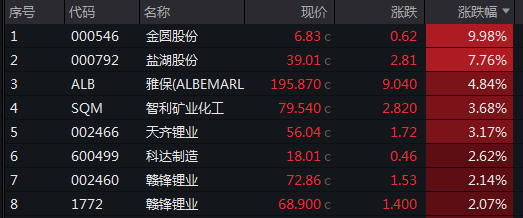
本就处于紧平衡的锂盐市场,供给端再添重要变量。 2026年2月25日,津巴布韦矿业部发布锂矿出口禁令,涵盖在途货物,且无明确恢复时间表。 津巴布韦,是过去几年全球锂精矿增长最迅速的国家之一,此前曾吸引多家中资锂业公司参与当地资源开发。 相关数据显示,2025年,中国进口锂精矿总量约为775.1万吨,其中从津巴布韦进口量达120.4万吨,占总进口量的15.5%左右,是仅次于澳大利亚的第二大 进口来源国。 因为有刚果(金)暂停出口引发2025年钴价上涨的案例在先,此次津巴布韦限制锂精矿出口也加重了市场各方对锂产品涨价的预期。 不过,节后碳酸锂期、现价格已经连续大涨,逼近今年1月下旬的前期高点,加之该品种多空博弈激烈,26日多个期货合约高开低走,锂矿指数涨幅也大幅 收窄至1.19%。 | 序号 | 代码 | 名称 | 现价 | 浙庆 | 涨跌幅 ▼ | | --- | --- | --- | --- | --- | --- | | 1 | 000546 | 美国股份 | 6.83 c | 0.62 | 9.98% | | 2 | 000792 | 非湖股份 | 39.01 c | 2.81 | 7.76% | | ...

解读津巴布韦暂停锂矿出口:严禁第三方贸易商出口 声明未提硫酸锂与深加工 有矿权企业仍可申请出口资格
Mei Ri Jing Ji Xin Wen· 2026-02-26 11:54
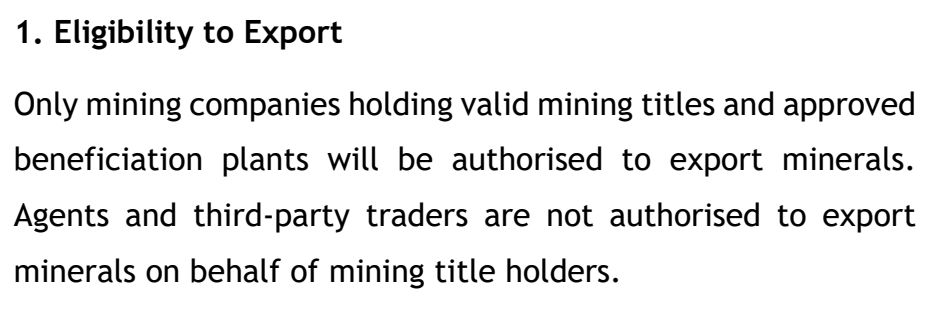
Core Viewpoint - The Zimbabwean government's export suspension on lithium raw materials and concentrates has caused significant fluctuations in the global lithium market, but the actual impact on compliant companies may be limited as the policy aims to regulate illegal exports and enhance local processing capabilities [1][2][4]. Group 1: Market Reaction - Following the announcement, shares of major lithium companies reacted positively, with SQM rising by 3.68% and ALB by 4.84%, while A-share lithium stocks showed mixed results, with Salt Lake Co. hitting a temporary limit up [1][2]. - The sudden nature of the announcement caught many industry players off guard, indicating the importance of Zimbabwe as a key lithium supplier in Africa [2][3]. Group 2: Policy Details - The Zimbabwean Ministry of Mines announced an immediate suspension of all unprocessed minerals and lithium concentrates for export, affecting all shipments in transit [4][6]. - Only companies holding valid mining rights and approved processing plants are permitted to export, while third-party traders are explicitly banned from the export chain [4][9]. Group 3: Compliance and Future Expectations - Companies with proper mining rights and export licenses are expected to face limited impacts, with a recovery in export activities anticipated within a short timeframe [1][18]. - The policy is seen as a corrective measure to address illegal export practices, with a long-term trend towards local processing of lithium resources being emphasized [1][19]. Group 4: Industry Trends - The construction of local refining facilities is viewed as an inevitable trend, as the majority of profits in lithium mining come from the refining stage [19]. - Companies like Huayou Cobalt are leading in local processing initiatives, while others are still in the planning stages [19][20].
博时市场点评2月26日:指数小幅震荡,通信行业涨幅领先
Xin Lang Cai Jing· 2026-02-26 11:37
Market Overview - The three major indices in the A-share market showed mixed results, with trading volume slightly increasing compared to the previous day [6] - The communication sector led the gains among the Shenwan first-level industries, with a rise of 2.84% [6] Currency Impact - The offshore RMB to USD exchange rate broke 6.84, while the onshore rate surpassed 6.87, both reaching new highs since April 2023 [1] - The appreciation of the RMB is attributed to a decline in external USD credit and a weakening USD index, supported by the resilience of China's economic fundamentals [1] - The strong performance of the RMB enhances the attractiveness of RMB-denominated assets, potentially increasing foreign capital inflows and improving overall market risk appetite [1] Real Estate Policy Changes - Shanghai's new real estate policy, known as "沪七条," significantly relaxes purchase restrictions and housing fund policies, including reducing the social security requirement for non-local residents from 3 years to 1 year [2] - The maximum loan amount for first-time homebuyers using housing funds has been raised from 1.6 million to 2.4 million RMB, with potential increases up to 3.24 million RMB [2] - This policy aims to lower the entry barriers for new residents and is expected to boost market sentiment, particularly in the real estate sector, which is crucial for stabilizing fixed asset investment and consumer confidence [2] Nvidia's Financial Performance - Nvidia reported Q4 revenue of $68.127 billion, a 73% year-over-year increase, with net profit rising 94% to $42.96 billion [3][10] - The data center business generated $62 billion in revenue, accounting for 91% of total revenue, and grew 75% year-over-year [10] - CEO Jensen Huang emphasized the "Inference Equals Revenue" concept, indicating that AI capabilities are transitioning from training to inference, which clarifies the business model and addresses concerns about the sustainability of AI capital expenditures [11] Lithium Supply Disruption - Zimbabwe announced a suspension of all lithium ore and concentrate exports, which is expected to exacerbate the short-term supply tightness of lithium for China, as approximately 19% of China's lithium concentrate imports come from Zimbabwe [4][12] - This export ban is likely to increase procurement costs and uncertainty for domestic lithium salt manufacturers, reinforcing the price increase logic in the lithium sector [12]

突发大动作!津巴布韦宣布:暂停锂精矿和原矿出口!这对中国影响有多大?
Sou Hu Cai Jing· 2026-02-26 11:04
Core Viewpoint - Zimbabwe has announced a complete suspension of lithium concentrate and raw lithium ore exports, impacting a significant portion of China's lithium imports and raising concerns about the potential disruption to the new energy industry chain in China [1][3]. Group 1: Event and Background - Zimbabwe is the fourth largest lithium producer globally, accounting for 10% of the world's total lithium production, and is China's second-largest source of lithium concentrate imports [3]. - In 2025, China imported 7.75 million tons of lithium concentrate, with 1.2 million tons (15.5%) coming from Zimbabwe, which has seen a 191% year-on-year increase in exports to China in 2024 [3]. - This is not the first time Zimbabwe has tightened its policies; it previously banned raw lithium ore exports in 2022 and imposed an export tax on lithium concentrate in 2025, with the full ban on concentrate exports initially set for 2027 [3]. Group 2: Reasons for the Ban - Zimbabwe aims to retain more value from its lithium resources by transitioning from being a raw material exporter to a processing nation, thereby keeping profits within its borders [5]. - The country is motivated by the desire to avoid merely selling raw materials while others profit from processing, similar to Indonesia's past actions with nickel exports [5]. Group 3: Impact on China - Short-term impacts include a further widening of the supply-demand gap for lithium, with a projected shortfall of 30,000 to 50,000 tons in 2026, exacerbated by the ban [8]. - Domestic lithium salt manufacturers are already facing low inventory levels, and the loss of nearly 20% of import sources may lead to production cuts for some smaller firms, resulting in a structural price increase for lithium carbonate [9]. - Long-term effects may lead to a more secure and robust new energy industry chain in China, as leading lithium mining companies have already established local processing capacities in Zimbabwe [10][11]. - The ban primarily affects smaller players that do not have localized operations, while larger companies may benefit from a wider competitive moat [11]. - This situation may accelerate China's efforts to achieve self-sufficiency in lithium resources and diversify its sourcing from other countries [12]. - The ban reflects a broader trend of resource-rich countries seeking to gain more control over their value chains in the new energy era, shifting the dynamics of global resource and manufacturing power [14].
津巴布韦禁止锂矿出口,碳酸锂直逼19万元/吨
高工锂电· 2026-02-26 11:00
Core Viewpoint - The ban imposed by Zimbabwe on the export of raw lithium and lithium concentrate is not only a short-term shock to supply and prices but also serves as a long-term warning regarding supply chain security [1][19]. Group 1: Ban Details - The Zimbabwean Ministry of Mines announced an immediate ban on all exports of lithium ore and lithium concentrate, including goods already in transit [3][4]. - The ban applies to all lithium raw ore and concentrate exports, with exemptions only for companies holding valid mining rights and approved processing/refining facilities [4]. - The long-term goal is to completely ban lithium concentrate exports by 2027, allowing only deep-processed products like lithium sulfate to be exported [4][5]. Group 2: Market Impact - Following the announcement, domestic lithium carbonate prices surged, with futures prices nearing 190,000 yuan per ton, and lithium mining stocks opened significantly higher [2]. - Zimbabwe is the largest lithium supplier in Africa and the fourth largest globally, making its export ban impactful on the global lithium market [8]. - If Zimbabwe halts lithium concentrate exports for one month, it could affect domestic production by approximately 10,000 tons of lithium carbonate equivalent [10]. Group 3: Industry Response - Major Chinese companies such as Huayou Cobalt, Zhongjin Lingnan, Shengxin Lithium Energy, and Yahua Group are key contributors to Zimbabwe's lithium supply [13]. - Huayou Cobalt has already launched a 50,000-ton lithium sulfate project in Zimbabwe, while Zhongjin Lingnan plans to start a 30,000-ton lithium sulfate project by Q3 2027 [14]. - Companies are responding differently to the ban; Zhongjin Lingnan has paused all exports and is awaiting further policy details, while Yahua Group has already shipped its lithium concentrate and does not expect production impacts [15][16]. Group 4: Global Resource Management Trends - The ban reflects a broader trend of resource-rich countries tightening control over their resources, as seen in the recent agreements among South American countries to manage lithium resources collectively [17][18]. - This shift indicates a move from freely traded commodities to strategically controlled resources, with countries seeking to maximize local value through processing and joint pricing mechanisms [18]. Group 5: Future Considerations - The Zimbabwean ban highlights the need for companies to develop stable, compliant, and controllable supply chains rather than merely focusing on cost advantages [20]. - Accelerating the development of recycling systems and diversifying technological routes will be essential for reducing reliance on lithium resources and ensuring industry security [21].


2.26犀牛财经晚报:全球债务膨胀至348万亿美元
Xi Niu Cai Jing· 2026-02-26 10:45
Group 1 - Huang Yanming, the director of Dongfang Securities Research Institute, stated that the next investment focus in A-shares will be on mid-cap blue chips, moving away from the previous high-growth tech and high-dividend strategies [1] - The investment focus will be on three main areas: globally priced cyclical goods such as chemicals, non-ferrous metals, agricultural products, and global shipping; manufacturing sectors related to technology and national strength enhancement, including military industry, robotics, and new energy; and technology sectors related to large model performance realization [1] Group 2 - The International Institute of Finance reported that global debt has surged to a record $348 trillion, increasing by nearly $29 trillion, marking the fastest growth since the onset of the COVID-19 pandemic [2] - Government debt in countries like the United States and the Eurozone exceeds $10 trillion [2] Group 3 - Several lithium mining companies expect Zimbabwe's lithium ore exports to resume within one month after a temporary suspension [3] - Companies like Zhongmin Resources and Yahua Group are preparing to submit supplementary materials for export applications, indicating that the ban is expected to be lifted soon [3] Group 4 - Overseas tech companies are increasingly turning to loans backed by chips, particularly GPUs, to fund their substantial AI investments, with Moody's beginning to rate GPU-backed debt [4] - NAND flash memory prices are rising due to ongoing shortages, prompting major manufacturers like Phison to require advance payments from customers [4] Group 5 - The Chinese smartphone industry is set to experience a comprehensive price increase starting in March 2026, with new models expected to rise by at least 1,000 yuan [5] - Major brands such as OPPO, OnePlus, Vivo, iQOO, Xiaomi, and Honor are likely to raise prices for older models as well, marking a historic trend of simultaneous price hikes across all categories and brands [5] Group 6 - CCD cameras, once common, have seen a resurgence in popularity, with prices for certain models skyrocketing in the second-hand market [6] - Young consumers are driving this trend, primarily for the aesthetic quality of the images produced by these cameras [6] Group 7 - Baidu Group reported a total revenue of 32.7 billion yuan for Q4 2025, reflecting a year-on-year growth of 5% [7] - The net profit attributable to Baidu was 1.8 billion yuan, with a net profit margin of 5% [7] Group 8 - ByteDance's valuation is reportedly around $550 billion, as investment firm General Atlantic is selling part of its stake [8] - This valuation places ByteDance between Tencent and Alibaba in terms of market capitalization [8] Group 9 - New Hope Liuhe announced a cash investment of 74.87 million yuan to acquire a 70% stake in Luochuan Lingxian Company [9] - The investment will be used for both purchasing shares and increasing capital for the company [9] Group 10 - Aokema plans to acquire a 45% stake in its subsidiary Qingdao Aokema Smart Industry Co., Ltd. for 253 million yuan, aiming for full ownership [10] - The transaction is part of a strategy to consolidate control over its subsidiary [10]




天力锂能(301152.SZ):子公司四川天力复工复产
Xin Lang Cai Jing· 2026-02-26 10:25
Group 1 - The core point of the article is that Tianli Lithium Energy has completed a comprehensive maintenance and upgrade of its production line during the maintenance period, laying a solid foundation for safe, continuous, and efficient production in the future [1] - As of the date of the announcement, Tianli Lithium has completed its scheduled maintenance plan and fully resumed production operations on February 24, 2026 [1]
碳酸锂站上17万元/吨!津巴布韦锂矿禁令引爆行情,超级周期要来了?
Xin Lang Cai Jing· 2026-02-26 10:21
Core Viewpoint - The recent surge in lithium carbonate futures prices is driven by a combination of supply disruptions, a reversal in demand fundamentals, and a strong influx of capital into the market [2][3][4] Supply Disruptions - Zimbabwe, a key source of lithium imports for China, announced a suspension of all lithium ore and concentrate exports, heightening global supply tightening expectations [3][20] - Domestic lithium salt plants are undergoing maintenance post-Spring Festival, leading to reduced production capacity and supporting the price increase [2][4] Demand Fundamentals - Pre-holiday data indicated a significant drop in lithium carbonate social inventory to 102,900 tons, maintaining a rapid destocking trend, with strong apparent demand [3][11] - The apparent demand for lithium carbonate rose to 22,700 tons in the week before the Spring Festival, with January production of power and energy storage batteries increasing by 55.9% year-on-year [23] Market Sentiment and Price Predictions - UBS and other institutions have raised their lithium price forecasts significantly, predicting a "third super cycle" in the lithium market, which has fueled bullish market sentiment [3][5][19] - The futures price of lithium carbonate is expected to remain strong, potentially testing previous highs, but caution is advised due to significant market volatility and the potential for price resistance around 180,000 to 185,000 yuan/ton [12][24] Changes in Market Positioning - As of February 25, the market showed a notable increase in both long and short positions, with a total open interest of 377,000 contracts, indicating a rapid return of capital to the market [4][17] - The top 20 positions saw a net increase in short positions, suggesting a growing divergence in market sentiment despite rising prices [18] Future Variables to Monitor - The execution details of Zimbabwe's export ban will be a critical short-term variable, along with the verification of actual downstream demand in March [21] - The ability of battery manufacturers and energy storage terminals to absorb rising costs will also be crucial in determining future price movements [21][23]
津巴布韦禁令引爆供应担忧,碳酸锂冲破18万关口,上市企业密集回应
Hua Er Jie Jian Wen· 2026-02-26 10:15
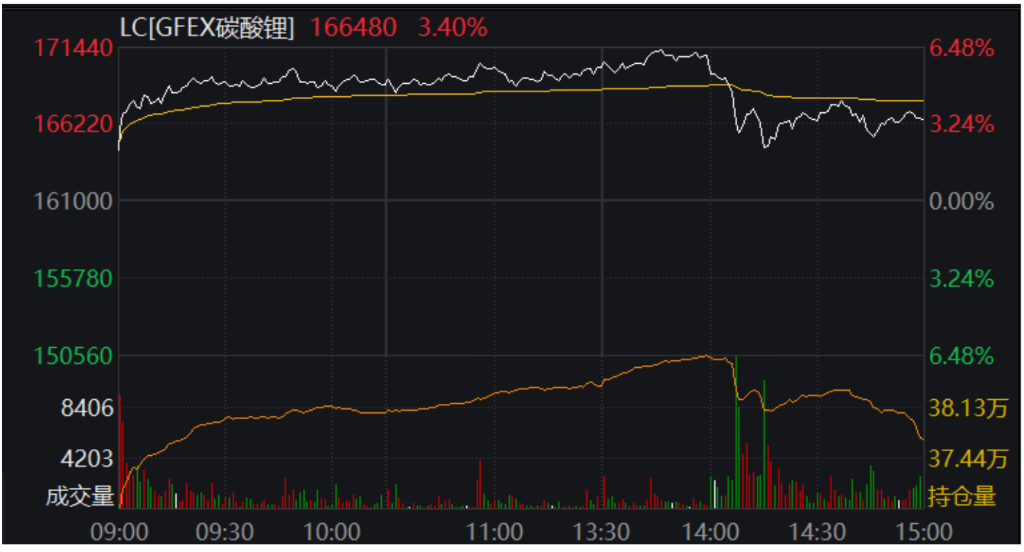
Core Viewpoint - The Zimbabwean government announced an immediate suspension of all lithium concentrate exports on February 25, significantly impacting the global lithium supply chain and raising strong expectations for lithium carbonate price increases [1][5]. Group 1: Market Reaction - Following the announcement, domestic lithium carbonate futures surged by 12% to 187,000 CNY per ton on February 26, closing with a 3.47% increase at 173,700 CNY per ton [1]. - The A-share lithium mining sector also saw gains, with stocks like Erkang Pharmaceutical rising over 12% and other companies like Keli Yuan and Jinyuan shares increasing by 10% [3]. Group 2: Supply Chain Impact - The export ban is expected to create significant disruptions in global lithium supply, especially as current inventories are low and have been depleting for five consecutive weeks [4][6]. - Zimbabwe, as Africa's largest lithium exporter, accounted for approximately 10% of global lithium production in 2025, with China importing about 120,000 tons of lithium concentrate from Zimbabwe, representing 15.5% of its total imports [6][7]. Group 3: Industry Forecasts - Analysts predict that if the ban continues, there could be a supply gap of 37,000 to 57,000 tons for the year, pushing lithium carbonate prices higher due to increased domestic reliance on imported lithium resources [7]. - The tightening supply is expected to maintain a strong price trend for lithium carbonate, driven by demand from energy storage and electric vehicle sectors [6][7]. Group 4: Company Responses - Companies with lithium mining operations in Zimbabwe, such as Shengxin Lithium Energy and Zhongkuang Resources, have varied responses to the export ban, with some having already shipped their lithium concentrate [8]. - The ban is anticipated to raise export thresholds and industry concentration, benefiting companies with valid mining licenses while excluding unlicensed traders [8].
津巴布韦暂停锂矿出口,多家A股公司回应影响
Xin Lang Cai Jing· 2026-02-26 09:21
Group 1 - The lithium mining sector showed active performance on February 26, with the lithium index rising by 1.19%, and companies like Jinyuan Co., Yanhua Co., and others seeing significant gains [1] - Zimbabwe's Ministry of Mines announced a suspension of all raw and lithium concentrate exports effective immediately, impacting all currently transported minerals without a clear timeline for resumption [1] - Zimbabwe is the largest lithium exporter in Africa and the second-largest source of lithium concentrate imports for China, with imports expected to reach approximately 7.75 million tons in 2025, a year-on-year increase of about 39.4% [1] Group 2 - Yahua Group stated that the Zimbabwe export ban will not affect its normal production and operations, as its projects comply with the new regulations, and it has resubmitted export applications [2] - China Mineral Resources indicated that all Chinese exports of lithium concentrate from Zimbabwe are currently halted, awaiting further policy details, while Huayou Cobalt noted that the impact of the ban is still uncertain [2] - According to Huatai Futures, the export ban is expected to significantly impact lithium supply in the short term, with approximately 1.2 million tons of lithium concentrate expected to be imported from Zimbabwe in 2025 [2][3] Group 3 - CITIC Securities reported that the export ban aims to enhance mineral regulation and promote deep processing of mineral products, with Zimbabwe expected to account for 12% of global lithium resource output by 2026 [3] - The ban is likely to exacerbate the short-term supply shortage of lithium carbonate in China, potentially leading to a significant increase in lithium prices [3]