
基金

Search documents
1月收官A股总成交额站上60万亿元 市场“人气风向标”沪深300ETF华泰柏瑞(510300)交投活跃 配置价值或显现
Xin Lang Cai Jing· 2026-02-02 10:05
Market Overview - The overall market maintained a high-level consolidation trend, with A-shares' total monthly trading volume exceeding 60 trillion yuan, reaching a historical high of 60.89 trillion yuan in January 2026 [1][7] - Following the end of January earnings forecasts, February is expected to be a fundamental gap period, and with liquidity remaining relatively abundant before the Spring Festival, the market may enter a core bullish phase [1][7] ETF Performance - The Huatai-PB CSI 300 ETF (510300) saw a significant increase in trading activity, with an average daily trading volume of 21.369 billion yuan from mid-January to January 30, 2026, and a peak trading volume of 40.1 billion yuan on January 28, marking a historical high since its inception [1][8] - The ETF and its linked funds (Class A 460300/Class C 006131) have the lowest annual management fee rate of 0.15% and annual custody fee rate of 0.05% in the A-share market, providing a cost-effective option for long-term investment in core A-share assets [1][8] Fund Management and Returns - As of January 30, 2026, the Huatai-PB CSI 300 ETF had a total size of 229.5 billion yuan and has generated cumulative profits of approximately 143.5 billion yuan for its holders since its establishment on May 4, 2012, making it one of the few equity funds in the A-share market with profits exceeding 100 billion yuan [3][9] - The fund has distributed dividends 14 times over 14 years, totaling 26.39 billion yuan [3][9] Diversified Investment Strategies - The Huatai-PB CSI 300 ETF serves as a practical tool for diversified strategy investments, being the only underlying asset for the Shanghai Stock Exchange's CSI 300 ETF options contracts and an important financing and margin trading target [2][8] - The fund management company, Huatai-PB Fund, is one of the first ETF managers in China, with over 19 years of experience in managing dividend-themed index investments, creating a diverse range of products across the Shanghai-Hong Kong-Shenzhen markets [3][9] Dividend-Focused Products - The Huatai-PB Dividend ETF (510880) is the first dividend-themed index fund in the A-share market, having distributed a total of 5.18 billion yuan in dividends over 19 years [4][10] - The Huatai-PB Low Volatility Dividend ETF (512890) is the only low-volatility dividend ETF in the market with a size exceeding 20 billion yuan, while the Huatai-PB Central Enterprise Dividend ETF (561580) is the first ETF combining "central enterprises" and "dividends" themes [4][10]
关于同意国泰海通证券股份有限公司为天弘上证科创板芯片设计主题交易型开放式指数证券投资基金提供主做市服务的公告
Xin Lang Cai Jing· 2026-02-02 09:45
上证公告(基金)【2026】238号 为促进天弘上证科创板芯片设计主题交易型开放式指数证券投资基金(以下简称科芯TH,基金代 码:589070)的市场流动性和平稳运行,根据《上海证券交易所基金自律监管规则适用指引第2号——上 市基金做市业务》等相关规定,本所同意国泰海通证券股份有限公司自2026年02月03日起为科芯TH提 供主做市服务。 炒股就看金麒麟分析师研报,权威,专业,及时,全面,助您挖掘潜力主题机会! 2026年02月02日 特此公告。 上海证券交易所 ...

关于同意国泰海通证券股份有限公司为易方达中证软件服务交易型开放式指数证券投资基金提供主做市服务的公告
Xin Lang Cai Jing· 2026-02-02 09:45
特此公告。 为促进易方达中证软件服务交易型开放式指数证券投资基金(以下简称软件30,基金代 码:562930)的市场流动性和平稳运行,根据《上海证券交易所基金自律监管规则适用指引第2号——上 市基金做市业务》等相关规定,本所同意国泰海通证券股份有限公司自2026年02月03日起为软件30提供 主做市服务。 上海证券交易所 上证公告(基金)【2026】240号 2026年02月02日 ...
德邦基金领罚震动基金营销市场,公募行业紧急启动“大V”资质排查
Di Yi Cai Jing· 2026-02-02 09:36
"请问您有基金从业资格、证券从业资格、证券投顾资质吗?挂靠在哪里?" 在监管部门公布对德邦基金处罚结果的当日,一位财经自媒体博主收到了公关公司发来的上述消息。 "请问您有基金从业资格、证券从业资格、证券投顾资质吗?挂靠在哪里?" 多位受访人士表示,此次 监管出手,实是对过去几年公募营销乱象的一次纠偏。 "草莽时代结束了。"该人士对第一财经表示,此前基金公司与"大V"的合作类似于网约车行业初期快速 扩张的阶段,市场需求量大但存在诸多乱象,这次处罚让他意识到,行业正迎来迈向规范化发展的转折 点。 1月30日,德邦基金因与不具备基金销售业务资格和基金从业资格的互联网"大V"开展营销合作、违规 销售基金产品,被监管部门采取责令改正并暂停受理公募基金产品注册的监管措施,该公司的总经理、 督察长、互联网业务部门负责人等也被同步追责。 值得关注的是,监管通报明确指出:"基金公司及基金销售机构严格禁止与不具备资质的互联网'大V'合 作,开展任何形式的基金销售活动(含基金宣传推介)。"同时,监管还要求销售机构及第三方网络平 台加强自查自纠,按期下架"基金实时估值""加仓榜""实盘榜"等功能。 这计"重拳"在公募行业迅速引发连锁 ...
复牌,一字跌停!白银基金,遭重挫!
券商中国· 2026-02-02 09:32
Core Viewpoint - The article discusses the significant decline in silver assets, leading to a trading halt for the Guotou Silver LOF fund, which experienced a one-day limit down. The premium rate for the fund has narrowed significantly, indicating market volatility and investor concerns [1][2][5]. Group 1: Market Impact - The main silver futures contract on the Shanghai Futures Exchange (SHFE) dropped by 17%, leading to a trading halt, while the Guotou Silver LOF fund also faced a one-day limit down [2][4]. - The premium rate for the Guotou Silver LOF fund decreased from 58.64% to 43.8%, reflecting a significant market adjustment [5]. - The article highlights that the domestic precious metals futures market opened with widespread declines, indicating a bearish sentiment across the sector [4]. Group 2: Factors Influencing the Decline - Multiple factors contributed to the market decline, including unexpected changes in monetary policy expectations, a reduction in risk aversion, technical profit-taking, and cumulative effects of regulatory measures [5]. - The appointment of Kevin Warsh, perceived as a hawkish candidate for the Federal Reserve, has influenced market sentiment negatively [5]. - The easing of geopolitical tensions, such as the Greenland dispute and signals from Trump regarding negotiations with Iran, has also contributed to a decline in safe-haven demand for silver [5]. Group 3: Fund Performance and Investor Sentiment - The Guotou Silver LOF fund's net asset value (NAV) is expected to reflect the volatility in silver prices, with significant attention on the upcoming NAV disclosure [6][7]. - The fund's performance is closely tied to the settlement prices of silver futures, which may not accurately reflect the true value due to market fluctuations [8]. - Investors are concerned about potential large-scale redemptions from the fund, as the market sentiment remains bearish and trading volumes have significantly decreased [6][8].


嘉实原油LOF:2月3日起暂停申购(含定期定额投资)业务
Mei Ri Jing Ji Xin Wen· 2026-02-02 09:18
Group 1 - The company, Jiashi Oil LOF (160723), announced the decision to suspend subscription services, including regular investment plans, starting from February 3, 2026 [1] - The company will continue to process redemption requests normally [1]
几点思考:黄金要跌多久?跌到哪?
Sou Hu Cai Jing· 2026-02-02 09:18
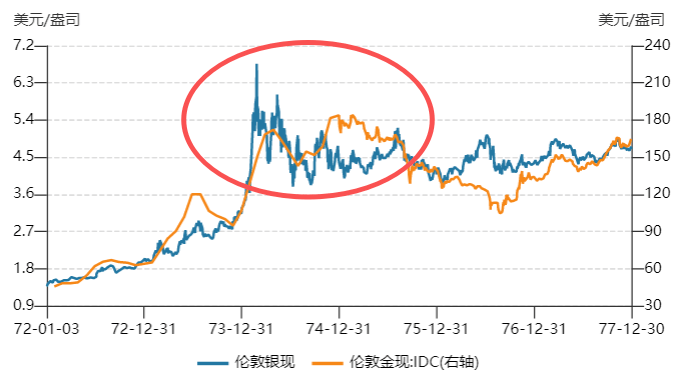
Group 1 - The article discusses the recent extreme fluctuations in gold and silver prices, indicating a potential market peak due to significant deviations from the 60-day moving average, with silver deviating by 66% and gold by 25% [1][6] - Historical patterns suggest that extreme surges in silver prices often signal market tops, and these tops are typically not singular points but rather ranges, followed by significant declines to wash out leveraged positions [6][7] - The performance of gold during market fluctuations is highlighted, with past instances showing that while silver experiences volatility, gold tends to remain more stable, suggesting a focus on gold's ability to reach new highs during these periods [7][8] Group 2 - The article emphasizes the importance of macroeconomic narratives in determining the future of gold prices, particularly the narrative surrounding the collapse of the US dollar credit system and the implications of rising US debt levels [12] - It notes that the current debt situation, exacerbated by multiple rounds of quantitative easing and fiscal policies, poses a significant risk to the stability of the US financial system [12] - The potential appointment of Kevin Warsh as the new Federal Reserve Chairman is discussed, with his proposed policies aimed at restoring financial discipline and addressing the debt crisis [12] Group 3 - The article draws parallels between current market conditions and those of early 2018, where rising interest rate expectations led to declines in global markets, including A-shares [24] - It suggests that the recent downturn in precious metals has similarly impacted the broader market, with significant declines observed in various sectors, including energy and commodities [31][32] - The performance of specific funds, such as the Guotou Silver LOF, is highlighted, indicating a significant drop in value and the challenges faced by investors in navigating the current market volatility [29][31]
科创债ETF鹏华(551030)收涨2bp,今日成交额68.31亿
Sou Hu Cai Jing· 2026-02-02 09:17
Group 1 - The core viewpoint of the news highlights the performance and market activity of the Penghua Science and Technology Bond ETF (551030), which rose by 0.02% with a trading volume of 6.831 billion yuan, indicating active market participation [1] - As of February, there is an anticipated liquidity demand of approximately 900 billion yuan due to cash withdrawals ahead of the Spring Festival, alongside significant government bond issuance pressure, leading to an expected funding gap of 2.7 trillion yuan before the festival [1] - The overall performance of the funding environment in February is expected to depend on the central bank's actions, although there are indications of supportive measures from the central bank, suggesting a balanced liquidity situation across the Spring Festival [1] Group 2 - The Penghua Science and Technology Bond ETF tracks the Shanghai Stock Exchange AAA-rated technology innovation company bond index, which selects bonds with AAA ratings and implied ratings of AA+ and above, providing a diversified investment option [1] - The advantages of the Science and Technology Bond ETF include low fees, low trading costs, high transparency, high diversification, and efficient "T+0" redemption, which help in risk diversification and improving capital efficiency [1] - Since the second half of 2018, Penghua Fund has established a long-term strategy for fixed-income tool products, actively developing in areas such as interest rate bond index products, ETFs, credit bond indices, and certificate of deposit indices, aiming to become a domestic expert in fixed-income indices [1]
2月基金配置展望:继续看好权益与小盘、成长风格
Ping An Securities· 2026-02-02 09:13
证券研究报告 继续看好权益与小盘、成长风格 ——2月基金配置展望 证券分析师 郭子睿 投资咨询资格编号:S1060520070003 任书康 投资咨询资格编号:S1060525050001 陈 瑶 投资咨询资格编号:S1060524120003 高 越 一般从业资格编号:S1060124070014 胡心怡 一般从业资格编号:S1060124030069 研究助理 2026年2月2日 请务必阅读正文后免责条款 基金配置建议:继续看好权益与小盘、成长风格 2 1月回顾:A股、美股上涨;美债利率上行,国债利率下行;商品价格上涨;美元指数下行,人民币升值。A股春季行情延续,市场活跃度大幅提 升,A股、港股表现亮眼,中盘成长风格基金涨幅最大。美国经济数据表现韧性,美股震荡上涨,美债利率上行。国内央行释放流动性,国债利 率下行,期限利差小幅走阔。在全球流动性宽松与地缘风险等因素驱动下,海内外商品价格上涨,贵金属价格涨幅大幅居前。 2月展望:资产配置的逻辑。股债轮动模型显示,2025年12月私人部门融资增速继续上行,通胀因子低位回升,基本面模型延续经济复苏信号。 我们在1月基金月报《增配权益,看好成长》中建议增配权益资产 ...
ETF主力榜 | 有色ETF汇添富(159652)主力资金净流入9353.34万元,居可比基金第一-20260202
Xin Lang Cai Jing· 2026-02-02 08:43
与此同时,该基金最新成交量为4.50亿份,最新成交额达8.41亿元,居可比基金第一。 有色ETF汇添富(159652.SZ),场外联接(A类:019164;C类:019165)。 2026年2月2日,有色ETF汇添富(159652.SZ)收跌10.00%,主力资金(单笔成交额100万元以上)净流 入9353.34万元,居可比基金第一。(数据来源:Wind) 拉长时间看,该基金近2天主力资金加速流入,合计流入9773.51万元,居可比基金第一。(数据来源: Wind) ...