
畜牧业

Search documents
四川云牛牧业有限公司成立 注册资本1000万人民币
Sou Hu Cai Jing· 2025-11-08 12:55
Core Viewpoint - Sichuan Yunniu Animal Husbandry Co., Ltd. has been established with a registered capital of 10 million RMB, focusing on livestock breeding and fertilizer production [1] Company Overview - The legal representative of the company is Tu Zunsheng [1] - The company is involved in various licensed activities including livestock breeding and animal husbandry [1] - General business activities include livestock sales, fertilizer sales, and research and development of compound microbial fertilizers and biological organic fertilizers [1] Regulatory Compliance - The company will conduct business activities in accordance with relevant departmental approvals and permits [1] - Specific business projects are subject to approval documents or licenses from relevant authorities [1] - The company is allowed to independently conduct business activities as per its business license, except for projects requiring special management measures [1]
11月8日猪价 | 北涨南稳,但无持续上涨支撑!
Xin Lang Cai Jing· 2025-11-08 11:04
Core Insights - The average price of live pigs in China has shown an upward trend, with the national average price at 5.98 yuan per jin, reflecting an increase of 0.02 yuan per jin compared to the previous day [3][4] - There are 20 regions experiencing price increases, 1 region with a price decrease, and 7 regions maintaining stable prices [3] - The lowest price for live pigs is reported in Guangxi at 5.6 yuan per jin, while the highest price is in Hainan at 7.3 yuan per jin [3] Price Trends - In the Northeast and North China regions, the price of standard pigs ranges from 5.9 to 6.2 yuan per jin, with an increase of approximately 0.1 yuan [4] - In Henan, a major market, the price has risen by 0.05 yuan, now quoted at around 6.1 yuan [4] - Guangdong's market price remains stable at 6.3 yuan per jin, indicating a strong price expectation in the northern regions while southern prices remain stable [4] Market Dynamics - The increase in pig prices is attributed to large-scale market demand, although overall demand remains weak, leading to a lack of significant price momentum [4] - Short-term price increases will depend on terminal demand, highlighting the importance of consumer behavior in the market [4]


朔风起,伽师羊陪您温暖过冬|疆品上新⑩
Nan Fang Nong Cun Bao· 2025-11-08 06:34
Core Viewpoint - The article highlights the significance of Kashi sheep in promoting local economic development and enhancing farmers' income in Kashi County, Xinjiang, emphasizing its role as one of the five pillar industries in the region [4]. Group 1: Kashi Sheep and Economic Impact - Kashi sheep have been a resilient species in the region for centuries, evolving from wild animals to important partners for local herders [3]. - The Kashi sheep industry is a key driver of local economic growth and farmer income, being recognized as one of the five major industries in Kashi County [4]. - The article mentions the promotion of a comprehensive livestock breeding model and the "Xinjiang products southward, Guangdong products northward" initiative, which aims to bring Kashi sheep products to the Guangdong-Hong Kong-Macao Greater Bay Area [9][10]. Group 2: Kashi Sheep Characteristics - The Dauran sheep, a notable breed among Kashi sheep, is known for its strong adaptability and high-quality meat, thriving in the saline-alkali desert environment [6][7]. - Kashi sheep are raised on a diet of drought-resistant forage and drink snowmelt water from the Kunlun Mountains, resulting in evenly distributed fat and tender meat [7][8]. Group 3: Culinary Aspects - The article describes traditional dishes made from Kashi sheep, such as grilled skewers and hand-pulled lamb, emphasizing the simplicity and authenticity of the cooking methods [11][12][29]. - Grilled lamb skewers are prepared with minimal seasoning, allowing the natural flavors of the meat to shine through, creating a rich culinary experience [17][18]. - Hand-pulled lamb is highlighted as a dish that embodies the essence of Xinjiang cuisine, focusing on the quality of the ingredients and traditional cooking techniques [30][32].

“猪王”“肉王”正面争锋,牧原双汇互相切入产业链
Xin Lang Cai Jing· 2025-11-08 01:06
Core Insights - The Chinese pork consumption market is slowly shrinking, leading to divergent performance between Muyuan Foods and WH Group in their Q3 2025 reports [1][9] - Muyuan Foods has shown remarkable growth, with revenue exceeding 100 billion yuan, while WH Group has maintained stable profitability despite limited revenue growth [1][3] Muyuan Foods Performance - Muyuan Foods reported a revenue of 111.79 billion yuan and a net profit increase of 41.01% to 14.78 billion yuan in the first three quarters of the year [1] - The company achieved a reduction in breeding costs from 13.1 yuan/kg at the beginning of the year to 11.6 yuan/kg by September, enhancing its risk resilience amid industry pressures [1] - Muyuan has successfully reduced its total liabilities by 9.796 billion yuan, achieving a debt-to-asset ratio of 55.50% and a net operating cash flow of 28.58 billion yuan [1] WH Group Performance - WH Group's revenue reached 44.523 billion yuan with a net profit of 3.959 billion yuan, reflecting a year-on-year growth of 1.19% and 4.05% respectively [3] - The company achieved a record high in total meat sales volume at 2.4885 million tons, despite limited revenue growth [3] - WH Group's average profit per ton in the meat products segment rose to 5,192 yuan, attributed to lower raw material costs and improved product mix [3] Strategic Developments - Muyuan Foods is expanding into the downstream slaughtering segment, achieving a slaughter volume of 19.16 million pigs in the first three quarters, a 140% increase year-on-year [4] - WH Group is cautiously extending its operations into upstream breeding, with a breeding capacity of 1 million pigs per year and a 22.4% increase in breeding revenue [5] - Both companies are attempting to break through their respective development bottlenecks by extending their reach along the industry chain [1][5] Competitive Advantages - Muyuan Foods excels in standardized and large-scale production management, while WH Group's strengths lie in brand operation and channel development [5][7] - Muyuan's cost advantages stem from improvements in disease control, breeding, nutrition, and technology, with a weaning-to-market survival rate of 93% [7] - WH Group is focusing on digital marketing and community engagement to enhance its brand presence and consumer loyalty [8] Market Outlook - The Chinese pork market is projected to see a gradual decline in consumption, with an expected average annual decrease of 0.5% until 2033 [8][9] - As the market contracts, leading companies must expand their operations along the industry chain to capture a larger share of the diminishing market [9]


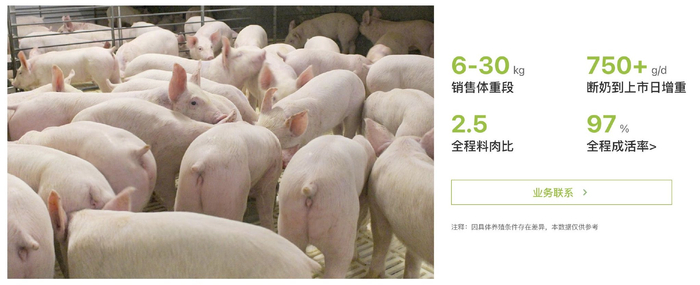
明天11月9日:涨了!涨了!大涨、暴涨开始了?玉米、小麦全面上涨!猪价、牛羊价涨定了!农民警惕...
Xin Lang Cai Jing· 2025-11-07 21:43
Core Insights - The agricultural market is experiencing a significant price increase for corn, wheat, and livestock, which is expected to benefit farmers' incomes in the fourth quarter of 2025 [1][2][3] Group 1: Corn Market - Corn prices have started to rise, with state-owned enterprises like COFCO and Sinograin initiating a new round of targeted purchases in major production areas, leading to a price of 2090 yuan per ton in Harbin [1][2] - The overall trend for corn prices is expected to continue upward, supported by increased purchasing from deep processing enterprises as the new corn season begins [2] Group 2: Wheat Market - Wheat prices have also seen a significant increase, with some regions reporting prices exceeding 2800 yuan per ton, and high-quality wheat reaching around 3000 yuan per ton [2] - The rise in wheat prices is anticipated to further enhance farmers' income from grain production [2] Group 3: Livestock Market - The prices of pigs, cattle, and sheep are expected to rise due to seasonal demand, with current market conditions indicating that pig prices are at a low point and are likely to increase as slaughterhouses raise purchase prices [2][3] - The onset of colder weather is expected to drive consumer demand for meat, contributing to the anticipated price increases in livestock [3] Group 4: Climate Impact and Risks - The formation of La Niña is expected to bring colder weather, posing challenges for farmers, including increased risks of livestock diseases [3] - Farmers are advised to enhance vaccination efforts and improve sanitation practices in livestock management to mitigate these risks [3] - Grain storage practices should also be improved to prevent spoilage due to adverse weather conditions [3] Group 5: Policy and Future Outlook - The year 2025 is seen as a critical year for agricultural reform and rural revitalization, with expectations for increased production and income for farmers under new government policies [4]
山东民和牧业股份有限公司第九届董事会第四次会议决议公告
Shang Hai Zheng Quan Bao· 2025-11-07 20:38
Group 1 - The company held its fourth meeting of the ninth board of directors on November 7, 2025, to discuss various proposals [2][3][4] - The board approved a proposal to engage in financing leasing business with a principal amount of 50 million RMB for a term of 24 months [26][27] - The board also approved a proposal for external guarantees and related transactions, which requires further approval from the shareholders' meeting [4][6][22] Group 2 - The company plans to provide a joint liability guarantee of up to 16.2078 million RMB for its subsidiary, Heilongjiang Beisanxia Breeding Co., Ltd., to secure a credit line of 50 million RMB [13][19][23] - The board's decision on the guarantee was made with 8 votes in favor and no opposition, with the actual controller abstaining from the vote due to conflict of interest [14][22] - The total amount of external guarantees after this transaction will be 81.0392 million RMB, which is 4.01% of the company's latest audited net assets [23] Group 3 - The company will convene its second extraordinary shareholders' meeting of 2025 on November 24, 2025, to vote on the approved proposals from the board [38][41] - The meeting will allow for both on-site and online voting, ensuring compliance with relevant regulations [39][40] - Shareholders holding less than 5% of the company's shares will have their votes counted separately to protect minority interests [46]

生猪月报:高空或反套-20251107
Wu Kuang Qi Huo· 2025-11-07 14:42
1. Report Industry Investment Rating - Not provided in the given content 2. Core View of the Report - The rebound in the pig market is mainly driven by frozen product storage and increased secondary fattening, leading to a bearish pattern of high slaughter volume and large body weight before the Spring Festival. The overall direction of the future market is to short on rebounds. Given the current high - position and low - price game situation, there is a possibility of a short - term rebound. Considering the large near - term supply and the expectation of capacity reduction in the long - term, the recommended strategies are first reverse spreads and then shorting after rebounds [11][12] 3. Summary by Directory 3.1 Monthly Assessment and Strategy Recommendation - **Spot Market**: Since October, domestic pig prices have shown a trend of first falling, then rising, and then falling again. The average prices in Henan, Sichuan, and Guangdong have decreased. Supply and demand are in a game, and pig prices are expected to decline slightly with fluctuations [11][22] - **Supply Side**: In September, the official sow inventory was 40.35 million, 3.5% more than the normal level. Capacity reduction has started but is progressing slowly. From now to April next year, the basic supply is increasing monthly, and the market before the Spring Festival will face a bearish configuration [11] - **Demand Side**: After the National Day, demand has increased, but significant growth is expected after December [11] - **Strategy**: Recommend reverse spreads first, followed by shorting after rebounds. For single - side trading, short on rebounds for contracts 01 and 03; for arbitrage, conduct reverse spreads for 3 - 7 and 3 - 9 contracts [11][13] 3.2 Futures and Spot Market - **Spot Trend**: Pig prices have fluctuated, and the average weight of slaughtered pigs has increased. Supply and demand suggest a slight decline in pig prices [22] - **Basis and Spread Trend**: The basis has converged, and the monthly spread still favors reverse spreads [25] - **Prices of Piglets and Sows**: Data on prices of piglets, reserve sows, and culled sows are presented, but no specific trends are summarized in the text [27][28] 3.3 Supply Side - **Reproductive Sows and Changes**: In September, the official sow inventory decreased slightly, but was still higher than normal. Capacity reduction has started slowly [33] - **Inventory and Slaughter**: From the piglet data, the market before the Spring Festival will face a bearish situation [43] - **Slaughter Proportion of Different - Sized Pigs**: The proportion of small and large pigs in slaughter is not high, indicating limited impact of diseases and a limited number of fat pigs [46] - **Trading and Post - Slaughter Weight**: After the National Day, the slaughter volume remained high, and the market supply was large and excessive [50] 3.4 Demand Side - **Slaughter Volume**: After the National Day, demand has increased, but significant growth is expected after December [59] - **Slaughtering Rate and Gross Margin**: Data on slaughtering rate and gross margin are presented, but no specific trends are summarized in the text [61] - **Spread and Price - Volume Relationship**: Data on spreads and price - volume relationships are presented, but no specific trends are summarized in the text [63] - **Fresh - Frozen Spread and Fresh Sales Rate**: Data on fresh - frozen spreads and fresh sales rates are presented, but no specific trends are summarized in the text [65] 3.5 Cost and Profit - **Cost and Breeding Profit**: Due to factors such as feed cost and efficiency improvement, the cost is decreasing, but there has been an overall loss this year [70] 3.6 Inventory Side - **Cost and Breeding Profit**: The frozen product inventory is slowly recovering and in a state of active inventory accumulation [75]
缅甸召开内比都口蹄疫无疫区建设研讨会
Shang Wu Bu Wang Zhan· 2025-11-07 13:54
Core Points - The meeting on foot-and-mouth disease vaccination and evaluation was held in Naypyidaw on November 5, organized by Myanmar's Ministry of Agriculture, Livestock and Irrigation [1] - The Minister emphasized the establishment of policies and infrastructure to meet live cattle export inspection and quarantine requirements [1] - Since June 11, 2021, eight townships in Naypyidaw have initiated the construction of foot-and-mouth disease control zones, providing free vaccinations, and were recognized as a control zone on February 13, 2023 [1] - The Ministry is actively negotiating with relevant countries' inspection and quarantine departments to expedite the certification of foot-and-mouth disease-free zones, aiming to enhance Myanmar's meat product exports [1] Summary by Categories Policy and Infrastructure Development - Myanmar has developed relevant policies and is gradually establishing animal transport inspection stations, control zones, protection zones, and disease-free zones to comply with export requirements [1] Vaccination and Control Measures - The vaccination campaign against foot-and-mouth disease began in eight townships in Naypyidaw, with free vaccinations provided, leading to the successful recognition of the control zone [1] Export Readiness - The Ministry is coordinating with inspection and quarantine departments of other countries to negotiate export procedures and expedite the certification of disease-free zones, encouraging departments and enterprises to prepare for increased meat product exports [1]
东瑞股份:2025年10月份生猪销售简报
Zheng Quan Ri Bao· 2025-11-07 13:43
Core Insights - In October 2025, Dongrui Co., Ltd. reported sales of 136,600 pigs, generating revenue of 173 million yuan, reflecting a month-on-month increase of 6.35% [2] - The average selling price of commercial pigs was 12.48 yuan per kilogram, showing a month-on-month decrease of 14.39% [2] - The company sold 2,300 pigs to its wholly-owned subsidiary, Heyuan Dongrui Meat Products Co., Ltd. [2]

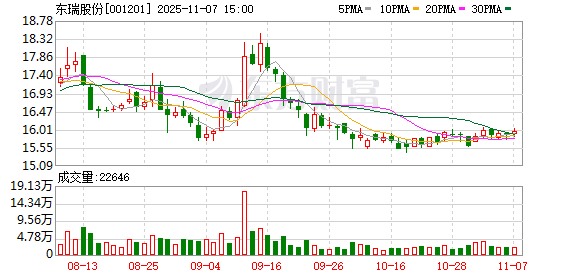
罗牛山:截至2025年10月31日,公司股东总户数约为8.45万户
Zheng Quan Ri Bao Wang· 2025-11-07 13:43
证券日报网讯 罗牛山(000735)11月7日在互动平台回答投资者提问时表示,截至2025年10月31日,公 司股东总户数约为8.45万户。 ...
