
互联网医疗

Search documents
方舟健客20260114
2026-01-15 01:06
Summary of Ark Health Conference Call Company Overview - Ark Health has established a comprehensive chronic disease management service system that integrates AI technology with medical services, chronic disease management, patient education, and pharmaceutical services, extending to patients' homes to optimize medical resource allocation and address challenges in offline medical visits and medication procurement [2][4] Financial Performance - In the first half of 2026, Ark Health achieved a turnaround in net profit, reporting over 10 million yuan in profit, with adjusted net profit reaching 17 million yuan, a year-on-year increase of 16.8%. Revenue approached 1.5 billion yuan, reflecting a 13% year-on-year growth, with expectations for over 25% revenue growth for the entire year [2][4] Business Model and Strategy - The core business model focuses on online doctor-patient interaction through an internet hospital platform after initial offline consultations, utilizing AI for electronic prescriptions and drug delivery. The company emphasizes prescription drug sales, with over 80% of revenue derived from prescription drugs, more than half of which are original imported drugs [2][6] - Ark Health collaborates with Tencent Health to leverage Tencent's large model for medical applications, expanding service coverage and achieving mutual benefits [5][8] Market Potential - The platform has approximately 52.8 million registered users, with over 11.9 million monthly active users. The chronic disease management market is projected to reach nearly 500 billion yuan by 2030, indicating significant growth potential for the company [3][11] Competitive Advantages - The platform boasts around 230,000 doctors, with 60% from top-tier hospitals and 40% at the deputy chief physician level or above, providing a competitive edge in medical resources compared to broader internet healthcare competitors [7] - Ark Health's focus on a familiar doctor-patient relationship model has few competitors, enhancing its market position [7] Future Outlook - The company plans to introduce new AI tools to enhance chronic disease management and improve doctor-patient efficiency. It aims to solidify its existing business segments: internet hospitals, online pharmacies, and marketing services, while also exploring new product opportunities in commercial insurance and long-term care insurance [13] - Financially, the company anticipates growth rates in the coming years to exceed those of the current year, with expectations for continued high growth in the second half of the year [13] Additional Insights - The introduction of weight loss drugs as a new category had a minimal impact on revenue proportions, but the platform's strong trust relationship with patients resulted in better retention, conversion rates, and average transaction values compared to broader competitors [12] - The launch of two large models, "Xinshi" and "Xinjie," focuses on core medical scenarios, emphasizing the importance of practical application in the AI medical field [9]
创新药盛世的“隐形赢家”
Xin Lang Cai Jing· 2026-01-15 01:02
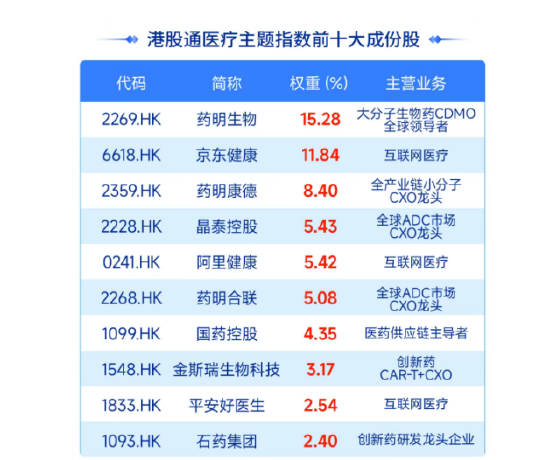
Core Insights - The Chinese innovative drug industry is entering a new prosperous era characterized by significant BD transactions and a focus on source innovation [1][10] - This revival not only leads to valuation recovery for innovative drug companies but also reshapes the entire innovative drug industry chain [1][10] - The CXO industry and internet distribution platforms are expected to benefit from this growth cycle, emerging as "invisible winners" in the innovative drug boom [1][10] CXO Industry - WuXi AppTec, as a leader in the CXO industry, possesses a unique logic of beta and alpha resonance during this innovative drug prosperity cycle [2][11] - WuXi AppTec is projected to achieve approximately 45.456 billion yuan in revenue for 2025, a year-on-year increase of about 15.84%, with adjusted net profit expected to reach approximately 14.957 billion yuan, up 41.33% [3][12] - The company's growth is attributed to its integrated CRDMO (Contract Research, Development, and Manufacturing) business model, which significantly reduces R&D costs and complexity [3][12] Innovative Drug Commercialization - The number and quality of innovative drugs approved in China are experiencing explosive growth, with 76 innovative drugs approved in 2025, a 58.3% increase from 48 in 2024 [5][15] - New commercial channels, particularly internet platforms like JD Health and Alibaba Health, are emerging as core strategic channels for innovative drug commercialization [5][15] - JD Health has established itself as the "first station for new specialty drugs," allowing innovative drugs to be launched online immediately after approval, enhancing accessibility for patients [5][15][16] Investment Opportunities - The industry’s growth is expanding from solely innovative drug R&D companies to the entire supply chain, creating significant investment opportunities [17] - Index theme funds are suggested as a means for ordinary investors to access the overall sector, with the Hong Kong Stock Connect Medical ETF (159137) covering about 70% of the core assets in the innovative drug supply chain [17][19] - The ETF includes leading companies in the medical AI sector and high-end medical devices, effectively covering industry hotspots [18][19]

趋势研判!2025年中国互联网医院行业发展历程、政策、医院数量、重点品牌及未来趋势:互联网医疗为互联网医院提供核心服务支撑,推动其数量达3756家[图]
Chan Ye Xin Xi Wang· 2026-01-14 01:13
Core Insights - The article discusses the emergence and growth of Internet hospitals in China, highlighting their role in providing convenient and efficient medical services, especially during the COVID-19 pandemic [1][14] - Internet hospitals are seen as a new model in the healthcare system, addressing issues like access to care and hospital transformation [1][14] Industry Overview - Internet hospitals are platforms that integrate online consultations, prescriptions, payments, and drug delivery, connecting patients with healthcare providers [4] - The services offered by Internet hospitals include remote diagnosis, post-hospital management, and health management [4] Industry Development History - The first Internet hospital in China was established in 2015, marking a significant milestone in the integration of healthcare and technology [9] - The COVID-19 pandemic accelerated the growth of Internet hospitals, with over 500 new hospitals established in 2020 alone [1][14] - By October 2022, there were over 2,700 Internet hospitals in China, serving more than 25.9 million patients [1][14] - Projections indicate that by the end of 2024, the number of Internet hospitals will reach 3,340, providing over 100 million consultations annually [1][14] Industry Policies - The Chinese government has increasingly recognized and supported Internet hospitals, leading to a period of policy benefits [11] - Recent policies aim to enhance the integration of artificial intelligence in healthcare, with a goal of widespread implementation by 2030 [11] Industry Value Chain - The upstream of the Internet hospital industry involves medical equipment and information technology, while the midstream consists of solution integrators [12] - The downstream primarily includes patients who utilize these services [12] User Scale and Usage Rate - As of December 2024, the user base for Internet healthcare in China reached 418 million, with a usage rate of 37.7% [13] - By June 2025, the user scale is expected to be 393 million, with a usage rate of 35% [13] Key Companies in the Industry - Notable companies in the Internet hospital sector include Ping An Good Doctor, JD Health, Alibaba Health, and WeDoctor, among others [2][15] - Ping An Good Doctor reported a revenue of 1.278 billion yuan in the first half of 2025, marking a year-on-year growth of 20.23% [15] - JD Health's revenue from health product sales reached 29.331 billion yuan in the first half of 2025, with a growth of 22.67% [17] Challenges Facing the Industry - Issues such as patient information sharing, cross-regional medical insurance reimbursement, and regulatory frameworks remain significant challenges for Internet hospitals [18][19][20] - The complexity of online diagnosis and potential medical risks also pose challenges that need to be addressed [21] Future Trends - The future of Internet hospitals is expected to focus on personalized health management driven by data and AI technologies [22] - Remote medical services will become standardized and integrated into the healthcare system, enhancing accessibility and efficiency [23] - A seamless integration of online and offline services will create a comprehensive healthcare ecosystem centered around patient needs [24]


仅拍舌苔就开500 元定制中药?长沙市民线上中医问诊踩坑,专家:属违规首诊
Xin Lang Cai Jing· 2026-01-13 23:59
Core Insights - The rise of online traditional Chinese medicine (TCM) consultations has led to consumer complaints about ineffective treatments and potential fraud [1][2] - A specific case involving a consumer, Ms. Zhou, highlights the risks associated with online TCM services that lack proper medical oversight [2][3] Group 1: Consumer Experience - Ms. Zhou was misled by a TCM store's claims of personalized treatment based solely on a tongue photo, resulting in a 500 yuan purchase with no improvement in her condition [2][3] - After experiencing adverse effects, her request for a refund was denied due to the store's policy on custom medications, revealing a lack of consumer protection [2][5] - The store's positive reviews were later found to be questionable, with many consumers reporting similar negative experiences [2][5] Group 2: Regulatory Issues - Experts criticize the practice of diagnosing and prescribing medication based solely on a tongue diagnosis, which violates TCM diagnostic principles [3][4] - The store's operations are deemed illegal as they exceed the boundaries of permissible online medical services, which should only include follow-up consultations for common and chronic diseases [3][5] - The lack of proper licensing for online consultations raises concerns about the legitimacy of the services provided by these stores [5][6] Group 3: Platform Accountability - The investigation revealed that multiple online stores shared the same offline clinic credentials, suggesting a potential loophole in regulatory compliance [5][6] - The platform's response to consumer complaints has been inadequate, indicating a failure in monitoring and enforcing compliance among its vendors [6][7] - Industry experts call for stricter regulations and accountability measures for online medical platforms to protect consumers from fraudulent practices [7][8]
方舟健客(06086)午后升幅扩至70% 与腾讯健康共推\"AI+慢病管理\"方案
Xin Lang Cai Jing· 2026-01-13 11:33
Core Viewpoint - Ark Health (06086) has seen a significant stock price increase of 73.84%, reaching HKD 4.12, with a trading volume of HKD 501 million, following its collaboration with Tencent Health on an "AI + Chronic Disease Management" solution [1][1]. Group 1: Company Developments - Ark Health and Tencent Health held a launch event for their "AI + Chronic Disease Management" solution, indicating a new developmental phase in the domestic chronic disease management sector [1][1]. - The partnership aims to provide comprehensive support for industry partners, covering everything from technology validation to scenario implementation and large-scale deployment [1][1]. Group 2: Industry Impact - This collaboration is expected to inject new momentum into the industry's development towards intelligence, compliance, and efficiency [1][1].

平安健康原CEO李斗被曝出任白象首席增长官,2024年薪酬总额超900万
Sou Hu Cai Jing· 2026-01-13 09:14
Group 1 - The core point of the article is the appointment of Li Dou as the Chief Growth Officer (CGO) of White Elephant Food Co., Ltd., marking the first time the company has established this position [1] - Li Dou previously held various senior roles, including Vice President of Sales and General Manager of Demand for Mars Wrigley Confectionery (China) and served in multiple capacities at Ping An Group, including CEO of Ping An Health Medical Technology Co., Ltd. [2] - Li Dou resigned from all positions at Ping An Health in October 2025, three months after his departure, he took on the new role at White Elephant [1][2] Group 2 - The article highlights that White Elephant's executive structure was previously flat, with founder Yao Zhongliang serving as both Chairman and General Manager for many years [1] - Li Dou's total cash compensation at Ping An Health was reported to be 9.077 million yuan, which included a salary of 5.5 million yuan and a performance bonus of 1.301 million yuan [4] - The compensation structure for directors at Ping An Health includes various components such as salary, performance bonuses, and other benefits, with total cash payments for directors amounting to 8.638 million yuan for the year ending December 31, 2024 [5]

步长制药遭遇“中概股破发”冲击 投资七乐康浮亏2.93亿元
Xi Niu Cai Jing· 2026-01-13 08:45
Core Viewpoint - The investment in Qilukang Digital Healthcare by Buchang Pharma has led to significant financial losses, highlighting challenges in the digital transformation strategy and reliance on a single product for revenue generation [3][4]. Group 1: Investment Details - Buchang Pharma announced that its stake in Qilukang Digital Healthcare's controlling company, Shiliu Cloud Medical, went public on NASDAQ on October 8, 2025 [1]. - As of September 30, 2025, the book value of the investment in Qilukang Digital Healthcare was 326 million yuan, with a corresponding market value of 33.08 million yuan as of December 31, 2025 [1]. - The fair value change loss is expected to be 293 million yuan, which will reduce the net profit attributable to the parent company for 2025 by the same amount, although it will not affect the net profit after deducting non-recurring gains and losses [1]. Group 2: Strategic Challenges - The partnership between Buchang Pharma and Qilukang began in 2021 during the peak of internet healthcare, with hopes of leveraging Qilukang's digital platform to enhance sales channels for core products [3]. - Qilukang has faced challenges in its business model transition from B2C pharmaceutical e-commerce to internet hospitals, including unclear profitability and high customer acquisition costs [3]. - The market environment for Chinese concept stocks in the U.S. has deteriorated, particularly affecting healthcare technology stocks, which has compounded the difficulties for Shiliu Cloud Medical's NASDAQ listing [3]. Group 3: Broader Implications - Buchang Pharma's reliance on its core product, the Naoxin Tong capsule, which accounts for over two-thirds of its revenue, has become increasingly problematic due to ongoing healthcare cost control policies and centralized procurement of traditional Chinese medicine [4]. - The failure of the Qilukang investment poses a significant setback to Buchang Pharma's digital transformation strategy, which had positioned "building a digital Buchang" as a core objective [4]. - The company may need to reassess its growth direction amid sluggish core business growth and the lack of breakthroughs in innovative drug development [4].


CXO、消费医疗大崩盘:这三年医疗行业发生了什么?
Sou Hu Cai Jing· 2026-01-13 03:48
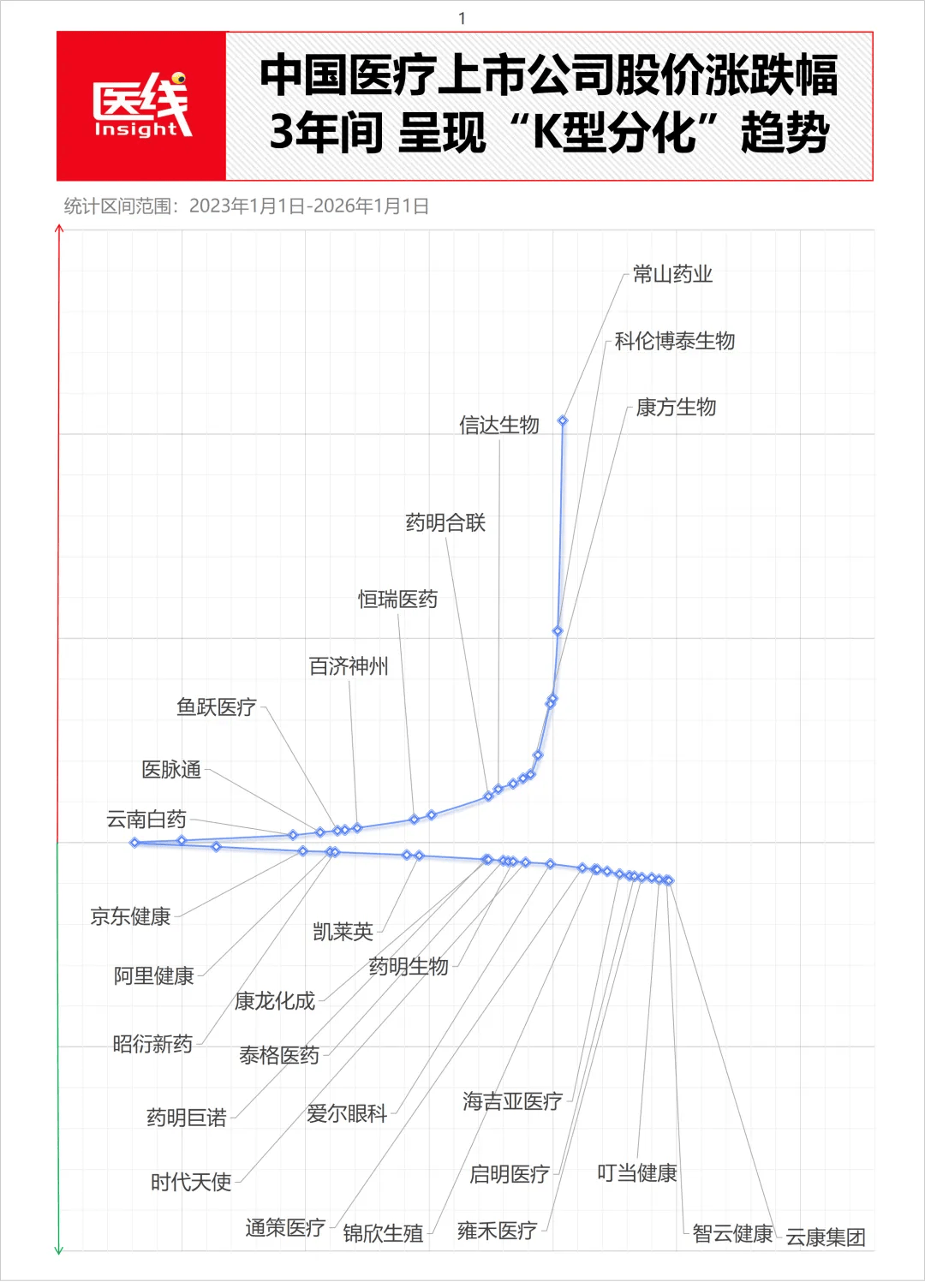
Core Insights - The Chinese healthcare industry has undergone a significant transformation from 2020 to 2025, transitioning from a "golden era" of investment to a "bubble-clearing period" characterized by a K-shaped divergence in market performance [1][2][4]. Group 1: K-shaped Downward Trends - The collapse of previously successful business models, particularly in CXO, consumer healthcare, and internet healthcare, has led to substantial market value losses, with some companies experiencing declines of over 90% [4][7]. - The downturn is attributed to macroeconomic factors such as U.S. interest rate hikes and geopolitical tensions, as well as microeconomic issues like supply-demand imbalances and the disappearance of growth dividends [8][10]. - The CXO sector, once seen as a perpetual growth engine, has faced a 46.68% decline for WuXi Biologics and 44.47% for Tigermed, revealing the fragility of its business model reliant on continuous global financing [12][10]. - Consumer healthcare has suffered a "Davis double whammy," with companies like Yonghe Medical and Aier Eye Hospital seeing declines of 86.19% and 52.69%, respectively, as consumer spending shifts away from discretionary healthcare services [14][15]. - Internet healthcare companies, including Zhiyun Health and Dingdang Health, have also faced severe declines, with drops of 92.44% and 90.67%, as the market realizes that their revenue largely comes from online drug sales rather than innovative healthcare solutions [19][21]. Group 2: K-shaped Upward Trends - In contrast, companies with strong global rights and hard-core technology have thrived, with Keren Biotechnology and Kangfang Biopharma seeing increases of 518.33% and 166.72%, respectively, marking a shift towards biopharma and global market engagement [29][31]. - The rise of these companies signifies a new era where capital is attracted to firms that can demonstrate robust clinical data and global market potential, moving away from mere concepts [30][31]. - Even within struggling sectors, some companies like WuXi AppTec and Yuyue Medical have shown resilience, with increases of 113.36% and 28.75%, respectively, by focusing on high-tech, high-barrier services [34][35]. Group 3: Challenges Ahead - Despite the emergence of new leaders, significant challenges remain, including the risks associated with licensing agreements that may compromise long-term profitability [36][37]. - The ADC sector is experiencing a rush similar to the past PD-1 craze, raising concerns about market saturation and price competition, which could undermine future profitability [39][40]. - The ongoing "ice age" in the primary market poses a threat to innovation, as funding for early-stage companies has become increasingly scarce, potentially leading to a decline in new drug approvals in the coming years [42][43].
国锐生活再涨超7% 月内累计涨幅超四成 公司拟收购春雨医生约78%股权
Zhi Tong Cai Jing· 2026-01-13 02:35
Group 1 - The core viewpoint of the article highlights that Guorui Life (00108) has seen a significant stock price increase of over 42% in the month, with a current rise of 7.44% to HKD 3.32, and a trading volume of HKD 1.5621 million [1] Group 2 - In December 2025, Guorui Life announced plans to acquire 78.29% of the internet medical platform Chunyu Doctor for approximately HKD 269 million [1] - Chunyu Doctor is recognized as a representative enterprise in the early mobile internet medical field in China, boasting around 180 million registered users and 690,000 contracted physicians as of June 2025 [1] - The platform handles approximately 330,000 health consultations daily and has accumulated around 400 million health records, evolving into a digital hospital and community health service ecosystem [1] Group 3 - Guorui Life emphasizes that Chunyu Doctor has a solid customer base and rich experience in the domestic digital medical service sector [1] - The company plans to leverage its existing resources, market position, and relationships to assist Chunyu Doctor in expanding its service range and attracting new users and corporate clients, thereby further increasing Chunyu Doctor's business and revenue [1]
方舟健客盘中涨近40% 近期携手腾讯健康数智化升级“AI+慢病管理”领域技术
Xin Lang Cai Jing· 2026-01-13 02:33
Core Viewpoint - Ark Health (06086) has seen a significant stock price increase, rising nearly 40% during trading, with a current price of 2.98 HKD and a trading volume of 136 million HKD, following the announcement of a partnership with Tencent Health to launch an "AI + Chronic Disease Management" solution [1] Group 1: Partnership and Collaboration - The collaboration between Ark Health and Tencent Health marks a new development stage in the domestic chronic disease management sector [1] - The partnership aims to provide comprehensive support for industry partners, from technology validation to scenario implementation and large-scale deployment, enhancing the intelligent, compliant, and efficient development of the industry [1] Group 2: Technological Strengths - Ark Health is recognized as a leading "AI + Chronic Disease Management" service platform, leveraging its innovative "AI + H2H (Hospital to Home) smart healthcare ecosystem" to establish unique technological advantages and practical experience in chronic disease management [1] - Tencent Cloud, as a leading cloud service provider, excels in key technology areas such as cloud computing, big data, and artificial intelligence, complementing Ark Health's strengths [1] Group 3: Market Impact - The strong collaboration between Ark Health and Tencent Health is expected to provide robust technical support for the digital transformation and upgrade of the "AI + Chronic Disease Management" sector [1]